Introduction: Why Puppy Travel Preparation Matters
The excitement of bringing a new puppy home often comes with dreams of shared adventures—road trips to the mountains, visits to family across the country, or even international relocations. While these experiences can create incredible memories, the difference between a wonderful journey and a stressful ordeal often comes down to one thing: preparation.
Puppies experience the world differently than adult dogs. Their brains are still developing, their immune systems are still strengthening, and they haven't yet learned how to handle the sensory overload that travel brings. The good news? The puppy stage is actually the ideal time to introduce your dog to travel. Young puppies are more adaptable and can be gradually desensitized to new experiences in ways that older dogs sometimes cannot. [4]
This guide will walk you through every essential step of preparing your puppy for travel, from the moment you decide to take the trip to the moment you arrive at your destination.
Understanding When Your Puppy Is Ready to Travel
One of the most common questions new puppy owners ask is: "How old does my puppy need to be before traveling?" The answer depends on the type of travel and your destination.
For car travel: There's no strict age requirement for driving with your puppy, but veterinarians recommend waiting until your puppy has received their initial vaccinations and is comfortable with the concept of being in a vehicle. [2]
For air travel: Most airlines accept puppies between 8 and 12 weeks of age, but the sweet spot for flying is when your puppy reaches 16 weeks old. At this age, your puppy will have received essential vaccinations, developed some immunity, and learned basic behavioral skills that make travel safer and easier. [2] [3]
For international travel: If you're planning to travel outside the United States, your puppy may need to be at least 16 weeks old and have a rabies vaccination. [3] Different countries have varying requirements, so research your destination's regulations immediately upon deciding your travel dates.
Before any trip, schedule a pre-travel veterinary appointment to confirm your puppy is healthy enough for the journey and to discuss specific concerns related to your destination. [2]
Building Your Puppy's Travel Foundation: Training Essentials
The most overlooked aspect of puppy travel preparation is training. Your puppy won't magically know how to behave in a car, crate, or new environment. Building positive associations with travel equipment and experiences takes time and consistency.
Crate Training: Your Travel Foundation
A properly crate-trained puppy is a traveling puppy's best friend. The crate serves multiple purposes: it keeps your puppy safe during travel, provides a familiar sanctuary in unfamiliar places, and prevents accidents or behavioral issues while you're on the road. [2]
Begin crate training at least 3-4 weeks before your planned trip. Here's how:
- Introduce the crate as a positive space, never as punishment
- Leave the crate door open and place treats, toys, and bedding inside
- Allow your puppy to explore at their own pace
- Gradually close the door for short periods while your puppy is calm
- Extend crate time progressively over several weeks
- Practice short car rides while your puppy is crated
Your crate should be large enough for your puppy to turn around, stand, and lie down comfortably, but not so large that they can eliminate in one corner and sleep in another. [4]
Car Desensitization: Making Vehicles Friendly
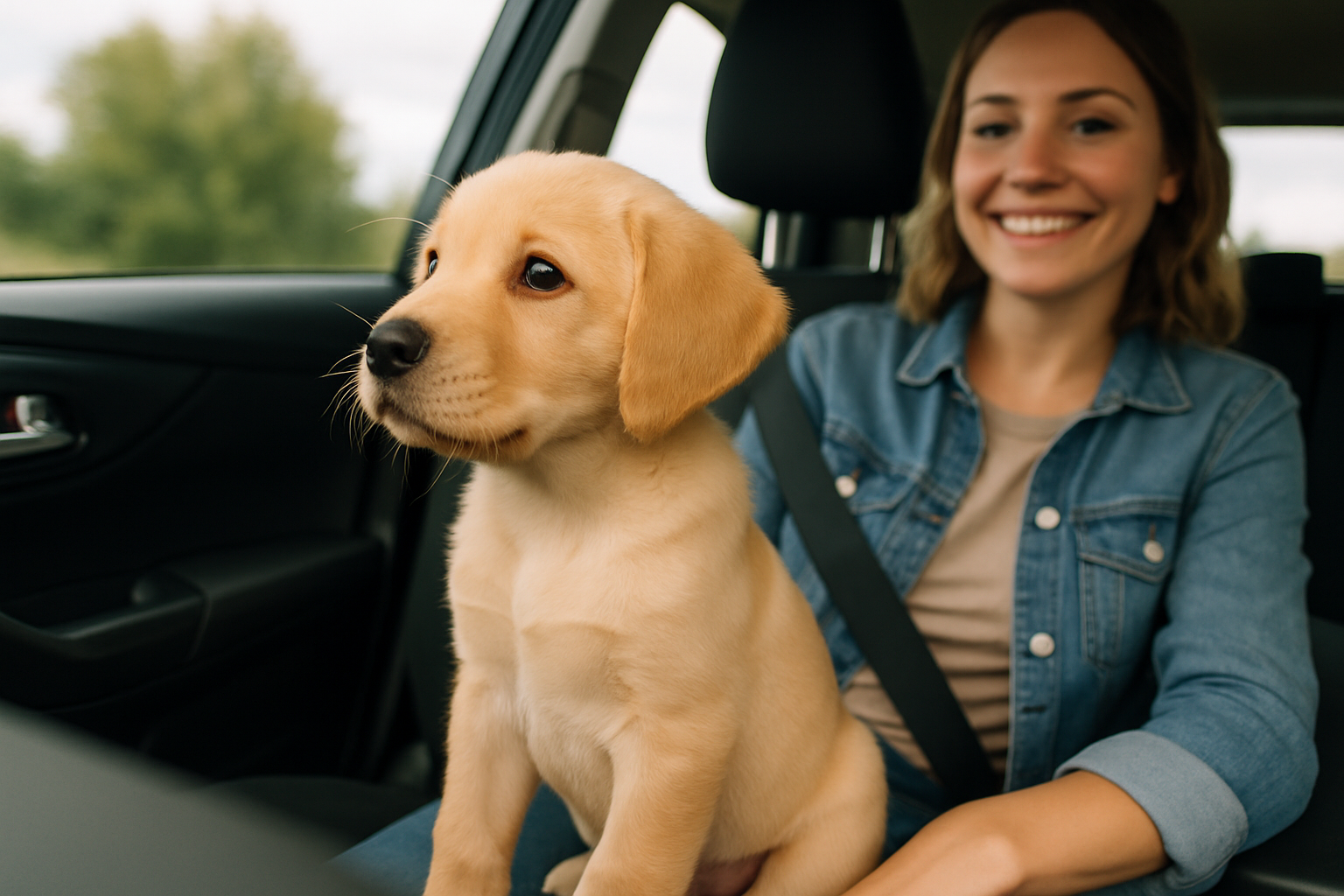
Many puppies experience anxiety or motion sickness on their first car rides. You can minimize this by gradually introducing your puppy to the vehicle before any actual travel. [4]
Start with these steps:
- Week 1: Let your puppy explore the stationary car. Allow them to sniff, walk around, and get comfortable with the space
- Week 2: Sit in the car with your puppy while the engine is off. Reward calm behavior with treats and praise
- Week 3: Turn on the engine while parked. Let your puppy acclimate to the sound
- Week 4: Take short drives—just to the end of the street and back. Keep these initial trips positive with praise and treats
- Weeks 5+: Gradually increase drive duration as your puppy becomes more comfortable
This gradual approach helps prevent car anxiety and makes longer journeys much more pleasant for everyone involved. [4]
Health and Documentation: Don't Leave Home Without Them
Proper health preparation and documentation are non-negotiable aspects of puppy travel. Overlooking these details can result in denied boarding, flight cancellations, or worse—your puppy getting sick in an unfamiliar place.
Vaccination and Medical Records
Schedule a veterinary appointment 4-6 weeks before your trip. During this visit, ensure that:
- All vaccinations are current and documented [2]
- Your puppy has received age-appropriate preventative treatments for parasites, heartworms, and fleas [1]
- Your puppy is microchipped with up-to-date contact information [1] [3]
- You receive official vaccination certificates and medical records to carry with you [3]
For international travel, you'll need a health certificate issued by your veterinarian within 10 days of departure. Some countries require this certificate to be issued even earlier, so verify requirements through the USDA's Animal and Plant Health Inspection Service (APHIS) as soon as you book your trip. [4]
Pro tip: Create digital copies of all medical documents and email them to yourself or upload them to cloud storage. This ensures you have access to critical information even if physical copies are lost or damaged. [1]
Identification: Your Puppy's Lifeline
Puppies are at higher risk of getting lost while traveling because they're in unfamiliar environments with endless new distractions. Multiple forms of identification dramatically increase the chances of reunion if separation occurs. [4]
Before traveling, ensure your puppy has:
- A current ID tag on their collar with your name and phone number
- An updated microchip with your current contact information verified in the database
- For international travel, consider a tag with your destination contact information (such as your host's name and phone number) [1]
Packing Your Puppy Travel Kit: The Complete Checklist
Packing for your puppy requires thinking about comfort, safety, health, and entertainment. Here's everything you should bring:
Safety and Comfort Items
- Travel crate or barrier: Appropriately sized with familiar bedding inside [2]
- Dog harness and seatbelt: Always use a harness (never attach seatbelts to collars) to keep your puppy secure [4]
- Two leashes: Your regular leash and a backup, plus a long leash for exploring [1]
- Blankets and bedding: Familiar items that smell like home provide comfort and security [2]
- Portable fan or extra blankets: For temperature regulation during travel [3]
Food and Hydration
- Puppy food: Bring your puppy's regular food to avoid digestive upset. Traveling itself can cause stomach sensitivity without adding dietary changes to the mix [2]
- Collapsible water bowls: At least two, so one can be washed while the other is in use
- Bottled water: If traveling far or internationally, bring water from home to prevent stomach upset from unfamiliar water sources [3]
- Treats and chews: Stuffed Kongs and long-lasting chews help prevent boredom and anxiety during travel [3]
Health and Emergency Supplies
- Complete medical records and vaccination certificates
- Any prescribed medications with instructions
- First aid kit designed for dogs
- Contact information for veterinary clinics at your destination and along your route [2]
- Recent photo of your puppy (helpful if they become lost)
Cleanup and Hygiene
- Puppy pads or portable potty solutions
- Waste bags for cleanup
- Paper towels and wet wipes
- Baby wipes for quick cleanups [3]
Entertainment and Comfort
- Soft toys that comfort your puppy
- Puzzle toys and interactive feeders
- Familiar items from home (blanket, toy with home scent)
Choosing Pet-Friendly Accommodations
Not all pet-friendly accommodations are created equal. Before booking, research specific policies and amenities that will make your puppy's stay comfortable. [2]
When evaluating accommodations, look for:
- Clear pet policies: Understand size restrictions, breed limitations, and any additional fees
- Nearby amenities: Proximity to parks, walking trails, or dog-friendly beaches where your puppy can exercise [2]
- Climate control: Reliable heating and air conditioning to maintain comfortable temperatures
- Secure outdoor space: If available, a fenced area where your puppy can safely explore
- Pet-friendly policies: Some accommodations go beyond tolerance and actually welcome pets with amenities like food bowls, beds, or treat stations
Book accommodations early. Pet-friendly lodging fills up quickly, especially during peak travel seasons. [2]
Travel Day: Practical Execution Tips
The day of travel requires careful timing and attention to your puppy's needs.
Pre-Travel Exercise
Exercise your puppy before departure. A tired puppy is a calm puppy, and a calm puppy is more likely to rest during travel rather than become anxious or destructive. [5] Plan for 30-45 minutes of active play before heading to the car or airport.
Feeding Strategy
Feed your puppy a small meal 3-4 hours before travel. An empty stomach minimizes the risk of motion sickness and nausea. [1] [5] Avoid feeding during car rides, as movement can cause digestive discomfort.
Rest Stops and Bathroom Breaks
Plan to stop every 2-4 hours for 15-30 minutes. These breaks give your puppy opportunities to:
- Stretch their legs and move around
- Use the bathroom
- Get fresh air and mental stimulation
- Drink water and settle their stomach
Use these stops to explore dog-friendly parks or trails along your route when possible. [1]
Never Leave Your Puppy Unattended in a Vehicle
This cannot be overstated: never leave your puppy alone in a parked car, regardless of weather conditions. Temperatures inside a closed vehicle can reach dangerous levels within minutes, even on mild days. [1] If you need to leave the car, bring your puppy with you or arrange for someone to stay with them.
Window Safety
While it might look adorable, don't allow your puppy to stick their head out the car window. Flying debris, insects, or small objects can injure your puppy's eyes or face. Additionally, there's a risk of accidental injury if someone bumps the window control. [1]
Managing Common Travel Challenges
Even with perfect preparation, some puppies experience travel-related challenges. Here's how to address the most common issues:
Car Sickness
If your puppy experiences motion sickness, discuss medication options with your veterinarian before traveling. In the meantime, take shorter trips more frequently to build tolerance, and ensure your puppy has a stable surface to stand on (the floor is better than soft seats). [4]
Anxiety and Stress
Some puppies become anxious during travel. Maintaining routine, bringing familiar items, and keeping your own demeanor calm can help. If anxiety is severe, ask your veterinarian about calming supplements or medications that might help. [5]
Accidents and Potty Issues
Accidents happen, especially with young puppies. Bring plenty of cleaning supplies and puppy pads. Stay patient—stress can make accidents more likely, and punishing your puppy will only increase anxiety. [3]
Research Your Destination: Local Regulations and Hazards
Different locations have different rules about where dogs can go and what hazards might exist. Research your destination in advance. [2]
Learn about:
- Local leash laws and off-leash areas
- Regional hazards (snakes, extreme heat, unfamiliar parasites)
- Dog-friendly attractions, restaurants, and parks
- Veterinary emergency services in the area
When walking your puppy in unfamiliar areas, keep them on a leash at all times, even if they're well-trained. New environments can trigger unexpected behaviors as your puppy focuses on exploring rather than listening to commands. [1]
International Travel: Additional Considerations
If you're traveling internationally with your puppy, preparation begins even earlier. Different countries have vastly different regulations regarding imported animals. [3]
Start planning 3-6 months before your departure date to:
- Research country-specific vaccination requirements
- Arrange for health certificates and import permits
- Verify microchip requirements and standards
- Understand quarantine procedures if applicable
- Arrange airline-specific pet travel requirements
Contact your destination country's embassy or agricultural department for the most current requirements.
Start Small: The Test Trip Strategy
If this is your puppy's first travel experience, consider starting with a short, local trip before embarking on a major adventure. A weekend getaway to a nearby location allows you to test your packing list, see how your puppy handles travel, and adjust your plans for longer journeys. [2]
This trial run helps you identify what works, what doesn't, and what your puppy specifically needs to feel comfortable during travel.
Final Checklist: Before You Leave
Use this final checklist in the days before your trip:
- ☐ All vaccinations and health certificates are current and copies are packed
- ☐ Microchip information is verified and up to date
- ☐ ID tags are securely attached with current contact information
- ☐ Travel crate is properly sized and your puppy is comfortable in it
- ☐ All medications and first aid supplies are packed
- ☐ Veterinary contact information for your destination is researched and saved
- ☐ Pet-friendly accommodations are confirmed and pet policies are understood
- ☐ Your puppy has had recent exercise and bathroom breaks
- ☐ Food, water, bowls, and treats are packed
- ☐ Leashes, harness, and safety equipment are in the car
- ☐ Recent photo of your puppy is available on your phone
- ☐ Digital copies of all documents are accessible via email or cloud storage
Conclusion: Creating Positive Travel Memories
Traveling with your puppy requires thoughtful preparation, but the investment pays dividends throughout your dog's life. Puppies who are gradually introduced to travel in positive ways often grow into dogs who enjoy adventures and new experiences. By following these preparation steps—from training and health management to packing and destination research—you're setting the stage for safe, enjoyable journeys with your furry companion for years to come.
Remember, every puppy is unique. What works perfectly for one puppy might need adjustment for another. Stay flexible, patient, and focused on your puppy's wellbeing, and you'll create travel memories that strengthen your bond and enrich both your lives.
Sources & References
- https://northeasternvetcare.com/traveling-with-your-pup/
- https://bondvet.com/blog/tips-dog-travel
- https://zigzag.dog/en-us/blog/puppy-training/training-basics/top-9-tips-for-traveling-with-a-puppy/
- https://www.petmd.com/dog/general-health/traveling-with-puppy
- https://goodheartcherrycreek.com/blog/cat-and-dog-travel-tips-in-2023