Why the Right Puppy Training Tools Matter
When you bring home a new puppy, the excitement is real—but so is the overwhelm. Walk into any pet store, and you'll find shelves packed with training gadgets promising miraculous results. Here's what most puppy owners don't realize: the most effective training tools are often the simplest ones. [1] Research consistently shows that over 85% of dog owners now rely on positive reinforcement tools, and this shift reflects a fundamental truth about canine learning. Your puppy doesn't need fancy technology; they need clear communication, consistency, and rewards that motivate them.
The relationship between you and your puppy is the real foundation of successful training. Every tool you choose should strengthen that bond rather than create distance or fear. [1] Studies in the Journal of Veterinary Behavior confirm that reward-based methods are most effective for promoting desired behaviors while maintaining your puppy's emotional well-being. Let's explore the tools that make this possible.
The Foundation: High-Value Training Treats
Before you invest in anything else, understand this: treats are your secret weapon. Not all treats are created equal, though. The difference between a mediocre training session and a breakthrough moment often comes down to what's in your treat pouch.
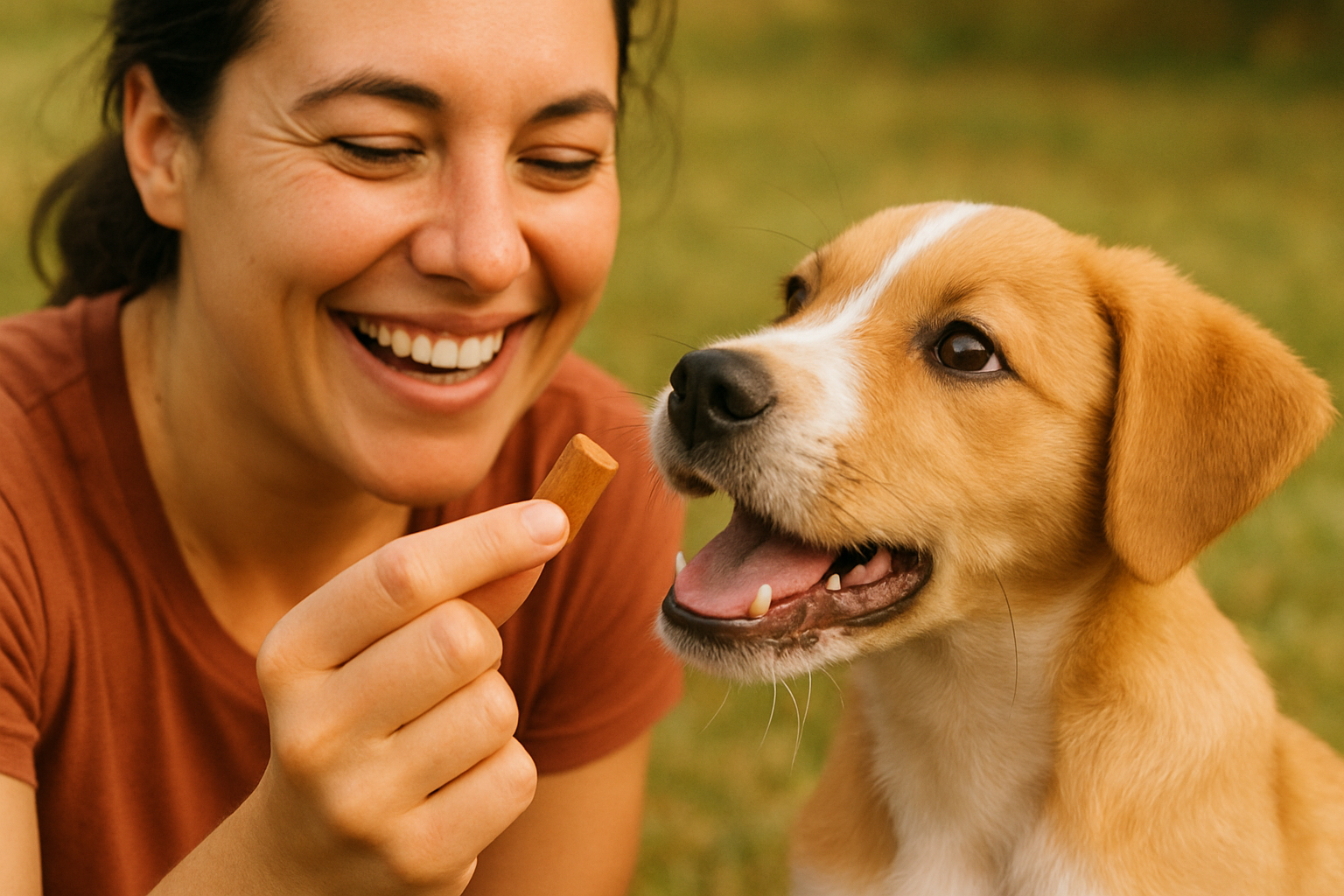
High-value treats are foods your puppy absolutely loves—the kind that make their eyes light up and tail wag uncontrollably. [5] Single-ingredient, organ meat-based treats work exceptionally well because they have irresistible scents and tastes to dogs. Beef lung, liver, or heart pieces are excellent choices. These treats create powerful positive associations with the behaviors you're teaching. When your puppy sits on command and immediately receives a treat they adore, they're learning that listening to you equals something wonderful.
Here's a practical tip: break treats into tiny pieces, about the size of a pea. This allows you to reward frequently without overfeeding your puppy during longer training sessions. [5] You'll also want to keep a mix of high-value and lower-value treats on hand. Lower-value treats work well for reinforcing behaviors your puppy already knows, while high-value treats are reserved for new commands or particularly challenging situations.
- Single-ingredient meat treats: Beef lung, liver, or heart—minimal processing, maximum motivation
- Freeze-dried options: Lightweight, long shelf life, and intensely aromatic
- Cheese or peanut butter pieces: Smaller portions work for less demanding training moments
- Rotation strategy: Switch treats regularly so your puppy stays excited and doesn't become bored
The Clicker: Your Communication Bridge
A clicker is a small handheld device that makes a distinct clicking sound. It might seem too simple to be effective, but the science behind it is solid. [2] Clicker training works through classical conditioning—your puppy learns to associate the click sound with an incoming reward. This creates a precise marker that tells your puppy exactly which behavior earned the reward.
Think of the clicker as a camera flash capturing the perfect moment. When your puppy sits, you click immediately, then treat. That timing precision helps your puppy understand exactly what they did right. [5] Many trainers report that puppies learn commands significantly faster with clicker training compared to traditional methods alone.
Why is this timing so important? Puppies process information quickly. If you reward them even a second or two after the desired behavior, they might associate the reward with whatever they're doing in that moment instead. The clicker eliminates this confusion by providing an instant, consistent marker.
- Keep a clicker in your treat pouch and another in your car
- Practice the click-treat sequence before formal training so your puppy understands the connection
- Use the clicker for marking desired behaviors during everyday moments, not just formal sessions
- Consider upgraded versions with adjustable sounds if you have a sensitive puppy
Leashes and Collars: Control with Comfort
A quality leash and properly fitted collar (or harness) form the foundation of safe training. [3] These aren't just about control—they're communication tools that help guide your puppy while keeping them secure.
For puppies, a comfortable, well-fitted collar or harness is essential. Many modern harnesses offer multiple attachment points, allowing you to choose between front-clip and top-clip configurations depending on your training goals. [5] Front-clip harnesses naturally redirect your puppy toward you when they pull, making leash training more intuitive for both of you.
Your leash choice matters too. A standard 6-foot leash works for everyday training and walks, but consider having multiple options:
- Standard 6-foot leash: Perfect for basic obedience, walks, and controlled environments
- Double-handle leash: Offers more control points and flexibility for managing different training situations
- Long line (15-30 feet): Essential for recall training, allowing your puppy freedom while maintaining safety
- Adjustable leash: Provides variable length for different training scenarios
Avoid aversive tools like choke chains or shock collars. [1] Research has shown these can increase behavioral problems and cause psychological harm to puppies. Your goal is building trust, not fear.
Training Treats Pouch: Organization Matters
Once you've assembled your treats and clicker, you need a reliable way to carry everything. A training treat pouch keeps your supplies organized and accessible, signaling to your puppy that training time has begun. [5] Look for pouches with magnetic closures to prevent spills and multiple compartments for organizing different treat types, your clicker, waste bags, and other essentials.
The psychological benefit shouldn't be underestimated. When you put on your training pouch, your puppy learns that focused training sessions are about to happen. This creates a clear distinction between training time and casual interaction, helping your puppy enter a learning mindset.
Training Mat or Designated Place
Teaching your puppy to go to a specific place is more valuable than many owners realize. [5] A training mat, crate, or designated spot serves as a visual cue and gives your puppy a safe refuge. This tool is incredibly useful for managing excitement, preventing jumping on guests, or creating a calm space during chaotic moments.
Start by placing high-value treats on the mat to create positive associations. Gradually, your puppy will begin seeking out this spot independently. This "place" command becomes invaluable for managing your puppy's behavior in real-world situations—when visitors arrive, during meal preparation, or when you need a moment of calm.
Long Line: Recall Training Game Changer
Recall—getting your puppy to come when called—is one of the most important commands you'll teach. A long line (typically 15-50 feet) allows you to practice recall in open spaces while maintaining safety. [5] Your puppy can explore and experience freedom while you retain the ability to guide them back if needed.
The long line is particularly valuable during the adolescent phase when puppies test boundaries. It allows you to practice recall without the anxiety of your puppy disappearing into the distance, and it prevents negative reinforcement situations where your puppy learns that coming to you means the fun ends.
Mental Stimulation Tools: Chews and Enrichment
Training isn't only about teaching commands—it's also about managing your puppy's overall well-being. [5] Appropriate chew items like marrow bones or beef trachea provide mental stimulation and satisfy your puppy's natural chewing instinct. When puppies have outlets for their chewing needs, they're more focused and engaged during training sessions.
Puppies that lack mental stimulation often develop destructive behaviors or become hyperactive during training. By providing appropriate enrichment items, you're setting up conditions for training success.
Training Vest: Signaling Training Mode
While optional, a training vest with multiple pockets transforms your efficiency. [3] These vests signal to your puppy that you're in "training mode," creating a psychological boundary between training sessions and casual interaction. They also keep your hands free while maintaining quick access to treats, clickers, and other tools.
First Aid Kit: Safety Preparation
Accidents happen during training sessions. [3] A basic first aid kit designed for both you and your puppy ensures you can address minor injuries quickly. Include bandages, antiseptic, tweezers for splinter removal, and any medications your puppy might need. Being prepared keeps training sessions safe and stress-free.
Building Your Training Toolkit: A Strategic Approach
You don't need to buy everything at once. Start with the essentials and expand based on your puppy's specific needs and your training goals:
- Week 1-2: High-value treats, clicker, and a comfortable collar/leash
- Week 3-4: Training treat pouch and training mat
- Month 2+: Long line, additional leash options, and enrichment toys
- As needed: Specialized tools for specific training challenges
The Real Secret to Training Success
Here's what every expert trainer knows: the tools are secondary to your approach. [1] The bond between you and your puppy, built through patience, consistency, and positive reinforcement, is the actual foundation of successful training. Tools simply facilitate that relationship.
Your puppy doesn't care about fancy equipment. They care about clear communication, predictable rewards, and your presence. Every tool you select should reinforce these elements rather than complicate them.
Key Takeaways for Puppy Training Success
- Invest in high-value treats that genuinely excite your puppy
- Use a clicker to mark exact moments of correct behavior
- Choose comfortable, humane collars and harnesses over aversive tools
- Stay organized with a quality treat pouch
- Practice recall with a long line in safe, open spaces
- Prioritize your puppy's overall well-being through mental stimulation
- Remember that the relationship matters more than the equipment
- Start simple and expand your toolkit as your puppy progresses
The journey of training your puppy is an opportunity to build a lifetime of communication and trust. With the right tools—and the right mindset—you're setting the stage for a well-behaved, confident, and happy companion.