Introduction: Why Puppy Calmness Matters More Than You Think
You've just brought home your adorable new puppy. Within hours, you're chasing them around the house, cleaning up accidents, and wondering if you've made a terrible mistake. Sound familiar?
Here's what most new puppy parents don't realize: the chaos you're experiencing isn't just a phase—it's a training opportunity. The difference between a well-behaved puppy and a destructive one often comes down to one critical factor: calmness. [3]
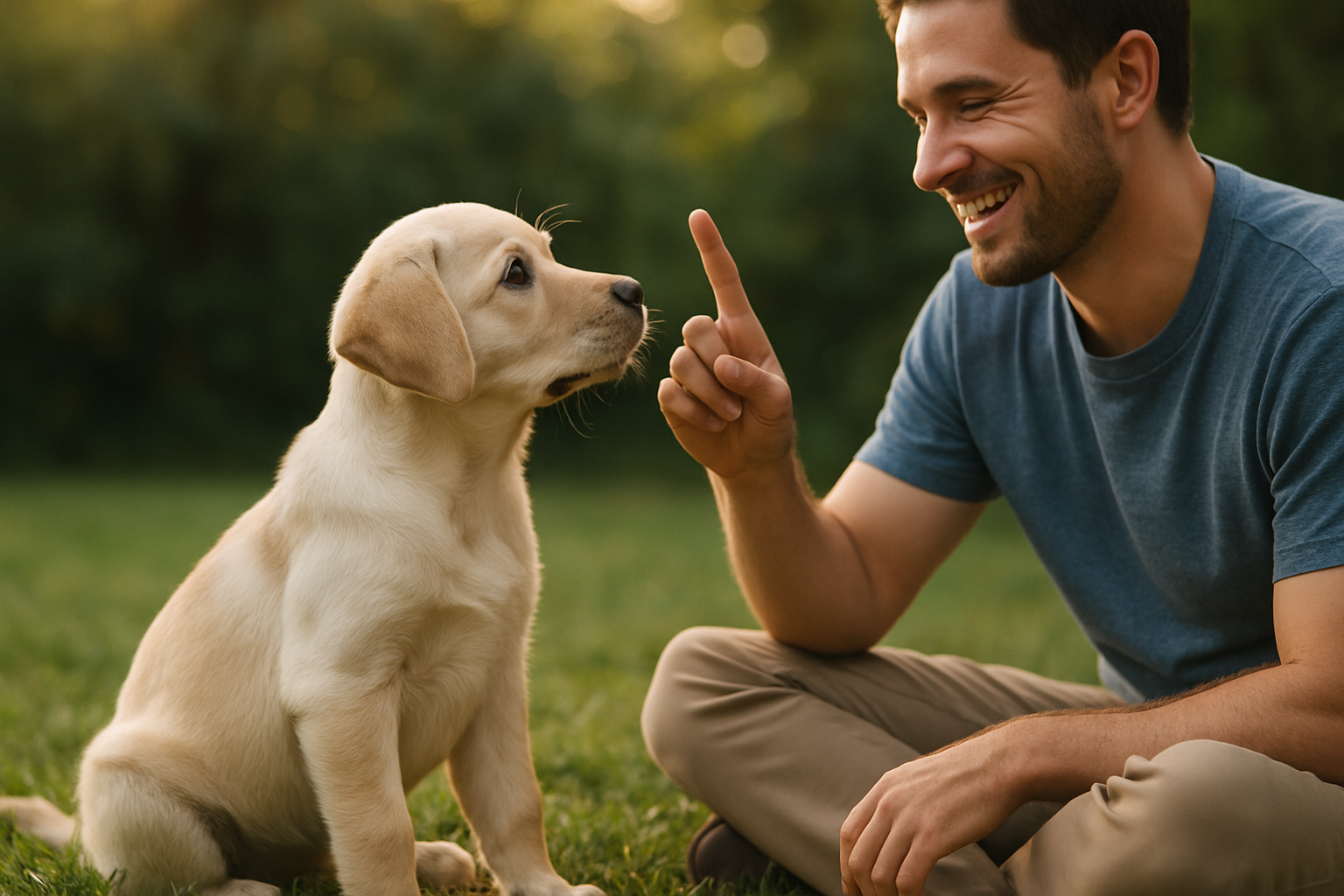
But this calmness isn't just about your puppy. It's about you too. Your emotional state directly influences your puppy's behavior more than you might think. When you approach training with frustration or anxiety, your puppy picks up on these signals and responds with their own stress and misbehavior. Conversely, when you maintain composure and create a peaceful training environment, your puppy naturally becomes more receptive, focused, and eager to learn. [3]
In this guide, we'll explore the science behind puppy calmness, reveal the hidden reasons your puppy might be hyperactive, and share proven strategies many trainers use to transform chaotic puppies into well-mannered companions.
Understanding Why Puppies Struggle to Stay Calm
Before we can fix the problem, we need to understand what's actually causing your puppy's wild behavior. Many owners assume their puppy is just being a typical puppy, but there are usually specific, addressable reasons behind the chaos.
The Energy Deficit Problem
One of the most common culprits behind hyperactive puppies is simply inadequate physical and mental stimulation. Puppies are bundles of energy, and if that energy isn't channeled productively, it becomes destructive. [4]
Think of it like this: an under-stimulated puppy is like a computer with too many programs running and nowhere to direct the processing power. That excess energy has to go somewhere, and it typically manifests as jumping, biting, destructive chewing, and general mayhem. [4]
The solution isn't complicated, but it requires honest self-assessment. Are you genuinely dedicating enough time to exercise and play? Many owners spend significant time on work, social media, and entertainment while their puppy remains under-engaged. [4]
Anxiety and Stress Responses
Not all hyperactivity is about excess energy. Sometimes what looks like wild behavior is actually anxiety in disguise. Puppies who haven't been properly socialized, experienced sudden environmental changes, or lack a predictable routine often exhibit what appears to be hyperactivity but is actually stress-driven behavior. [2]
Anxiety can completely overwhelm a puppy's ability to learn and respond to commands. When your puppy is in an anxious state, their brain literally can't process training effectively. [2]
Lack of Leadership and Structure
Dogs are inherently pack animals with a deep need for structure and leadership. When puppies don't have clear guidance about what's expected, they become anxious and act out. Interestingly, many behavioral problems stem not from the puppy being "bad," but from the puppy not understanding how to please you. [4]
The Science: How Your Emotions Shape Your Puppy's Behavior
Here's something that might surprise you: your puppy is essentially an emotional mirror. Dogs possess remarkable sensitivity to human emotions, detecting subtle shifts in voice tone, body language, and even stress-related scent changes. [3]
When you're frustrated, anxious, or impatient during training, your puppy doesn't just sense it—they internalize it. This emotional transmission can actually trigger fear responses, defensive behaviors, or increased anxiety in your puppy. Conversely, a calm demeanor creates an environment where your puppy feels safe, secure, and mentally available for learning. [3]
Research shows that dogs trained in calm, positive environments learn faster, retain information better, and develop stronger bonds with their owners compared to dogs trained in stressful or punitive settings. [3]
Building Your Calm Training Foundation
Step 1: Establish a Predictable Routine
One of the most powerful ways to reduce puppy anxiety and hyperactivity is through consistency. When your puppy can predict when meals will happen, when walks occur, when playtime begins, and when rest happens, they feel more in control of their environment. This sense of control dramatically reduces anxiety. [2]
Create a daily schedule and stick to it as closely as possible. Your puppy should know approximately when to expect:
- Feeding times (typically 3-4 times daily for young puppies)
- Potty breaks (after meals, naps, and play)
- Exercise and play sessions
- Training time (short, focused sessions)
- Rest and sleep periods
Step 2: Teach Your Puppy to Earn Resources
Instead of giving your puppy food, toys, or attention randomly, require them to perform a simple action first. Ask your puppy to sit before lowering the food bowl. Request a sit before attaching the leash. This teaches your puppy that they have agency and control over their environment, which significantly reduces anxiety. [2]
This practice serves a dual purpose: it builds impulse control while simultaneously giving your puppy a sense of accomplishment and predictability.
Step 3: Master Your Own Composure
Before you can expect your puppy to be calm, you need to embody calmness yourself. Here are practical techniques for maintaining composure during training:
- Deep breathing: Before and during training sessions, engage in slow, deliberate breathing. This physiologically calms your nervous system and is immediately detectable by your puppy. [3]
- Take strategic breaks: If a training session becomes frustrating, pause and reset. A five-minute break where you regain composure is far more productive than pushing through frustration. [3]
- Plan your sessions: Having a clear, structured plan for each training session minimizes uncertainty and prevents the stress that comes from not knowing what to do next. [3]
- Know your puppy: Understanding your specific puppy's personality, strengths, and triggers allows you to craft training sessions that play to their strengths rather than constantly highlighting weaknesses. [3]
The "Settle" Command: Teaching Emotional Self-Control
One of the most valuable skills you can teach your puppy is the ability to settle on command. This isn't just about lying down—it's about your puppy learning to relax at your request, even in stimulating situations. [2]
How to Teach "Settle"
Phase 1: Foundation in Calm Settings
Start in a quiet, distraction-free environment. Interrupt a gentle play session and ask your puppy to sit or lie down. When they comply, offer quiet praise and a treat, then resume play. This reinforces that settling brings rewards without ending the fun entirely. [2]
Phase 2: Building the Cue
Once your puppy consistently settles during play, stop the game and wait for them to sit or lie down independently. Reward this behavior. Now you can add a verbal cue like "settle" or "calm down" right before the behavior happens. [2]
Phase 3: Increasing Duration and Difficulty
Gradually ask your puppy to settle for longer periods. Slowly increase the intensity of play before requesting the settle. Eventually, introduce mild distractions. The goal is a puppy who can settle on command even in stimulating environments. [2]
Creating Your Puppy's Safe Haven
Every anxious puppy benefits from having a designated safe space—a place they associate with security, comfort, and positive experiences. This might be a dog bed, a crate, or a specific mat. [2]
The beauty of using a portable mat is that it becomes a "relaxation station" you can take anywhere. Your puppy learns that wherever this mat is, calm and safety follow. This is invaluable at the vet's office, in the car, or at a friend's house. [2]
Building Your Puppy's Safe Space
- Choose a location away from high-traffic areas
- Pair the space with positive experiences: treats, toys, praise
- Practice having your puppy go to their space on cue
- Start with short durations and gradually increase
- Use the space proactively before your puppy becomes anxious
Managing Energy Through Strategic Exercise and Mental Stimulation
Physical exercise is essential, but mental stimulation is equally important for achieving puppy calmness. A mentally tired puppy is often more calm than one who's just physically exhausted. [4]
Combining Physical and Mental Outlets
- Puzzle toys and food-dispensing toys: These engage your puppy's problem-solving abilities while providing entertainment
- Hide and seek games: Hide treats around your house or yard for your puppy to find
- Obstacle courses: Create simple agility challenges that build confidence and tire your puppy mentally [4]
- Training classes: Formal training provides structure, mental stimulation, and socialization simultaneously [4]
- Scent work and mantrailing: These tap into your puppy's natural instincts and provide deep mental engagement [4]
The Critical Role of Positive Reinforcement
Modern dog training is built on learning theory and positive reinforcement—rewarding desired behaviors rather than punishing undesired ones. Research consistently shows that positive reinforcement is more effective, creates less stress and anxiety, and builds stronger bonds between puppies and their owners. [5]
Importantly, studies indicate that punishment-based methods actually increase aggression and anxiety in puppies, potentially creating the very problems you're trying to prevent. [5]
Implementing Positive Reinforcement
- Catch them being good: Reward your puppy immediately when they display calm behavior, even if you didn't ask for it
- Use high-value rewards: Rewards don't have to be food. Affection, play, or access to favorite toys work equally well [4]
- Ignore unwanted behavior: Often, the best response to minor misbehavior is no response at all. This removes the reward of attention
- End activities on a positive note: If your puppy gets too excited during play, end the session immediately. They'll learn that calmness keeps the fun going [4]
Reading Your Puppy's Body Language
Understanding your puppy's emotional state through body language allows you to intervene before problems escalate. Early intervention is far more effective than waiting until your puppy is completely overwhelmed. [2]
Signs your puppy is becoming anxious or overstimulated include:
- Lip licking or yawning
- Pulled back ears
- Tucked tail
- Stiff body posture
- Rapid panting
- Dilated pupils
When you notice these signs, take action immediately. Move to a calmer environment, use your "settle" command, or redirect your puppy's attention to help them regain composure. [2]
Special Considerations: Socialization and Environmental Management
Lack of proper socialization during puppyhood can create anxiety that manifests as hyperactivity throughout your dog's life. [2] However, this doesn't mean throwing your puppy into overwhelming situations. Gradual, positive exposures to new people, animals, environments, and stimuli build confidence and resilience.
When introducing your puppy to new situations:
- Start in low-stress environments
- Gradually increase exposure
- Always pair new experiences with positive associations (treats, praise, play)
- Allow your puppy to approach at their own pace
- Never force interactions
When to Seek Professional Help
If despite your best efforts your puppy remains hyperactive or anxious, professional guidance is invaluable. Look for trainers certified through organizations like the CCPDT, KPA, ABS, or IAABC who use positive reinforcement methods. [5]
A good trainer should not only work with your puppy but teach you how to read canine behavior and apply training principles yourself. Remember that your trainer works with you as much as with your puppy. [5]
Additionally, consult your veterinarian to rule out underlying health conditions that might contribute to anxiety or hyperactivity. [2]
Key Takeaways: Your Action Plan
Raising a calm, well-behaved puppy isn't about luck—it's about understanding your puppy's needs and responding with intentional, consistent strategies. Here's what to do starting today:
- Establish a predictable daily routine
- Commit to 20-30 minutes of combined physical and mental exercise daily
- Practice deep breathing and maintain composure during training
- Teach the "settle" command in calm environments
- Create a safe space your puppy can retreat to
- Use only positive reinforcement methods
- Learn to read your puppy's body language for early intervention
- Seek professional help if needed
Remember: the calm puppy you're envisioning isn't a distant dream. It's absolutely achievable through understanding, patience, and consistent application of proven training principles. Your puppy wants to please you and be part of your pack. By creating an environment of calm, predictability, and positive reinforcement, you're not just training a puppy—you're building a lifelong companion and strengthening the bond you'll share for years to come.
Sources & References
- https://www.akc.org/expert-advice/training/soothe-dog-anxiety/
- https://www.acdtacademy.com/post/the-power-of-composure-how-staying-calm-elevates-dog-training-success
- https://thedogwizard.com/blog/8-tips-for-calming-down-an-excited-dog/
- https://www.gentlebeast.com/blog/the-ultimate-guide-to-dog-training