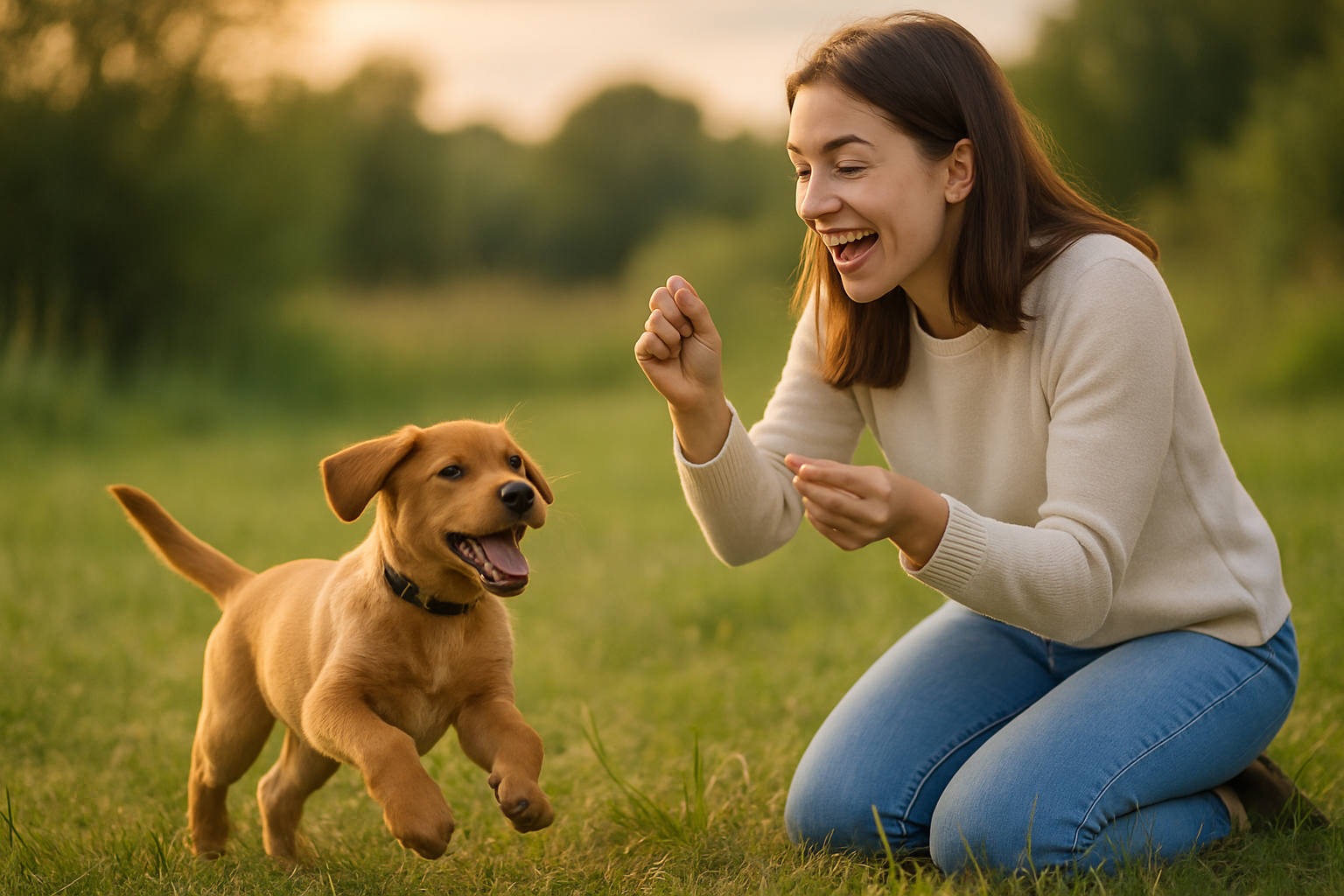
Why Recall Training Matters for Your Puppy
Every dog owner knows that moment of panic when their puppy darts away at the park or bolts through an open door. A reliable recall—the ability to come when called—isn't just a nice-to-have trick; it's a lifesaving skill. When your puppy responds promptly to your call, you're preventing potential accidents, protecting them from dangerous situations, and giving them the freedom to enjoy off-leash activities safely. [4]
But here's the challenge: every time you ask your puppy to come, you're essentially asking them to abandon whatever fascinating thing they've discovered. That sniffing opportunity, that squirrel, that other dog—these are all far more interesting than you are in that moment. Your job is to make yourself more compelling than the environment around them. [4]
Understanding Your Puppy's Natural Tendencies
Not all puppies are born with equal recall abilities. Some puppies seem naturally inclined to check in with their owners frequently and respond eagerly to their names. Others are more independent explorers, less interested in maintaining constant contact. Understanding where your puppy falls on this spectrum helps you set realistic expectations and choose the right training approach. [5]
Factors influencing your puppy's recall potential include:
- Breed characteristics (hound breeds may be more distraction-prone, while retrievers often have natural recall instincts)
- Individual personality and independence level
- Age and developmental stage
- Previous experiences and associations with the recall cue
- Environmental distractions and excitement levels
The good news? Even puppies who seem less naturally inclined to recall can develop reliable recall through consistent, positive training. [5]
The Foundation: Setting Up for Success
Before you begin formal training, gather your supplies and prepare your environment. Success in recall training depends heavily on these foundational elements.
What You'll Need:
- A quiet, distraction-free space (your living room or kitchen is perfect)
- High-value treats your puppy absolutely loves (these should be special, reserved only for training)
- A long training leash (10-20 feet minimum for outdoor practice)
- 15-20 minutes of daily training time
- Patience and a positive attitude
The environment you choose for initial training is critical. Your puppy's brain has limited capacity to focus when overwhelmed by stimuli. Start indoors where you control the variables, then gradually introduce mild distractions as their skills improve. [Source 3, 4]
Step-by-Step Training Process
Step 1: Build Positive Association Without Expectations
Begin by sitting with your puppy and simply saying "come" followed immediately by giving them a high-value treat. Repeat this 5-10 times during your first few sessions. At this stage, you're not asking your puppy to do anything—you're simply creating a powerful association between the word "come" and something wonderful happening. [4]
This might feel strange because you're rewarding without requesting an action, but this foundation is crucial. You're essentially pre-loading the recall cue with positive meaning before you ever ask your puppy to respond to it.
Step 2: Introduce the Behavior with Short Distances
Once you've done several sessions of the association work, it's time to add the behavioral component. Start with very short distances—just 3-5 feet away. [4]
Here's the process:
- Position yourself a short distance from your puppy
- Get their attention by cheerfully saying their name
- Pat your legs or clap your hands to encourage movement toward you
- The moment they start moving in your direction, say "come" in an excited, happy tone
- Immediately reward them with treats and enthusiastic praise when they reach you
The key here is timing: only use the verbal cue "come" when your puppy is already moving toward you. This pairs the word with the action you want, creating a strong association. [4]
Step 3: Gradually Increase Distance and Difficulty
After several successful sessions at short distances, progressively increase how far away you are when you call your puppy. Move from 5 feet to 10 feet, then to 15-20 feet. Practice in the same room first, then progress to calling your puppy from different rooms in your house. [4]
If your puppy struggles at any distance, simply go back to the previous distance where they were successful. There's no rush—building a rock-solid foundation is more important than moving quickly through stages.
Step 4: Test the Cue Before Moving Outdoors
Before you take your training outside, test whether your puppy actually understands the cue. Use "come" before your puppy is already moving toward you. If they don't respond, that's valuable information—it means they've learned to associate the word with the action, but not necessarily to respond to the cue independently. Continue pairing the word with the action for several more sessions. [4]
Once your puppy reliably comes when you say "come" from various distances around your home, you're ready for the next phase.
Outdoor Training: Expanding Your Puppy's Recall
The jump from indoor to outdoor training is significant. Your backyard introduces new smells, sounds, and distractions. A dog park presents even more stimulation. The key is to progress gradually and always use safety tools like long lines. [Source 3, 4]
Backyard Training:
Start in your backyard with a 10-15 foot long line attached to your puppy's collar. This safety tool allows your puppy freedom to explore while ensuring you can prevent them from running away if they don't respond to your recall. Call your puppy and reward heavily when they come. Practice multiple times per session, varying when you call so your puppy doesn't predict the pattern. [3]
Park Training:
Once your puppy demonstrates reliable backyard recall, progress to a dog park or quiet outdoor area. Use a 20-30 foot long line and continue rewarding generously. The increased distractions mean your puppy needs higher-value rewards and more frequent practice. [Source 3, 4]
Only remove the long line and practice off-leash recall when you're genuinely confident your puppy will respond. Even then, choose safe, enclosed areas initially.
Managing Common Training Mistakes
The "Poisoned Cue" Problem
One of the most common reasons recall training fails is what trainers call "poisoning" the recall cue. This happens when your puppy learns to associate the recall word with something negative. [3]
Common ways the cue gets poisoned:
- Ending the fun: Calling your puppy from the park, then immediately putting them on the leash to go home. Your puppy learns that responding to "come" means the fun ends.
- Punishment after recall: Calling your puppy when they've misbehaved, then punishing them. This teaches them that coming to you is dangerous.
- Overuse without reward: Repeatedly saying "come" without rewarding, especially if your puppy doesn't respond. The word becomes meaningless.
- Inconsistent response to the cue: Sometimes rewarding, sometimes not. This creates confusion about whether they should respond.
If you suspect you've poisoned your recall cue, you have two options: return to the basics and rebuild positive associations, or introduce a new cue word like "here" or "close" and start fresh with proper technique. [3]
Avoiding the Grab-and-Go Mistake
When your puppy finally comes to you, resist the urge to immediately grab their collar. For some puppies, especially timid ones, this can feel threatening and discourage future recalls. Instead, kneel down to their level, offer treats, and only gently reach for their collar if necessary. Make the experience of reaching you consistently positive. [1]
Never use recall as a setup for something your puppy dislikes—like nail trimming or a bath. Your puppy will quickly learn to avoid you in these situations.
Fun Games That Build Bulletproof Recall
Training doesn't have to feel like work. These games make recall practice enjoyable for both you and your puppy while building genuine reliability.
Chase Me Game
Go for a walk with your puppy on-leash. When you have their attention, turn around and run away from them while excitedly saying "come!" After a few steps, stop and reward them enthusiastically with treats or play. This game taps into your puppy's natural chase instinct and makes you the most exciting thing in their world. [1]
Hide-and-Seek
Once your puppy has the basics down, hide in another room and call out your recall cue. When they find you, reward them generously with praise and treats. This game builds independent problem-solving while reinforcing that coming to you is rewarding. [1]
Hot Potato
Gather two or more friends, each with high-value treats. Take turns calling your puppy between each person, rewarding them every time they respond. This game teaches your puppy that recall is rewarding regardless of who's calling, and it adds an element of excitement. [1]
Fetch Recall
During fetch games, practice calling your puppy back before throwing the ball again. This teaches them that responding to recall keeps the game going rather than ending it. Always reward with another throw to maintain positive associations. [3]
Introducing Distractions Strategically
Real-world recall means your puppy responds even when tempted by other stimuli. Build distraction tolerance gradually through structured practice. [4]
Progression of distractions:
- Food distractions: Start by placing a low-value treat on the floor during recall practice. Reward your puppy for ignoring it and coming to you instead.
- Toy distractions: Have their favorite toy nearby but not in direct line of sight initially. Gradually move it closer as they improve.
- Social distractions: Practice with other calm dogs present, then gradually introduce more energetic dogs and people.
- Environmental distractions: Train in different locations—parks, quiet streets, areas with mild traffic noise.
- Weather variations: Practice in light rain, wind, or different times of day to build adaptability.
Never introduce distractions so overwhelming that your puppy fails. If they're struggling, you've progressed too quickly. Go back to an easier level and build more gradually. [4]
Advanced Tip: The Power of Unprompted Check-Ins
Here's a lesser-known technique that significantly improves recall reliability: reward your puppy whenever they come to check in with you on their own, without being called. [5]
When your puppy is off-leash and independently decides to approach you, have a treat ready and reward them. Use slightly lower-value treats for these unprompted check-ins so your puppy doesn't become treat-focused and ignore other activities. This strategy makes you a naturally rewarding presence in your puppy's environment, increasing their motivation to maintain contact with you generally. [5]
Building Reliability with Stay Training
Interestingly, working on stay commands significantly improves recall reliability. Training stays strengthens your puppy's ability to focus on you, builds impulse control, and creates clearer communication between you and your puppy. [5]
Spend time training sit-stays and down-stays, gradually increasing duration and distance. This foundational work translates directly into more reliable recalls.
Troubleshooting Reluctant Recallers
Some puppies are naturally more independent and less motivated by praise or standard treats. If your puppy seems resistant to recall training:
- Upgrade your rewards: Experiment with different high-value treats—cheese, chicken, hot dogs, or special training-only rewards.
- Reduce calling frequency: Calling too often can make the cue feel less special. Practice less frequently but with higher-value rewards.
- Change your cue: Sometimes starting fresh with a new word removes negative associations and creates a fresh start.
- Combine with training: Do a 3-5 minute mini training session (sits, hand targets, heeling) before off-leash practice. This gets your puppy's brain engaged and focused on you. [5]
- Make yourself more interesting: Run away, clap, use higher-pitched excited tones, and move unpredictably. Become the most entertaining thing in your puppy's world.
Consistency: The Secret Ingredient
Every family member must use the same recall cue, the same reward strategy, and the same positive reinforcement approach. Inconsistency creates confusion and slows progress dramatically. [3]
Hold a family meeting about recall training. Ensure everyone understands:
- The exact cue word you're using
- The types of rewards being offered
- The importance of never calling your puppy to something negative
- The rule about not ending fun activities immediately after recall
Train together, share progress updates, and celebrate wins as a team.
Timeline: What to Expect
Recall training isn't something that happens overnight. Here's a realistic timeline:
- Weeks 1-2: Building initial associations, short indoor distances
- Weeks 3-4: Increasing indoor distances, testing the cue independently
- Weeks 5-6: Backyard training with long line, introducing mild distractions
- Weeks 7-8: Park training with long line, building reliability in higher-distraction environments
- Weeks 9+: Gradual off-leash practice in safe areas, ongoing maintenance
Remember: this timeline assumes daily 15-20 minute training sessions. Progress depends on your consistency, your puppy's individual learning style, and the specific challenges you encounter.
Key Takeaways for Successful Recall Training
- Start in low-distraction environments and progress gradually
- Use high-value rewards your puppy genuinely loves
- Only use the recall cue when your puppy is already moving toward you, initially
- Never use recall as a setup for something negative
- Avoid grabbing your puppy when they arrive—make reaching you feel safe
- Practice daily for consistency and faster progress
- Reward unprompted check-ins to make yourself naturally rewarding
- Use long lines for safety during outdoor training
- Introduce distractions gradually and strategically
- Maintain consistency across all family members
- Be patient—recall is one of the most challenging skills to train but one of the most valuable
Final Thoughts
Teaching your puppy to come when called is an investment in their safety and your peace of mind. It requires patience, consistency, and genuine enthusiasm, but the payoff is enormous. A puppy with reliable recall gets to enjoy more freedom, more off-leash adventures, and more opportunities to be a dog while staying safe.
Start today with the foundation work, celebrate small wins, and remember that every puppy learns at their own pace. With dedication and the techniques outlined in this guide, you'll develop a recall so reliable that your puppy comes running every single time you call—even when that squirrel is nearby.