Why Your Puppy Loves Your Furniture (And What You Can Do About It)
Your puppy's obsession with your couch isn't personal—it's actually quite logical from their perspective. Furniture offers multiple attractions that make it irresistible to your young pup. First, there's the obvious comfort factor: cushions are soft, warm, and infinitely more inviting than a hardwood floor. But there's something even more powerful at play. Your furniture is saturated with your unique scent, which provides your puppy with a profound sense of security and belonging. [1] For puppies experiencing separation anxiety or stress, your couch becomes a comforting sanctuary that smells like their favorite person—you.
Beyond comfort and scent, elevated furniture serves a practical purpose in your puppy's mind. It offers a commanding vantage point from which to survey the room, monitor activity, and feel more in control of their environment. [2] This elevated perspective gives puppies a sense of security and helps them track what's happening around them. Understanding these motivations is crucial because it shapes how you'll approach training. You're not fighting against stubbornness; you're redirecting natural instincts toward better alternatives.
The Foundation: Why Consistency Matters More Than You Think
Before diving into specific training techniques, let's address the most critical factor in your success: consistency. [1] Dogs thrive on predictable rules and clear expectations. When your puppy gets mixed signals—allowed on the couch on Monday but scolded for it on Wednesday—they become confused and anxious, not obedient.
This consistency must extend beyond just your behavior. Every family member, roommate, and regular visitor needs to enforce the same rules using the same commands. If your partner occasionally lets your puppy snuggle on the couch "just this once," you're essentially restarting your training efforts from scratch. The same applies to interactions with dog sitters, family members, or friends who might have different rules. [1] Before beginning your training journey, hold a household meeting and ensure everyone understands and commits to the boundaries you're establishing.
Teaching the "Off" Command: Step-by-Step Training
The "off" command is your primary tool for managing furniture access. This clear, concise directive communicates exactly what you want from your puppy. Here's how to teach it effectively:
Step 1: Choose Your Command Word
Select a single word—"off" is most common, but "down" works too (though it can be confused with the "down" command for lying down). Stick with this word exclusively. Dogs respond best to short, distinct commands that are consistently used throughout training. [1]
Step 2: Create the Situation
Invite your puppy onto the furniture or wait for them to jump up on their own. You want to practice with them already in the "wrong" position. Have treats ready—small, high-value rewards your puppy absolutely loves.
Step 3: Use Positive Redirection
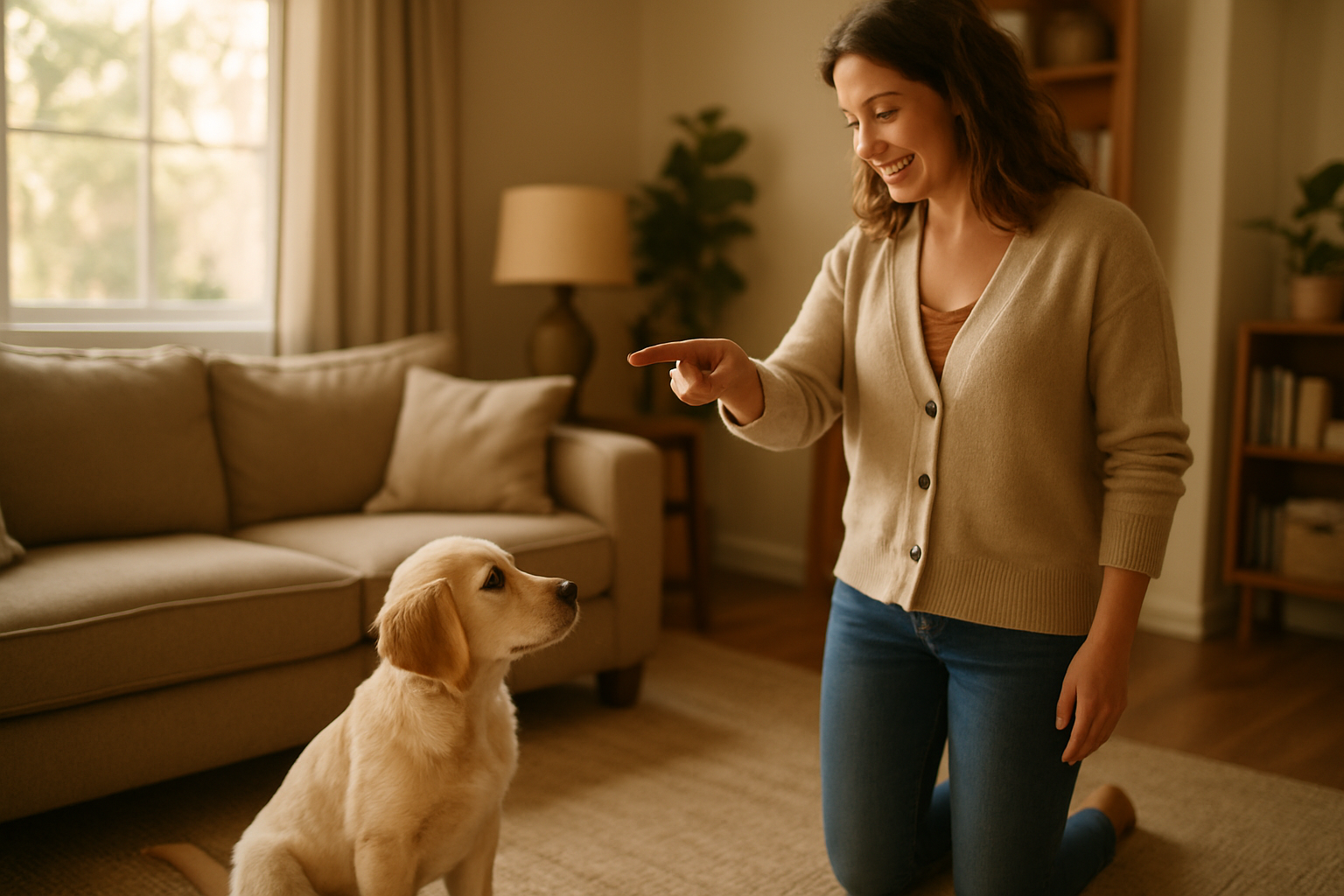
Rather than physically forcing your puppy off the furniture, use a treat to lure them down. Hold the treat below the furniture level and say your command word: "Off!" The moment their paws touch the ground, immediately reward them with the treat and enthusiastic praise. [4] This positive association teaches your puppy that following the command results in something wonderful.
Step 4: Reward the Behavior You Want
Once your puppy is off the furniture, immediately guide them to their designated spot (more on this below) and reward them again for staying there. The goal is to make being off the furniture more rewarding than being on it. [2]
Step 5: Practice Consistently
Repeat this sequence multiple times daily in short training sessions. Puppies learn through repetition, and frequent practice sessions (5-10 minutes) are more effective than occasional longer ones. Over time, your puppy will begin to anticipate the reward and respond more quickly to the command.
Creating an Irresistible Alternative: "Their Place"
Simply telling your puppy what not to do isn't enough. You need to give them something better to do instead. This is where creating "their place" becomes essential. [4]
Select a specific spot near your furniture—perhaps a quality dog bed, a cushioned mat, or even a pile of blankets. This location should be comfortable enough to rival the couch's appeal. If you're asking your puppy to stay off plush furniture, don't expect them to be thrilled about cold hardwood floors. Invest in a genuinely comfortable bed. [4]
Make this spot even more appealing by incorporating familiar scents. Place an old t-shirt or blanket with your scent on it in the bed. [1] This gives your puppy the security and comfort they were seeking on the couch, but in an appropriate location.
Once you've established this spot, begin training your puppy to use it. Use the same positive reinforcement approach: reward them enthusiastically when they choose to rest there. Over time, this designated area becomes their preferred spot—not because you forced them there, but because it's genuinely rewarding to be there.
Managing Access: Temporary Barriers and Supervision
While you're building new habits, temporary management strategies can prevent unwanted behavior and set your puppy up for success. [1]
- Baby gates and barriers: Restrict access to rooms containing furniture your puppy shouldn't access. This isn't punishment; it's prevention. The American Kennel Club recommends using safe barriers during initial training stages while always ensuring your dog's safety and comfort. [1]
- Furniture covers: Place throw blankets or pet-specific covers on furniture. These make the surface less appealing and can protect your furniture from damage. [2]
- Close supervision: Keep your puppy in sight and under control. This might mean keeping them on a leash indoors initially or having someone actively supervise them. [2] The more you can prevent the behavior from happening in the first place, the fewer times you need to correct it.
- Crate training: When you cannot supervise, crate-train your puppy or confine them to a designated area. [2] A properly introduced crate becomes a safe den where your puppy feels secure, not a punishment tool.
Addressing Jumping on People: Extending the "Off" Command
The "off" command isn't just for furniture—it's equally valuable for managing jumping behavior when your puppy greets people. Puppies jump to get attention, and any attention (even scolding) can reinforce the behavior. [2]
When your puppy jumps on someone, use the same approach: redirect them off the person using a treat, issue the "off" command, and reward them for having all four paws on the ground. Teach visitors to ignore jumping completely—no petting, talking, or eye contact—until your puppy has all four paws on the floor. Only then should they provide attention and affection. [2] This teaches your puppy that jumping makes people ignore them, but sitting or standing calmly brings the interaction they crave.
Advanced Training: Differential Reinforcement
Once your puppy understands the basics, you can accelerate their learning using differential reinforcement. This technique involves rewarding them specifically for choosing an alternative behavior to the one you want to eliminate. [2]
For example, instead of only rewarding your puppy when you ask them to get off the couch, also reward them for spontaneously choosing to lie on their bed instead. This teaches them that the alternative behavior is even more valuable than the behavior you're trying to eliminate. Over time, your puppy will naturally gravitate toward the rewarded behavior.
Handling Common Training Obstacles
The Stubborn Puppy Who Keeps Testing Limits
Some puppies are natural rule-testers. They'll push boundaries repeatedly to see if the rules have changed. Stay firm and consistent. If your puppy persistently tries to access furniture, redirect them to their designated space and reward them for staying there. [1] The key is never letting them "win" by getting on the furniture even occasionally.
Mixed Messages from Multiple Caregivers
If your puppy has been allowed on furniture at a dog sitter's house, friend's home, or with a family member who has different rules, you may need a brief retraining period. [1] Reinforce your home rules consistently and understand that your puppy isn't being defiant—they're genuinely confused about which rules apply where.
Attention-Seeking Behavior
Some puppies jump on furniture or people primarily to get your attention. [2] If this is your puppy's motivation, ensure they're getting adequate attention during appropriate times. Engage in regular play sessions on the floor, provide interactive toys, and spend quality time with them. This reduces their need to seek attention through unwanted behaviors.
Insufficient Exercise and Mental Stimulation
High-energy puppies, particularly those from working or herding breeds, may get on furniture to burn off excess energy. [2] Ensure your puppy is getting age-appropriate exercise and mental stimulation daily. A tired puppy is far less likely to engage in destructive or boundary-pushing behavior.
What NOT to Do: Avoiding Training Mistakes
As important as knowing what to do is understanding what to avoid. Certain training approaches can damage your relationship with your puppy and create behavioral problems rather than solving them.
- Never use punishment-based methods: Yelling, hitting, or using shock collars causes fear, anxiety, and can lead to aggression. [1] [4] These methods damage the bond you're trying to build and often make the behavior worse.
- Don't physically force your puppy: Roughly pulling or pushing your puppy off furniture teaches them to fear you, not to respect boundaries. Always use positive redirection instead.
- Avoid inconsistent enforcement: Never allow your puppy on furniture "just this once." Every exception resets your training progress.
- Don't assume they know better: Your puppy isn't being defiant or disrespectful. They genuinely don't understand the rule yet. Approach training with patience and understanding, not frustration. [4]
Timeline Expectations: How Long Will This Take?
The duration of training varies significantly based on your consistency and your individual puppy. Some puppies grasp the concept within days, while others need ongoing reinforcement for weeks or even months. [4] Several factors influence the timeline:
- Your puppy's age (younger puppies generally learn faster)
- Your consistency in enforcement
- The consistency of all household members
- Your puppy's individual temperament and learning style
- Previous exposure to different rules in other homes
Rather than fixating on a specific timeline, focus on progress. Are fewer furniture incidents occurring? Is your puppy spending more time on their designated spot? These indicators matter more than arbitrary deadlines.
Troubleshooting: When Training Isn't Working
If you've been consistent for several weeks and your puppy still isn't responding, consider these possibilities:
- Insufficient reward value: Your treats might not be exciting enough. Experiment with higher-value rewards like small pieces of chicken or cheese.
- Inconsistent household enforcement: Have a conversation with household members. Someone may be inadvertently rewarding the behavior.
- Underlying anxiety: Some puppies seek furniture comfort due to anxiety. If your puppy seems distressed, consult a veterinary behaviorist.
- Medical issues: Rarely, puppies jump on furniture due to pain or discomfort. Have your vet rule out any physical problems.
- Professional help needed: If training isn't progressing, a certified professional dog trainer can assess your situation and provide personalized guidance.
Key Takeaways: Your Action Plan
Training your puppy to respect furniture boundaries is absolutely achievable with the right approach. Here's what to remember:
- Understand that your puppy isn't being defiant—they're seeking comfort, security, and attention through furniture access
- Establish and maintain consistent household rules that every family member enforces
- Teach the "off" command using positive reinforcement and high-value treats
- Create an irresistible alternative with a comfortable, scent-infused designated spot
- Use temporary management strategies like barriers and supervision while training
- Extend the "off" command to jumping on people, using the same positive approach
- Avoid punishment-based methods that damage your relationship and create fear
- Be patient—progress matters more than speed
- Celebrate small wins and remain consistent even when progress feels slow
The effort you invest in teaching the "off" command now pays dividends throughout your puppy's life. You're not just solving a furniture problem; you're building a foundation of clear communication and mutual respect. Your puppy learns that you're a fair, predictable leader who rewards good choices—and that's the beginning of a truly wonderful relationship.