Why Early Grooming Training Matters
When you bring a new puppy home, grooming might not seem like an immediate priority. However, introducing your puppy to handling and grooming during their early developmental months is one of the most valuable investments you can make in their long-term wellbeing. [3] Puppies' ability to form positive associations with new experiences drops dramatically after four months of age, making the window between 8-14 weeks critical for establishing a foundation of comfort with grooming routines.
Beyond the obvious aesthetic benefits, regular grooming serves essential health functions. Proper coat maintenance prevents painful matting that can lead to skin infections and even restrict circulation. Dental care begun early protects against tooth decay, gum disease, and potentially serious heart and kidney complications. Nail maintenance prevents painful breaks and ingrown nails that can cause permanent paw damage. When introduced correctly, grooming becomes a calming activity that strengthens your bond with your puppy while allowing you to conduct regular health inspections. [3]
Setting the Foundation: Basic Handling Exercises
Before introducing grooming tools or professional services, your puppy needs to become comfortable with being touched and handled in various ways. This foundational work is non-negotiable and pays dividends throughout your puppy's life. [4]
Start with short, frequent handling sessions—ideally multiple times daily for just 2-5 minutes each. This approach is far more effective than occasional longer sessions. The key is consistency and positive reinforcement. [3]
Focus on desensitizing these specific areas:
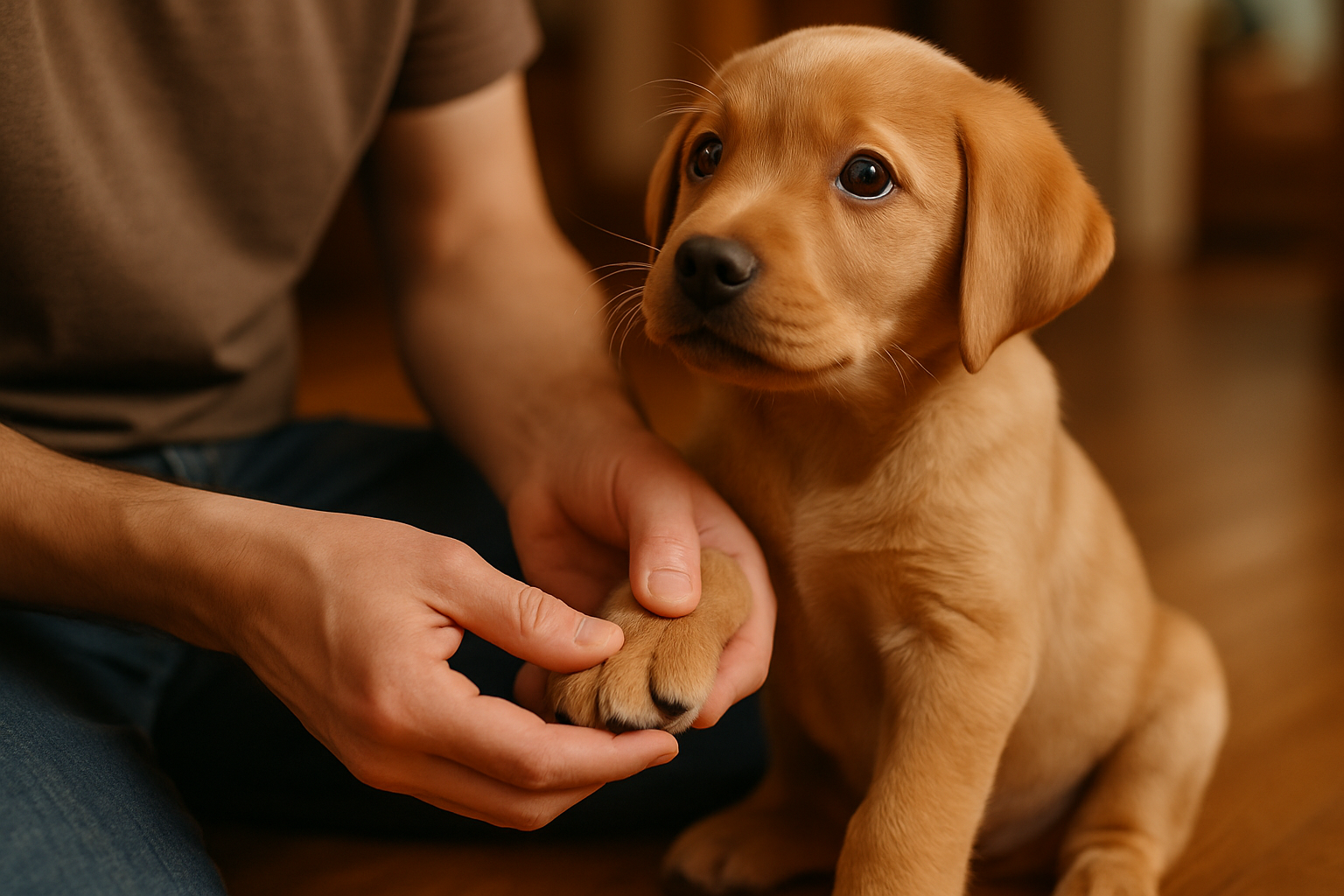
- Paws and nails: Gently hold each paw, massage between the pads, and feel around the nails. If your puppy tries to pull away or bite, calmly say "no" and pause briefly before resuming. Reward acceptance with treats and praise. [1]
- Face and muzzle: Softly stroke around their eyes, nose, and mouth. Practice the "face hold" technique groomers use by placing your hand under their chin and gently holding their fur while they sit still. Progress to 30-second holds before moving to actual grooming. [1]
- Ears: Gently touch and massage the outer ear, then gradually work toward the inner ear area. This prepares them for ear cleaning and helps prevent anxiety around ear-related handling.
- Belly and legs: Many puppies are sensitive about their underside. Regular, gentle touching in these areas builds trust and acceptance.
Timing matters significantly. [4] Schedule these sessions when your puppy is naturally calmer—either at the end of the day as they're winding down or after vigorous play when they've burned off excess energy. A tired puppy is a cooperative puppy.
Introducing Brushing and Coat Care
Once your puppy accepts basic handling, introduce brushing gradually. If your puppy resists brushing from you, they'll likely struggle with a professional groomer too. [1] Regular brushing prevents matting, removes debris, and distributes natural oils that keep skin and coat healthy.
Selecting the right brush: The appropriate brush depends on your puppy's coat type. Short-haired puppies benefit from brushes with short bristles, while long-haired breeds need longer bristles to penetrate the coat effectively. Always brush in the direction the fur grows, using firm but gentle strokes. Finish with a shedding blade to collect dead hair. [1]
Making brushing enjoyable: Start with just a few gentle strokes along your puppy's back. You might accomplish only 3-4 brush strokes in the first session—that's perfectly acceptable. The goal is building positive associations, not completing a full grooming. Reward calm behavior with treats and praise. Over multiple sessions spanning weeks, gradually increase the duration and coverage area. [4]
For small breeds, you can hold your puppy in your lap during brushing. Larger puppies do better sitting or lying on the ground in front of you. Some puppies benefit from a second person providing treats and encouragement while you brush. [4]
Bathing: Creating Positive Water Associations
Many puppies develop water anxiety if their first bath is a stressful experience. Prevent this by building positive associations with water and bathing equipment well before their first actual bath. [1]
Pre-bath preparation: Start by making the bathing environment fun and non-threatening. Place treats in an empty bathtub with just a small amount of water. Let your puppy explore, sniff, and play in this low-pressure setting. This removes the shock factor from later baths. [5]
When bathing your puppy: Use only puppy-specific shampoo with natural fragrances—never human shampoo, which disrupts your puppy's protective skin barrier and leaves them vulnerable to infections. [1] If your puppy has dry skin, choose a moisturizing formula designed for puppies. [1]
Keep the first actual bath brief and gentle. Use lukewarm water, avoid spraying directly in the face, and maintain a calm, reassuring demeanor. Praise sitting still and reward brave behavior. If your puppy becomes overwhelmed, pause and resume later. End on a positive note even if you didn't complete a full wash. [3]
Desensitizing to Grooming Equipment Sounds
Professional grooming equipment—particularly blow dryers and clippers—produces sounds that can startle unprepared puppies. Proactive desensitization prevents fear-based reactions during professional grooming. [1]
The treat-and-dryer technique: Ask your puppy to sit and place treats in front of them. Turn on a household hair dryer at low speed and use it to gently blow the treats toward your puppy. Reward calm behavior and positive associations. Gradually increase the dryer's proximity and intensity over multiple sessions. Your puppy will begin associating the "scary noise" with something enjoyable. [1]
Similarly, introduce the sound of electric clippers or trimmers at a distance, gradually bringing the sound closer as your puppy demonstrates comfort. Never force proximity—let your puppy set the pace.
Dental Care: Starting Early Prevents Lifetime Problems
Dental disease is one of the most common health issues in dogs, yet it's highly preventable with consistent care beginning in puppyhood. Establishing tooth brushing routines early makes the process easier and normalizes mouth handling for future veterinary care. [3]
Step-by-step introduction:
- Begin by letting your puppy sniff and lick dog toothpaste (never human toothpaste, which contains toxic artificial sweeteners). [1] Choose a flavored variety—puppies are more enthusiastic about toothpaste that tastes like treats. [5]
- Place a small amount of toothpaste on your finger and let your puppy lick it off while you gently rub it on their teeth. [1]
- Introduce a rubber finger brush before transitioning to a traditional toothbrush. Use your finger to massage their gums, building comfort with mouth contact. [5]
- Progress to actual brushing, starting with just one or two teeth. You might accomplish only a few brush strokes in early sessions. [4]
- If your puppy bites or resists, pause and resume later. Never force the process.
This process typically requires several weeks of consistent practice. [4] Maintain a calm demeanor—your relaxed energy signals to your puppy that this is a normal, non-threatening activity. [4] Brush in short sessions multiple times weekly, always ending on a positive note.
Mastering Essential Commands for Grooming
Professional groomers rely on commands like "sit" and "stay" to position puppies safely and keep them calm during procedures. Ensuring your puppy has mastered these commands before their first professional grooming makes the experience smoother for everyone. [1]
Practice these commands during calm periods, using treats as motivation. For "sit," show your puppy a treat and lift it over their head—they'll naturally sit to follow it. Praise enthusiastically when they sit. For "stay," ask your puppy to sit or stand, say "stay," and reward them for remaining in position. Start with very short durations (5-10 seconds) and gradually increase. [1]
Practice these commands in various settings and positions, as groomers may need to position your puppy standing, sitting, or lying down depending on the grooming task.
Preparing for Professional Grooming
Once your puppy has received appropriate vaccinations (typically by 12-14 weeks), professional grooming becomes an excellent socialization opportunity. [3] Even if you plan to handle grooming at home, involving a professional groomer helps your puppy become comfortable with strangers handling them—valuable experience for future vet visits and emergencies. [3]
Selecting the right groomer: Research thoroughly before choosing a groomer. Read reviews, ask for recommendations from your veterinarian or trusted friends, and visit the facility in person. [3] Ensure the groomer maintains vaccination requirements for rabies, DHPP, and kennel cough—this demonstrates commitment to canine health. [3] Don't hesitate to ask about their experience with puppies and their approach to anxious or difficult dogs.
Communicating with your groomer: Before the appointment, inform your groomer of anything that makes your puppy nervous. Ask specifically how they approach first-time grooming—the best groomers view early appointments as training sessions rather than complete haircuts. [2] Professional groomers understand that puppies need multiple short visits to acclimate to the environment, sounds, and handling before expecting a full groom. [2]
First appointment strategy: Don't make a big production of the appointment. Avoid lengthy goodbyes or excessive excitement when picking your puppy up. When everyone treats grooming as a routine, boring activity rather than a stressful event, your puppy will mirror that calm attitude. [3] After the appointment, ask your groomer for feedback and continue groundwork at home based on their observations.
Troubleshooting Common Challenges
Your puppy bites or nips during handling: This is normal puppy behavior. Firmly say "no," pause the activity briefly, and resume once they've calmed. Never punish harshly—you want to teach that biting stops the fun activity, not create fear. [1]
Your puppy is overly wiggly and won't stay still: Ensure they're at an appropriate energy level before grooming sessions. A tired puppy is far more cooperative. [4] Consider enlisting a partner to provide treats and encouragement while you groom.
Your puppy shows genuine fear responses: Go slower. Break tasks into even smaller steps. Spend more time on desensitization before attempting actual grooming. Fear-based reactions require patience and shouldn't be rushed. Consult a professional trainer if anxiety seems severe.
Creating a Sustainable Grooming Routine
Consistency is the secret to grooming success. [2] Establish a grooming schedule appropriate for your puppy's coat type and stick to it. Long-haired breeds typically need professional grooming every 6-8 weeks, while short-haired puppies may need grooming less frequently but benefit from regular home maintenance. [2]
Make grooming a positive bonding experience rather than a chore. Use it as an opportunity to inspect your puppy's skin, ears, and teeth for any concerns. This regular contact allows you to catch potential health issues early—groomers frequently discover ear infections, parasites, or skin abnormalities that warrant veterinary attention. [3]
Key Takeaways for Success
- Begin grooming introduction between 8-14 weeks old, before the critical window for forming positive associations closes. [3]
- Start with basic handling exercises focused on paws, face, ears, and sensitive areas before introducing grooming tools.
- Keep early sessions short (2-5 minutes), frequent, and heavily reward-focused.
- Choose appropriate grooming tools and products designed specifically for puppies.
- Desensitize your puppy to grooming equipment sounds and sensations gradually.
- Establish dental care routines early—this prevents lifetime health issues and normalizes mouth handling.
- Teach commands like "sit" and "stay" before professional grooming appointments.
- Select a groomer who views early appointments as training sessions and communicates openly about your puppy's progress.
- Maintain a calm, matter-of-fact attitude about grooming to prevent your puppy from developing anxiety.
- Consistency matters more than perfection—regular, gentle practice builds lasting comfort with handling and grooming.
When approached thoughtfully and patiently, grooming training becomes one of the most rewarding aspects of puppy parenthood. You're not just maintaining your puppy's physical health and appearance—you're building their confidence, strengthening your bond, and setting the foundation for a lifetime of positive experiences with handling, health care, and professional services.
Sources & References
- https://www.barkbus.com/blog/tips-to-prepare-your-puppy-for-professional-grooming
- https://www.moego.pet/blog/puppy-grooming
- https://www.petmd.com/dog/general-health/grooming-tips-new-puppy
- https://www.thepuppyacademy.com/blog/2021/6/7/puppyhood-made-easy-for-new-owners-grooming-basics-for-puppies
- https://zigzag.dog/en-us/blog/puppy-health/grooming/puppy-grooming-tips/