Why Early Puppy Grooming Matters More Than You Think
When you bring home your new puppy, grooming might feel like something you can tackle later. But here's what many new dog owners don't realize: puppies have exceptional memories, and their first grooming experiences shape how they'll respond to grooming for the next 10-15 years of their lives. [1] Starting early isn't just convenient—it's foundational to raising a dog who tolerates (and might even enjoy) grooming sessions.
Beyond behavior, regular grooming directly impacts your puppy's health. Proper grooming prevents painful matting, protects developing paws, maintains dental health, and allows you to spot potential health issues early. [4] Think of grooming as preventative healthcare that also happens to keep your pup looking fantastic.
Understanding Your Puppy's Coat Type
Not all puppies are created equal when it comes to grooming needs. Before you start any grooming routine, identify your puppy's coat type, as this determines your approach, tools, and frequency. [2]
- Short-haired coats: Require less frequent grooming but still benefit from regular brushing to remove dead hair and distribute natural oils
- Long-haired coats: Need daily or every-other-day brushing to prevent tangles and mats that can lead to skin infections
- Curly or wire-haired coats: Often require professional grooming every 4-8 weeks to maintain proper texture and prevent matting
- Double coats: Need consistent brushing to manage shedding and maintain skin health
Many breeders of long-haired puppies begin grooming exposure early, so ask your breeder what they've already introduced. [3] This head start means your puppy is already comfortable with handling and basic grooming procedures.
The Foundation: Building Comfort With Touch
Before you ever introduce water, clippers, or nail trimmers, your puppy needs to become comfortable with being handled. This is the most crucial step and should begin the moment your puppy arrives home. [4]
Start with these gentle handling exercises:
- Softly touch and massage their fur, working across their entire body
- Gently handle their paws, spreading their toes and touching between the pads
- Carefully touch around their ears, eyes, and face
- Open their mouth gently and touch their teeth and gums
- Run your fingers along their legs and belly
Keep these sessions short—just 2-5 minutes—and do them multiple times daily. [4] Pair every touch with praise and high-value treats so your puppy associates handling with positive outcomes. This foundational work prevents anxiety and resistance during actual grooming sessions.
Introducing Water and Bathing
Many puppies arrive home nervous about water. Rather than waiting until they're visibly dirty to introduce bathing, create positive associations early. [3]
Pre-bath desensitization:
- Place your puppy in an empty bathtub with treats and toys to build comfort with the space
- Gradually introduce small amounts of lukewarm water, starting with just dipping their paws
- Let your puppy sniff and explore the water without pressure
- Allow them to play and investigate at their own pace
Once your puppy is comfortable with the bathing environment, introduce the shampoo scent by letting them sniff it from your fingers or placing a small amount on their paw. [1] This removes the shock of unfamiliar smells during actual bathing.
Your first bath at home:
When you're ready for a full bath, use a mild, puppy-specific shampoo formulated for their delicate skin. [2] Use lukewarm water, avoid getting water in their eyes and ears, and maintain a non-slip surface to prevent accidents. [2] Keep the experience brief and positive—you're building comfort, not achieving perfection.
Bathing frequency depends on your puppy's lifestyle and skin sensitivity. Generally, once monthly is appropriate for most puppies, though puppies with sensitive skin may need longer intervals between baths. [1] Always consult your veterinarian about your specific puppy's needs.
Brushing: The Daily Grooming Essential
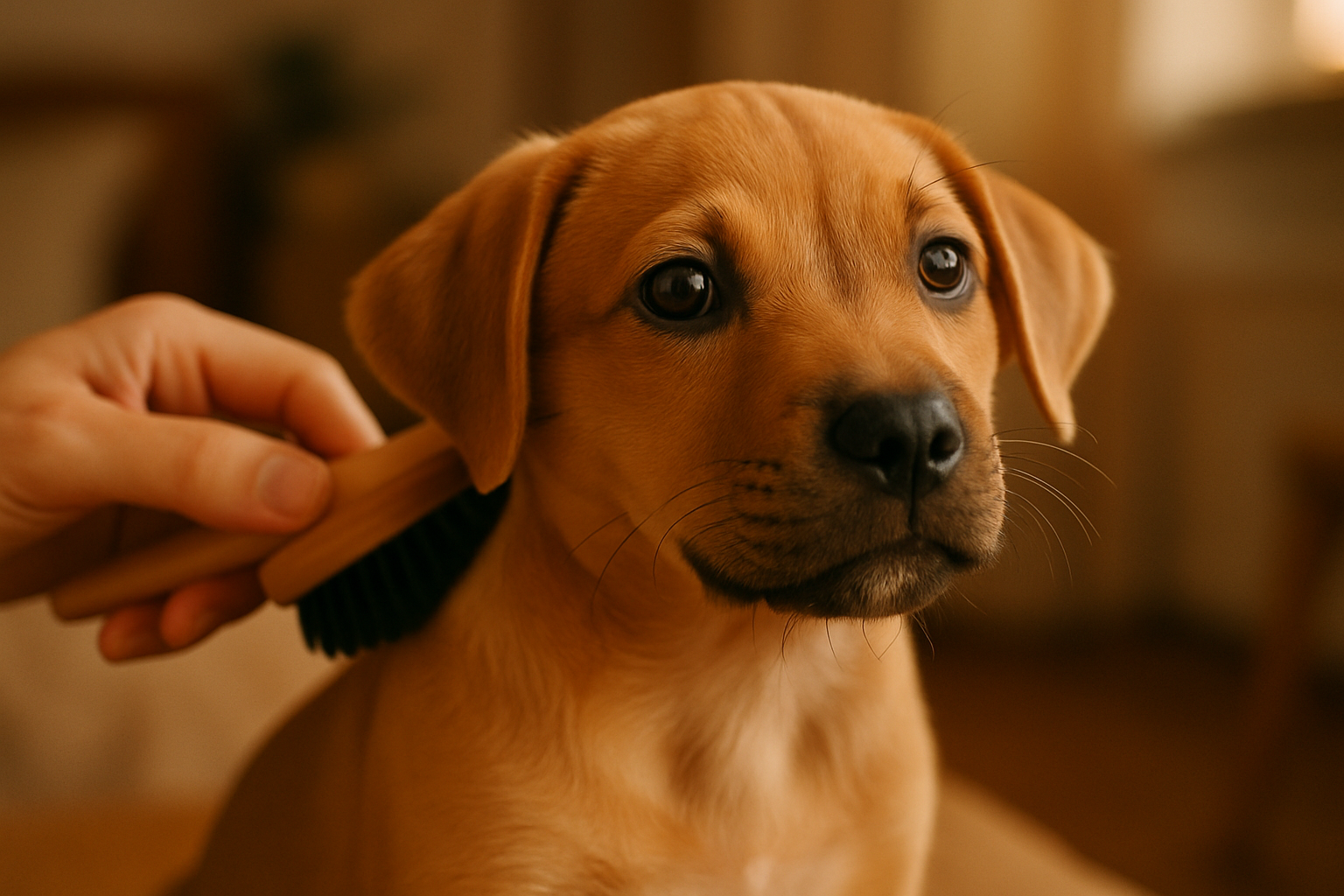
Brushing is perhaps the most important grooming habit to establish early. Beyond preventing mats and tangles, brushing distributes natural oils, stimulates blood flow, and provides bonding time with your puppy. [3]
Brushing frequency by coat type:
- Long-haired puppies: Daily brushing prevents mats and tangles
- Short-haired puppies: Once weekly is typically sufficient
- Double-coated puppies: 2-3 times weekly to manage shedding
Start by using a wide-toothed comb on long-haired puppies to gently remove tangles, then follow with a slicker brush. [2] For short-haired breeds, a soft brush or mitt works well. Keep sessions short and make it playful—your goal is creating positive associations, not achieving a show-ready coat.
Teach your puppy to enjoy brushing by pairing it with treats and praise. Many puppies actually come to love the massaging sensation once they're accustomed to it.
Nail Care: Starting Safely
Puppy nails grow quickly and can become sharp and uncomfortable. However, nail trimming requires care and shouldn't be rushed. [3]
Building comfort with nail handling:
- Week 1-2: Simply touch and hold your puppy's paws during calm moments
- Week 3-4: Gently manipulate each toe and spread the pads
- Week 5-6: Let your puppy see and hear the nail clippers (without using them)
- Week 7+: Attempt trimming just the very tip of one nail
Puppies require more frequent nail trims than adult dogs, and growth rates vary by breed. [1] When you do trim, use dog-specific clippers and trim only a small amount to avoid cutting into the quick, which causes bleeding and pain. [1] If you're uncertain, have a professional groomer or veterinarian handle this task—it's worth the investment to ensure it's done correctly.
Professional groomers have the training and tools to handle nail trimming safely and efficiently, which is why many owners opt for this service rather than attempting it at home.
Dental Care: A Grooming Essential Often Overlooked
Introducing tooth brushing early sets your puppy up for excellent oral health throughout their life. [3] Starting young means your puppy becomes comfortable with mouth handling, making dental care easier as they mature.
Your tooth brushing roadmap:
- Let your puppy sniff and lick dog-safe toothpaste (meaty flavors are popular)
- Use a finger toothbrush initially for comfort and control
- Gently touch their teeth and gums with the toothbrush
- Brush a few teeth at a time before working toward a full-mouth brushing
- Aim for daily brushing, though 3-4 times weekly provides significant benefits
If your puppy resists mouth handling, spend extra time on the handling exercises mentioned earlier. [3] Dental health directly impacts overall health, potentially preventing serious issues like heart and kidney disease later in life. [4]
Ear Cleaning and Inspection
Puppies with floppy ears are particularly prone to ear infections, making regular ear cleaning crucial. [2] Even puppies with upright ears benefit from routine inspection and cleaning.
Use a vet-approved ear-cleaning solution and cotton balls to gently remove dirt or wax buildup. [2] Make ear cleaning part of your regular grooming routine rather than something you only do when problems arise. Clean ears should be fresh-smelling; any odor or discharge warrants a veterinary visit.
Teach your puppy to accept ear handling by making it part of your daily touch exercises. This prevents resistance when you need to clean or inspect their ears.
When to Visit a Professional Groomer
While you can handle many grooming tasks at home, professional groomers play an important role in your puppy's development. Aim for your puppy's first professional grooming appointment between 12-14 weeks of age, assuming they're up to date with vaccinations. [4]
Why 12-14 weeks matters: Puppies' ability to form positive associations with new experiences decreases dramatically after four months of age. [4] Getting them to a groomer before this window closes helps ensure they view grooming as normal and non-threatening.
Finding the right groomer:
- Ask your veterinarian for recommendations
- Read online reviews and ask friends for referrals
- Visit facilities before booking to assess cleanliness and professionalism
- Confirm they have vaccination requirements (rabies, DHPP, kennel cough) [4]
- Ask about their experience with breed-specific cuts if applicable
- Inquire whether they allow you to observe or visit between appointments
Even if you're comfortable handling grooming at home, involving a professional groomer helps your puppy become accustomed to different people and environments. This socialization prevents anxiety if they ever need professional grooming as an adult.
Creating Positive Associations: The Psychology of Grooming
Your attitude directly influences your puppy's response to grooming. If you approach grooming with anxiety or stress, your puppy will sense it and develop similar feelings. [4]
Pro tips for positive associations:
- Keep your energy calm and matter-of-fact about grooming
- Avoid long goodbyes before grooming appointments
- Don't make a big deal when picking your puppy up afterward
- Use high-value treats and enthusiastic praise throughout grooming
- Keep initial sessions short to prevent overwhelm
- Gradually introduce sounds like clippers and dryers before using them [2]
- Allow your puppy to explore grooming tools and spaces at their own pace
Grooming is a social activity in the animal world, and when introduced properly, it becomes a calming, bonding experience for both you and your puppy. [4]
Special Considerations for Different Coat Types
Long-haired breeds like Maltese, Yorkies, and some Spaniels, as well as curly-haired breeds like Poodles and Doodles, may need professional grooming earlier than 12-14 weeks to prevent their hair from becoming too long and matted. [4] Talk to your breeder about the ideal grooming timeline for your specific breed.
Short-haired breeds still benefit from professional grooming exposure even if their coat maintenance is simpler. This ensures they're comfortable with the grooming environment and tools.
Your Grooming Timeline: Month by Month
Weeks 1-4 (Home): Focus on handling exercises and touch desensitization. Introduce water play in the bathtub without bathing.
Weeks 5-8 (Home): Begin gentle brushing, introduce shampoo scent, start tooth brushing exercises, and begin nail handling.
Weeks 9-12 (Home + Professional): Continue all home grooming, visit a groomer to observe and familiarize your puppy with the environment.
Week 12-14 (Professional): Schedule your puppy's first full professional grooming appointment.
Week 16+ (Ongoing): Maintain regular home grooming and professional appointments based on your puppy's coat type and breed needs.
Key Takeaways: Your Grooming Action Plan
Starting early with grooming isn't an extra task—it's an investment in your puppy's lifelong health and your sanity during future grooming appointments. Here's what to do immediately:
- Begin daily handling exercises today, focusing on paws, ears, mouth, and face
- Identify your puppy's coat type and research breed-specific grooming needs
- Introduce water play in a positive, pressure-free way
- Start a brushing routine appropriate for your puppy's coat
- Begin tooth brushing with dog-safe paste
- Find a reputable professional groomer before your puppy's 12-week mark
- Schedule that first professional appointment between 12-14 weeks
- Maintain consistency with home grooming between professional appointments
Remember: grooming is grooming. The goal isn't perfection during these early months—it's building your puppy's confidence and comfort. A well-socialized puppy who enjoys grooming is a gift you'll appreciate for years to come.