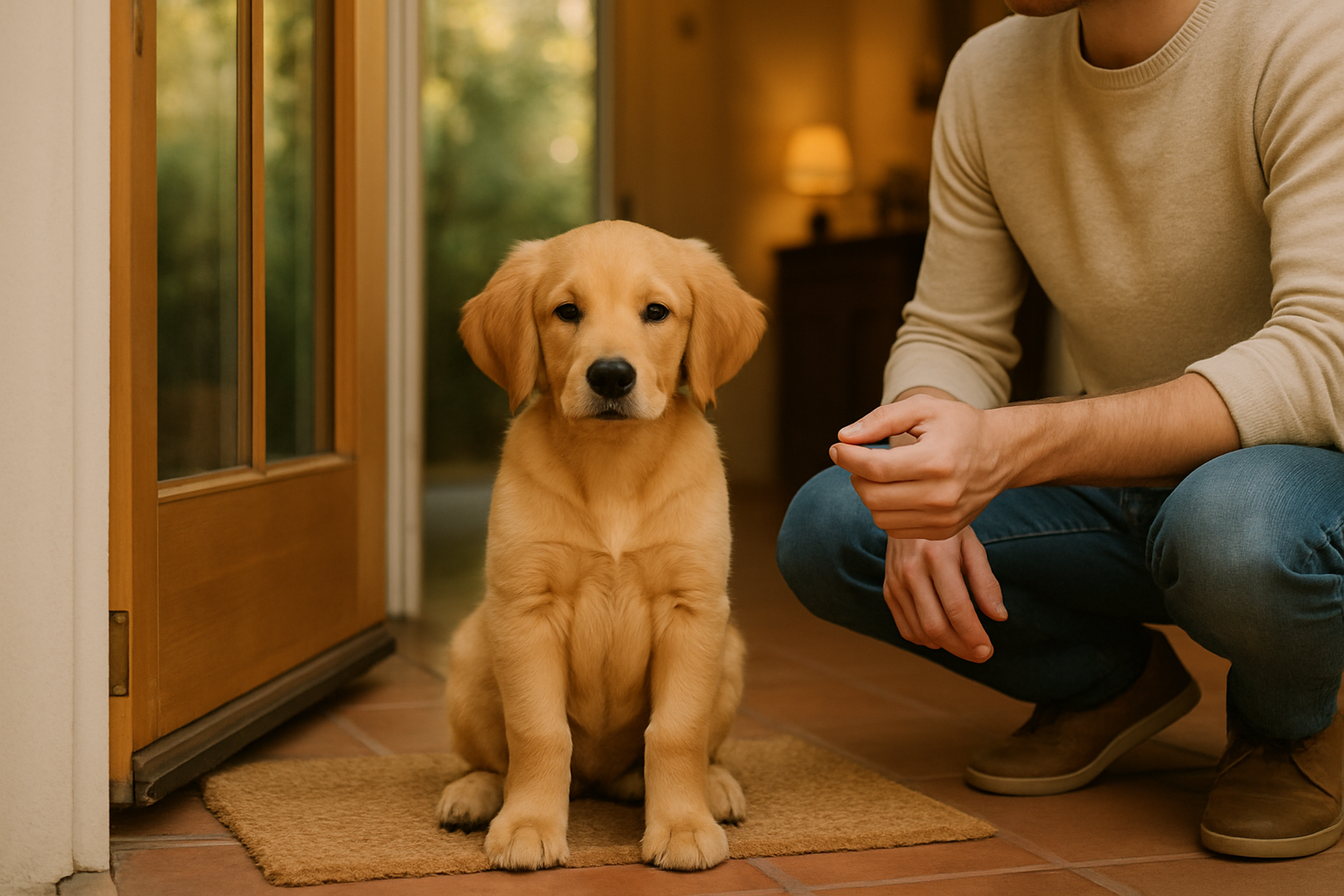
Why Teaching Door Manners Matters More Than You Think
Every dog owner has experienced that heart-stopping moment when a puppy lunges toward an open door. Whether it's the front entrance, a car door, or an elevator, an untrained puppy's impulse to dash through can create dangerous situations. Beyond safety concerns, a puppy that barrels through doorways creates practical challenges: guests getting knocked over, escaped dogs requiring neighborhood searches, and the constant stress of managing your pup's enthusiasm.
The good news? Teaching your puppy to wait at doors is entirely achievable using positive reinforcement methods. This skill doesn't require dominance-based training or confrontation. Instead, it leverages what your puppy naturally wants—rewards, freedom, and your approval—to build reliable door etiquette. [1]
Understanding the Psychology Behind Door Excitement
Before diving into training, it's worth understanding why puppies go wild at doorways. Doors represent opportunity: outdoor adventures, new smells, play, and freedom. For your puppy, an open door is essentially a flashing neon sign saying "adventure awaits!" This isn't misbehavior—it's enthusiasm.
The key to successful training is redirecting this natural excitement into a behavior you want: waiting calmly. Rather than punishing the impulse to move through the door, you'll teach your puppy that waiting creates even better outcomes. This psychological shift makes training faster and more reliable than traditional methods.
The Foundation: Choosing Your Training Approach
Reward-based training relies on three core components: clear marking, valuable reinforcement, and gradual progression. [2] Let's break down each element:
- Marking System: You'll use either a clicker or a verbal marker like "yes" to precisely identify the moment your puppy performs the desired behavior. This creates a clear communication bridge between action and reward.
- Reinforcement Value: Different puppies are motivated by different rewards. Some go crazy for high-value treats, while others prefer play or access to the outdoors. Identify what truly excites your individual puppy.
- Incremental Progression: You'll start with minimal door opening and gradually increase difficulty as your puppy succeeds. This prevents frustration and builds confidence.
Step-by-Step Training Protocol
Step 1: Start Small and Choose Your Training Location
Begin at a door that doesn't lead to highly tempting areas. An interior bathroom door works perfectly for initial training. If you're training at an exterior door, use a leash held loosely—think of it as a safety net, not a control device. [1] The goal is to prevent accidents while your puppy learns, not to physically force compliance.
Pro tip: Avoid training at doors that open to squirrel-filled yards, busy streets, or the kitchen during dinner prep. These high-distraction environments will make learning exponentially harder.
Step 2: The Initial Door Touch
Begin with the absolute smallest increment of door movement. Simply touch the door handle or crack it open just an inch. Here's the sequence:
- Approach the door naturally (don't announce your intentions to your puppy)
- Touch or slightly open the door
- The moment your puppy doesn't immediately lunge forward, mark the behavior with your clicker or "yes"
- Immediately deliver a high-value treat behind your puppy (away from the door)
- Close the door
- Wait for your puppy to finish the treat and reorient
- Repeat 5-10 times
This teaches your puppy a fundamental association: door touching = treat delivery, but only if they remain calm. [3]
Step 3: Recognize and Mark Desirable Behaviors
As you repeat this exercise, your puppy will begin offering specific behaviors that indicate calmness. Watch for:
- Weight shifting backward
- Planting front feet firmly
- Looking away from the door
- Making eye contact with you
- Sitting or lying down voluntarily
The moment you see any of these behaviors, mark it immediately. Be as specific as possible with your marking. Instead of just clicking anytime your puppy is near the door, mark the exact behavior you want to strengthen. This precision accelerates learning significantly. [1]
Step 4: Gradually Increase Door Opening
Once your puppy consistently offers calm behaviors at minimal door opening, you're ready to progress. Increase the door opening by just a few inches. Repeat the marking and treating process multiple times at this new level before advancing further.
The progression might look like:
- Week 1: Door cracked 1-2 inches
- Week 2: Door opened 4-6 inches
- Week 3: Door opened 12 inches
- Week 4: Door fully open
Move at your puppy's pace. Some puppies progress faster; others need more repetitions. There's no prize for speed—consistency matters far more than rushing. [2]
Step 5: Introduce Your Verbal Cue
Once your puppy reliably waits at a fully open door, add a verbal cue like "wait," "hold up," or "pause." Say the cue just before opening the door, then proceed with your normal routine. After several repetitions, your puppy will begin associating the word with the behavior.
The beauty of this approach is that the door opening itself becomes a cue—your puppy will begin waiting automatically. The verbal cue simply gives you flexibility to use this command in other contexts (like preventing your puppy from rushing toward dropped food or a street curb).
Step 6: Add a Release Cue
Now teach your puppy that waiting is rewarded not just with treats, but with access to what's beyond the door. Choose a release word like "okay," "free," or "go." Here's how:
- Your puppy waits at the open door
- Say your release cue enthusiastically
- Immediately prompt your puppy forward (with a treat, toy, or gentle guidance)
- Reward the forward movement with treats, play, or access to the outdoor environment
This creates a powerful reinforcement loop: waiting earns the release cue, and the release cue earns access to exciting things. The release itself becomes rewarding, which reinforces the wait. [1]
Troubleshooting Common Challenges
My Puppy Keeps Trying to Push Through
If your puppy bolts forward before you've given the release cue, don't click or treat. Simply close the door calmly and reset. Invite your puppy back to try again. If this happens repeatedly, you've likely progressed too quickly. Return to a smaller door opening and use higher-value treats. The goal is setting your puppy up for success, not testing their limits.
Treats Don't Work at the Door
Some puppies find the opportunity to go through the door more rewarding than any treat you can offer. This is actually excellent news! Use the door access itself as the primary reinforcement. The moment your puppy waits appropriately, say your release cue and let them through. You can still use treats for initial training, but transition to using door access as the main reward. [1]
My Puppy Shows No Interest in Training
Low motivation typically means either the treats aren't valuable enough or your puppy is too distracted. Try training during calm times when your puppy isn't overstimulated. Experiment with different treat types—some puppies go wild for cheese or chicken that they ignore standard training treats. Also ensure you're training for short sessions (5-10 minutes) before your puppy's attention wanes.
Proofing Your Training: Making It Stick
Once your puppy reliably waits at your training door, it's time to generalize the behavior to other contexts. Proofing means practicing in different locations with various distractions and different people as handlers. [2]
Increase Duration
Gradually extend the time your puppy waits before you give the release cue. Start with 2-3 seconds, then progress to 10 seconds, then 30 seconds. Build slowly so your puppy experiences consistent success.
Add Distractions
Practice with toys visible, knocking on walls softly, or having family members move around. Introduce one distraction at a time. When you add a new challenge, reduce the door opening slightly and shorten the wait duration. Then gradually increase difficulty again.
Practice Different Doors and Thresholds
Train at your front door, back door, car door, and even thresholds without actual doors. Each location presents slightly different challenges and contexts.
Involve Different Family Members
Have everyone in your household practice the same protocol. Consistency across handlers prevents confusion and accelerates learning. [2]
Special Considerations for Different Scenarios
Car Doors
Car door training follows the same principles but has unique safety implications. Practice with your car parked in your driveway or a safe location. Have your puppy wait before entering and exiting. This prevents bolting into traffic and keeps your puppy safe during car rides.
Elevator Doors
Urban puppies need special elevator training. Rather than standing at the elevator, position yourself 10 feet away. Feed your puppy treats as the elevator door opens and closes. This teaches your puppy that elevator doors aren't an invitation to rush forward. [1]
Crate Doors
Apply the same waiting principles to crate training. Open the crate door slightly and reward your puppy for not immediately exiting. Gradually increase the opening width and duration before releasing your puppy. [2]
Timeline: What to Expect
Most puppies show noticeable improvement within 1-2 weeks of consistent training. However, full reliability—especially with distractions—typically takes 4-6 weeks of regular practice. Older dogs may progress similarly or slightly faster since they have better impulse control. [4]
Remember that puppies regress during developmental phases or when stressed. This is normal. Simply return to your training protocol and rebuild the behavior. Consistency matters more than perfection.
Why This Method Works Better Than Alternatives
Traditional methods often relied on physical corrections or dominance-based approaches. These methods created fear, confusion, and unpredictable behavior. Reward-based training works because:
- It builds your puppy's confidence rather than eroding it
- It creates clear communication about what you want (not just what you don't want)
- It strengthens your bond through positive association
- It produces faster, more reliable results
- It's humane and enjoyable for both you and your puppy
Final Thoughts: The Bigger Picture
Teaching your puppy to wait at doors is about far more than preventing escape attempts. It's teaching impulse control, building confidence, and establishing a communication system based on trust and positive association. These foundational skills transfer to other training goals: loose-leash walking, recall, and general obedience all benefit from the patience and focus your puppy develops through door training.
Start today with your puppy and a simple interior door. Be patient, stay consistent, and celebrate small victories. Within weeks, you'll have a puppy who calmly waits at thresholds—a transformation that makes daily life dramatically easier and your puppy significantly safer.
Sources & References
- https://kikiyablondogtraining.com/kiki-blog/2018/1/7/teach-your-dog-to-wait-at-doors
- https://bestfriends.org/pet-care-resources/how-teach-dog-wait-door
- https://petexpertise.com/blogs/all/how-to-train-a-dog-to-wait-before-going-out-the-door
- https://www.halepetdoor.com/blog/doggie-door-training-how-to-get-your-dog-to-use-it/