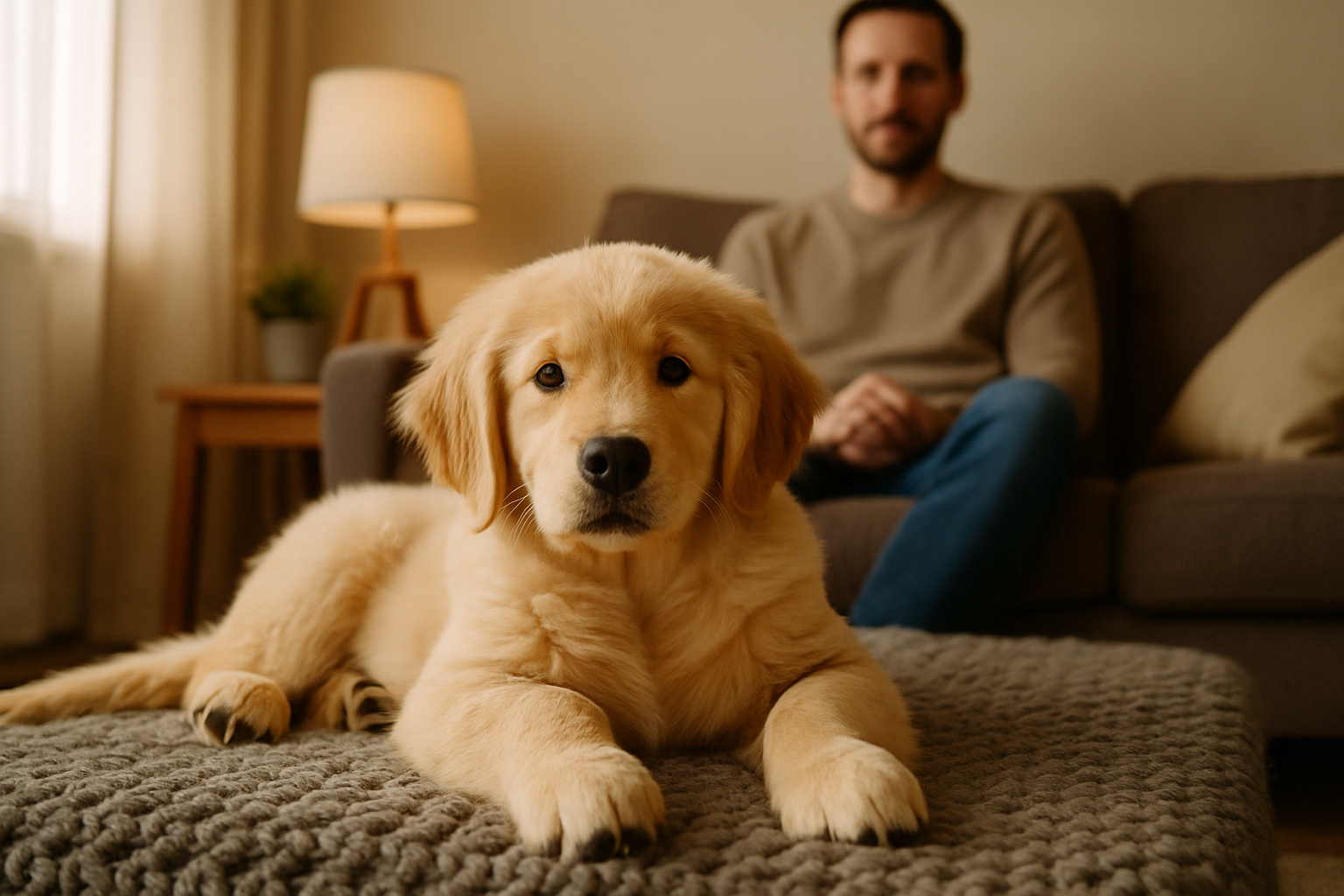
Why Mat Training Is Essential for Puppies
Puppies are bundles of energy, curiosity, and impulse control challenges. When your pup encounters new places, unfamiliar faces, or exciting distractions, their natural response is often jumping, barking, pulling, or complete chaos. This is where mat training becomes your secret weapon. [1]
Unlike generic "stay" commands, mat training creates a specific, designated space where your puppy learns to associate relaxation with a tangible object. This isn't just about obedience—it's about conditioning your puppy's emotional state. When trained correctly, your puppy will actually look forward to settling on their mat, similar to how a child finds comfort in a security blanket. [2]
The benefits extend far beyond keeping your puppy calm. Mat training teaches valuable life skills including self-control, focus, and the ability to remain composed in stimulating environments. Whether you're dining at outdoor restaurants, visiting friends, traveling on public transit, or managing vet visits, a well-trained mat behavior becomes invaluable. [2]
Selecting the Right Mat for Success
Before you begin training, choosing the appropriate mat significantly impacts your puppy's learning speed and enthusiasm. The mat you select during initial training will become the foundation for all future mat work. [2]
Consider these essential mat characteristics:
- Color and Visibility: Select a mat that contrasts with your flooring. If your mat blends into the carpet or tile, your puppy may struggle to identify the specific training area. A distinctly colored mat helps your puppy's brain clearly register where the "magic" happens. [2]
- Thickness and Comfort: Thicker mats provide more cushioning, which many puppies prefer. Some puppies show resistance to thinner materials like pillowcases, so don't hesitate to experiment until you find what your individual pup enjoys. [5]
- Non-Slip Backing: This is non-negotiable. As your puppy becomes enthusiastic about the mat, they'll throw themselves onto it with energy. A mat that slides across the floor can startle your puppy and create negative associations. Bath mats with rubber backing are excellent choices. [2]
- Appropriate Size: Your mat should be large enough for your puppy to stretch out in a comfortable down position, but not so large that it becomes confusing. [5]
- Keep Their Bed Separate: Don't use your puppy's actual sleeping bed as their training mat. Their bed is a place they can choose to visit anytime, while the training mat is a specific location they go to on cue and remain until released. This distinction is crucial for clear communication. [5]
Understanding Key Training Concepts
Before diving into the step-by-step process, familiarize yourself with terminology that will guide your training:
- Marker Word or Clicker: A distinct sound (clicking device or verbal word like "yes" or "good") that immediately tells your puppy they've performed the correct behavior and a reward is coming. The marker must be consistent in tone and timing. [1]
- Reset: Tossing a treat away from the mat to give your puppy a break between repetitions and signal the start of the next training cycle. [1]
- Cue: The signal you give your puppy to perform a behavior—this can be verbal ("mat") or physical (pointing gesture). [1]
- Release Signal: A specific word or hand gesture that tells your puppy their mat session is complete and they're free to leave. Examples include "all done," "free," or a hand-drying motion. [1]
- Generalization: The ability for your puppy to apply the mat behavior across different locations and situations—from your living room to crowded cafes to parks with children playing. [1]
- Fluency: When your puppy performs the behavior smoothly, correctly, and without hesitation. [1]
Phase 1: Building Mat Interest and Targeting
The foundation of successful mat training is creating genuine interest and positive associations. This phase establishes that the mat is the most rewarding place in your puppy's world. [1]
Step 1: Create Irresistible Mat Appeal
While your puppy is watching, dramatically lay the mat on the floor and sprinkle 5 high-value treats directly onto it. Let your puppy investigate and consume the treats naturally. Your enthusiasm and the immediate reward create positive neural pathways. [1]
Once your puppy finishes the treats, show them a treat from your hand to redirect their attention away from the mat, then toss it a short distance away (this is your first "reset"). While your puppy chases and eats that treat, reload the mat with another round of 5 treats. Repeat this cycle 3-4 times in your first session. [1]
Step 2: Introduce the Concept of Earning
After a few successful rounds of finding treats on the mat, use your reset to send your puppy away one more time—but this time, don't reload the mat. As your puppy returns and approaches the empty mat, mark ("yes!" or click) the moment they show interest and immediately place 2-3 treats on the mat as their reward. [1]
This is the critical shift: your puppy learns that approaching the mat (even when empty) triggers the appearance of treats. Repeat this sequence several times, marking and rewarding each approach to the empty mat. [1]
Step 3: Test Understanding
End your first training session by tossing a treat for your puppy and putting the mat away. In your next session, place the mat on the floor without any pre-loaded treats. Does your puppy go to check out the mat? If yes, you've successfully built mat interest. If no, repeat Phase 1 for another session or two. [1]
Phase 2: Building Duration Through Gradual Progression
Once your puppy reliably approaches the mat, you're ready to build duration—the ability to stay on the mat for increasingly longer periods. This phase requires patience and strategic reward timing. [5]
Step 4: Reward the Down Position
Now you're selective about what behavior earns rewards. Instead of marking any interaction with the mat, focus exclusively on marking when your puppy lies down on it. You may need to break this into smaller steps depending on your puppy's current behavior: [5]
- Mark and reward when your puppy sniffs the mat
- Mark and reward when your puppy steps onto the mat
- Mark and reward when your puppy sits on the mat
- Mark and reward when your puppy's elbows touch the mat (play bow position)
- Mark and reward when your puppy achieves a full down
Every puppy progresses at their own pace. Some move through these steps in one session; others need multiple days. Never rush to the next step until your puppy consistently offers the previous behavior. [5]
Step 5: Introduce Your Cue Word
Once your puppy reliably lies down on the mat, add your cue word just before they perform the behavior. Say "mat" and immediately your puppy goes to the mat and lies down. Mark and reward. The cue becomes predictive of the behavior they already know how to perform. [1]
Practice this 5-10 times per training session. Keep sessions brief—puppies have limited attention spans and learn better in short bursts. [1]
Step 6: Build Duration in Micro-Increments
Here's where many trainers make mistakes: they try to extend duration too quickly. Instead, build duration in tiny, manageable increments. [3]
Start by marking and rewarding your puppy after they've been on the mat for just 1 second. Yes, one second. In the next repetition, mark after 2 seconds. Then 3 seconds. Continue this gradual progression, adding only 1-2 seconds per repetition. When your puppy can reliably stay for 10 seconds, increase to 15 seconds. Then 20 seconds. [3]
This methodical approach prevents frustration and sets your puppy up for consistent success. You're building a strong foundation where your puppy understands that staying on the mat longer earns rewards. [3]
Step 7: Vary Your Reward Delivery
Mix up how you deliver rewards to maintain interest and prevent predictable patterns. Sometimes toss treats off the mat (reset). Sometimes feed treats directly on the mat while your puppy remains in position. This variation keeps your puppy engaged and teaches them that good things happen both on and around the mat. [5]
Phase 3: Adding Distractions and Distance
Once your puppy settles calmly on their mat for 30-45 seconds in a quiet environment, introduce the complexity that makes real-world mat training valuable: distractions and distance. [3]
Step 8: Introduce Mild Distractions
Begin with subtle distractions while maintaining your puppy's success. Start with your own body movements: [3]
- Tap your foot while saying "mat"
- Clap your hands once
- Shift your weight side to side
- Kneel or sit while your puppy is on the mat
- Face away from your puppy
- Wave your hands gently
The key principle: introduce distractions at a level where your puppy notices them but can still succeed. If your puppy gets up from the mat when you introduce a distraction, you've made it too challenging. Scale back and make the distraction milder. [3]
Practice each distraction 10 times before increasing the challenge. This repetition builds confidence and generalizes the behavior. [1]
Step 9: Gradually Increase Environmental Distractions
Once your puppy masters mild distractions, introduce environmental challenges: [3]
- Ring a doorbell (or have someone do it)
- Have family members walk past the mat
- Play soft background noise or music
- Drop objects nearby (start far away, gradually move closer)
- Introduce another calm dog in the distance
Each new distraction should be introduced at low intensity and gradually intensified as your puppy demonstrates success. [3]
Step 10: Build Distance Between You and Your Puppy
Dogs perform better when they understand what you want. Distance training teaches your puppy that the mat behavior works regardless of your position. [3]
Start with the mat placement directly in front of you. Say "mat" and your puppy goes to the mat and lies down. Mark and reward. In the next repetition, take a half-step backward while your puppy is eating their reward. Repeat the behavior from this new distance. [3]
Only move back another half-step after your puppy succeeds 10 times from the current distance. Gradually work your way across the room until you can send your puppy to the mat from across the room. Your puppy learns that "mat" means go to the mat and settle, regardless of where you're standing. [3]
Phase 4: Generalizing to Multiple Locations
A truly trained mat behavior works everywhere—your kitchen, your friend's house, the vet's office, outdoor cafes. Generalization is the final frontier. [1]
Step 11: Practice in New Environments
Once your puppy masters mat training in your home, start practicing in new locations: [3]
- Different rooms in your house
- Your backyard
- A friend's living room
- Quiet public spaces (parks, outdoor patios during off-hours)
- Busier public locations (cafes, shopping areas)
When introducing a new location, temporarily reduce other variables. If you're training in a new environment, keep distractions mild and distance short. Gradually layer in additional challenges. [3]
Step 12: Test in Real-World Scenarios
The ultimate test is using mat training in situations where you actually need it. Bring your puppy's mat to a cafe and practice settling while you enjoy a meal. Bring it to a friend's house during a gathering. Use it during vet visits. These real-world applications prove your training has transferred beyond the training room. [2]
Training Best Practices and Common Mistakes
Session Structure
Keep training sessions to 5-10 minutes. Puppies learn better in brief, focused sessions rather than long, exhausting ones. [1] Before each new session, warm up with 2-3 repetitions of the previous session's final step to remind your puppy of their previous success. [5]
Reading Your Puppy's Signals
If your puppy disengages, leaves the training area, or shows signs of frustration, allow them time to rest and digest before continuing. Training should be fun, not frustrating. [1] Watch your puppy's facial expressions, body posture, and breathing to assess their relaxation level. You're not just teaching a position; you're conditioning a calm emotional state. [4]
Progression Timing
Only move to the next training step when your puppy confidently meets the criteria of their current step for 5-10 minutes. If your puppy struggles with a new step, it's perfectly acceptable to return to the previous step and build more confidence before progressing again. [1]
Reward Quality Matters
Use high-value treats exclusively for mat training. These should be special—better than everyday kibble. Save your puppy's favorite treats for this behavior. This exclusivity makes the mat training more rewarding and motivating. [4]
Your Energy and Demeanor
Your puppy mirrors your emotional state. Remain calm, relaxed, and soft-spoken during training. If you're tense or frustrated, your puppy will sense it. Create an environment free of unnecessary distractions and maintain a positive, encouraging attitude throughout. [4]
Creating a Customized Training Plan
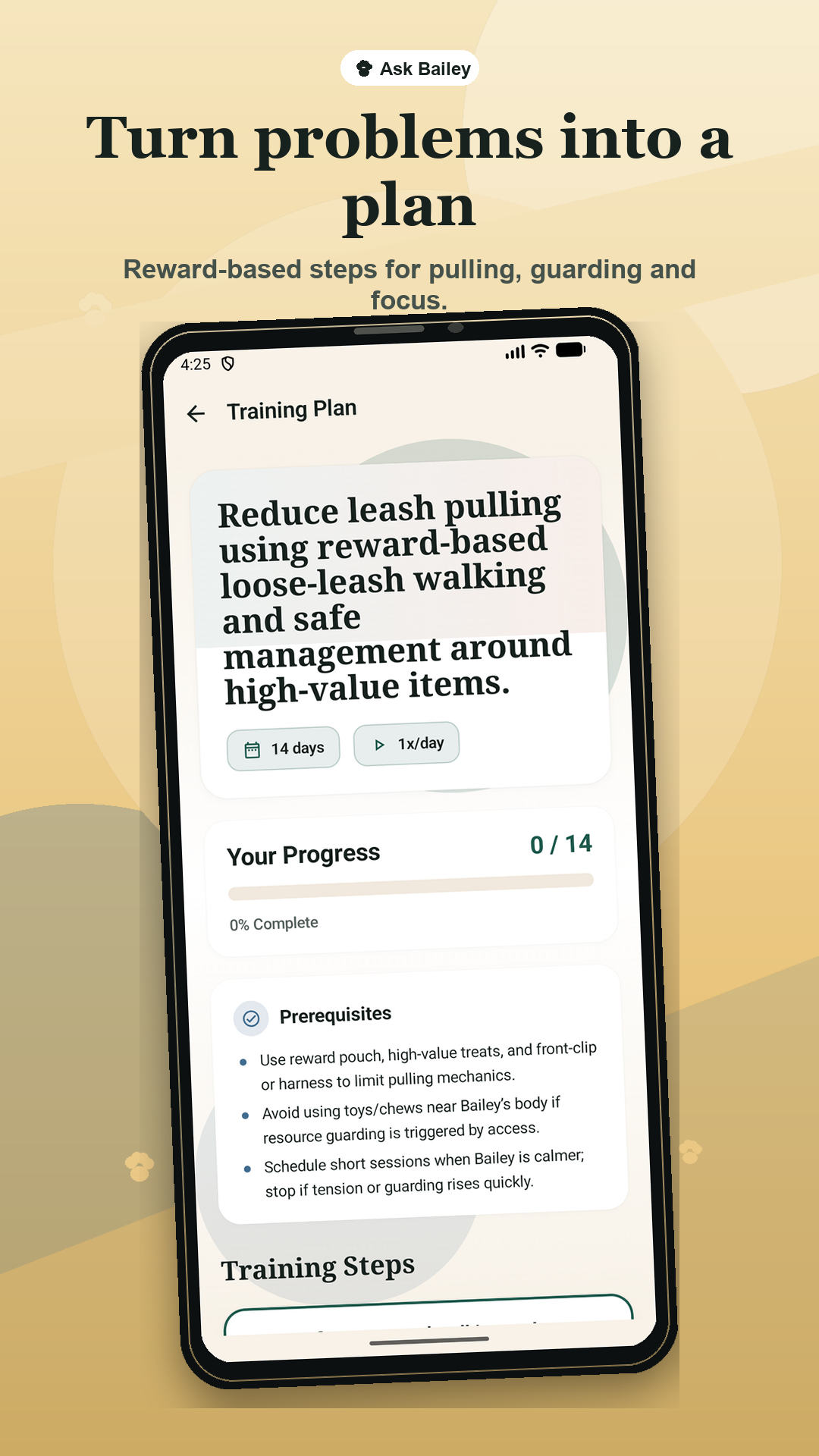
Every puppy is unique. While the foundational steps remain consistent, the pace and specific techniques should adapt to your individual puppy. Consider these variables: [3]
- Your Puppy's Current Skills: Does your puppy already know "down"? Can they focus on you? Start from where they are.
- Distractions: What specifically challenges your puppy? Tailor your distraction training accordingly.
- Duration Goals: How long do you need your puppy to settle? A 15-minute cafe visit requires different training than a 2-hour restaurant dinner.
- Distance Requirements: Will you need to send your puppy to the mat from across the room, or will you always be nearby?
- Target Locations: Prioritize generalizing to environments where you'll actually use the behavior.
Troubleshooting Common Challenges
Puppy Won't Stay on the Mat: You've likely progressed too quickly with duration. Return to rewarding 1-2 second stays and build more gradually. Also evaluate if your mat choice is comfortable for your puppy.
Puppy Gets Up When You Move: Your puppy hasn't learned to settle despite your movement. Introduce body movement distractions more gradually and at lower intensity.
Puppy Shows No Interest in the Mat: Your treats may not be high-value enough, or you haven't built sufficient positive associations. Spend more time in Phase 1 creating irresistible mat appeal.
Puppy Settles at Home But Not in Public: This is a generalization issue. Return to practicing in slightly less challenging environments before attempting complex public settings. Build incrementally.
The Long-Term Benefits of Mat Training
A well-trained mat behavior provides benefits that extend far beyond the training process. Your puppy learns to self-regulate, manage arousal, and find comfort in consistency. They become the calm, confident companion that's welcome everywhere. [2]
Mat training also becomes a diagnostic tool. If your puppy suddenly struggles with mat settling, it may indicate anxiety, pain, or other concerns worth investigating with your veterinarian. [4]
Most importantly, mat training creates a secure foundation for addressing other behavioral challenges. Many behavior problems stem from excessive arousal or anxiety. Once your puppy can access a calm state on cue, addressing other issues becomes significantly easier. [4]
Key Takeaways
- Select a high-visibility, non-slip mat that's comfortable for your puppy
- Build genuine interest in the mat before introducing behavioral expectations
- Use consistent marker words or clickers to communicate success
- Build duration in micro-increments, adding just 1-2 seconds per repetition
- Introduce distractions gradually, ensuring success at each level
- Generalize the behavior across multiple locations and scenarios
- Keep training sessions brief (5-10 minutes) and positive
- Tailor your training plan to your individual puppy's needs and pace
- Use high-value rewards exclusively for mat training
- Remain calm and patient—mat training is an investment in your puppy's future