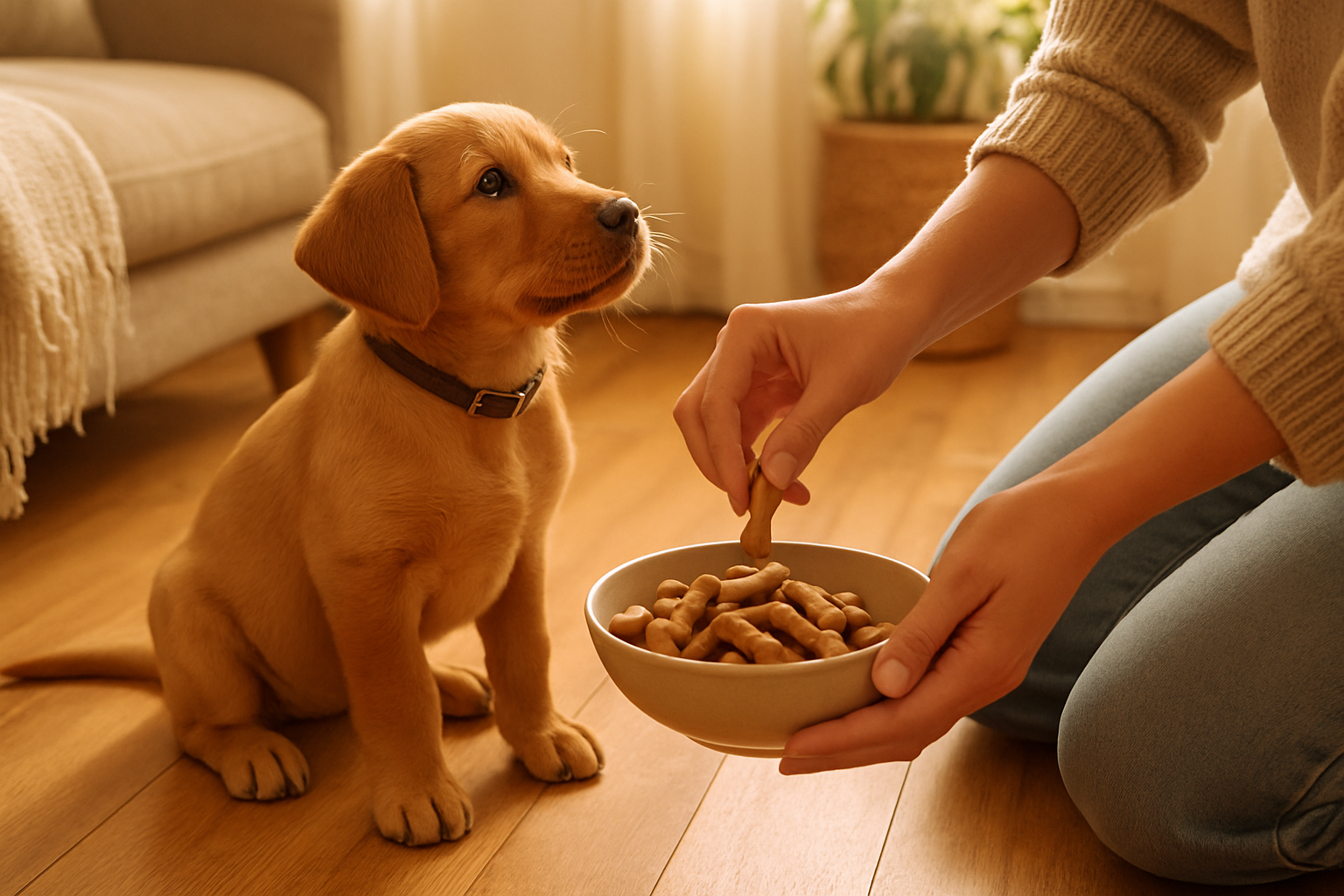
Why Teaching Your Puppy to Leave Food Matters
One of the most stressful moments for any dog owner is watching their puppy lunge for something potentially dangerous that's fallen on the floor. Whether it's medication, chocolate, or something toxic, a puppy's lightning-fast reflexes can turn a minor accident into a veterinary emergency in seconds.
Beyond safety concerns, puppies who haven't learned food restraint can become counter-surfers, trash diggers, and dinner-table beggars. These behaviors aren't just annoying—they can damage your relationship with your puppy and create constant tension in your home.
The good news? You don't need to use punishment, corrections, or frustrating methods to teach your puppy this critical skill. Instead, by building genuine self-control through positive reinforcement, you'll create a puppy who chooses not to grab food because they've learned something better is coming. [1]
Understanding Self-Control vs. Forced Obedience
Before diving into the training method, it's important to understand a fundamental distinction in dog training philosophy.
Many traditional approaches focus on teaching a dog to respond to the word "leave it" through punishment or extinction—essentially, the dog learns to stop trying because nothing good happens when they do. This method can work, but it comes with hidden costs that modern behavioral science has revealed. [3]
Self-control training, by contrast, teaches your puppy to make a choice. Instead of responding to a command out of fear or frustration, your puppy learns that waiting for permission to take food results in something even better. This approach:
- Builds intrinsic motivation rather than external compliance
- Creates a puppy who genuinely wants to make good choices
- Doesn't rely on punishment or withholding rewards
- Transfers reliably to new situations and environments
- Strengthens your bond through positive association
The result is a puppy who will ignore that dropped pill bottle not because they're afraid of you, but because they've learned that patience pays off. [1]
The Foundation: Starting with the Right Treats
Your choice of treats at the beginning of training is critical to your success. Many owners make the mistake of starting with high-value items like cheese or hot dogs, which actually undermines the learning process.
Choose Low-Value Treats Initially
Start with foods your puppy likes but doesn't go crazy for. Excellent beginner options include:
- Plain Cheerios or other unsweetened cereal
- Small pieces of carrot or apple
- Regular kibble from their daily meals
- Plain rice cakes broken into tiny pieces
- Freeze-dried green beans
Why low-value? These treats are less likely to trigger intense food-seeking behavior, making it easier for your puppy to succeed and build confidence. As your puppy progresses, you'll gradually introduce higher-value rewards. [1]
Avoid Oily or Juicy Foods
Never start with moist, sticky, or oily treats like hot dogs, cheese, or wet food. These can be licked or eaten directly from your hand, which actually rewards the very behavior you're trying to discourage. Stick with dry, discrete pieces that must be offered deliberately. [1]
The Training Method: Building Impulse Control Step by Step
Phase One: The Open Hand Game
This foundational exercise teaches your puppy that waiting for permission is the key to getting food.
Setup:
- Hold 3-6 low-value treats in one hand (your "treat hand")
- Have additional treats in your other hand or pocket (your "reward hand")
- Sit or kneel at your puppy's level
- Choose a quiet environment with minimal distractions
The Process:
- Open your hand with a treat visible in your palm
- If your puppy tries to grab it, simply close your hand—no words needed, no "leave it" command
- Keep your closed fist steady and wait
- The moment your puppy backs away, looks at you, or shows any hesitation, immediately reward with your other hand using a treat from your reward hand
- Repeat this sequence 5-10 times per training session
The critical insight here is that you're not verbally correcting your puppy. Your actions—closing your hand—communicate that the treat is inaccessible. The reward from your other hand teaches them that patience works. [1]
Why Two Hands Matter:
Using separate hands prevents confusion. If you reward from the same hand holding the treats, your puppy learns that persistence sometimes pays off—exactly what you want to avoid. The "reward hand" creates a clear distinction: trying to grab equals nothing, waiting equals good things. [1]
Phase Two: Progressing to Open Palms
Once your puppy consistently waits with a closed hand, gradually open your fingers slightly. The goal is to eventually hold treats in a completely open palm that your puppy ignores.
Progress slowly—open your fingers a little more each session. If your puppy lunges, simply close your hand again. There's no punishment; you're simply removing the opportunity. Continue until your puppy can wait patiently with treats fully visible in your open palm. [1]
Phase Three: Treats on the Ground
This is where the training becomes truly practical for real-life scenarios.
The Ground Drop Exercise:
- Start while sitting or kneeling so you're close to the ground
- Drop a low-value treat near your puppy's paws
- If they go for it, use your foot (not your hand) to gently block access
- Wait for them to look at you or back away
- Immediately reward with a treat from your hand
- Repeat with treats dropped from different heights and positions
Progress through different body positions: kneeling, bending, standing. This variation is crucial because puppies can become position-specific in their learning. A puppy who waits when you're kneeling might not wait when you're standing. [1]
Advancing to Higher Surfaces:
Once your puppy masters floor-level treats, practice dropping treats from chairs, stools, and low tables. If counter-surfing is a concern, specifically train on countertop height. This teaches your puppy that elevated surfaces are also off-limits. [1]
Critical Training Principles for Success
Generalization: The Key to Real-World Reliability
Many owners train their puppies in one location with the same treats and expect the behavior to transfer everywhere. This is a common mistake.
Your puppy needs to learn that this rule applies universally. This means:
- Train in every room of your house, including the kitchen and bathroom
- Use at least 20 different types of treats across your training sessions
- Practice on various surfaces and heights
- Train with different family members
- Gradually introduce mild distractions
The goal is for your puppy to develop a general principle: "Food on the ground is not mine to take unless given permission." Without this generalization work, your puppy might learn that the training game only applies with you, in the living room, with carrots. [1]
Motivation and Environmental Factors
Not all puppies respond equally to the same training approach. Several factors affect your puppy's ability to succeed:
Hunger Level: Train before meals, not after. A full puppy has less motivation to work for treats. [5]
Environmental Stress: If your puppy seems anxious or overstimulated, their appetite naturally decreases. High stress actually shuts down the brain's appetite signals—a survival mechanism. Move to a calmer environment or reduce distractions. [5]
Distraction Level: A puppy easily distracted by squirrels, other dogs, or activity can't focus on training. Start in controlled environments and gradually add complexity. [5]
Treat Value: Some puppies are genuinely less food-motivated than others. If your puppy seems uninterested in standard treats, experiment with different options: cooked chicken, small pieces of roast beef, or baby food. Having a rotating list of high-value options keeps training fresh. [5]
Common Mistakes to Avoid
Using "Leave It" Verbally Too Early: Many trainers immediately add the cue "leave it" while the puppy is still learning. This can create confusion. Let the behavior develop first through your physical actions, then add the verbal cue once it's reliable.
Inconsistent Rewards: Your puppy needs to clearly understand that waiting equals something good. Every single time they make the right choice, reward immediately. Inconsistency teaches them that sometimes it works and sometimes it doesn't—encouraging them to keep trying to grab.
Starting with High-Value Treats: Beginning with the most delicious treats your puppy loves sets them up for failure. Build success with easy treats first, then gradually increase difficulty.
Skipping Generalization: Training only in your living room with kibble and expecting your puppy to ignore a dropped piece of pizza in the kitchen will disappoint you. Invest time in varied practice.
Punishing Mistakes: If your puppy grabs a treat you dropped, resist the urge to scold. Simply remove access and try again. Punishment creates fear and confusion, not understanding. [3]
Real-World Applications and Safety Benefits
The true value of this training becomes apparent when real-world emergencies occur.
Puppies trained with genuine impulse control will pause when medications, toxic foods, or dangerous objects fall on the ground. Rather than blindly grabbing, they'll look to you for guidance. This hesitation—even just a second or two—can be the difference between a minor incident and a life-threatening emergency. [1]
Beyond safety, puppies with strong impulse control:
- Don't counter-surf or steal food from tables
- Won't rummage through trash
- Can be trusted around children's food
- Are easier to manage at restaurants with outdoor seating
- Create a more relaxed household environment
Training Timeline and Expectations
How quickly will your puppy learn? This depends on several factors, but here's a realistic timeline:
Weeks 1-2: Your puppy learns the basic game and starts showing occasional restraint with your closed hand.
Weeks 3-4: Consistency improves with closed hands; you can begin opening your palm slightly.
Weeks 5-8: Your puppy waits reliably with open palms in your training location.
Weeks 9-16: Through generalization work, the behavior transfers to new locations, treats, and situations.
Beyond 4 Months: With continued practice and reinforcement, the behavior becomes deeply ingrained and highly reliable.
Remember that puppies have short attention spans. Multiple 5-10 minute sessions spread throughout the day are far more effective than one long session. [1]
Troubleshooting Common Challenges
My puppy lunges aggressively for treats: This indicates high arousal. Use lower-value treats, train in a calmer environment, and consider spacing out training sessions. You may be moving too quickly through the phases.
My puppy does great in training but ignores the rule elsewhere: This is a generalization issue. Increase variety in your training locations, treats, and surfaces. Practice in the kitchen specifically if that's where problems occur.
My puppy seems uninterested in treats: Check for medical issues first by consulting your veterinarian. Then experiment with different treat options. Some puppies respond better to toys or praise as rewards.
I'm getting bitten or scratched: This indicates your puppy is frustrated or overstimulated. Use lower-value treats, reduce session length, and ensure your puppy isn't stressed. Consider consulting a professional trainer. [3]
Actionable Takeaways
Teaching your puppy to leave food on the floor is one of the most valuable skills you can build—for safety, household management, and your peace of mind.
Start today with these concrete steps:
- Gather supplies: Collect low-value treats (Cheerios, carrots, kibble) and identify at least 10 other treat options for variety
- Choose your location: Pick a quiet room with minimal distractions for initial training
- Schedule training: Plan 2-3 short sessions daily, before meals, for maximum motivation
- Start the open hand game: Spend your first week on this foundation phase
- Track progress: Keep notes on which treats work best and how your puppy responds
- Plan generalization: Map out different rooms and surfaces where you'll practice
- Stay patient: Remember that you're building genuine decision-making skills, not just teaching a command
Your puppy isn't being stubborn or difficult when they struggle with impulse control—they're simply being a puppy. With consistent, positive training, you'll build a reliable skill that lasts a lifetime and keeps your puppy safe.