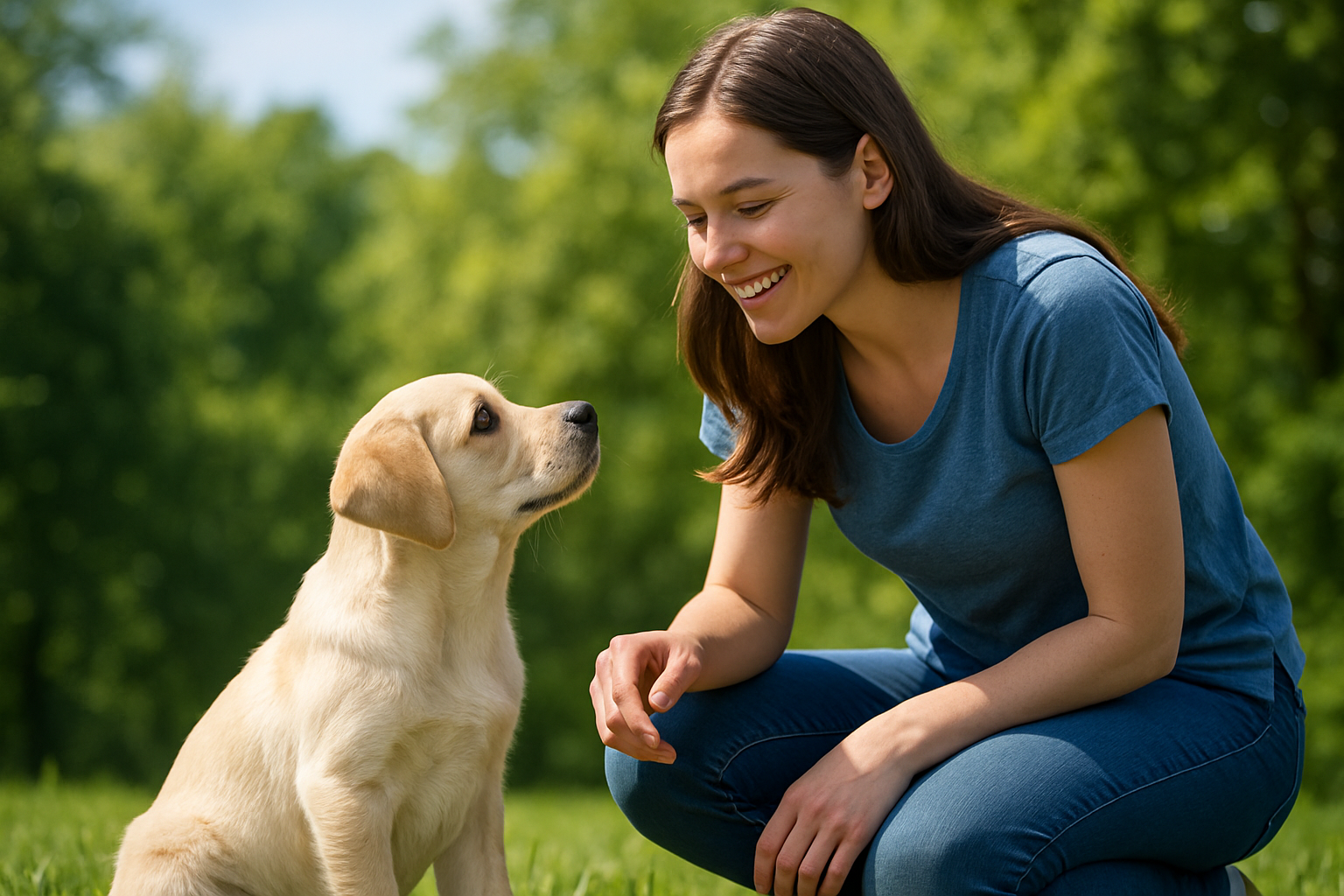
Why Recall Training Matters From Day One
Imagine your puppy bolting toward a busy road, and you're powerless to stop them. Or picture yourself chasing a gleeful pup around the park while other owners watch in amusement. These scenarios don't have to happen. A strong recall—the ability for your puppy to return to you immediately when called—is one of the most critical life skills you can teach. [1]
Unlike many dog behaviors, recall doesn't develop naturally. Your puppy won't automatically know that abandoning a fascinating squirrel to run back to you is the right choice. This is a skill that requires deliberate, consistent training from the moment your puppy arrives home. [2]
The benefits extend far beyond convenience. A reliable recall keeps your puppy safe from hazards, gives them the freedom to enjoy off-leash exercise, strengthens your bond, and builds their confidence as they explore the world. [2] Most importantly, a good recall could save your puppy's life in an emergency.
Understanding Why Puppies Don't Come Back
Before you start training, it helps to understand what's actually happening when your puppy ignores you. Your puppy isn't being deliberately disobedient—they're simply responding to competing motivations that feel more rewarding in that moment. [3]
From your puppy's perspective, the environment offers immediate, tangible rewards: the scent of another dog, the thrill of chasing a bird, or the texture of something interesting to investigate. These rewards are right there, right now. In contrast, coming back to you feels uncertain. Will there be a treat? Will playtime end? [3]
This is why recall training must start at home, in a controlled environment where you control the rewards and remove competing distractions. You're essentially teaching your puppy that you're the best thing in their world—better than squirrels, better than other dogs, better than anything else they might find.
Step 1: Build Name Recognition (Days 1-3)
Before your puppy can come when called, they need to respond to their name. This is the foundation of all recall training. [1]
Here's how to teach this:
- Choose high-value treats. These should be tiny (pea-sized), soft, and something your puppy goes crazy for. Think chicken, cheese, or specialized puppy training treats—not their regular kibble.
- Carry treats everywhere. Keep them in your pocket, on the counter, by the sofa. You'll use them constantly throughout the day. [1]
- Say their name once, brightly. When your puppy isn't looking at you (but also isn't distracted with something else), say their name in an upbeat, happy tone. Say it only once. [1]
- Reward immediately when they look. The moment your puppy's eyes meet yours, deliver a treat. Timing is everything—they need to connect their name with the reward instantly. [1]
- If they don't look, move on. Don't repeat their name or get frustrated. Simply move to a different location and try again in a few minutes. [1]
- Practice everywhere. Do this in the kitchen, living room, bedroom, garden—different rooms, different times of day. The goal is for your puppy to respond to their name in any context. [1]
Expect to do this 10-20 times daily during the first few days. It sounds like a lot, but these are quick, two-second interactions. Most puppies begin reliably responding to their name within 3-5 days of consistent practice.
Step 2: Introduce Movement Toward You (Days 4-7)
Once your puppy consistently looks at you when they hear their name, you're ready to add movement. This bridges the gap between attention and physical recall.
Here's the progression:
- Say their name and drop a treat. Instead of throwing the treat, drop it on the floor between you and your puppy. When they look at you and move toward the treat, you're building the association between their name and coming toward you. [1]
- Gradually increase the distance. Start by dropping the treat just a few inches away from you. Over several days, slowly drop treats closer to your feet. Eventually, your puppy will be running directly to you to collect the reward. [1]
- Make it a game. Keep sessions playful and upbeat. Your energy matters. A bright, excited tone makes you more interesting than whatever else might be happening.
- Practice in multiple locations. Move to different rooms and the garden. This teaches your puppy that the behavior works everywhere, not just in one spot. [1]
By the end of week one, your puppy should be moving toward you reliably when they hear their name, especially in low-distraction environments like your home.
Step 3: Add a Recall Cue (Week 1, Days 5-7)
Now that your puppy is moving toward you, you can introduce a specific recall word. This is different from their name. [1]
Common recall cues include:
- "Come"
- "Here"
- "Quickly"
- "Return"
The word itself doesn't matter—consistency does. [5] Choose one word that feels natural to say, and make sure everyone in your household uses the same cue. [5] If mum says "come" and dad says "here," your puppy will be confused.
Critical timing: Only introduce the recall word when your puppy is already moving toward you. [1] Say the cue as they're coming to you, not before. This teaches them that the word means "the action you're already doing." If you call "come" when they're not coming, you're teaching them that "come" means "ignore me." [1]
The sequence should be:
- Your puppy is at a distance
- You say their name (they look at you)
- You say your recall cue as they start moving toward you
- They arrive and receive a treat
After several repetitions, your puppy will start to anticipate the recall cue and move toward you faster.
Essential Tools for Success
High-Value Treats
Regular kibble won't cut it. Your puppy needs to believe coming to you is the best possible decision. Use treats they go wild for—soft, small, and delivered immediately. [2] Variety helps too; rotate between different treats to maintain excitement. [5]
Long Training Lines
Once you move training outdoors, a long training line (15-30 feet) becomes essential. It provides freedom while preventing your puppy from self-rewarding by running off. [3] Attach it to a harness rather than a collar to distribute pressure safely. [3] The line isn't about punishment—it's about preventing mistakes that would teach your puppy that ignoring you works.
Dog Whistle (Optional but Helpful)
Whistles offer consistency that human voices can't match. Everyone produces the same whistle sound, preventing confusion from different family members calling with varying tones. Whistles also carry further and cut through environmental noise. [3] If you use a whistle, establish one specific pattern (like a three-second long blast) and use it consistently. [3]
Treat Pouch
Keep rewards instantly accessible. Fumbling in your pocket while your puppy's attention wanders defeats the purpose. A treat pouch attached to your waistband ensures you can reward immediately. [3]
Common Mistakes to Avoid in Week One
Using their name for negative things. Never call your puppy to you for something they dislike—nail clipping, medication, ending playtime. This teaches them that their name predicts bad things. [1] If you need to do something unpleasant, go get them rather than calling them to you.
Repeating their name endlessly. Say their name once. If they don't respond, move away and try again later. Repeating it teaches them to ignore it. [1]
Training in distracting environments too early. Your puppy can't focus on you if they're surrounded by other dogs, interesting smells, or exciting activities. Start indoors, progress to a quiet garden, then gradually add mild distractions. [5]
Inconsistent rewards.** Every single time your puppy comes in week one, they should receive a treat. "Sometimes" training teaches them that coming is optional. [4] This is the foundation phase—be generous with rewards.
Forgetting to touch their collar.** When your puppy arrives, gently take hold of their collar before giving the treat. This prevents the "catch-me-if-you-can" game and makes collar contact positive. [4]
Sample Week One Training Schedule
Here's what a realistic week might look like:
- Morning (after breakfast): 5-10 name recognition sessions in the kitchen (2 minutes total)
- Mid-morning: 3-5 name recognition sessions in a different room (1 minute)
- Lunchtime: 5-10 movement-toward-you sessions in the garden (2-3 minutes)
- Afternoon: 5 name recognition sessions indoors (1-2 minutes)
- Evening: 5-10 movement sessions, introducing recall cue (2-3 minutes)
- Before bed: 3-5 quick name recognition sessions (1 minute)
Total daily training time: 10-15 minutes spread throughout the day. This fits easily into normal life—you're not adding extra "training sessions," you're capitalizing on natural moments throughout your day.
What to Expect by Week Two
By the end of week one, your puppy should:
- Reliably respond to their name indoors
- Move toward you when they hear their name, especially if a treat is involved
- Begin to anticipate and respond to your recall cue
- Show excitement when they see you reaching for treats
They won't yet have a bulletproof recall in distracting environments—that takes weeks and months of progressive training. But you've established the foundation. Your puppy understands that their name means good things, that coming to you results in rewards, and that you're worth paying attention to.
Key Principles for Long-Term Success
Recall training doesn't end after week one. It's a skill that requires constant reinforcement throughout your puppy's life. [1] Here are the principles that will serve you long-term:
- Consistency is everything. Use the same cue, the same tone, the same rewards. Everyone in your household should follow the same protocol. [5]
- Always reward. In the early stages, every successful recall gets a treat. As your puppy matures, you can gradually reduce treat frequency, but never stop rewarding occasionally. [1]
- Practice everywhere. Recall trained in your kitchen might not transfer to the park. Train in multiple locations, gradually adding distractions. [1]
- Make it fun. Vary your rewards with treats, play, toys, and praise. Keep your puppy excited about the game. [5]
- Never punish poor recall. If your puppy doesn't come, don't scold them when they finally arrive. You'll teach them that coming to you is dangerous. Instead, prevent the situation by using long lines and training in controlled environments until recall is solid.
Moving Forward: From Week Two Onward
After week one, you'll gradually introduce distractions and increase distance. Start in your garden with no competing stimuli. Once your puppy reliably comes from across the garden, introduce mild distractions—a toy on the ground, another family member nearby. Gradually progress to busier environments like parks, always on a long line until recall is absolutely reliable. [3]
The timeline varies by puppy. On average, developing reliable recall takes 3-6 months of consistent practice. [5] Some puppies progress faster; others need more time. Breed matters too—working breeds developed for independence may require more patience and higher-value rewards. [3] But with dedication, nearly every puppy can learn excellent recall.
Final Thoughts
The time you invest in recall training during week one pays dividends for the next 15 years. A puppy who reliably comes when called is a puppy who gets to experience the joy of off-leash freedom, who stays safe from hazards, and who strengthens their bond with you through positive interactions. Start today, stay consistent, and celebrate small wins. Your future walks—and your peace of mind—will thank you.
Sources & References
- https://www.purina.co.uk/articles/dogs/puppy/behaviour/recall-training
- https://www.poochandmutt.co.uk/blogs/puppy/tips-for-puppy-recall-training
- https://companyofanimals.com/us/dog-recall-training-guide/
- https://www.baxterandbella.com/post/2017/09/14/teaching-a-solid-recall
- https://zigzag.dog/en-us/blog/puppy-training/commands/puppy-recall-training/