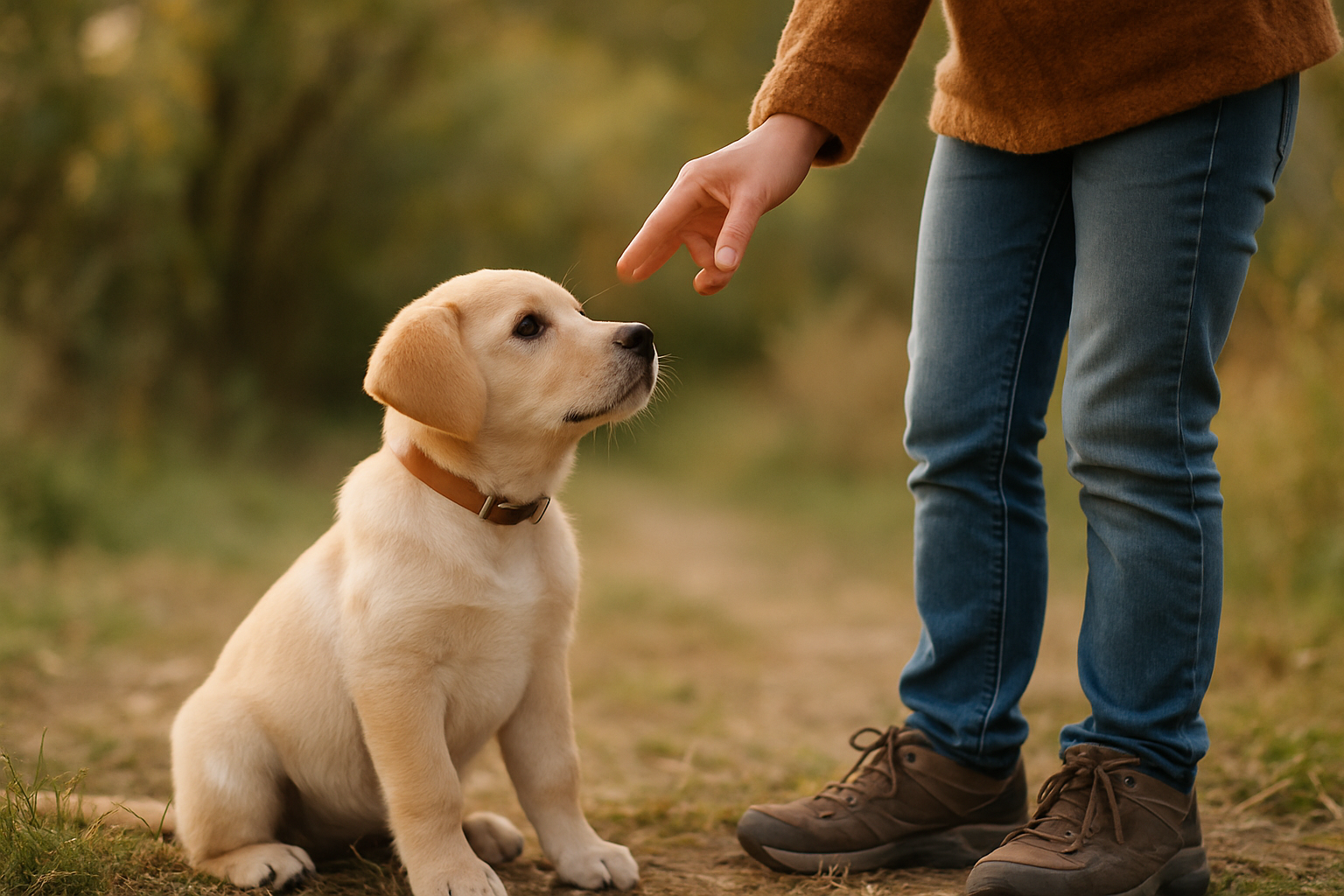
Why Leave It Is One of the Most Important Commands You'll Teach
Imagine this: you're enjoying a walk with your puppy when you spot something dangerous on the sidewalk—perhaps chocolate, medication, or a piece of broken glass. Without the "leave it" command, your curious puppy might snatch it before you can react. With this single skill, you can confidently tell your puppy to leave it alone and continue your walk safely. [5]
The "leave it" command does more than just prevent accidents. It builds impulse control, which is the foundation for other important behaviors like "stay" and "drop it." It teaches your puppy that they can trust you to guide them away from temptation, and that following your direction leads to even better rewards. [2]
This isn't a command you teach once and forget. It's a lifelong skill that requires patience and consistent practice, but the payoff—a safer, better-behaved puppy—makes every training session worthwhile. [2]
Leave It vs. Drop It: Understanding the Difference
Before you start training, it's important to understand how "leave it" differs from "drop it." These are two separate commands that work together to keep your puppy safe. [2]
- Leave It: Tells your puppy not to approach or touch an object in the first place. You use this command before your puppy picks something up.
- Drop It: Orders your puppy to release something they've already picked up. You use this command after they've grabbed something unsafe.
Think of "leave it" as prevention and "drop it" as damage control. Ideally, you'll use "leave it" most of the time because it stops the behavior before it starts. [2]
What You'll Need Before Starting Training
Success with "leave it" training depends on having the right tools and setup. Gather these items before your first training session: [2] [4]
- High-value treats: These should be more interesting to your puppy than anything you're asking them to leave alone. Small pieces of chicken, cheese, or special training treats work well.
- Low-value test items: Start with boring items like broccoli, spinach, or lettuce that your puppy won't be tempted by.
- Mid-value items: Once your puppy masters the basics, use slightly more interesting items like crackers or bread.
- A collar and short leash: These help you manage your puppy safely during training.
- A favorite toy (optional): Choose one that's not your puppy's absolute favorite—you want the reward to be more valuable than what they're leaving behind.
Start your training indoors where there are minimal distractions. This controlled environment helps your puppy focus on learning without competing stimuli. [2]
Step-by-Step Training Process
Step 1: Start With Your Closed Fist
Begin with the absolute basics. Hold a low-value item (like a piece of broccoli) in a closed fist and bring it near your puppy's nose. This is the foundation of the entire exercise. [4]
Your puppy will likely sniff, lick, or paw at your closed hand. This is completely normal and expected. Don't react—just stay patient and hold your hand steady. If your puppy is pulling too hard, brace your hand against your leg to prevent movement. [4]
Step 2: Reward the Disengagement
The magic happens the moment your puppy looks away or stops trying to get the item from your hand. The instant they disengage—even for just a second—immediately reward them with a high-value treat from your other hand. [4]
This teaches your puppy that ignoring something tempting results in an even better reward. Repeat this exercise many times until your puppy consistently looks away from your closed fist without you having to wait long. You're building the behavior before adding the verbal cue. [3]
Step 3: Add the Verbal Cue
Once your puppy is reliably disengaging from the item in your closed fist, it's time to pair this behavior with the word "leave it." Say the command the moment your puppy looks away from your hand. Keep your tone calm and kind—avoid sounding harsh or frustrated. [4]
Your puppy learns through association, so timing is crucial. Say "leave it" right as they display the behavior you want to reward. After many repetitions, your puppy will begin connecting the word with the action of disengaging. [3]
As your puppy improves, gradually move the cue earlier in the sequence. Eventually, you'll say "leave it" right when you present the item, rather than waiting for them to look away first. [4]
Step 4: Open Your Hand Gradually
Once your puppy is solid with the closed fist, increase the difficulty by opening your hand slightly. This makes the item more visible and tempting, challenging your puppy's impulse control. [4]
Keep your hand steady and wait for your puppy to look away before rewarding. If your puppy tries to grab the item, simply close your hand again and wait. Don't punish or scold—just calmly reset and try again. Your patience teaches your puppy that persistence doesn't work, but disengagement does. [4]
Step 5: Move the Item Closer to the Floor
Gradually lower the item in your open palm, then place it on the ground while covering it with your hand. This mimics real-world scenarios where your puppy encounters items on the floor or ground during walks. [4]
Once your puppy reliably leaves the item alone while your hand covers it, slowly remove your hand. Eventually, stand up and step further away, but stay close enough to prevent your puppy from grabbing the item if they choose to. [4]
Step 6: Increase the Value Gradually
After your puppy masters the exercise with low-value items, introduce mid-value items like crackers or bread. Only move to higher-value items once your puppy consistently succeeds with easier challenges. [5]
Never jump straight to your puppy's favorite toy or treat—this sets them up for failure. The goal is to build confidence and success at each level before increasing the difficulty. [5]
Step 7: Practice in Different Environments
Once your puppy has mastered "leave it" at home, practice in increasingly distracting environments. Try the backyard, a quiet park, and eventually busier locations. [5]
Keep training sessions short and watch for signs of fatigue or lost focus. If your puppy seems overwhelmed, take a break and return to an easier version of the exercise. Success builds confidence, so celebrate small wins. [5]
Combining Leave It With Look at Me
One of the most powerful combinations in dog training is pairing "leave it" with "look at me." This teaches your puppy not only to ignore distractions but to redirect their attention to you. [3]
Once your puppy understands "leave it," add a verbal cue like "look at me" the moment they make eye contact with you instead of the item. With repetition, your puppy learns that when they hear "leave it," they should disengage and look to you for guidance. [3]
This combination is invaluable on walks or in situations with multiple distractions. Your puppy learns to check in with you rather than act on impulse. [3]
Varying Rewards to Keep Training Fun
Not every reward needs to be a treat. Vary what your puppy receives for successfully leaving items alone to keep training engaging and to show that following your direction always pays off. [5]
- High-value treats for difficult challenges
- Praise and enthusiastic celebration
- Play with a favorite toy
- A moment of interaction and affection
This variety prevents your puppy from becoming bored and reinforces that "leave it" is a fun game you play together, not a punishment or restriction. [5]
Get Expert Help When You Need It
Training a puppy takes time and patience, and sometimes you need personalized guidance. Our certified trainers are here to help, whether you're dealing with impulse control challenges or need a fresh routine. Book a 1:1 session through Homeschool by LAY LO and get expert, personalized advice tailored to your life at home. Chat with a dog expert today to get started.
Common Mistakes to Avoid
Even with the best intentions, training can go off track. Watch out for these common pitfalls: [2] [4]
- Moving too fast: Don't skip steps or jump to high-value items before your puppy is ready. Patience now prevents frustration later.
- Inconsistent rewards: Make sure the reward is always more valuable than the item you're asking your puppy to leave. If it's not, your puppy won't see the point.
- Harsh tone: Avoid sounding angry or frustrated when giving the "leave it" command. Your puppy should see this as a positive game, not a punishment.
- Practicing only during formal training sessions: "Leave it" needs to be practiced throughout daily life—during walks, meals, and playtime—to become truly reliable.
- Expecting perfection too soon: This is a complex behavior that requires lifelong practice. Celebrate progress rather than expecting instant mastery. [2]
Proofing the Behavior: Real-World Application
"Proofing" means testing your puppy's understanding in increasingly challenging situations. Once your puppy reliably responds at home, start practicing in real-world scenarios: [4]
- Drop items while walking on leash
- Toss treats on the ground and ask your puppy to leave them
- Practice around other dogs or people
- Use items your puppy finds naturally tempting (like a dropped sandwich or fallen leaf)
- Practice during exciting times like meal preparation or playtime
The goal is to build such a strong habit that your puppy responds reliably, even when distracted or excited. [4]
Building Impulse Control Beyond Leave It
While "leave it" is essential, it's just one tool for building impulse control. Consider combining it with other techniques to create a well-rounded training approach: [3]
- Structured play sessions with clear rules
- Practice with "wait" or "settle" commands
- Provide appropriate outlets for natural impulses (like chewing toys or sniffing games)
- Use "leave it" to redirect rather than restrict—teach your puppy that leaving one thing means they get access to something better
Remember, impulses are natural and healthy for dogs. The goal isn't to eliminate them entirely, but to help your puppy make safe choices. [3]
Timeline: When Will Your Puppy Get It?
Every puppy learns at their own pace, but here's a realistic timeline: [2]
- Weeks 1-2: Your puppy learns to disengage from items in your closed fist and associates the behavior with rewards.
- Weeks 3-4: Your puppy begins responding to the "leave it" cue with items in your open hand.
- Weeks 5-8: Your puppy shows reliability with items on the ground and in low-distraction environments.
- Months 3+: Continuous practice and proofing in real-world scenarios builds lasting reliability.
This timeline assumes consistent daily practice. Puppies that train several times a week may take longer to develop the behavior reliably. [2]
Safety Considerations
If your puppy has already eaten something potentially toxic or dangerous, contact your veterinarian or an animal poison control center immediately rather than relying on training. "Leave it" is a preventive tool, not a treatment for poisoning. [5]
For puppies showing signs of resource guarding, aggression, or severe anxiety around items, consult a certified professional trainer or veterinary behaviorist. These behaviors require specialized guidance beyond basic training. [5]
Key Takeaways
Teaching your puppy "leave it" is an investment in their safety and your peace of mind. Here's what to remember:
- Start with low-value items and gradually increase difficulty
- Always reward disengagement with something more valuable than the item being left
- Practice consistently in multiple environments
- Combine "leave it" with "look at me" for maximum effectiveness
- Be patient—this is a complex behavior that takes time to master
- Practice throughout daily life, not just during formal training sessions
- Seek professional help if your puppy shows resource guarding or aggression
With patience, consistency, and positive reinforcement, your puppy will develop a reliable "leave it" response that protects them from hazards and makes life together more enjoyable for everyone.
Sources & References
- https://www.purina.com/articles/dog/behavior/training/how-to-teach-dog-leave-it
- https://pupford.com/blogs/all/teach-dog-leave-it
- https://www.laylopets.com/blogs/barkives/how-to-teach-leave-it-to-a-dog-a-step-by-step-guide-to-teaching-dogs-impulse-control
- https://bestfriends.org/pet-care-resources/how-teach-dog-leave-it