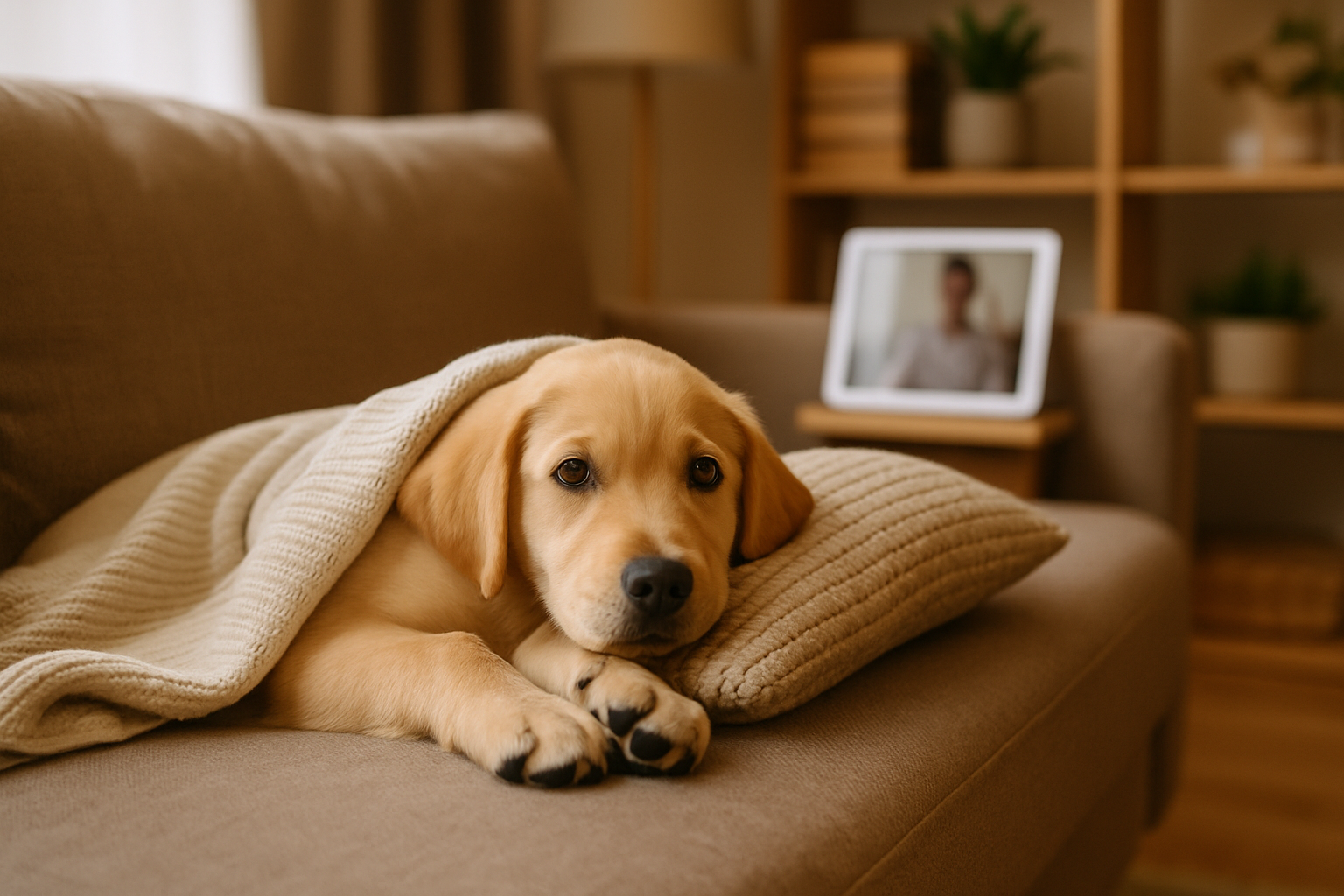
Managing Separation Anxiety in Puppies: A Step-by-Step Guide to Reducing Distress During Owner Absence
Your adorable puppy follows you from room to room, whimpering softly when you approach the door. You tell yourself it's just a phase, an endearing quirk of puppyhood. But what starts as a gentle scratch at the door can quickly escalate into destructive behavior, excessive vocalization, and genuine distress for your young companion.
Separation anxiety in puppies is more common than you might think. Between 20% and 40% of dogs experience this behavioral challenge at some point in their lives, and early intervention makes all the difference [2]. The encouraging news? With proper understanding and consistent training, you can help your puppy develop the confidence and independence they need to thrive, even when you're not around.
This guide provides actionable strategies based on behavioral science to transform your puppy's relationship with alone time—from a source of panic to an opportunity for calm, independent relaxation.
Understanding Puppy Separation Anxiety: What You're Really Seeing
Before implementing solutions, it's crucial to recognize what separation anxiety actually looks like in puppies. Many new dog parents mistake normal puppy behavior for anxiety or, conversely, overlook genuine distress because they don't recognize the subtler signs.
Separation-related behavior (SRB) occurs specifically when your puppy is left alone and stems from genuine emotional distress [4]. The critical distinction is that these behaviors appear before you leave, during your absence, or immediately upon your return—not randomly throughout the day.
Recognizing the Signs: Beyond Obvious Behaviors
Most puppy parents recognize the obvious indicators of separation anxiety:
- Vocalization: Intense howling, crying, or excessive barking that begins moments after you leave [2]
- Destructive behavior: Chewing or digging at doors, windows, crates, or walls with enough force to cause injury to themselves or significant property damage [2]
- Escape attempts: Frantic efforts to break free from confined spaces, often resulting in bleeding paws, torn nails, or damaged teeth [3]
- Bathroom accidents: An otherwise housetrained puppy having accidents exclusively when left alone [2]
However, research reveals that half of anxious puppies won't display obvious signs, making their distress easy to miss [4]. Watch for these subtle indicators:
- Refusing to eat meals, treats, or interact with food toys during your absence
- Excessive panting or drooling without physical exertion
- Pacing or restlessness that persists even after exercise
- Reluctance to settle or relax when you're preparing to leave
A helpful diagnostic tool: install a pet camera to observe your puppy's behavior when you're not home. This objective view often reveals hidden signs of distress that you wouldn't otherwise notice [4].
Distinguishing Separation Anxiety from Normal Puppy Behavior
Not every accident or moment of whining indicates separation anxiety. Puppies are still learning bladder control, and occasional stress-related behaviors are developmentally normal. The key difference lies in consistency and pattern.
True separation anxiety presents as recurring, escalating behaviors specifically tied to your absence. One isolated accident is cause for observation, not alarm. However, a pattern of consistent destruction, vocalization, or elimination exclusively when you're gone warrants intervention [2].
Additionally, certain breeds show predisposition toward separation anxiety, though any puppy can develop this issue with the right combination of factors. Genetics interact with early experiences, socialization, and learned behaviors to create vulnerability.
The Prevention Strategy: Building Independence from Day One
The most effective approach to separation anxiety is prevention. Proper socialization and gradual independence training during puppyhood can significantly reduce or completely prevent this behavioral issue from developing [2].
Step 1: Establish a Predictable Routine
Puppies thrive with structure. A consistent daily routine builds confidence because your puppy learns to predict when feeding, walking, playtime, and rest periods occur [5]. This predictability reduces overall anxiety and creates a sense of control over their environment.
Your routine should include:
- Consistent meal times (typically 3-4 times daily for puppies)
- Regular walk schedules
- Designated play and training sessions
- Established rest periods in their designated space
- Predictable departure and return times
Step 2: Teach Your Puppy to Earn Resources
Rather than providing food, toys, or attention randomly, require your puppy to perform a simple behavior first. Ask for a sit before placing the food bowl, before clipping on the leash, before opening the door for outdoor time [5]. This teaches your puppy that they have agency in their environment—a powerful anxiety reducer.
Step 3: Gradual Desensitization to Departure Cues
Puppies quickly learn the signals that precede your departure: picking up keys, putting on shoes, grabbing your bag. These cues trigger anticipatory anxiety. Desensitize your puppy by performing these actions repeatedly without actually leaving.
Pick up your keys and set them down. Put on your shoes and sit back down. Grab your bag and return to the couch. Repeat these sequences dozens of times until your puppy no longer reacts with anxiety. This removes the predictive power of departure cues.
Step 4: Practice Micro-Absences
Start with incredibly brief separations. Leave your puppy alone for 30 seconds, return before any distress develops, and reward calm behavior. Gradually extend these periods: one minute, two minutes, five minutes, and so on. The goal is to build your puppy's confidence that you always return and that alone time is manageable.
The timeline varies by individual puppy, but patience during this phase prevents the development of anxiety patterns. Never progress to longer absences until your puppy remains calm during current durations.
The Treatment Strategy: Addressing Existing Separation Anxiety
If your puppy already shows signs of separation anxiety, behavior modification is essential. Unlike quick fixes or medications alone, comprehensive training addresses the underlying emotional distress [3].
Step 1: Pre-Departure Exercise and Feeding
A tired puppy is a calmer puppy. Before departing, engage your puppy in meaningful exercise: a walk, a play session, or training work [4]. Return 30 minutes before you leave to ensure your puppy has time to settle and isn't hungry during your absence.
Consider feeding a small meal or offering a food-stuffed toy before departure. A puppy focused on eating is less likely to spiral into anxiety [4]. Remember to account for these treats and meals in your puppy's daily caloric intake to prevent overfeeding.
Step 2: Create a Safe Space
Designate a specific area—a crate, pen, or room—as your puppy's safe haven. This space should be associated exclusively with positive experiences: treats, favorite toys, comfortable bedding, and undisturbed rest [5].
Train your puppy to voluntarily go to this space using rewards and positive reinforcement. Start in calm, distraction-free environments, then gradually increase distance and distractions. The goal is a portable relaxation station your puppy loves so much they seek it out independently.
Step 3: Teach the "Settle" Cue
A puppy who can settle on command has learned emotional self-control—a critical skill for managing separation anxiety [5]. To teach this:
- Interrupt gentle play and ask your puppy to sit or lie down
- Quietly praise and treat the moment they comply
- Resume play to reinforce the behavior
- Repeat until your puppy begins settling independently
- Add the verbal cue "settle" or "calm down" once the behavior is consistent
- Gradually increase duration and add mild distractions
Practice this skill during calm periods, not during moments of anxiety. Once mastered, you can use this cue before departures to help your puppy enter a relaxed state.
Step 4: Environmental Management
While training progresses, manage your puppy's environment to prevent rehearsal of anxious behaviors. Puppies that practice destructive or vocal behaviors during anxiety episodes reinforce these patterns, making them harder to break.
Puppy-proof the space where your puppy stays during your absence:
- Remove access to items that could be destroyed or cause injury
- Provide appropriate chew toys and food-dispensing toys
- Use white noise or calming music to mask external triggers
- Close curtains or blinds to reduce visual stimulation from passing people or animals [4]
- Consider using a crate if your puppy is crate-trained, as this provides security and limits destructive options
Step 5: Enrichment and Mental Stimulation
Boredom and anxiety often work together. Provide long-lasting chews, puzzle toys, and food-dispensing toys that occupy your puppy's mind during your absence [4]. Introduce these toys while you're home so your puppy associates them with positive experiences.
Rotate toys to maintain novelty and interest. A puppy engaged with an interesting activity is less likely to develop anxious thought patterns.
Critical Mistakes That Make Separation Anxiety Worse
Even well-intentioned actions can inadvertently reinforce separation anxiety. Understanding what to avoid is as important as knowing what to do.
Never Punish Separation Anxiety Behaviors
Returning home to destruction and responding with anger, raised voices, or physical punishment is neurologically damaging and counterproductive [4]. Your puppy doesn't connect your punishment to the earlier behavior—they only learn that your return is scary, intensifying anxiety about future departures.
A puppy that lowers their head, pulls back their ears, and tucks their tail isn't showing "guilt"—they're showing fear. This response often leads owners to punish further, creating a vicious cycle of escalating anxiety.
If you discover evidence of anxiety-related behavior, simply clean it up without comment. Let your puppy outside before addressing the mess so they don't witness your disapproval.
Avoid "Cry It Out" Methods
Some training guides recommend letting puppies "cry it out" until they stop vocalizing. This approach is ineffective and potentially harmful. Extended crying indicates extreme distress, not progress. Allowing your puppy to reach this state doesn't teach independence—it teaches that their distress signals are ineffective, potentially leading to learned helplessness and deeper anxiety [4].
Don't Use Crating as Punishment
When crating is associated with confinement during anxiety episodes, the crate becomes a source of dread rather than comfort. Use crates only for positive experiences during your presence until your puppy is genuinely comfortable alone.
When to Seek Professional Help
While many cases of puppy separation anxiety respond well to owner-implemented training, some situations warrant professional intervention [4]:
- Your puppy shows severe behaviors (self-injury, extreme vocalization, escape attempts that cause harm)
- You've consistently implemented training for several weeks without improvement
- Your puppy's anxiety is escalating rather than improving
- You suspect underlying health issues contributing to the behavior
- You're uncertain about proper training techniques
Consult your veterinarian first to rule out medical issues. They can then refer you to a certified animal behaviorist who will develop a personalized treatment plan tailored to your puppy's specific needs and circumstances [4].
Supplemental Support: When Training Needs Extra Help
In some cases, calming supplements can support behavior modification efforts. Options vary in effectiveness, and what works for one puppy may not affect another [3]. Work with your veterinarian to identify appropriate supplements and monitor their impact through trial and observation.
Supplements should complement training, never replace it. They can help your puppy access a calmer state where learning is possible, but they don't teach independence or confidence on their own.
Realistic Timeline and Expectations
Separation anxiety doesn't develop overnight, and it won't resolve overnight either. The longer your puppy has experienced anxiety, the more challenging treatment becomes [5]. However, puppies' brains are remarkably plastic, and early intervention yields significant results.
Most puppies show noticeable improvement within 2-4 weeks of consistent training. Complete resolution may take several months. Progress isn't always linear—setbacks happen, particularly during stressful life changes or disrupted routines.
Celebrate small victories: your puppy settling calmly before you leave, a successful solo period without vocalization, or voluntary interaction with enrichment toys. These incremental improvements build toward lasting independence.
Key Takeaways: Your Action Plan
- Start prevention early: Build independence and routine from puppyhood through gradual, positive exposure to alone time
- Recognize hidden signs: Use a pet camera to observe your puppy's behavior when you're not home
- Exercise before departure: A tired puppy is a calmer puppy; ensure physical and mental stimulation before you leave
- Create a safe space: Develop a positive association with a specific area your puppy can retreat to during your absence
- Teach emotional self-control: Practice the "settle" cue during calm periods so it's available during stressful moments
- Never punish: Avoid anger, punishment, or showing disapproval about accidents or destruction
- Provide enrichment: Offer engaging toys and activities that occupy your puppy's mind during your absence
- Seek professional help when needed: Consult your veterinarian and a certified behaviorist for severe cases or when self-directed training isn't working
Separation anxiety in puppies is challenging, but it's also highly preventable and treatable with patience, consistency, and evidence-based training methods. Your puppy isn't misbehaving to upset you—they're communicating genuine distress. By addressing this issue thoughtfully and compassionately during puppyhood, you're investing in your puppy's emotional wellbeing and setting the foundation for a confident, independent adult dog who can thrive even when you're away.
Sources & References
- https://www.pumpkin.care/post/separation-anxiety-dogs
- https://www.caldwellanimalhospital.org/2019/09/03/a-step-by-step-guide-for-solving-your-pets-separation-anxiety/
- https://www.rspca.org.uk/adviceandwelfare/pets/dogs/behaviour/separationrelatedbehaviour
- https://www.akc.org/expert-advice/training/soothe-dog-anxiety/