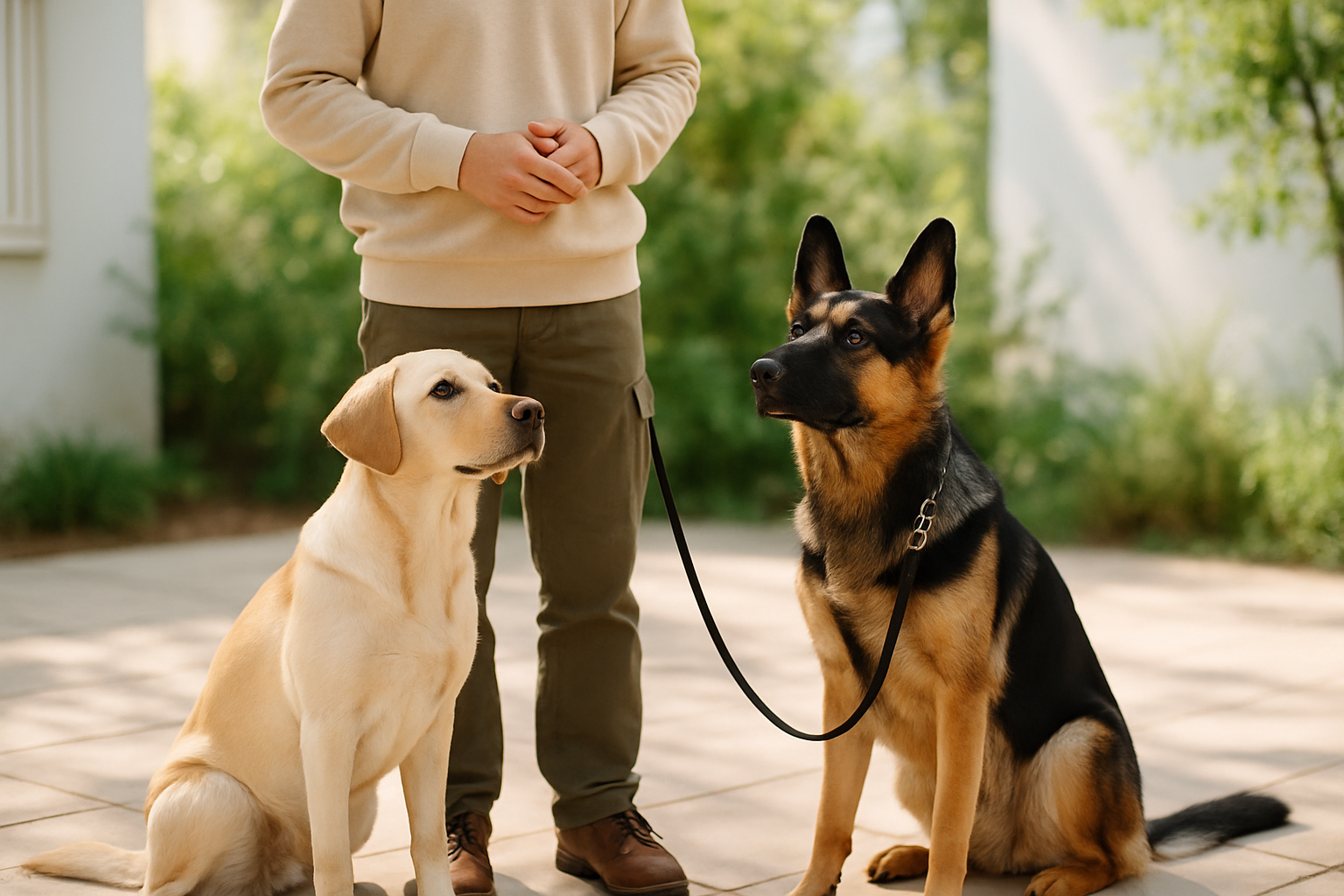
A dog training schedule shows real results when built on consistent daily routines your dog can anticipate and rely on. Your dog learns through repeated, predictable patterns—not occasional sessions or sporadic corrections. When you establish a structured daily dog training routine, you're creating a communication system your dog understands, which leads to faster obedience results and a more confident, engaged pet. This guide walks you through building a realistic training plan that fits your lifestyle while setting clear expectations for progress.[1]
Why Consistency Matters in Dog Training
If there's one thing that separates successful dog owners from frustrated ones, it's consistency. Your dog doesn't learn from occasional training sessions or sporadic corrections—they learn through repeated, predictable patterns. When you establish a consistent training schedule, you're essentially creating a communication system that your dog can understand and rely on. [1]
Think of it this way: your dog is constantly observing your behavior and learning what to expect. When training happens at random times with varying expectations, your dog becomes confused. They don't understand the rules because the rules keep changing. But when you establish a predictable routine, your dog begins to anticipate training moments and becomes more engaged, focused, and eager to participate. This predictability also reduces anxiety and helps your dog feel secure in their environment. [1]
Beyond behavior modification, consistency builds trust. Your dog learns that you're reliable—that you'll follow through on what you say, that rewards come for good behavior, and that the household operates according to understandable principles. This foundation of trust makes every subsequent training goal easier to achieve.
Understanding Your Dog's Learning Timeline
Before you create your training schedule, it's important to recognize that dogs learn at different rates depending on several factors. Age plays a significant role—puppies typically have shorter attention spans and may only focus for 5-10 minutes, while older puppies and adult dogs can concentrate for 10-15 minutes or longer. [1]
Breed, personality, and individual motivation also influence how quickly your dog masters new skills. Some dogs are highly food-motivated and will work tirelessly for treats, while others respond better to play or praise. [2] Additionally, adult dogs with established habits may need more time to unlearn problematic behaviors before learning new ones, though patience and gentle correction followed by positive reinforcement will help them succeed. [2]
The good news? Dogs are generally quick learners. Basic commands can be taught in just a few days, and with consistent practice and positive reinforcement, your dog can perform them reliably across different contexts within weeks or months. [2] The key is meeting your individual dog where they are and adjusting your expectations accordingly.
The Three Pillars of an Effective Training Schedule
Creating a training schedule isn't just about picking random times to work with your dog. There are three fundamental principles that make schedules actually work:
- Leverage Your Dog's Meals: Your dog's food is one of your most powerful training tools. Rather than simply placing food in a bowl, have your dog work to earn their meals during training sessions. This approach accomplishes multiple things simultaneously: it captures their attention, rewards them for compliance, and builds a positive association with following your direction. Many professional trainers recommend using a portion of your dog's regular kibble for training rather than additional treats. [1]
- Maintain a Daily Routine: Structure creates security. Establish a daily schedule that includes designated times for potty breaks, feeding, playtime, training sessions, and rest periods. When your dog knows what to expect and when to expect it, they're calmer, more confident, and better behaved. This predictability helps your dog understand household expectations and promotes good behavior naturally. [1]
- Practice in Multiple Environments: Once your dog has received proper vaccinations, begin practicing training routines in different outdoor locations. This prevents your dog from only obeying in your living room—it reinforces that commands apply everywhere. Environmental variation strengthens command reliability and encourages consistent good behavior regardless of location. [1]
Building Your Daily Training Schedule
Now let's get practical. Here's how to structure a daily training schedule that actually works:
Morning Sessions
Start your day with a short training session before breakfast. Your dog will be hungry, focused, and eager to work for their meal. Spend 5-10 minutes (for puppies) or 10-15 minutes (for older dogs) working on one or two commands. This is an ideal time to practice foundational skills like sit, stay, or come. End the session on a positive note—when your dog is succeeding—and follow up with their breakfast as the ultimate reward.
Midday Training
After a midday potty break and some play, dedicate another short session to reinforcing what you've already taught or introducing something new. This session doesn't need to use mealtime; treats from your training pouch work perfectly. Keep it brief and fun. The goal isn't exhaustion—it's engagement. [1]
Evening Sessions
Before dinner, conduct another short training session. By this point in the day, your dog may have some pent-up energy, so this is a great time to practice commands that require focus and impulse control. Again, use their dinner as the reward and conclude while your dog is still interested and performing well.
Bonus Training Moments
Beyond structured sessions, look for natural training opportunities throughout the day. Before letting your dog outside, ask them to sit. Before giving them a toy, ask for a down. Before going for a walk, ask them to wait calmly at the door. These micro-training moments reinforce lessons without requiring dedicated time blocks.
Session Structure: Quality Over Quantity
The length of your training sessions matters less than their quality. Here's how to structure each session for maximum effectiveness:
- Start with Success: Begin by practicing something your dog already knows well. This builds confidence and gets them into a positive mindset before introducing new material.
- Keep Sessions Short: Even if your dog seems engaged, stop before they lose interest. It's better to end a five-minute session with your dog wanting more than to push through a fifteen-minute session where they're fading. [Source 3]
- Focus on One or Two Skills: Trying to teach too many things in one session overwhelms your dog. Pick one primary skill and one secondary skill to reinforce.
- Use Immediate Rewards: When your dog does something right, reward them instantly—within one second if possible. This creates a clear connection between the behavior and the positive consequence. [Source 3]
- Stay Positive and Calm: Your energy matters. Dogs pick up on your frustration or excitement. Maintain a neutral, encouraging tone. If you find yourself getting frustrated, end the session and try again later. [Source 3]
- End on a High Note: Always finish training sessions with your dog succeeding at something. This leaves them eager for the next session rather than discouraged.
Establishing Clear Boundaries Within Your Schedule
Consistency isn't just about when you train—it's also about what you train. Dogs thrive when they understand clear boundaries and expectations. [2] Your training schedule should include designated times for teaching house rules: where they can go, what they can chew, how they should greet people, and how they should behave during meals.
Set these boundaries consistently. If your dog isn't allowed on the couch, that rule applies every single day, not just when you feel like enforcing it. If jumping on guests is unacceptable, redirect this behavior every time it happens. This consistency helps your dog understand the permanent nature of household rules rather than viewing them as arbitrary restrictions.
Adapting Your Schedule to Your Dog's Age
Your training schedule should evolve as your dog matures:
- Puppies (8 weeks - 6 months): Focus on foundational skills like name recognition, basic commands (sit, down, stay), and house training. Keep sessions very short (5-10 minutes) and frequent (3-4 times daily). Puppies need more patience as their brains are still developing. [1]
- Adolescent Dogs (6 months - 2 years): Extend session length to 10-15 minutes and begin introducing more complex commands and real-world scenarios. Practice in different environments. This is when consistency becomes critically important because adolescents often test boundaries.
- Adult Dogs (2-7 years): Adult dogs can handle longer sessions and more advanced training. They can also learn new behaviors at any point in their lives. Maintain your schedule but adjust intensity based on your individual dog's needs.
- Senior Dogs (7+ years): Older dogs can absolutely continue learning, but be mindful of physical limitations. If your senior dog seems reluctant to perform commands they previously knew, consult your veterinarian to rule out pain or sensory issues like hearing loss. [2]
Overcoming Common Scheduling Challenges
Challenge: "I'm too busy for multiple training sessions." Start with just two sessions daily—morning and evening. Even 5-10 minutes twice daily beats sporadic hour-long sessions. Quality and consistency trump quantity.
Challenge: "My dog loses interest quickly." Your dog's attention span is normal. Rather than fighting it, work with it. Multiple short sessions actually produce better results than marathon sessions because your dog stays engaged.
Challenge: "My schedule varies day to day." Create a flexible framework rather than rigid timing. Instead of "training at 7 AM," establish "training before breakfast." This maintains consistency in structure while accommodating schedule variations.
Challenge: "I keep forgetting to train." Anchor training to existing habits. Train before breakfast, after your morning coffee, or before dinner. These natural anchors make training easier to remember and maintain.
Measuring Progress and Adjusting Your Schedule
Every two weeks, assess whether your current schedule is working. Is your dog improving? Are they retaining what they've learned? Are they more focused during sessions? Adjust based on what you observe:
- If your dog is improving quickly, you might introduce new skills or increase difficulty
- If progress has plateaued, you might need more frequent sessions or to break skills into smaller steps
- If your dog is losing focus, your sessions might be too long or too frequent
- If you're struggling to maintain consistency, simplify your schedule to something more manageable
The Long-Term Benefits of Consistency
A consistent training schedule does more than teach commands. It establishes you as a reliable leader that your dog looks to for guidance. [Source 3] This leadership role deepens your bond and makes your dog more responsive to you in all situations—not just during formal training.
Dogs trained with consistent schedules and positive reinforcement are safer. They're less likely to run into traffic, get into fights with other animals, chase wildlife, or engage in destructive behaviors. [Source 3] They're also happier because they understand the world and their place in it.
Most importantly, consistency transforms training from a frustrating chore into a rewarding daily ritual that strengthens your relationship with your dog. When both you and your dog know what to expect, training becomes enjoyable for everyone involved.
Getting Started Today
You don't need the perfect schedule to begin. Start with what works for your lifestyle. Commit to two short training sessions daily—before breakfast and before dinner. Use your dog's meals as rewards. Practice one command at a time. End each session with success. Do this consistently for two weeks, then assess and adjust.
Remember, every expert dog trainer started exactly where you are now. The difference between dogs that transform and those that don't isn't talent—it's consistency. Your commitment to showing up, day after day, with patience and positivity, is what creates lasting change.
Your dog is ready to learn. They're waiting for you to provide the clear, consistent guidance that helps them become the well-behaved companion you've always wanted. Start today.