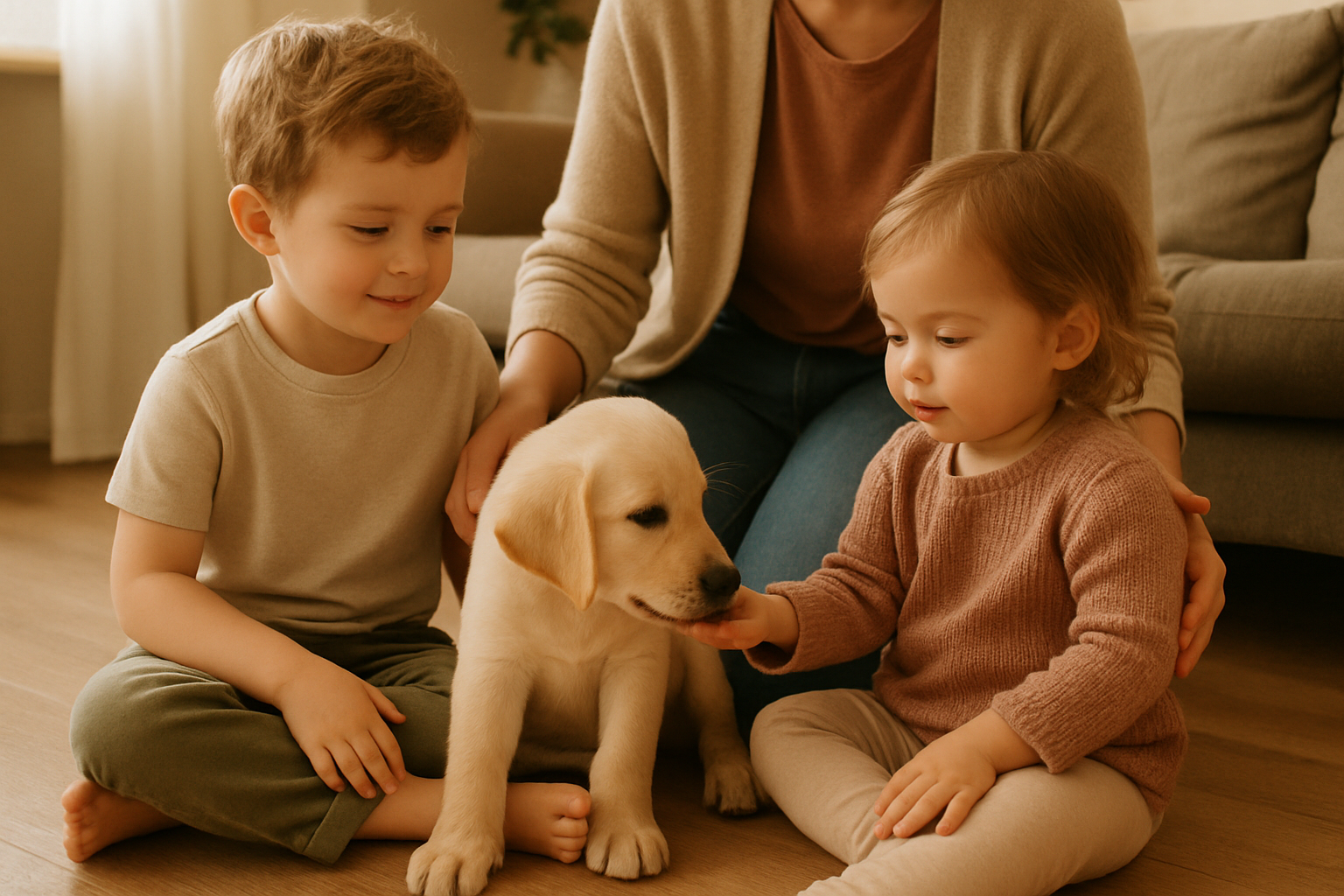
Introducing Your Puppy to Children Safely: A Comprehensive Guide
The moment you bring a new puppy home, your children's faces light up with pure joy. That infectious enthusiasm is wonderful—but it's also where things can quickly go sideways if you're not prepared. Many puppy-child problems can be prevented with careful planning, supervision, and guidance from qualified sources.
The truth is, puppies and young children operate on similar wavelengths: they're both energetic, impulsive, and learning about the world around them. Without your guidance, these two forces can create chaos, accidentally teach bad habits, or worse, create negative associations that damage their relationship for years to come.
This guide walks you through everything you need to know to set your puppy and children up for a lifetime of safe, joyful companionship.
Why Puppy-Child Introductions Matter
The first few weeks and months of a puppy's life are critical for developing their personality, confidence, and behavioral patterns. During this period, puppies are forming associations about the world—what feels safe, what's scary, what's rewarding, and what's confusing.
When children are involved in these early experiences, they're literally helping to shape your puppy's temperament. A child who learns to interact gently creates a puppy that feels secure around kids. Conversely, a child who plays roughly or surprises the puppy can inadvertently create anxiety or defensive behaviors that persist into adulthood. [1]
This isn't about blame—it's about recognizing that you have the power to influence these outcomes through intentional, thoughtful introductions.
Before the First Meeting: Setting the Stage
The introduction process doesn't actually begin when your puppy arrives home. It begins with preparing your children mentally and physically for what's coming.
Have a Family Meeting
Before your puppy arrives, sit down with your children and explain what puppies are really like. Many kids have idealized expectations shaped by movies and cartoons. They imagine a furry companion who's immediately ready to play fetch and cuddle for hours. Reality is different.
Explain that:
- Puppies are babies who need lots of sleep (14-18 hours per day)
- They explore the world with their mouths and will chew on things
- They don't understand human affection the way kids do
- They need training and patience to become the family pet everyone wants
- There will be accidents, and that's completely normal
Setting realistic expectations prevents disappointment and helps children approach the puppy with appropriate behavior from day one.
Teach Gentle Handling Beforehand
If you have younger children (especially under age 4), use a stuffed animal to demonstrate proper puppy handling before your real puppy arrives. [1] Show them:
- How to pet gently with an open hand (not grabbing or squeezing)
- How to support a puppy's bottom and back when holding them
- Why we never pull ears, tails, or paws
- How to recognize when a puppy wants space
This hands-on practice with a stuffed animal makes the transition to real puppy interaction much smoother.
The First Meeting: Creating a Positive Experience
The initial introduction sets the tone for your puppy's entire relationship with your children. Plan this carefully.
Choose the Right Environment
Meet your puppy in a calm, controlled space—ideally your living room or a quiet area of your home. Avoid overwhelming your puppy with the entire family crowding around immediately. Instead, have one adult bring the puppy in while children sit calmly on the floor.
Why the floor? Puppies are naturally intimidated by height. When children sit at the puppy's level, the dynamic feels less threatening and more inviting. Let the puppy approach the children at their own pace rather than forcing interaction.
Keep Initial Meetings Short
Puppies have short attention spans and tire quickly. A 10-15 minute first meeting is plenty. This prevents overstimulation and keeps the experience positive. You can always do another introduction later when everyone's calm.
Use Positive Associations
Have your children offer treats or engage the puppy with toys during the introduction. This teaches the puppy that children mean good things happen. [1] The puppy begins forming the association: kids appear = treats, play, and fun.
The Critical First Days: Establishing Boundaries
After the initial meeting, the next several days are crucial for establishing how your puppy and children will interact going forward.
Never Leave Them Unsupervised
This is non-negotiable: puppies and children under 13 should never be left alone together. [1] Not even for five minutes. Not even if your kids are "responsible for their age." Not even if your puppy seems perfectly behaved.
Why? Because in an unsupervised moment, a child might accidentally step on the puppy's tail, the puppy might nip during play, or a child might try to take away a toy. Any of these scenarios can create negative associations or injuries.
Your presence allows you to intervene before problems occur and redirect behavior in real-time.
Teach Children to Approach Calmly
Excited children running toward a puppy looks like an invitation to chase and play, which triggers nipping and jumping. [1] Instead, teach your children to:
- Walk slowly and calmly toward the puppy
- Call the puppy's name softly
- Crouch down to the puppy's level
- Let the puppy sniff their hand first
- Pet gently on the back or sides (not the head initially)
This approach creates a calm interaction pattern that your puppy will begin to anticipate and enjoy.
Establish "No Interruption" Times
Puppies need undisturbed time to sleep, eat, and play with toys. Teach your children that if the puppy is sleeping, eating, or focused on a toy or bone, they should not disturb them. [1]
Startling a puppy during these vulnerable moments can create negative associations or even trigger defensive reactions like growling or snapping—not out of aggression, but out of surprise and fear. [1]
Create a physical signal your kids can use: if the puppy is in their crate, on their bed, or has a toy, that's a "do not disturb" zone unless an adult gives permission.
Preventing Common Problem Behaviors
Most behavioral issues between puppies and children stem from preventable situations. Here's how to avoid the most common pitfalls.
Hand Play and Nipping
Never allow your puppy to play with children's hands, even if it seems cute or harmless. Puppies naturally explore with their mouths, and if they learn that hands are toys, this behavior becomes a problem as they grow. [1]
Instead, provide appropriate alternatives:
- Rope toys for tugging games
- Balls for fetch
- Puzzle toys for mental stimulation
- Stuffed toys for carrying around
When your puppy tries to mouth a child's hand, redirect immediately to a toy. Praise enthusiastically when the puppy engages with the toy instead. This teaches the puppy where appropriate play should happen.
Chase Games and Running
Kids running around with a puppy creates an irresistible play invitation that triggers chasing, jumping, and nipping. [1] While this is normal puppy behavior, allowing it to continue establishes a pattern that becomes problematic as the puppy grows.
Instead, teach children to:
- Play structured games like fetch rather than chase
- Use toys on strings or flirt poles for interactive play
- Practice training commands for rewards
- Play in designated areas with clear boundaries
These activities provide the stimulation puppies crave while teaching appropriate interaction patterns.
Rough Handling and Hugging
Children often want to hug their puppies tightly, squeeze them, or bury their faces in puppy fur. While this comes from a place of love, it can overwhelm and frighten puppies. [1]
Teach children that puppies don't experience affection the way humans do. Tight hugs around the chest and neck, having their faces mushed, or being picked up unexpectedly can make puppies anxious and apprehensive about being handled. [1]
Show them the right way:
- Gentle strokes on the back and sides
- Soft scratches behind the ears
- Calm, brief petting sessions
- Respecting when the puppy walks away
Integrating Training Into Child-Puppy Interactions
Once your puppy has learned basic commands, children can become wonderful training partners—but timing matters.
Let the Puppy Learn First
Don't involve children in training during the very first days. [1] Puppies are easily distracted, and a playful child looks far more interesting than your training session. Let your puppy master basic commands (sit, down, stay, come) with you first, establishing clear associations between the word, the action, and the reward.
Once your puppy understands these commands reliably, introduce your children as training partners. This prevents confusion and sets everyone up for success.
Teach Children to Be Trainers
Show your children exactly how to:
- Give clear, consistent commands
- Reward immediately when the puppy complies
- Use treats or praise appropriately
- Stay patient and calm
- Keep training sessions short (5-10 minutes)
This gives children a sense of responsibility and accomplishment while providing structured, positive interaction with the puppy. [1]
Age-Specific Guidance for Different Children
Your approach should vary depending on your child's age and maturity level.
Toddlers (Ages 1-3)
Constant supervision is essential. Toddlers move unpredictably and can accidentally hurt a puppy. Use baby gates to create safe spaces where the puppy can retreat away from toddlers. Interactions should be very brief and always supervised by an adult holding the child or standing directly beside them.
Preschoolers (Ages 4-5)
Children this age can begin learning basic handling and simple commands, but still require close supervision. Use a stuffed animal to practice proper technique before interacting with the real puppy. Keep sessions short and focus on positive, calm interactions.
Early Elementary (Ages 6-8)
These children can take on more responsibility—helping with feeding, basic training, and play—under supervision. They're old enough to understand cause and effect, so explaining why certain behaviors are harmful becomes more effective.
Older Children (Ages 9+)
Older kids can handle most interactions independently, though supervision during training and play is still important. They can help with more complex training, exercise, and care responsibilities.
Red Flags and When to Seek Help
Most puppy-child interactions go smoothly with proper management, but watch for these warning signs:
- Puppy consistently avoiding children or showing fear signals (tucked tail, averted eyes, trembling)
- Puppy growling, snapping, or showing teeth to children
- Children showing fear or reluctance to interact with the puppy
- Repeated nipping or jumping that doesn't improve with redirection
- Puppy resource guarding (protecting toys or food from children)
If you notice any of these, consult with a certified professional dog trainer. Early intervention prevents problems from becoming ingrained behavioral issues.
Creating Long-Term Success
The goal isn't just to survive the puppy stage—it's to build a foundation for a lifelong, joyful relationship between your children and your dog.
Stay Consistent
Consistency is more important than perfection. If you sometimes allow hand play but other times discourage it, your puppy becomes confused. Establish clear rules and stick to them, even when it's inconvenient.
Celebrate Small Wins
When your child gently pets the puppy, when the puppy sits calmly during a child's petting, when a child successfully teaches the puppy a command—celebrate these moments. Positive reinforcement works for children too, and it reinforces the behaviors you want to see.
Adjust as Your Puppy Grows
Your puppy's needs change as they grow. What works for an 8-week-old won't work for a 6-month-old. Stay engaged, keep learning, and adjust your approach accordingly.
The Bottom Line
Introducing your puppy to children safely isn't complicated, but it does require intention and consistency. By supervising interactions, establishing clear boundaries, teaching gentle handling, preventing problem behaviors, and integrating children into training, you create an environment where both your puppy and children thrive.
The investment you make in these early weeks pays dividends for years to come. Your children will learn responsibility, empathy, and the joy of a genuine bond with an animal. Your puppy will grow into a confident, well-behaved dog who loves spending time with the entire family.
That's a win worth the effort.