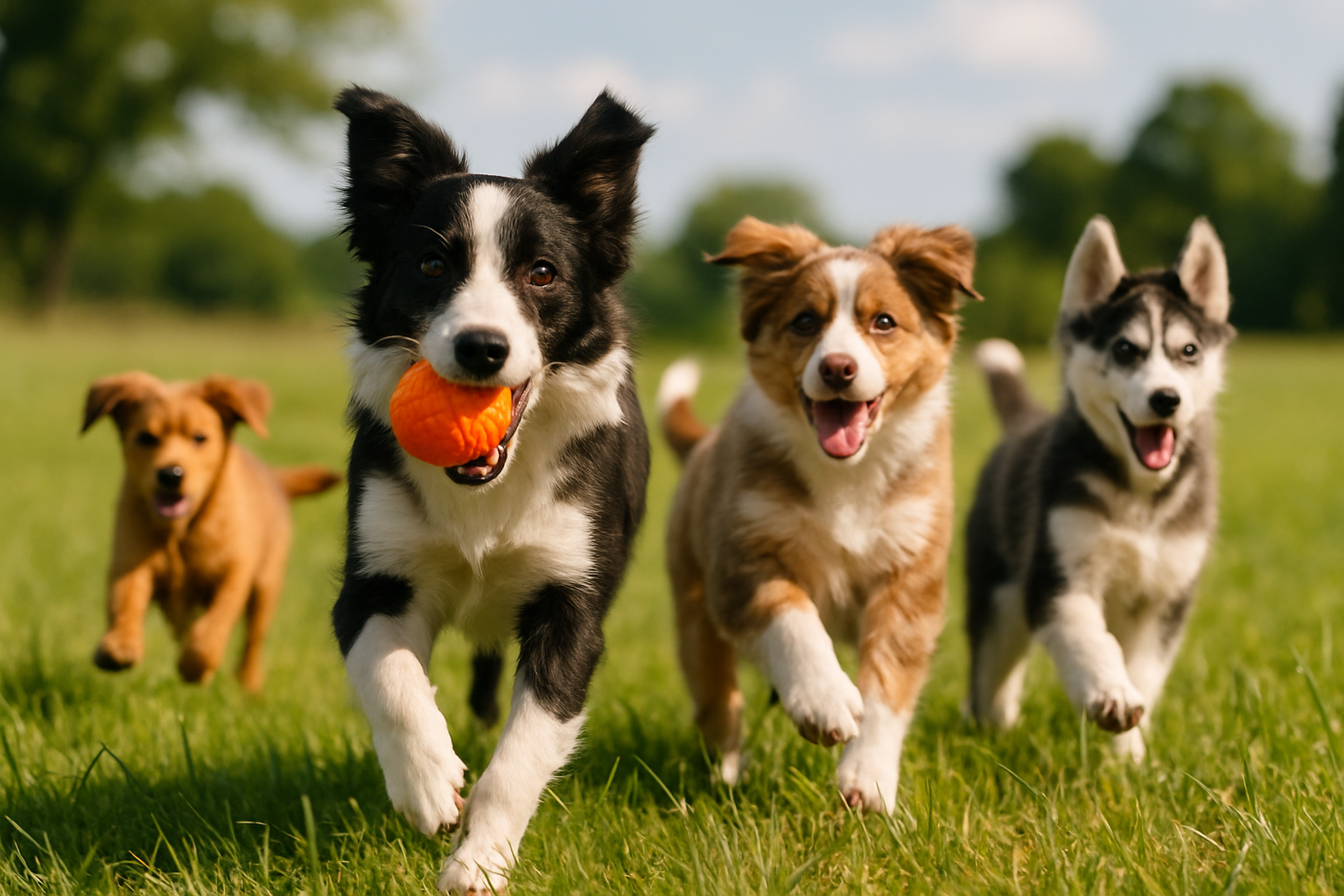
The High-Energy Puppy Challenge: Understanding the Problem
You've just brought home an adorable new puppy, and within hours, you realize this little furball has an seemingly unlimited energy supply. They're bouncing off furniture, chewing on everything, and showing no signs of slowing down—even as you're exhausted from trying to keep up. If this sounds familiar, you're not alone. Many new puppy owners find themselves overwhelmed by their pup's relentless enthusiasm and constant need for stimulation.
The reality is that high-energy puppies aren't just being difficult—they're expressing their natural instincts. Breeds like Border Collies, Australian Shepherds, Jack Russell Terriers, and Siberian Huskies were historically developed for demanding work such as herding, hunting, or guarding livestock. These breeds require significantly more exercise and mental engagement than their calmer counterparts. [1] Statistics show that high-energy dogs need at least 60 minutes of vigorous exercise daily to stay happy and healthy. [3] Without proper outlets for this energy, puppies often resort to destructive behaviors like excessive chewing, digging, and inappropriate elimination.
The good news? There's a proven formula for managing your puppy's energy levels. It involves combining physical exercise with mental stimulation, establishing consistent routines, and understanding what truly motivates your individual pup. Let's dive into the strategies that will transform your chaotic puppy into a calm, well-adjusted companion.
The Dual-Energy Approach: Physical and Mental Exercise
Many puppy owners make a critical mistake: they assume that tiring out their pup means only physical exercise. While running and playing are essential, they're only half the equation. The most effective strategy involves what we call the "dual-energy approach"—combining rigorous physical activity with challenging mental stimulation. [1] Owners who diversify their training approach by blending mental and physical tasks report significantly higher satisfaction and improved behavior in their dogs.
Think of your puppy's energy like a battery with two compartments: one for physical energy and one for mental energy. A puppy might still have a full mental battery even after a long walk, which is why they continue to act restless and destructive. Conversely, a puppy that's been mentally challenged but hasn't exercised their body might still have pent-up physical energy. The secret is addressing both simultaneously.
Physical Exercise: Burning Off the Fuel
Physical exercise is the foundation of managing your puppy's energy. Here are the most effective physical activities:
- Extended Walks and Hikes: Aim for at least two walks daily, each lasting 30 minutes to an hour. [3] Vary your routes to keep things interesting and provide different sensory experiences. Walking on different terrain engages different muscle groups and keeps your puppy mentally engaged while physically active.
- Off-Leash Running: If you have access to a securely fenced area or dog park, allow your puppy to run freely. Off-leash exercise allows them to expend energy at their own pace and often burns calories faster than leashed walks. [2] This is particularly valuable for high-energy breeds.
- Interactive Play Sessions: Engage in games like fetch, tug-of-war, and frisbee. These games combine exercise with bonding and can quickly tire out even the most energetic puppies. Keep sessions to 15-20 minutes initially, as puppies have shorter attention spans.
- Swimming: If your puppy enjoys water, swimming is an excellent full-body workout that's easy on developing joints. It provides cardiovascular benefits without the impact stress of running on hard surfaces. [3]
- Biking or Canicross: For more athletic owners, biking alongside your puppy or canicross (running with your puppy attached via a specialized harness) provides intense physical activity. These activities should only be introduced once your puppy's growth plates have matured (typically 12-18 months depending on breed).
Mental Exercise: Engaging the Brilliant Mind
Mental stimulation is equally critical, yet often overlooked. High-energy breeds were developed to work and think independently. Their brains are literally programmed to have a job. [2] Without mental challenges, they'll create their own "jobs," often resulting in destructive behaviors like chewing baseboards or tearing apart furniture.
Here are powerful mental stimulation activities:
- Puzzle Toys and Brain Games: Interactive toys that dispense treats force your puppy to think and solve problems to access rewards. Kong toys, West Paw Toppl, and lick mats can keep your puppy engaged for extended periods. [2] Rotate different puzzle toys to maintain novelty and interest.
- Scent Work and Hide-and-Seek: Dogs have an incredible sense of smell. Hide treats around your house or yard and encourage your puppy to find them. This taps into their natural instincts and provides satisfying mental engagement. [1] You can gradually increase difficulty by hiding treats in more challenging locations.
- Training Sessions: Short, focused training sessions (5-10 minutes) throughout the day provide mental exercise while strengthening your bond. Teaching new commands, working on impulse control, and practicing obedience all challenge your puppy's mind. [3] Training before physical play can actually enhance your puppy's ability to focus during exercise.
- Nose Work Games: Create games where your puppy uses their nose to search for toys, treats, or even you. Hide-and-seek games where you hide and have your puppy find you are particularly engaging.
- Frozen Treats and Long-Lasting Chews: Frozen Kongs stuffed with treats or peanut butter provide extended mental engagement as your puppy works to extract the contents. Appropriate chewing outlets redirect their natural chewing instincts productively.
Creating a Structured Routine: The Foundation of Success
High-energy puppies thrive on predictability. A well-structured routine helps your puppy know what to expect, reducing anxiety and behavioral issues. [1] Think of your routine as a framework that channels your puppy's energy into productive activities rather than destructive ones.
Here's a sample daily routine for a high-energy puppy:
- Early Morning (7-8 AM): Brief potty break and 15-minute walk
- Mid-Morning (10-11 AM): Mental stimulation (puzzle toys, training session, scent work) for 20-30 minutes
- Midday (12-1 PM): Lunch and rest period (crate time or designated rest area)
- Afternoon (3-4 PM): Physical exercise (off-leash play, fetch, or longer walk) for 30-45 minutes
- Late Afternoon (5-6 PM): Mental enrichment (training, puzzle toys, or nose work) for 20-30 minutes
- Evening (7-8 PM): Dinner and calm activities (gentle play, bonding time)
- Night (9-10 PM): Final potty break and bedtime
The key is consistency. Your puppy will begin to anticipate these activities and settle more easily during downtime because they know stimulation is coming. [1] Varying the specific activities within each time slot keeps things interesting while maintaining the predictable structure.
Understanding Your Individual Puppy: Motivation Matters
Not all puppies are motivated by the same rewards. Some live for treats, while others are driven by toys, physical affection, or even just your excited tone of voice. [2] Understanding what truly motivates your individual puppy is crucial for effective training and exercise.
To discover your puppy's primary motivators, observe their behavior and experiment with different rewards:
- Does your puppy go crazy when you pull out a specific toy?
- Are they more interested in treats or play?
- Do they respond better to verbal praise or physical affection?
- What activities do they choose to do when given free choice?
Once you identify what motivates your puppy, use this knowledge strategically during training and play. In early training stages, motivation acts as a bribe to encourage desired behavior. [2] As your puppy matures and understands expectations, this motivation transforms into a reward they actively seek by performing known behaviors.
Nutrition: Fueling the Engine Properly
A high-energy puppy's nutritional needs are different from calmer dogs. These active pups burn significantly more calories, requiring special dietary consideration. [1] A balanced diet with appropriate proteins, fats, and carbohydrates ensures your puppy has sustained energy for activity and recovery.
Key nutritional considerations:
- Consult your veterinarian about the appropriate calorie intake for your puppy's age, breed, and activity level
- Ensure adequate protein to support muscle development and recovery
- Include healthy fats for brain development and sustained energy
- Feed multiple smaller meals throughout the day rather than one large meal
- Avoid feeding immediately before intense exercise to prevent bloat
- Provide fresh water constantly, especially during and after activity
A well-fed, properly hydrated puppy is more focused during training and better able to handle the physical and mental demands you're placing on them. [1]
Socialization and Training: Building Confidence and Control
Proper socialization and training during puppyhood have lasting impacts on behavior and energy management. Inadequate training and limited socialization can actually contribute to hyperactivity and behavioral issues. [4]
Prioritize these foundational skills:
- Solid Recall: A reliable "come" command is one of the most valuable skills for high-energy dogs. It allows you to provide significantly more off-leash freedom, which is crucial for burning energy. [2] Start in low-distraction environments and gradually increase difficulty.
- Polite Leash Walking: Teaching your puppy to walk calmly on a leash without pulling enables you to enjoy longer walks and hikes together. [2] This makes regular exercise more enjoyable for both of you.
- Basic Obedience: Commands like "sit," "stay," and "leave it" provide mental stimulation while establishing you as a consistent leader. [4] Break these down into manageable steps and celebrate small victories.
- Impulse Control: Exercises that teach your puppy to wait, pause, and think before acting help channel their energy productively. "Wait" at the door, "leave it" with treats, and pausing before meals all build impulse control.
Consider working with a professional trainer, either in-person or virtually. [2] Remember that trainers aren't training your dog—they're training you to train your dog. The communication skills and understanding you gain are invaluable for your long-term relationship with your puppy.
Recognizing the Signs: Is Your Puppy Getting Enough?
How do you know if your exercise and enrichment routine is actually working? Look for these positive signs:
- Your puppy can settle and rest calmly during designated downtime
- Destructive behaviors (excessive chewing, digging, inappropriate elimination) decrease
- Your puppy is more responsive to training and commands
- Energy levels are more balanced throughout the day
- Your puppy shows interest in learning new things
- Play sessions are followed by natural rest periods
Conversely, these signs indicate your puppy needs more stimulation:
- Excessive barking or whining
- Persistent destructive behavior
- Inability to focus during training
- Hyperactivity that continues even after exercise
- Difficulty settling or constant restlessness
- Attention-seeking behaviors that seem excessive
The Importance of Rest: Don't Over-Exercise
While it might seem counterintuitive, rest is just as important as activity for high-energy puppies. Over-exercising can lead to exhaustion, potential injuries, and actually increase behavioral problems. [3] Growing puppies need adequate rest for proper physical development and mental processing.
Establish designated rest periods where your puppy has a comfortable space to relax undisturbed. A crate with a cozy bed, a designated corner with a comfortable mat, or a pen in a quiet area all work well. These rest periods help your puppy learn to self-regulate and provide necessary downtime for their developing bodies and brains.
Actionable Takeaways: Your Next Steps
Start implementing these strategies today:
- Assess your puppy's breed: Research your puppy's original purpose and breed characteristics to understand their inherent exercise needs better.
- Create a daily routine: Design a schedule that includes both physical exercise and mental stimulation, with designated rest periods.
- Identify your puppy's motivators: Experiment to discover what truly drives your individual pup and use this knowledge strategically.
- Invest in quality gear: Puzzle toys, appropriate leashes and harnesses, and durable chew toys are worth the investment.
- Seek professional guidance: Consider at least a few sessions with a professional trainer to establish clear communication and training foundations.
- Track progress: Monitor behavioral improvements and adjust your routine based on what works best for your specific puppy.
- Be patient and consistent: Building good habits takes time. Stick with your routine and celebrate small victories along the way.
Remember, every puppy is unique. What works perfectly for your friend's puppy might need adjustment for yours. Stay flexible, observe your puppy's responses, and don't hesitate to modify your approach. The investment you make now in properly tiring out your high-energy puppy will pay dividends in the form of a well-behaved, balanced adult dog.
Sources & References
- https://offleashk9oklahoma.com/training-high-energy-dogs-tips-success/
- https://atlaspetcompany.com/blogs/adventures/tips-and-tricks-for-training-high-energy-pups
- https://www.houndsy.com/blogs/modern-tails/how-to-exercise-a-high-energy-dog-a-comprehensive-guide-for-pet-owners
- https://www.shelbydogtraining.com/blog/2023/8/3/how-to-train-a-hyperactive-puppy