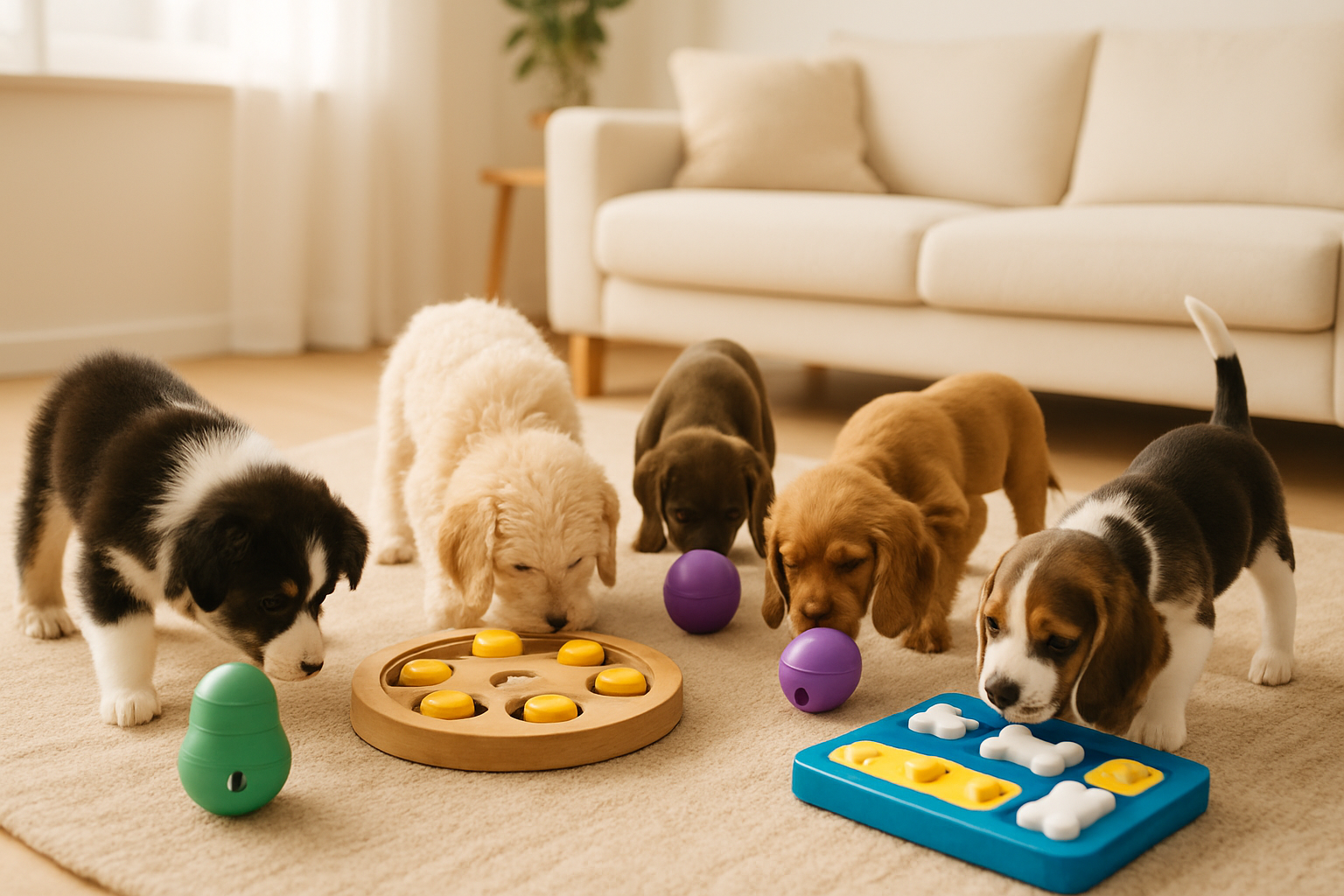
Why Puzzle Toys Matter for Growing Puppies
Picture this: You step away for two hours to run errands, and when you return home, your living room looks like a tornado hit it. The TV remote is in pieces between the couch cushions, throw pillows are scattered everywhere, and your puppy is wagging their tail, completely satisfied with their afternoon of "entertainment." Sound familiar?
This scenario isn't just frustrating—it's a sign that your puppy's brilliant mind isn't getting the engagement it craves. Puppies are naturally curious, intelligent creatures with an instinctive drive to forage, hunt, and solve problems. Without proper mental outlets, they'll create their own, and those outlets usually involve your favorite possessions. [1]
Research from behavioral experts confirms what many puppy parents intuitively know: cognitive stimulation is just as important as physical exercise for healthy puppy development. Mental engagement through puzzle toys can reduce anxiety, curb destructive behaviors, and help puppies develop confidence in their problem-solving abilities. [3] When you provide appropriate mental challenges, you're not just preventing boredom—you're actively supporting your puppy's emotional and behavioral development.
Understanding the Three Difficulty Levels
Not all puzzle toys are created equal, and matching your puppy's skill level to the right toy is crucial for success. According to certified dog behavior consultants, starting with toys that are too difficult can actually backfire, causing frustration and discouragement. [2] Instead, think of puzzle toys as a progression—a journey your puppy takes as their confidence and problem-solving abilities grow.
Beginner Level: Building Confidence
Beginner puzzle toys are perfect for puppies just discovering the concept of working for their rewards. These toys introduce problem-solving in a straightforward, encouraging way that builds your puppy's confidence without overwhelming them.
- KONG Toys: The classic choice for a reason. These durable rubber toys can be stuffed with kibble, dry treats, or spreadable options like dog-safe peanut butter. The unpredictable bounce keeps puppies engaged, and the simplicity means even young pups can experience success. [2]
- Treat-Dispensing Balls: Simple, rolling toys that release treats as your puppy nudges them around. The Tricky Treat Ball features an uneven surface that creates unpredictable bounces, keeping chase-loving puppies entertained while they work for their rewards. [2]
- Snuffle Mats: These fabric mats with hidden pockets tap into your puppy's natural foraging instinct. By hiding treats in the soft folds, you encourage your pup to use their nose—one of their most powerful senses—to solve the puzzle. [1]
- Simple Slider Puzzles: Interactive toys with basic mechanisms like the Hide & Seek Sushi puzzle allow puppies to slide pieces and discover treats without requiring complex manipulation. [2]
Intermediate Level: Building Skills
Once your puppy has mastered beginner toys and shows consistent success, it's time to introduce more complexity. Intermediate puzzles require multiple problem-solving steps and encourage puppies to experiment with different techniques.
- Multi-Mechanism Flip Boards: These toys feature switches, sliders, hinges, and cones that require puppies to use various techniques to uncover treats. Each compartment works differently, teaching puppies that different problems require different solutions. [1]
- Hide-and-Seek Plush Toys: Toys like the Squirrel-in-Tree puzzle combine texture and challenge. Puppies must maneuver their nose and paws into a plush tree trunk to extract squeaky squirrels hidden inside. The added sensory element of squeakers keeps engagement high. [1]
- Rotating Disk Puzzles: These creative toys feature rotating layers where treats are hidden behind movable disks. Puppies must figure out how to rotate the layers to access rewards, introducing cause-and-effect learning. [1]
- Wobbling Treat Dispensers: Toys with adjustable bases that release treats through various pokes, nudges, and taps teach puppies that multiple approaches can lead to success. [1]
Advanced Level: Mastering Challenges
Advanced puzzle toys are designed for puppies who've demonstrated strong problem-solving skills and can handle multi-step challenges. These toys often combine several mechanisms and may require supervision to prevent frustration.
- Chess-Style Games: Four-difficulty-level games that progress from simple cone lifting to complex combinations of sliders moving in opposite directions. These toys truly challenge a puppy's cognitive abilities and require patience and persistence. [1]
- Complex Multi-Step Puzzles: Toys that combine rotating disks, sliding mechanisms, and hidden compartments. Adding plastic blocks to increase difficulty teaches puppies adaptive problem-solving. [1]
- Scent-Work Games: Advanced enrichment tools based on working dog training that tap into your puppy's nose—their most powerful sense. These games build advanced problem-solving and focus in ways traditional puzzle toys cannot. [3]
Choosing the Right Puzzle Toy for Your Puppy
With countless options available, how do you know which puzzle toy will be perfect for your specific puppy? Consider these essential factors:
Size and Breed Considerations
Your puppy's size matters significantly. Small toys designed for toy breeds can become choking hazards for larger puppies, while oversized puzzles may frustrate tiny pups who can't manipulate them effectively. Similarly, different breeds have different needs—a high-energy Border Collie puppy will benefit from more complex mental challenges than a naturally laid-back Basset Hound. [3]
Chewing Power
Some puppies are gentle with toys; others are determined destroyers. If your puppy is a serious chewer, look for puzzle toys made from durable rubber or reinforced materials. The Qwizl, designed for enthusiastic chewers, holds up to serious chomping while providing mental stimulation. [2]
Motivation Style
Not all puppies are treat-motivated. Some prefer toys with squeakers and plush textures, while others are motivated by the challenge itself. Observe what excites your puppy, then choose puzzles that align with their natural preferences. Puppies who love squeakers will adore hide-and-seek plush toys, while food-motivated pups thrive with treat-dispensing puzzles. [1]
Safety and Quality
Always verify that puzzle toys are made from pet-safe materials and designed specifically for dogs. Check reviews on reputable sites, inspect toys regularly for damage, and supervise your puppy during play sessions, especially with new toys. [3]
Implementation Strategy: Making Puzzle Toys Part of Your Routine
Starting Strong
Begin with a beginner-level toy and introduce it when your puppy is calm and focused. Demonstrate how the toy works by showing your puppy where treats are hidden or how pieces move. Your enthusiasm will be contagious, and your puppy will quickly understand that this toy is worth their attention.
Frequency and Duration
Puzzle toys aren't meant to replace regular feeding bowls or be available 24/7. Instead, use them strategically—about 2-4 times per week is ideal for most puppies. [3] This frequency keeps them novel and exciting rather than becoming mundane household items. Keep individual sessions short (10-15 minutes) to maintain engagement and prevent frustration.
Rotating Your Toy Selection
A puzzle toy that captivates your puppy today might lose its appeal next week. Combat this by rotating between 3-4 different puzzles. When you reintroduce a toy after a week or two away, it feels fresh and exciting again. This rotation strategy also allows you to gradually increase difficulty as your puppy's skills develop. [3]
Varying Your Rewards
If you always use the same treats, your puppy's motivation may wane. Mix up your rewards—sometimes use high-value treats, sometimes regular kibble, sometimes just the satisfaction of solving the puzzle. This unpredictability keeps your puppy engaged and prevents them from becoming bored with the activity. [3]
Beyond Traditional Puzzle Toys
While commercial puzzle toys are excellent tools, don't overlook other enrichment options. The Animal Humane Society offers directions for creating homemade puzzles using household items like muffin tins, toilet paper tubes, and blankets. [1] These DIY options are budget-friendly and can be customized to your puppy's specific interests.
Additionally, scent-based games represent an evolution beyond traditional treat puzzles. These games leverage your puppy's extraordinary sense of smell and can provide endless variety without relying solely on food rewards. [3]
Troubleshooting Common Challenges
My Puppy Loses Interest Quickly
This usually indicates the toy is either too easy or too difficult. If it's too easy, your puppy has solved it and moved on—time to upgrade to intermediate level. If it's too difficult, your puppy is frustrated and giving up. Step back to an easier level and build confidence before progressing again.
My Puppy Gets Frustrated
Never force a puppy to engage with a puzzle toy. If you notice signs of frustration (whining, pawing intensely, walking away), remove the toy and try again later with a simpler option. Building positive associations with puzzle toys is more important than completing any single puzzle.
My Puppy Ignores Food-Based Puzzles
Not every puppy is food-motivated, and that's perfectly normal. Try plush hide-and-seek toys with squeakers, or combine puzzle toys with play sessions rather than treats. Some puppies find the challenge itself rewarding enough.
The Long-Term Benefits
Investing in puzzle toys for your puppy isn't just about managing boredom in the moment. The cognitive benefits extend far into your dog's adult life. Puppies who regularly engage with puzzle toys develop stronger problem-solving skills, greater confidence, and more resilient emotional responses to challenges. They're less likely to develop anxiety-related behaviors and more likely to be adaptable, curious adults. [3]
Perhaps most importantly, puzzle toys create a positive feedback loop: as your puppy successfully solves challenges, their confidence grows, which makes them more willing to tackle increasingly complex problems. This builds a foundation of cognitive resilience that serves them well throughout their lives.
Key Takeaways
- Mental stimulation through puzzle toys is essential for puppy development and behavioral health
- Start with beginner-level toys and progress gradually as your puppy's skills develop
- Match puzzle difficulty to your puppy's current abilities to build confidence without causing frustration
- Rotate between different puzzles (2-4 times weekly) to maintain novelty and engagement
- Consider your puppy's size, breed, chewing power, and motivation style when selecting toys
- Combine commercial puzzle toys with DIY enrichment and scent-based games for variety
- Keep sessions short and positive to build a lifelong love of mental challenges
Your puppy's brilliant mind is waiting for engagement. By providing the right puzzle toys at the right time, you're not just preventing destructive behavior—you're nurturing a confident, capable problem-solver who'll bring joy and personality to your home for years to come.