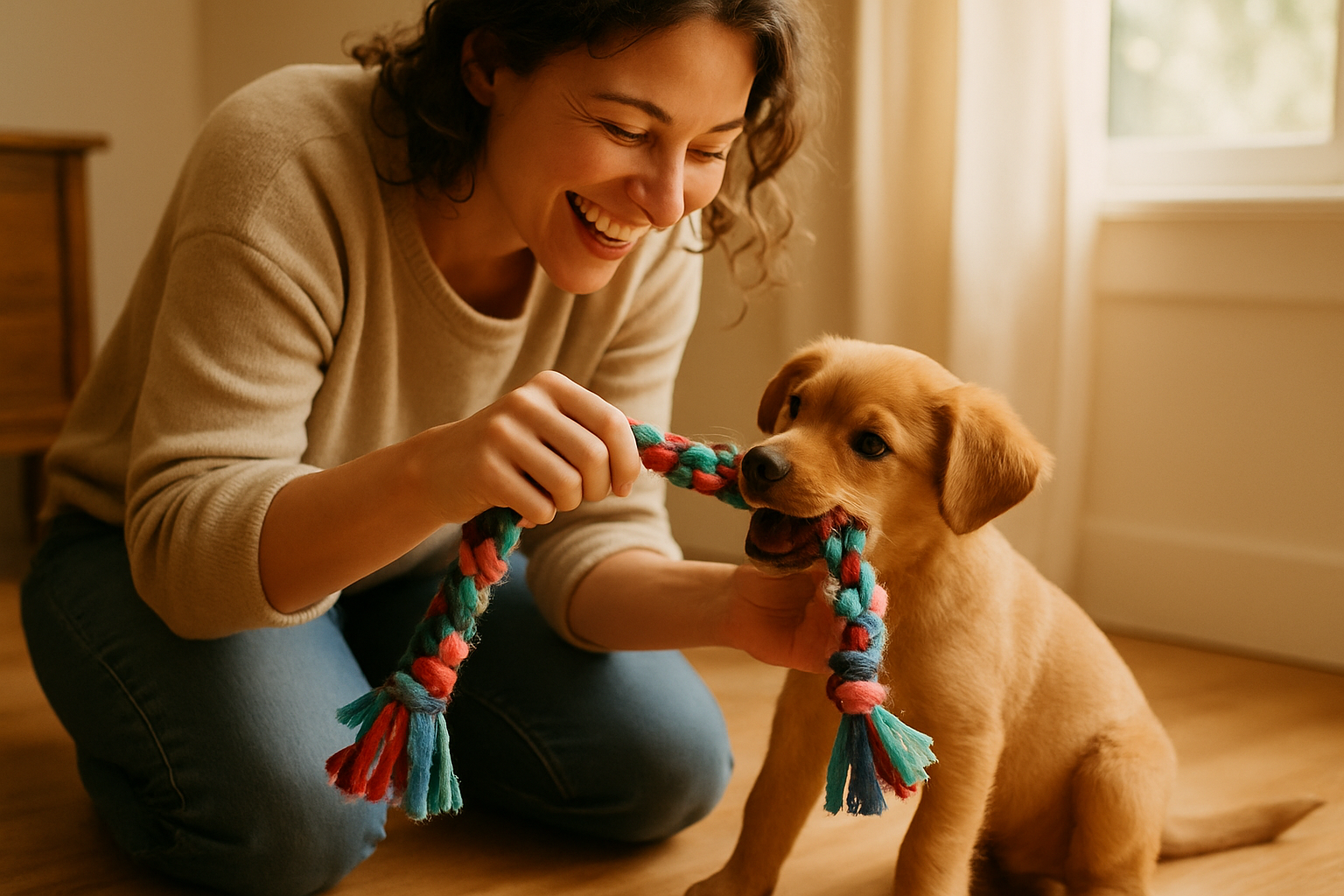
Homemade puppy teething toys are one of the most effective ways to soothe your puppy's sore gums while saving money on store-bought options. When your puppy is teething, they need safe outlets to chew and relieve pressure on their developing teeth—and DIY toys let you provide exactly that. These 15+ ideas use everyday household items to create toys tailored to your puppy's age and chewing intensity, giving you complete control over materials and safety. Beyond comfort, homemade teething toys offer mental stimulation that prevents destructive behavior and supports healthy development.[2] [3]
Why DIY Puppy Toys Matter More Than You Think
As a puppy parent, you're probably familiar with the cycle: buy an expensive toy, watch your pup destroy it in record time, repeat. But here's what many people don't realize—homemade toys offer far more than just budget savings. Creating toys at home allows you to tailor enrichment activities specifically to your puppy's play style, age, and developmental stage. [2] [3]
Beyond the financial benefits, DIY toys provide critical mental and physical stimulation that helps prevent behavioral problems, reduces anxiety, and even supports cognitive health as your puppy matures. When you make toys yourself, you control the materials, ensuring they're safe and appropriate for your individual pup. Plus, there's something special about watching your puppy enjoy something you created with your own hands.
The Benefits of Homemade Puppy Toys
- Cost-effective: Most DIY toys cost just a few dollars or use materials you already have at home
- Customizable: Tailor difficulty levels and materials to your puppy's preferences and developmental needs
- Sustainable: Upcycle old clothing, towels, and household items instead of sending them to landfills
- Safer options: You control what materials touch your puppy's mouth
- Bonding opportunity: Family-friendly projects that everyone can participate in
- Endless variety: Create new toys whenever your pup gets bored without breaking the bank
Fabric-Based Toys: Perfect for Tugging and Chewing
Fabric scraps are goldmines for DIY puppy toys. Old t-shirts, towels, and denim pieces can be transformed into engaging playthings that satisfy your puppy's natural desire to chew and tug. [1] [4]
Braided T-Shirt Tug Toy
This no-sew classic is ideal for puppies who love interactive play. Here's how to make it:
- Cut 3-4 old t-shirts into long strips (approximately 2 inches wide)
- Tie a large knot at one end of your strips
- Braid the strips as tightly as possible, keeping the tension consistent
- Tie another knot at the opposite end to secure the braid
- Trim any loose threads for safety
The braided texture gives your puppy multiple surfaces to grip, making tug-of-war games more engaging and physically demanding. This toy is particularly effective for burning energy during those high-energy puppy phases.
Denim Knot Chew Toy
Denim is remarkably durable and perfect for power chewers. Unlike softer fabrics, denim maintains its integrity longer under aggressive chewing:
- Collect strips from old jeans or denim jackets (cut along the grain for easier handling)
- Tie strips together in knots, stacking multiple strips to create thickness
- Add additional knots every few inches along the toy
- Optionally, cut small tassels into the strips for added sensory interest
Frozen Sock Surprise
This might sound simple, but puppies absolutely love frozen socks. [4] The cold provides soothing relief for teething puppies while the texture satisfies chewing urges:
- Select a clean sock you no longer wear
- Tie a knot at the end
- Dip the sock in water
- Place in the freezer for 3-4 hours
- Supervise playtime to prevent ingestion of fabric
Puzzle and Enrichment Toys: Mental Stimulation Games
Puppies are natural foragers with incredible problem-solving abilities. Puzzle toys challenge their minds and encourage the hunting behaviors that are hardwired into their DNA. [2] [3] Mental enrichment is just as important as physical exercise for healthy puppy development.
Muffin Tin Treat Game
This classic enrichment toy requires minimal preparation and provides extended entertainment:
- Place small treats in the cups of a muffin tin
- Cover each cup with a tennis ball
- Show your puppy how to remove the balls to access the treats
- Increase difficulty by placing treats in only some cups, forcing your pup to problem-solve
This game stimulates your puppy's sense of smell and teaches them to use their nose to investigate. Start with all cups baited to build confidence, then gradually reduce the number of treats to increase the challenge.
Cardboard Box Puzzle Feeder
Cardboard boxes offer incredible versatility for puzzle creation. [3] The destructible nature of cardboard also provides satisfying sensory feedback for puppies:
- Take a sturdy cardboard box and place a smaller box inside it
- Put high-value treats in the inner box
- Wrap both boxes and place them together
- Your puppy must tear through the outer box to reach the inner treasure
- For extra difficulty, nest three or four boxes together
Important safety note: Always supervise your puppy during cardboard play to ensure they don't ingest large pieces. Remove and discard the toy once it becomes significantly damaged.
Snuffle Mat: The Ultimate Nose Work Toy
While requiring a bit more effort than other DIY toys, a snuffle mat provides hours of enrichment and helps tire out even the most energetic puppies. [3]
Materials needed:
- Rubber drainage mat (often called a "yoga mat" style with holes)
- Fleece strips in various colors (old fleece blankets work perfectly)
- Scissors
Instructions:
- Cut fleece into strips approximately 3-4 inches long and 1 inch wide
- Tie each strip through the holes in the drainage mat, creating a dense "forest" of fleece
- Hide treats throughout the mat by tucking them between the fleece strips
- Encourage your puppy to use their nose to snuffle through the mat and find treats
Snuffle mats engage your puppy's most powerful sense—smell—and can keep them occupied for 20-30 minutes or longer. This makes them invaluable for rainy days or when you need some quiet time.
Bottle and Container Toys: Crinkle and Crunch
Many puppies are fascinated by the sounds and textures of plastic bottles and containers. These toys are incredibly budget-friendly since you're likely to have suitable materials already in your recycling bin. [4] [5]
Bottle Bopper
This toy combines the satisfying crinkle sound of plastic with the softness of fabric:
- Take a plastic water bottle or 2-liter bottle
- Crinkle it slightly to activate the noise-making potential
- Wrap the entire bottle in old t-shirt fabric
- Twist the fabric on both ends like a candy wrapper
- Secure the twisted ends with additional fabric strips or knots
The fabric exterior makes this toy safer for your puppy's mouth while the crinkly bottle inside provides auditory feedback that many puppies find irresistible.
Treat-Dispensing Water Bottle Toy
This puzzle toy combines play with reward, encouraging your puppy to problem-solve for treats:
- Take a plastic water bottle and remove the label
- Cut small holes (about the size of a pencil eraser) in the bottle's sides
- Fill the bottle with small kibble or treats
- Close the cap securely
- Your puppy must roll, bat, and manipulate the bottle to get treats to fall out
This toy is particularly effective for slowing down fast eaters and providing mental stimulation during meals.
Rope and Knot Toys: Classic Favorites
Rope toys are timeless for a reason—they satisfy multiple play drives simultaneously. Whether your puppy wants to tug, chew, or carry toys, rope-based creations deliver. [1]
Rope Ball Surprise
- Collect old rope or thick twine from around your home
- Tie multiple knots along the rope's length
- Wrap the rope into a ball shape, securing it with additional knots
- Optionally, hide a small treat inside one of the knots
- Ensure all knots are secure and no rope is fraying dangerously
Sweet Potato and Rope Chew
This natural option combines nutrition with play:
- Dry out thin slices of sweet potato
- Thread them onto food-safe rope or twine
- Tie knots on both ends to prevent slipping
- Your puppy gets to chew the sweet potato while playing with the rope
Always ensure the rope is thick enough that your puppy cannot accidentally ingest it, and supervise playtime.
Frozen Treats and Cool Toys: Summer Favorites
Puppies love cooling relief, especially during hot months or when teething. Frozen toys provide sensory stimulation while soothing sore gums. [4]
Pupsicles
These frozen treats are perfect for hot days and can be made in minutes:
- Mix one part Greek yogurt with three parts water
- Pour into ice cube trays
- Add mix-ins like blueberries, apple slices, or crushed dog treats
- Freeze overnight
- Pop out and serve as needed
Pro tip: Always consult your veterinarian before introducing new foods to your puppy's diet, even healthy options like yogurt and fruit.
Frozen Toy Cake
This elaborate frozen toy is perfect for special occasions or when you need extended entertainment:
- Gather several of your puppy's favorite toys
- Place them in a large freezer-safe bowl
- Fill the bowl with water (or diluted pupsicle mix for added flavor)
- Freeze overnight until completely solid
- Run warm water around the bowl's exterior to release the "cake"
- Present to your puppy and watch them work to free each toy
Interactive and Wand Toys: Bonding Through Play
Some of the best DIY toys involve you directly in the play experience. These interactive toys strengthen your bond while providing physical exercise and mental engagement.
Magic Wand Toy
This toy brings back the joy of interactive play for both you and your puppy:
- Wrap a tennis ball in old t-shirt fabric
- Attach the wrapped ball to the end of a durable rope or bungee cord (remove any metal parts)
- Tie the other end of the rope to a stick or broomstick handle
- Use the wrapped ball as a "flirt" to entice your puppy
- Swing it out of reach just as they're about to catch it
This toy provides excellent exercise for your puppy while giving you control over play intensity and duration.
Safety Considerations for Homemade Puppy Toys
While DIY toys are wonderful, safety must always be your top priority. [3]
- Supervise playtime: Always watch your puppy with new toys, especially during the first few uses
- Check for loose pieces: Regularly inspect toys for fraying, tears, or detachable parts that could be swallowed
- Replace damaged toys: Remove toys from circulation as soon as they show significant wear
- Avoid toxic materials: Never use materials treated with chemicals or dyes that could harm your puppy
- Consider your puppy's size: Ensure toys are appropriately sized for your pup—too small and they're a choking hazard, too large and they're unplayable
- Know your puppy's play style: Aggressive chewers need more durable toys; gentle players can enjoy more delicate creations
- Dispose of wet cardboard: Remove and discard cardboard toys after they become wet to prevent bacterial growth
Tailoring Toys to Your Puppy's Age and Play Style
Not all puppies play the same way. Understanding your individual pup helps you create toys they'll actually enjoy:
For teething puppies: Focus on frozen toys, rope chews, and fabric toys that provide satisfying textures for sore gums.
For high-energy puppies: Create toys that demand physical engagement like tug toys, interactive wands, and destructible cardboard puzzles.
For anxious puppies: Snuffle mats, puzzle feeders, and enrichment toys provide calming mental stimulation.
For intelligent puppies: Prioritize puzzle toys, treat-dispensing bottles, and nested boxes that require problem-solving.
For gentle puppies: Soft fabric toys, braided toys, and interactive wands work well without overwhelming them.
Bonus: Donating Your Creations
If you find yourself with more toys than your puppy can handle, consider donating your creations. [1] Local animal shelters, rescue organizations, and foster networks are constantly searching for toys to enrich the lives of dogs in their care. Your DIY toys can bring joy to multiple puppies throughout their lives.
Final Thoughts: The Joy of Creating
Making toys for your puppy is more than just a budget-saving hack—it's an opportunity to engage in meaningful pet parenting. Each toy you create is tailored specifically to your pup's needs, preferences, and developmental stage. You're not just providing entertainment; you're investing in your puppy's physical health, mental wellbeing, and emotional security.
Start with one or two simple projects this weekend. Watch your puppy's reaction, note what they enjoy most, and build from there. Before long, you'll have a collection of homemade toys that rival any pet store, and the best part? Your puppy will love them even more because they're made with love.
Sources & References
- https://artycraftycrew.com/15-easy-diy-chew-toys-for-dogs-puppies/
- https://burlingtonvetctr.com/5-diy-enrichment-toys-for-your-pet/
- https://stackvethospital.com/6-pet-enrichment-toys-you-can-make-at-home/
- https://www.frenchiebulldog.com/blogs/frenchie-bulldog-pet-supply/diy-dog-toys-pet-parenting-on-a-budget
- https://woollywolf.co/blogs/blog/6-diy-dog-toys