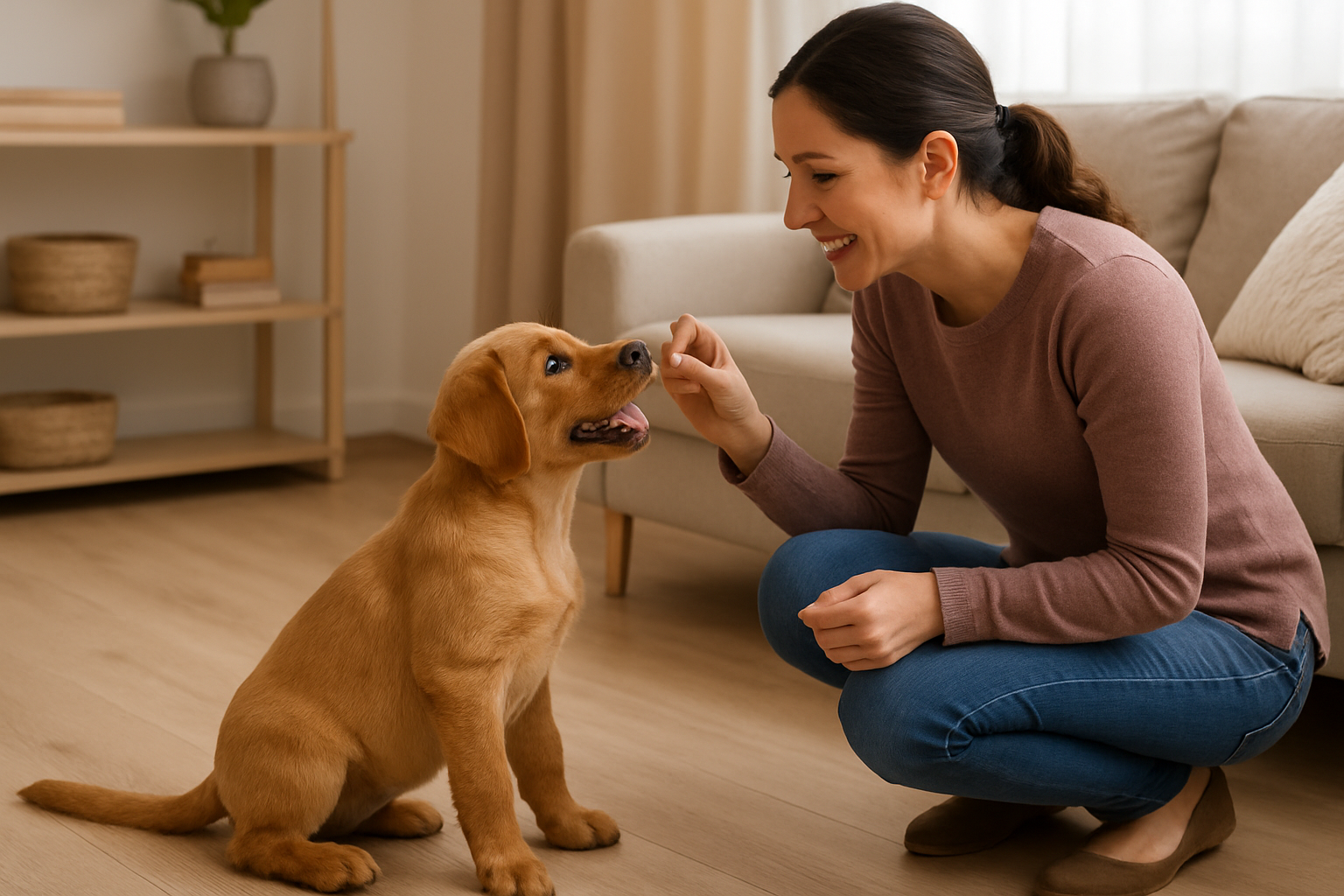
Games to play with puppy indoors are crucial when bad weather, extreme temperatures, or scheduling makes outdoor time impossible. A bored puppy often becomes destructive—chewing shoes, barking excessively, and damaging furniture. The good news is you don't need fancy equipment to keep your pup entertained and stimulated. These 10 indoor games provide both physical exercise and mental engagement your growing puppy craves, transforming your home into an enrichment playground that builds your bond while teaching valuable skills.[5]
10 Indoor Games to Play with Your Puppy: Keep Your Pup Happy on Any Day
If you're a new puppy parent, you've probably discovered that a bored puppy is a destructive puppy. Chewed shoes, excessive barking, and furniture that looks like it's been through a shredder are telltale signs that your furry friend needs more mental engagement. The good news? You don't need fancy equipment or perfect weather to keep your puppy entertained and stimulated.
Indoor games are essential for your puppy's development. They provide both physical exercise and mental stimulation—two things your growing pup desperately craves. Whether you're dealing with a rainy day, extreme heat, or simply want to supplement outdoor playtime, these 10 games will transform your home into an enrichment playground. [5]
Why Indoor Games Matter for Puppy Development
Before we dive into specific games, let's talk about why mental stimulation is just as important as physical exercise. Puppies are naturally curious, and their developing brains need challenges to grow properly. Without adequate mental engagement, puppies can develop anxiety, destructive behaviors, and poor impulse control. [5]
The beauty of indoor games is that they check multiple boxes simultaneously. They provide mental enrichment, build your bond with your puppy, teach valuable obedience skills, and tire out your pup in ways that physical exercise alone cannot. A mentally stimulated puppy is a calmer, better-behaved puppy. [4]
Game 1: The Name Game – Building Foundation Recognition
This foundational game is deceptively simple but incredibly powerful. The Name Game teaches your puppy to respond to their name, which becomes the foundation for recall training later on. [3]
How to Play:
- Start in a quiet room with high-value treats your puppy loves
- Say your puppy's name in an excited, happy tone
- The moment your puppy looks at you, immediately reward them—don't wait for them to sit or perform any other action
- Repeat this 5-10 times per session, keeping sessions short (2-3 minutes)
- Gradually increase distance as your puppy improves, eventually calling from different rooms
- Once mastered indoors, practice outside in low-distraction environments
Pro Tip: Use your puppy's name only when calling them to you or getting their attention. Don't add their name to commands like "sit" or "down"—this keeps the name special and maintains its power. [3]
Game 2: Hide and Seek with Treats – Engaging the Nose
Dogs experience the world through their noses, and hiding treats or toys around your home taps into their natural hunting instincts. This game provides mental stimulation while building confidence and problem-solving skills. [3]
How to Play:
- Start with obvious hiding spots (under a cushion, in a shoe, behind a door)
- Use the phrase "Find it!" as your cue
- Let your puppy search and celebrate enthusiastically when they discover the treat
- Gradually make hiding spots more challenging as your puppy improves
- Hide toys and treats around your home throughout the day for surprise discoveries
Why It Works: This game channels your puppy's natural instinct to hunt and track, giving them a healthy outlet for these behaviors. It also builds confidence and provides mental exercise that tires puppies out more effectively than physical activity alone. [3]
Game 3: Puzzle Toys and Problem-Solving Challenges
Puzzle toys are among the most effective enrichment tools available. These interactive toys require your puppy to figure out how to access treats hidden inside, stimulating their problem-solving abilities and keeping them engaged for extended periods. [3]
How to Use Them:
- Select puzzle toys appropriate for your puppy's age and size
- Start with easier puzzles and gradually increase difficulty
- Use puzzle toys during mealtimes to slow down fast eaters and reduce bloating
- Rotate different puzzles to maintain novelty and interest
- Supervise your puppy until you're confident they can handle the toy safely
Bonus Benefit: Puzzle toys are excellent for managing puppy anxiety. The mental focus required to solve the puzzle provides a calming effect and reduces stress-related behaviors. [3]
Game 4: Tug of War – Building Impulse Control and Bond
Many puppy parents worry that tug of war promotes aggression, but this is a myth. When played with proper boundaries, tug of war is an excellent game that strengthens your bond, builds jaw muscles, and teaches impulse control. [3]
How to Play Safely:
- Use a rope toy or soft tug toy designed for this purpose
- Initiate the game by offering the toy and encouraging your puppy to grab it
- Play gently, allowing your puppy to win sometimes
- Establish a "release" command (like "drop it") and reward compliance with treats or praise
- End the game on a positive note when your puppy successfully releases the toy
- Never play if your puppy is overly excited or aggressive
What You're Building: Tug of war teaches your puppy to control their impulses, strengthens your relationship, provides mental stimulation, and tires them out—all while being genuinely fun for both of you. [3]
Game 5: Simon Says – Training as Play
Transform obedience training into an engaging game by playing Simon Says with basic commands. This makes learning feel like playtime rather than work, keeping your puppy motivated and engaged. [3]
How to Play:
- Start with basic commands your puppy knows (sit, down, touch)
- Say "Simon Says [command]" and reward immediately when your puppy complies
- Occasionally give commands without saying "Simon Says" first—if your puppy follows, no reward (but keep it lighthearted)
- Keep sessions short and fun, focusing on success rather than mistakes
- Gradually add new commands as your puppy learns them
The Magic: This game makes training feel like play, which keeps your puppy's attention and motivation high. It also reinforces that listening to you is always rewarding. [3]
Game 6: Indoor Obstacle Course – Mini Agility
Create a simple agility course using household items. This game provides physical exercise, builds confidence, and teaches your puppy to navigate obstacles—all indoors. [3]
How to Set It Up:
- Use cushions to create jumps (keep them low for puppies)
- Set up a "tunnel" using a blanket draped over chairs
- Create weaving poles using rolled-up towels or pool noodles
- Guide your puppy through the course with treats and encouragement
- Never force your puppy—let them explore at their own pace
- Celebrate every attempt, even if they don't complete the course
Safety Note: Keep obstacles low and manageable for your puppy's size and age. Always supervise and prioritize fun over perfection.
Game 7: The Treat Scatter Game – Slow Feeding and Foraging
This simple game mimics natural foraging behavior and provides mental engagement during mealtime. It's particularly useful for puppies who eat too quickly. [3]
How to Play:
- Instead of using a food bowl, scatter your puppy's kibble across a small area of your floor
- Let your puppy hunt and find each piece
- Vary the difficulty by scattering on different surfaces (carpet, tile, grass)
- Use a muffin tin with tennis balls covering each cup and hide kibble underneath
- Try a snuffle mat—a fabric mat with pockets for hiding treats
Why It Matters: This game slows down eating, aids digestion, prevents bloating, and provides mental stimulation during a routine activity. [3]
Game 8: Supervised Puppy Playdates – Social Enrichment
While not technically an "indoor game," supervised playdates with other well-socialized puppies can happen in your home and provide invaluable social enrichment. This game teaches appropriate play behavior and helps your puppy burn energy while learning social skills. [3]
How to Facilitate:
- Arrange playdates with puppies of similar size and age
- Ensure both puppies have up-to-date vaccinations
- Supervise closely and interrupt play if it becomes too rough
- Provide breaks with water and calm time
- Start with short sessions (15-20 minutes) and gradually extend
- Rotate playdates to expose your puppy to different personalities
The Benefit: Socialization through play helps puppies develop confidence, learn bite inhibition, and become well-adjusted adults. [3]
Game 9: Target Training – Building Focus and Engagement
Target training teaches your puppy to touch an object (like your hand or a stick) with their nose. This builds focus, engagement, and can be the foundation for more advanced tricks. [4]
How to Teach It:
- Hold your hand at your puppy's nose level with a treat inside your fist
- When your puppy touches your hand with their nose, say "Yes!" and reward
- Repeat 10-15 times per session
- Gradually move your hand to different positions
- Add a verbal cue like "Touch" or "Target"
- Once mastered, use this skill to guide your puppy through other activities
Why It's Powerful: Target training creates a strong focus between you and your puppy, making them more attentive and responsive to your guidance in all situations. [4]
Game 10: The Sniff Walk – Sensory Exploration Indoors
Create an indoor sensory experience by setting up different scents around your home for your puppy to explore. This game engages their most powerful sense and provides mental enrichment. [3]
How to Create a Scent Trail:
- Use safe scents like peanut butter, banana, or cinnamon
- Dab small amounts on cotton balls or paper towels
- Hide them around your home at your puppy's nose level
- Encourage your puppy to "find" each scent
- Reward discovery with treats and praise
- Change the scents regularly to maintain novelty
Important: Only use dog-safe scents and avoid anything toxic like chocolate, grapes, or essential oils. [3]
Tips for Success with Indoor Games
To maximize the effectiveness of these games, keep these expert tips in mind:
- Keep Sessions Short: Puppies have short attention spans. Aim for 5-15 minute sessions, multiple times throughout the day. [3]
- Use High-Value Rewards: Reserve the best treats for training games to maintain motivation and engagement. [3]
- Rotate Games: Variety prevents boredom and keeps your puppy interested. Mix and match different games throughout the week. [5]
- Supervise Always: Watch your puppy during all games to ensure safety and prevent destructive behaviors. [3]
- Adapt to Your Puppy: Every puppy is unique. Pay attention to which games your puppy enjoys most and adjust accordingly. [5]
- Combine Mental and Physical: Pair mental games with physical activity for balanced enrichment. [4]
- Make It Positive: Games should be fun for both you and your puppy. If something isn't working, try a different approach without frustration. [4]
The Long-Term Benefits of Indoor Games
Consistent play and enrichment during puppyhood sets the foundation for a well-adjusted adult dog. Puppies who receive adequate mental and physical stimulation through games develop stronger impulse control, better behavior, increased confidence, and deeper bonds with their owners. [4] [5]
Beyond immediate entertainment, these games teach your puppy valuable life skills: problem-solving, focus, impulse control, and how to interact appropriately with you. They also provide a healthy outlet for natural instincts like hunting, tracking, and foraging. [3]
When to Seek Professional Help
If your puppy shows signs of anxiety, excessive destructive behavior, or aggression despite enrichment efforts, consult your veterinarian or a certified professional dog trainer. Some puppies may benefit from specialized training programs that incorporate these games and activities. [3]
Your Action Plan
Start implementing these games today:
- Choose 2-3 games that match your puppy's personality and your home setup
- Gather any necessary supplies (toys, treats, household items)
- Schedule 3-4 short play sessions throughout your day
- Observe which games your puppy enjoys most
- Gradually introduce new games to maintain novelty
- Track improvements in behavior and engagement
- Adjust based on your puppy's preferences and developmental stage
Remember, the goal isn't perfection—it's creating joyful moments of connection with your puppy while providing the mental and physical stimulation they need to thrive. These indoor games are investments in your puppy's development and your relationship together. A well-enriched puppy is a happy, well-behaved puppy, and that benefits everyone in your household.