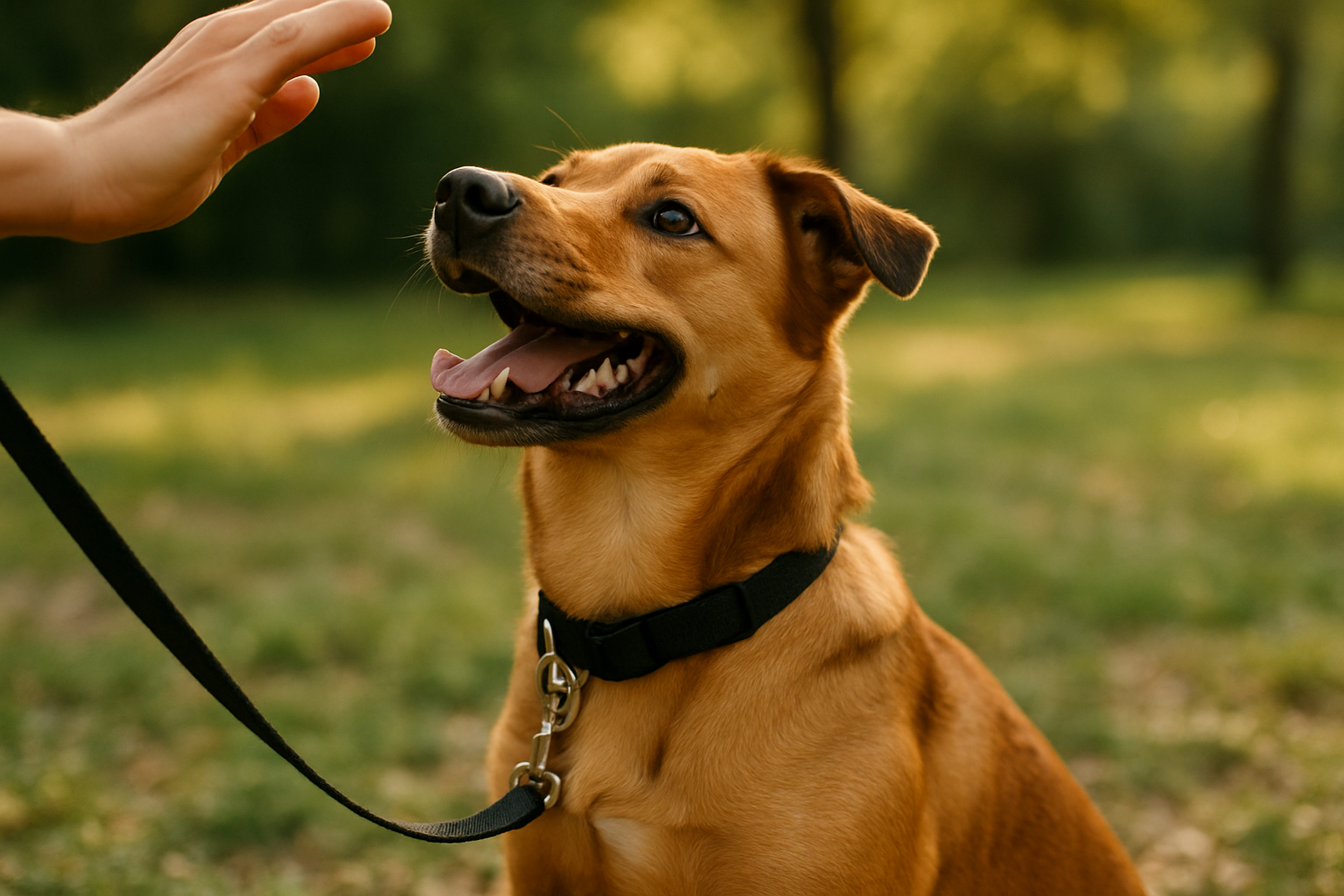
Why Teaching Your Puppy to Wait at the Door Matters
If you've ever had a puppy launch themselves through an open door the moment you crack it, you know the panic that follows. Beyond the frustration of chasing your escape artist, door dashing poses serious safety risks. A puppy who bolts could run into traffic, get lost, or encounter dangers you never anticipated. [3]
But the benefits of teaching 'wait' go far beyond safety. This single command teaches your puppy emotional self-control—one of the most valuable life skills a dog can develop. It also makes practical daily life smoother: carrying groceries inside, preventing your pup from knocking you over, managing transitions between spaces, and even handling car doors safely. [3]
The beauty of 'wait' is that it's flexible and forgiving. Unlike 'stay,' which demands your puppy remain in an exact position until released, 'wait' simply means your puppy should pause momentarily. Your puppy can sit, stand, or even shift their weight—they just can't move forward until you give permission. [Source 3, Source 4]
Wait vs. Stay: Understanding the Difference
Many dog owners assume 'wait' and 'stay' are interchangeable. They're not, and understanding this distinction will transform your training approach. [3]
'Stay' is a commitment. When you ask your puppy to stay, they should remain in that exact position—sitting, lying down, whatever—until you release them. If you ask them to stay for an hour, they should still be in that same spot when you return. It's rigid and demanding.
'Wait,' on the other hand, is a pause. It means 'hold on a moment' and 'look to me for what comes next.' Your puppy doesn't need to maintain a specific position. They can shift, stand up if they were sitting, or even walk away from the threshold—as long as they don't move through the doorway without permission. [4]
This distinction matters because it makes training more achievable and realistic. Most puppies can't handle the pressure of an absolute 'stay' at every doorway. But 'wait'? That's something puppies can master with consistency and patience.
Getting Started: Before Your First Training Session
Before you begin teaching 'wait,' set yourself and your puppy up for success by preparing your training environment.
- Choose an interior door first. Start with a bedroom door, bathroom door, or any interior threshold where nothing exciting happens on the other side. If your puppy makes a mistake and slips through, they're safe. [3]
- Pick a door that opens toward you. This gives you better control and makes it easier to manage your puppy's movements. [3]
- Have high-value treats ready. Use small, soft treats—think kibble-sized pieces of string cheese, hot dog bits, or liver treats. You want rewards your puppy can consume quickly without much chewing, so you can maintain momentum during training. [5]
- Keep a leash on your puppy. Even during indoor training, having a leash attached gives you a gentle way to redirect your puppy if they get ahead of themselves. [5]
- Choose the right time. Train when your puppy isn't overly excited or tired. Mid-morning or early afternoon often works well, after some exercise but before the dinner excitement kicks in.
One more critical detail: decide on your release word now. Common choices include 'okay,' 'free,' 'go,' or 'through.' Pick one word and stick with it consistently. Your puppy will learn that this specific word means they can now move forward. [5]
The Step-by-Step Training Process
Step 1: The Foundation (Open Door, No Movement)
Begin with the door already open. You're not asking your puppy to do anything complex yet—just introducing the concept.
- Stand at the open doorway with your puppy on one side
- In a cheerful, upbeat tone, say 'Wait'
- Pause for 5 seconds while your puppy remains on their side of the threshold
- Say your release word ('Free,' 'Okay,' or 'Go') and walk through the doorway together
- Reward your puppy immediately with praise and a treat
- Repeat this 5-10 times in one session [4]
This step teaches your puppy that the word 'wait' predicts good things—and that waiting leads to the reward of moving forward with you. Keep sessions short and sweet. End on a successful repetition so your puppy's brain locks in the correct behavior. [5]
Step 2: Add Your Movement
Now your puppy learns that 'wait' means they should hold their position even when you move.
- Say 'Wait' at the open doorway
- Take a half-step forward into the doorway
- Your puppy should remain in place (they haven't been released yet)
- Before your puppy has a chance to follow, say your release word
- Reward generously
- Gradually increase to one full step through the doorway, then two steps, as your puppy demonstrates they understand [4]
This is where many puppies test the rules. If your puppy tries to follow you through before the release word, gently guide them back to their original side of the doorway and repeat the cue. Don't get frustrated—this is normal learning behavior. [3]
Step 3: Close the Door and Try Again
Now introduce the door being closed initially. This adds a layer of difficulty because your puppy has to wait while you open it.
- With the door closed, give the 'Wait' cue
- Slowly open the door just a quarter of the way
- If your puppy stays in place, immediately say your release word and open the door fully
- Reward and walk through together
- Over multiple sessions, gradually increase how far you open the door before releasing [4]
If your puppy tries to nose through the partial opening, calmly close the door and try again. The door becomes your training tool—it teaches your puppy that rushing forward results in the door closing (not a punishment, just a logical consequence). [5]
Step 4: Combine Movement with the Closed Door
This is where everything comes together. Your puppy learns to wait while you approach the door, open it, and move through it.
- Start at a distance from the door with your puppy
- Walk toward the door and give the 'Wait' cue
- Fully open the door and take one step through
- Before your puppy moves, release them and walk through together
- Gradually increase the distance you walk through the doorway before releasing [4]
You're building a pattern here: approach, cue, open, move, release. Your puppy's brain begins to anticipate this sequence and wait automatically.
Step 5: Practice at Different Doors
Once your puppy masters the interior door, practice at your front and back doors using the same steps. Start back at Step 1 with each new door—don't assume your puppy will generalize the behavior immediately. [4]
Your puppy needs to learn that 'wait' applies everywhere, not just the bedroom door. This is called 'proofing' the behavior, and it's essential for real-world reliability. [1]
Proofing: Making the Behavior Bulletproof
Proofing means practicing 'wait' in different situations, with various distractions, and with different people giving the cue. This is what transforms a behavior your puppy understands in one context into a reliable skill they'll follow anywhere. [1]
Add Distractions Gradually
Once your puppy waits reliably at an open door, introduce mild distractions and slowly increase their intensity:
- Hold up a toy near the doorway
- Raise your arms or make hand movements
- Knock softly on a wall or door frame
- Have another family member stand nearby
- Slowly increase the intensity of each distraction [1]
The key word here is 'gradually.' If you overwhelm your puppy with too many distractions at once, they'll fail and become confused about the rules. Introduce one new element at a time, and when you do, reduce the difficulty of other parameters (like how wide the door is open or how long they wait). [1]
Practice with Different Handlers
Have other family members practice the 'wait' cue with your puppy. Dogs don't automatically generalize behaviors from one person to another, so your puppy needs to learn that 'wait' means the same thing whether mom, dad, or the babysitter says it. [1]
Extend Duration Gradually
In small increments, increase how long your puppy waits before you release them. Start with 5 seconds, then 10, then 15, and so on. Your puppy will naturally begin waiting at doorways automatically, even before you give the cue. [1]
Common Mistakes to Avoid
Moving too fast. This is the #1 reason puppies struggle with 'wait.' Owners get impatient and progress to harder steps before their puppy truly understands the easier ones. Go at your puppy's pace, not your own. [2]
Skipping the sit cue too early. It's fine to ask your puppy to sit before opening the door while they're learning. But gradually fade this cue so the open door itself becomes the trigger for waiting, not the sit command. [3]
Being inconsistent. If you ask your puppy to wait sometimes but not others, they'll never develop reliable habits. Ask for 'wait' every single time you approach a door during the learning phase. Consistency is everything. [4]
Punishing mistakes.** When your puppy bolts through without permission, don't scold them. Simply guide them back to the original side and try again. Your puppy is learning, not being defiant. [3]
Forgetting to proof the behavior.** Teaching 'wait' at one door doesn't mean your puppy understands it everywhere. You must practice at multiple doors, with distractions, and with different people. [1]
Special Considerations for Anxious or Fearful Puppies
Some puppies become anxious when doors open or close, especially if they're transitioning between spaces they find stressful. If your puppy seems nervous rather than excited about doors, take extra time with the early steps. [2]
You might start by simply rewarding your puppy for remaining calm when you touch the doorknob, before you ever open it. Then progress to small openings. The goal is to create positive associations with doors, not add pressure.
If your puppy shows signs of significant anxiety—freezing, trembling, or refusing to approach the door—consult with a certified professional trainer or veterinary behaviorist who can assess whether there's an underlying fear response that needs specialized attention.
Using 'Wait' Beyond Doorways
Once your puppy masters 'wait' at doors, this command becomes incredibly versatile. You can use it while:
- Approaching the food bowl (teaching patience around meals)
- Walking down stairs (preventing tumbles)
- Greeting visitors (managing excitement)
- Crossing streets (impulse control in high-distraction environments)
- Approaching other dogs or people during walks [4]
The 'wait' command is essentially teaching your puppy to pause and look to you for guidance. That skill translates across countless real-world scenarios.
Training Timeline: What to Expect
Every puppy learns at their own pace, but here's a realistic timeline:
- Week 1-2: Your puppy understands the concept at one interior door with no distractions
- Week 2-3: They can wait while you move through the doorway
- Week 3-4: They begin generalizing to other interior doors
- Week 4-6: They reliably wait at front and back doors
- Week 6+: You add distractions and proof the behavior in real-world situations
Some puppies will move faster; others will need more time. The pace doesn't matter. What matters is consistency and celebrating every small success. [5]
Key Takeaways for Teaching 'Wait'
- Start with an interior door and progress gradually to exterior doors
- Use a clear, consistent release word so your puppy knows when they can move forward
- Practice in short, positive sessions and always end on success
- Proof the behavior by practicing at different doors, with distractions, and with different handlers
- Be patient—moving too fast is the main reason training fails
- Remember that 'wait' teaches impulse control, a skill that benefits your puppy in countless situations
- If your puppy shows significant anxiety around doors, seek guidance from a professional trainer
Teaching your puppy to wait at the door is one of the most worthwhile investments you'll make in their training. It keeps them safe, builds their confidence, and makes life with your pup dramatically easier. Start today, be consistent, and celebrate the progress along the way.
Sources & References
- https://bestfriends.org/pet-care-resources/how-teach-dog-wait-door
- https://www.doggoneproblems.com/teach-a-dog-to-wait-at-the-door-maple/
- https://www.akc.org/expert-advice/training/teach-your-dog-to-wait-at-doorways/
- https://www.everydogaustin.org/handouts/wait
- https://www.mustluvboxersrescue.com/post/2016/08/03/teaching-your-dog-self-control-with-wait-command