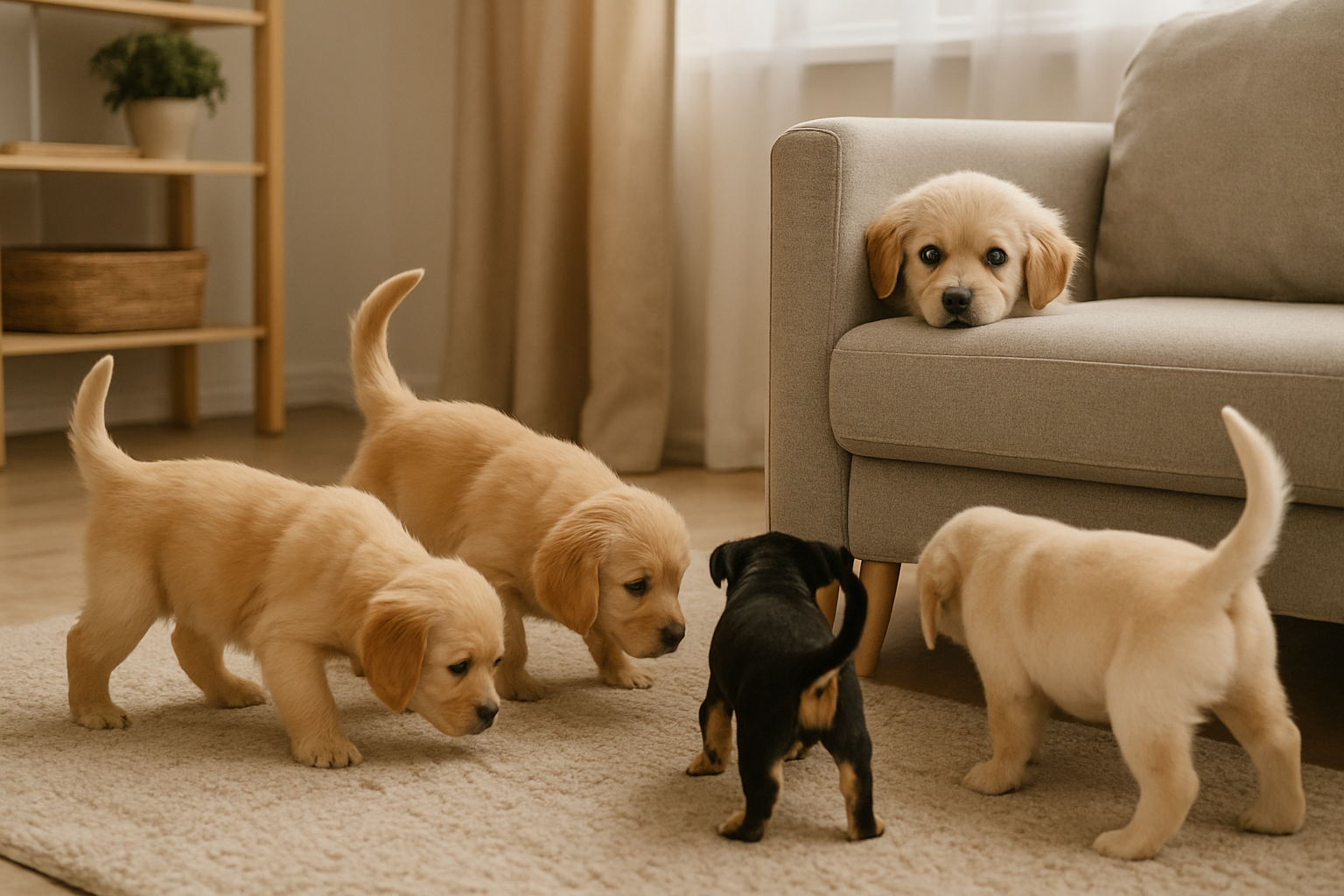
10 Indoor Games to Play with Your Puppy: Fun Training Activities That Build Bond and Skills
You're standing at your window watching the rain pour down, and your puppy is bouncing off the walls with pent-up energy. Sound familiar? Many new puppy parents struggle with keeping their young dogs mentally and physically stimulated, especially during bad weather or when outdoor play isn't an option. The good news? Some of the most effective training happens indoors, and your puppy will love it.
Indoor games serve a dual purpose: they tire out your puppy while simultaneously teaching valuable skills and strengthening your bond. Unlike mindless play, structured games develop impulse control, improve recall, and engage your puppy's problem-solving abilities. [4] Let's explore 10 fantastic indoor games that will transform those restless afternoons into quality training sessions your puppy will beg to repeat.
1. The Name Game: Building Recognition and Focus
Before your puppy can master any command, they need to recognize their own name as a cue to pay attention to you. The Name Game is foundational training disguised as fun playtime.
How to Play:
- Start in a quiet room with minimal distractions
- Say your puppy's name in an excited, happy tone
- The moment they look toward you, immediately reward them with a treat
- Initially, don't wait for them to make eye contact—reward the head turn itself [5]
- Repeat this 5-10 times per session, keeping sessions short and fun
- Gradually increase distance as your puppy improves
- Progress to having another person call your puppy from different rooms
Pro Tip: The Name Game is the foundation for reliable recall. This is the only command where you use your puppy's name—for "sit" or "down," just use the command without the name. This distinction helps your puppy understand that their name means "pay attention to me!" [5]
2. Hide and Seek: Engaging Natural Hunting Instincts
Hide and Seek taps into your puppy's natural searching abilities while providing excellent mental stimulation. This game works wonderfully indoors because you can control the difficulty level and environment.
How to Play:
- Start with easy hiding spots where you're partially visible
- Call your puppy's name excitedly and let them find you
- Celebrate their success with treats and praise
- As they improve, hide in slightly more challenging locations
- You can also hide treats or toys around the house for them to discover
- Keep initial games simple—if your puppy can't find you within a minute, make it easier next time [2]
Why It Works: This game develops your puppy's problem-solving skills and confidence. They learn that searching for you (or treats) is rewarding, which translates beautifully into reliable recall outdoors. [2]
3. Chase Games: Building Excitement and Recall
Chase is a natural, joyful game that puppies inherently understand. The key is structuring it so your puppy always comes toward you, not away from you.
How to Play:
- Start in a hallway or open room with clear space
- Get your puppy excited and engaged with you
- Run away from your puppy in an exaggerated, playful manner
- Your puppy's natural instinct will be to chase you
- When they catch you, reward enthusiastically with treats and praise
- Repeat several times, keeping sessions short and fun
- Add complexity by adding a "wait" cue—make them pause before you run, so they learn impulse control [2]
Safety Note: Make sure your play area is clear of obstacles, furniture, and other hazards. The last thing you want is a tumble during an exciting game. [2]
4. Hand Targeting: Teaching Visual Recall
Hand targeting teaches your puppy to touch your hand on command. This seemingly simple game has enormous training applications and builds a strong visual recall cue.
How to Play:
- Hold your hand at your puppy's nose level, palm open
- Let them sniff and naturally touch your hand with their nose
- Immediately reward with a treat (from your other hand)
- Repeat 5-10 times per session
- Gradually introduce a verbal cue like "touch" as they understand the game
- Practice in different locations around your home
- Add challenge by targeting your hand through your legs or at different heights [2]
Why It Matters: Hand targeting creates a visual recall that doesn't necessarily mean the end of playtime or a trip to the vet. Your puppy learns that coming to you simply means touching your hand for a reward. [2]
5. Puzzle Toys and Problem-Solving Games
Puzzle toys are excellent for independent play and mental enrichment. They stimulate your puppy's problem-solving abilities while providing entertainment during times when you can't actively play.
How to Use Them:
- Choose age-appropriate puzzle toys designed for puppies
- Start with easier puzzles that require minimal problem-solving
- Hide treats or kibble inside the puzzle
- Show your puppy how to interact with it initially
- Let them work independently, offering gentle guidance if needed
- Rotate different puzzles to maintain novelty and engagement
- Use puzzles during mealtime to slow down fast eaters [5]
Added Benefit: Puzzle toys have been shown to decrease stress and anxiety in puppies, making them excellent tools for when you need your puppy to entertain themselves independently. [5]
6. Tug of War: Building Impulse Control and Bonding
Many people believe tug of war makes puppies aggressive—this is a myth. When played correctly, tug of war is an excellent game that builds impulse control and strengthens your bond.
How to Play Safely:
- Use a rope toy or designated tug toy (never your hands or clothing)
- Initiate the game by offering the toy and encouraging your puppy to grab it
- Play with gentle to moderate intensity
- Teach a "release" or "drop it" command by offering a treat in exchange for the toy
- Reward the release enthusiastically
- You should always win the game and end on a positive note
- Keep sessions short—5-10 minutes is plenty
Training Benefits: Tug of war improves impulse control (learning to release on command), strengthens jaw muscles, and provides excellent mental stimulation while tiring out your puppy. [5]
7. The Treat Toss Game: Combining Name Recognition with Movement
This game supercharges your puppy's name recognition while adding an element of excitement and unpredictability.
How to Play:
- Have a supply of small, tasty treats ready
- Call your puppy's name in an excited voice
- When they look at you, immediately toss a treat in an unexpected direction
- Vary your throws—sometimes over your shoulder, sometimes between your legs, sometimes down the hallway [2]
- The unpredictability keeps your puppy engaged and eager to respond to their name
- Play for 5-10 minutes, several times per week
Why It Works: This game combines name recognition training with physical exercise and mental engagement. The unpredictability means your puppy stays focused and interested, never quite knowing where the next treat will come from.
8. Tennis Game: Multi-Person Recall Training
If you have a family member or friend available, the Tennis Game (also called "Puppy Tennis") is fantastic for teaching your puppy to respond to multiple people.
How to Play:
- You and another person stand at opposite ends of a room
- One person calls the puppy and rewards them with a treat when they arrive
- The other person then calls the puppy
- Alternate unpredictably so your puppy never knows who will call next
- Make the calls exciting and enthusiastic
- Keep sessions to 5-10 minutes to prevent fatigue
- Gradually increase the distance between players as your puppy improves [2]
Advanced Variation: Once your puppy masters this with treats, try using toys as rewards instead. This variation teaches them to respond enthusiastically regardless of the reward type. [2]
9. Simon Says: Obedience Training as Play
Transform traditional obedience training into an engaging game that your puppy will look forward to playing.
How to Play:
- Use basic commands your puppy knows (sit, down, stay, come)
- Add a playful element by using silly voices, exaggerated movements, or unexpected treats
- Create mini-sequences: "Sit, down, sit, come!"
- Celebrate each successful command enthusiastically
- Vary the pace and order to keep your puppy engaged
- Keep sessions short—puppies have limited attention spans
- Always end on a positive note with a command your puppy reliably knows [5]
Training Benefit: This approach maintains your puppy's enthusiasm for learning while reinforcing important commands in a low-pressure, fun environment.
10. Scent Work and Treat Hunts: Engaging the Nose
Dogs experience the world primarily through their noses. Scent work games engage this natural ability while providing significant mental stimulation.
How to Play:
- Start with obvious hiding spots (under a blanket, behind a cushion)
- Hide treats or toys around your home
- Encourage your puppy to find them using an excited voice: "Find it!"
- Celebrate enthusiastically when they discover each item
- Gradually make hiding spots more challenging as your puppy improves
- You can hide your own scent (worn clothing) for them to track
- Practice in different rooms to maintain novelty
Why It's Beneficial: Scent work taps into your puppy's natural hunting and tracking instincts, providing a constructive outlet for these behaviors. This helps develop a more balanced, confident puppy while building their problem-solving abilities. [5]
Creating the Ideal Indoor Play Environment
To maximize your indoor gaming sessions, set yourself up for success:
- Minimize Distractions: Start games in quiet rooms with few competing stimuli, especially for games focused on training specific skills [2]
- Stock Quality Treats: Use high-value rewards that your puppy loves—small pieces of chicken, cheese, or commercial training treats
- Manage Space: Clear the play area of hazards and ensure you have enough room for the games you're playing
- Keep Sessions Short: Puppies have limited attention spans. Five to ten-minute sessions are typically ideal
- Consistency Matters: Regular, predictable play sessions help your puppy learn faster and look forward to training time
- Adapt to Your Puppy: Different breeds and individual puppies have different energy levels and preferences. Adjust games based on what your puppy enjoys [5]
The Bigger Picture: Why Indoor Games Matter
Indoor games do far more than keep your puppy entertained on rainy days. They provide the mental and physical exercise that puppies need for healthy development. [4] A mentally stimulated puppy is a well-behaved puppy—they're less likely to engage in destructive behaviors like excessive chewing or inappropriate elimination.
These games also build your relationship with your puppy. Every interaction is an opportunity to strengthen your bond and establish yourself as a source of fun, rewards, and security. This foundation makes all future training easier and creates a puppy who genuinely wants to listen to you.
Final Thoughts: Making Training Fun
The most important element of any training game is that it should be enjoyable for both you and your puppy. [4] If a game isn't working, don't force it—try a different approach or a different game entirely. Every puppy is unique, and what works for one may not work for another.
Remember that mistakes and mishaps during training are simply information that helps you adjust your approach. Rather than viewing errors as failures, see them as opportunities to make the game easier or more engaging. [4]
Rainy days, winter weather, and busy schedules don't have to derail your puppy's training and development. With these 10 indoor games in your toolkit, you have everything you need to keep your puppy mentally stimulated, physically active, and deeply bonded to you—all without leaving your home.