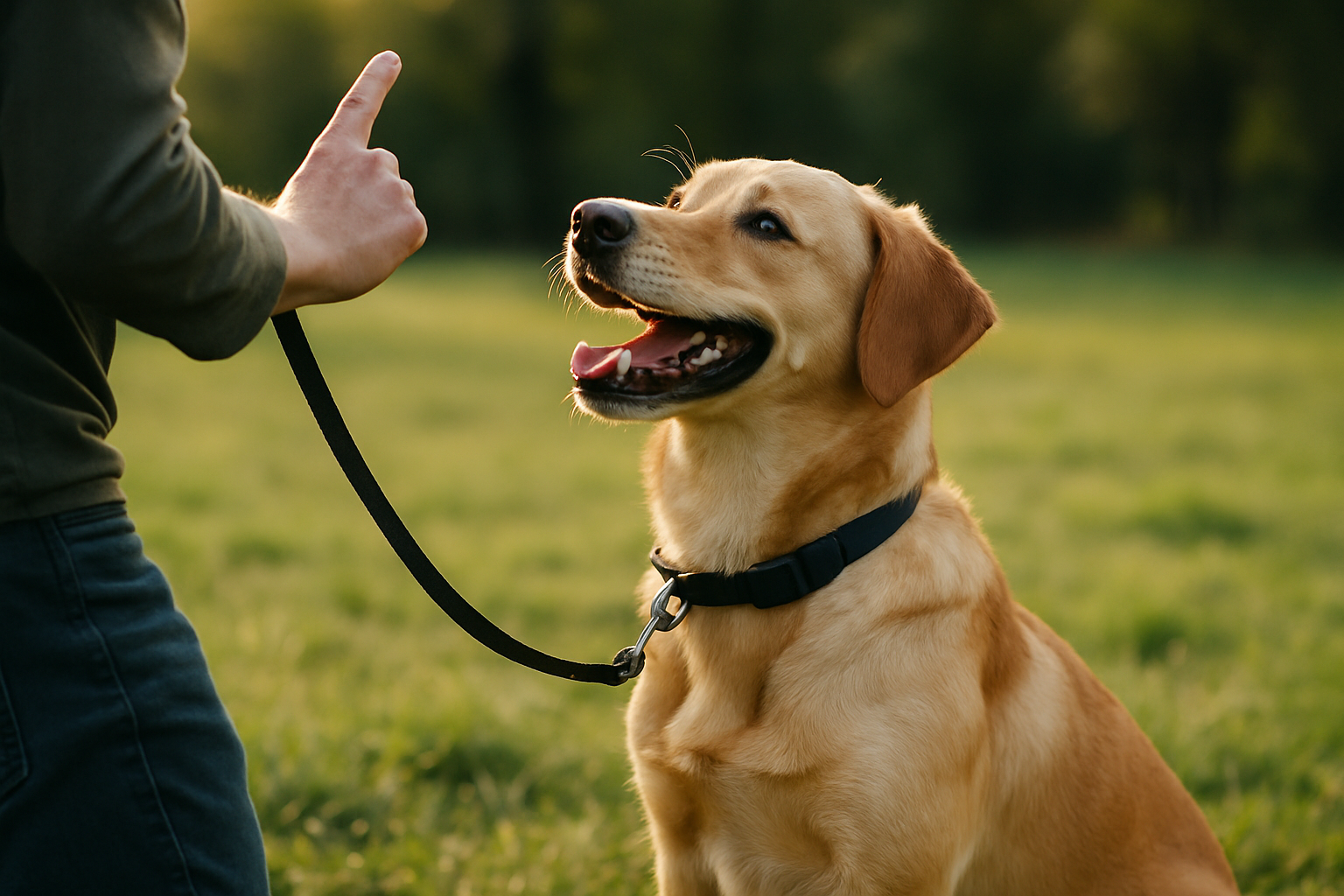
Puppy training for the down command works best when you keep sessions short and focused, with just 5 minutes of consistent practice teaching your puppy to lie down on cue.[4] This foundational skill builds impulse control and calm behaviour in any situation, creating peaceful moments at home and giving you a reliable way to settle your pup when you need it most. Whether you're managing a bouncy puppy or preparing for public outings, the down command becomes invaluable. Our straightforward approach breaks training into manageable chunks so your puppy stays engaged and eager to learn.
Why the Down Command Matters for Your Puppy
The down command is far more than just a cute party trick. It's a gateway behaviour that teaches your puppy impulse control, patience, and the ability to settle calmly in various environments. Whether you're at home managing a bouncy pup or out in public needing a moment of peace, a solid down command becomes invaluable. [4] This command is particularly useful when you want your dog to remain in one spot for extended periods, creating a sense of security and routine for both you and your puppy.
Beyond practical benefits, teaching down builds the foundation for other advanced commands and strengthens your relationship through positive, reward-based interaction. Puppies that learn to settle on command tend to develop better focus and fewer destructive behaviours born from restlessness or anxiety.
Prerequisites: Is Your Puppy Ready?
Before diving into down command training, your puppy should already have a reliable sit command. [4] This isn't just a suggestion—it genuinely makes teaching down easier because your pup already understands the concept of moving into a specific position on cue and holding it briefly.
Your puppy should also be:
- At least 8-12 weeks old (though older puppies learn just as well)
- Able to focus for short periods (even 30 seconds is fine to start)
- Motivated by treats or toys they love
- In a calm, distraction-free environment for initial training sessions
If your puppy hasn't mastered sit yet, take a step back and solidify that command first. Rushing through prerequisites often leads to frustration for both trainer and pup.
Gathering Your Training Tools
You don't need fancy equipment, but having the right items on hand makes training smoother and more enjoyable.
- High-value treats: Small, soft pieces your puppy absolutely loves (cheese, chicken, or training-specific treats work well)
- A quiet space: Your living room, backyard, or a quiet corner without competing distractions
- Patience and consistency: The most important tool of all
- Optional: a mat or blanket: Helpful for marking the spot where you want your puppy to lie down
- A clicker (optional): Useful for marking the exact moment your puppy performs the behaviour correctly
Keep training sessions short—5 to 10 minutes is perfect for puppies. Their attention spans are naturally limited, and short, positive sessions build enthusiasm rather than fatigue.
Step-by-Step Guide to Teaching Down
Step 1: Start from the Sit Position
Begin with your puppy sitting directly in front of you. This familiar starting point makes the transition to down feel natural. Hold a treat close to your puppy's nose, then slowly lower it toward the floor in a straight line between their front paws. As you do this, say the word "down" in a calm, encouraging tone.
Your puppy will naturally follow the treat with their nose, and their body will follow their head. The moment their elbows touch the ground, mark the behaviour (say "yes!" or click if using a clicker) and immediately reward with the treat.
Step 2: Reward the Moment They Lie Down
Timing is everything in dog training. The reward must come within a split second of your puppy's elbows touching the ground. This teaches them exactly which behaviour earned the reward. If you wait even a few seconds, your puppy might stand up again, and you'll accidentally reward standing instead of lying down.
Use enthusiastic praise alongside treats: "Yes! Good down!" This positive reinforcement builds excitement around the command and strengthens the association between the word and the action.
Step 3: Introduce a Hand Signal
Once your puppy reliably lies down when you lure them with a treat, add a hand signal. A common choice is pointing downward with one or both hands. Say "down" while making the hand signal, then lure with the treat as before. Over several repetitions, your puppy will begin responding to the hand signal alone, giving you a non-verbal way to communicate the command.
Step 4: Fade the Lure Gradually
After 10-15 successful repetitions over a few days, start reducing your reliance on the treat lure. Say "down" with the hand signal, but instead of holding the treat right in front of their nose, hold it slightly higher or to the side. Your puppy should still move into the down position based on the command and signal alone, anticipating the reward.
Gradually make the lure less obvious until your puppy responds to just the verbal command and hand signal. This transition usually takes 3-7 days of consistent practice.
Step 5: Build Duration and Distance
Once your puppy reliably lies down, start asking them to stay down for longer periods. Begin with just 2-3 seconds, then reward. Gradually extend this to 10, 20, and eventually 30 seconds or more. Always reward before your puppy gets up on their own—this prevents them from learning that getting up is acceptable.
As duration improves, start moving slightly away while your puppy holds the down position. Begin just one step away, reward, and gradually increase distance over multiple sessions.
Common Challenges and How to Overcome Them
Your Puppy Won't Lie Down
If your puppy isn't following the treat lure downward, try a few adjustments:
- Use an even more enticing treat they absolutely can't resist
- Make sure you're luring straight down between their front paws, not off to the side
- Try training on a softer surface (carpet or grass) rather than hard flooring
- Ensure your puppy is well-rested and not overstimulated before the session
Your Puppy Lies Down but Won't Stay
This is completely normal at first. Your puppy is still learning that down means "stay in this position until I release you." Start with very short durations—literally one second—and reward before they have a chance to pop back up. Gradually extend the time as they build understanding and impulse control.
Your Puppy Gets Confused with Sit and Down
If your puppy seems to mix up these commands, slow down and practice each separately in different sessions. Use distinct hand signals for each (sit might be an upward palm motion, down a downward motion). Consistency and clear differentiation will help your puppy understand the distinction.
Training in Different Environments
Once your puppy masters down in your quiet living room, gradually introduce the command in different settings. Start with slightly busier areas of your home, then move outdoors. [4] This process, called generalisation, teaches your puppy that "down" means the same thing everywhere, not just in training sessions.
Progress through environments slowly:
- Week 1-2: Quiet home environment
- Week 2-3: Other rooms in your home, backyard
- Week 3-4: Quieter outdoor spaces (parks with minimal activity)
- Week 4+: Busier environments as confidence builds
In busier environments, you may need to use higher-value treats and more frequent rewards initially. This isn't backsliding—it's simply acknowledging that distractions make the task harder for your puppy.
Building Real-World Reliability
A command is only truly useful when your puppy responds reliably in real-life situations, not just during training sessions. To build this reliability:
- Practice regularly: Short 5-10 minute sessions 3-4 times per week maintain and strengthen the behaviour
- Use the command in daily life: Ask for down before meals, when guests arrive, or when you need a moment of calm
- Vary your rewards: Sometimes use treats, sometimes toys, sometimes just praise to keep your puppy engaged and prevent them from only responding when they see a treat
- Stay patient with setbacks: Puppies have off days. If your pup suddenly seems to forget the command, simply return to basics without frustration
Safety Considerations
While teaching down is generally straightforward, keep a few safety points in mind:
- Never force your puppy into a down position by pushing on their back or legs. This can damage trust and cause physical discomfort
- If your puppy shows signs of pain when lying down, consult your veterinarian. Some puppies have joint issues or other conditions that make lying uncomfortable
- Avoid training on wet or dirty surfaces where your puppy might be reluctant to lie down
- Always end training sessions on a positive note, even if progress feels slow
The Long-Term Benefits
Investing time in teaching the down command pays dividends throughout your puppy's life. A dog that can settle calmly on command is a pleasure to live with and easier to manage in any situation. Whether you're at a café with outdoor seating, visiting friends, or simply need your pup to calm down at home, this command becomes an essential tool in your training toolkit.
Beyond the practical benefits, the training process itself strengthens your bond. You're learning to communicate clearly with your puppy, and they're learning to trust and respond to your guidance. This foundation of positive interaction sets the stage for a lifetime of good behaviour and mutual respect.
Troubleshooting Quick Reference
Keep this handy for quick problem-solving:
- Puppy won't move into down: Better treat, softer surface, clearer lure path
- Puppy lies down but jumps up immediately: Reward faster, work on very short durations first
- Puppy responds at home but not outside: Practice generalisation in progressively busier environments
- Puppy seems uncomfortable lying down: Consult your vet to rule out physical issues
- Puppy forgets the command: Return to basics, shorter sessions, higher-value treats
Your Next Steps
Start your down command training today by finding a quiet space, gathering your puppy's favourite treats, and dedicating just 5 minutes to practice. Remember that every puppy learns at their own pace—some pick up down in a few days, others take a couple of weeks. Consistency, patience, and positive reinforcement are your keys to success. Before you know it, you'll have a puppy that settles calmly on command, making life together infinitely more enjoyable.