Why Your Puppy Pulls on the Lead (And Why It's Normal)
Before you can solve puppy pulling, it helps to understand what's driving the behavior. From your puppy's perspective, the world is endlessly fascinating. They want to explore faster than you can walk, investigate every scent, and engage with their environment at their own pace. [1] Wearing a leash and being tethered to a human isn't a natural behavior for dogs—many puppies instinctively lean forward and strain when they feel pressure on their collar, believing that pulling might help them reach their destination more quickly.
The key insight: your puppy isn't being naughty or defiant. They're simply trying to accomplish something that makes sense to them. [1] When pulling gets them closer to an interesting dog, a fallen leaf, or the park entrance, the behavior is rewarded from their perspective. They learn that pulling works, so they keep doing it.
This also means the solution isn't punishment—it's showing your puppy that loose leash walking is more rewarding than pulling ever could be.
Meet Your Puppy's Needs First
Here's a truth that many new puppy owners miss: you cannot train loose leash walking into an exhausted, understimulated puppy. [1] Before you invest energy in leash training, ensure your puppy is getting adequate daily exercise, mental enrichment, and social interaction.
Most puppies need:
- Multiple short play sessions throughout the day (puppies have short attention spans)
- Safe, unstructured exploration time in your home and yard
- Mental stimulation through puzzle toys, sniffing games, and training sessions
- Age-appropriate social experiences with people and other dogs
A well-exercised, mentally satisfied puppy is far more likely to walk calmly on lead than one who's bursting with pent-up energy. [1] Think of lead training as the final piece of the puzzle, not the foundation.
Choosing the Right Equipment
The tools you use matter more than most owners realize. Poor equipment makes training harder and can even cause injury.
Leash Selection
Choose a leash that's 6–10 feet (1.8–3 meters) long. [1] It should be wide enough to protect your hands from friction burns if your puppy pulls hard, but lightweight enough that it doesn't burden your growing puppy. Avoid retractable leashes entirely—they can cause serious friction burns to both you and your puppy if they suddenly lock or if your puppy lunges. [1]
A standard fixed-length leash gives you better control and clearer communication with your puppy about where the boundaries are.
Collar Considerations
If you choose a collar, use a plain, flat collar fitted so you can slide two fingers comfortably underneath. [1] The collar should be snug enough that your puppy can't slip it over their head, but not so tight that it restricts breathing or causes discomfort.
However, a collar isn't the right choice for every puppy. If your puppy pulls very hard, pulls until coughing or showing noisy breathing, or pulls hard enough to physically unbalance you, move to a harness instead. [1]
Avoid training collars like slip, choke, prong, or electronic collars. [1] These tools rely on causing discomfort or pain to discourage pulling. When the leash is tight, the puppy experiences pain; when it's loose, the pain stops. While this may reduce pulling temporarily, it teaches your puppy to fear the leash and damages your relationship. Modern training science shows this approach is unnecessary and carries real risks to your puppy's welfare and your bond with them. [5]
Harness Options
A well-fitted H-style or Y-style harness is an excellent choice for most puppies. [1] Harnesses distribute pressure across the chest and back rather than concentrating it on the neck, making them safer and more comfortable. Harnesses should only be worn when your puppy is on a leash—don't leave them on unsupervised.
For puppies that pull exceptionally hard, a front-attach harness can be a game-changer. [4] This style has the leash attachment point on the chest rather than the back. When your puppy pulls, they naturally turn slightly inward toward you rather than being pulled forward, giving you better control without causing discomfort.
Head Collars
Head collars fit around your puppy's nose and ears, similar to a horse halter. They provide excellent control, especially for large, powerful puppies with smaller handlers. However, they require careful introduction and positive conditioning—most puppies find them uncomfortable initially. [1] If you choose to use a head collar, always attach a backup leash to a harness or neck collar as well. If your puppy lunges suddenly while wearing only a head collar, the leash can jerk their head sharply to the side, potentially causing neck strain. [1]
Understanding Why Your Puppy Pulls: The ABC Method
Every behavior your puppy exhibits serves a purpose from their perspective. To change pulling, you need to understand what's driving it. [1] Use the ABC method to analyze the situation:
- A = Antecedent: What happens immediately before your puppy pulls? (You're walking toward the park, they see another dog, a leaf blows past)
- B = Behavior: What does your puppy do? (They pull forward, lunge, strain on the leash)
- C = Consequence: What happens as a result? (They get closer to what they want, they get attention from you, they feel the pressure release)
Once you identify A, B, and C, your training plan becomes clear. [1] For example, if your puppy pulls toward other dogs (A), they pull (B), and get closer to the dog (C), then pulling is working perfectly from their view. Your job is to make pulling ineffective and loose leash walking rewarding instead.
The Reward-Based Training Approach
The most effective and humane method for teaching loose leash walking is reward-based training. [5] This means rewarding the behavior you want to see more of and making unwanted behavior less rewarding.
Why Reward-Based Training Works
Puppies repeat behaviors that have positive results. [1] When loose leash walking leads to treats, praise, and forward progress, your puppy learns that this is the behavior worth repeating. [5] Current veterinary guidance strongly supports reward-based methods as the most effective and safest approach to puppy training. [5]
Setting Up for Success
Before you begin formal training, prepare your environment:
- Start indoors or in your quiet yard—not on a busy street
- Gather small, delicious treats your puppy loves (soft, high-value treats work best)
- Have a toy available if your puppy is toy-motivated
- Choose a time when your puppy is alert but not overly excited
- Plan for short training sessions (just a few minutes)
The Basic Training Steps
Step 1: Reward Slack Leash
Clip on the leash and stand quietly. Do nothing else. Wait for even the smallest moment when the leash goes slack—when there's no tension. The instant the leash is loose, say "Yes!" or click a clicker, then immediately give your puppy a treat. [1] Repeat this dozens of times until your puppy starts to understand that a loose leash equals rewards.
Step 2: Reward Movement with Slack Leash
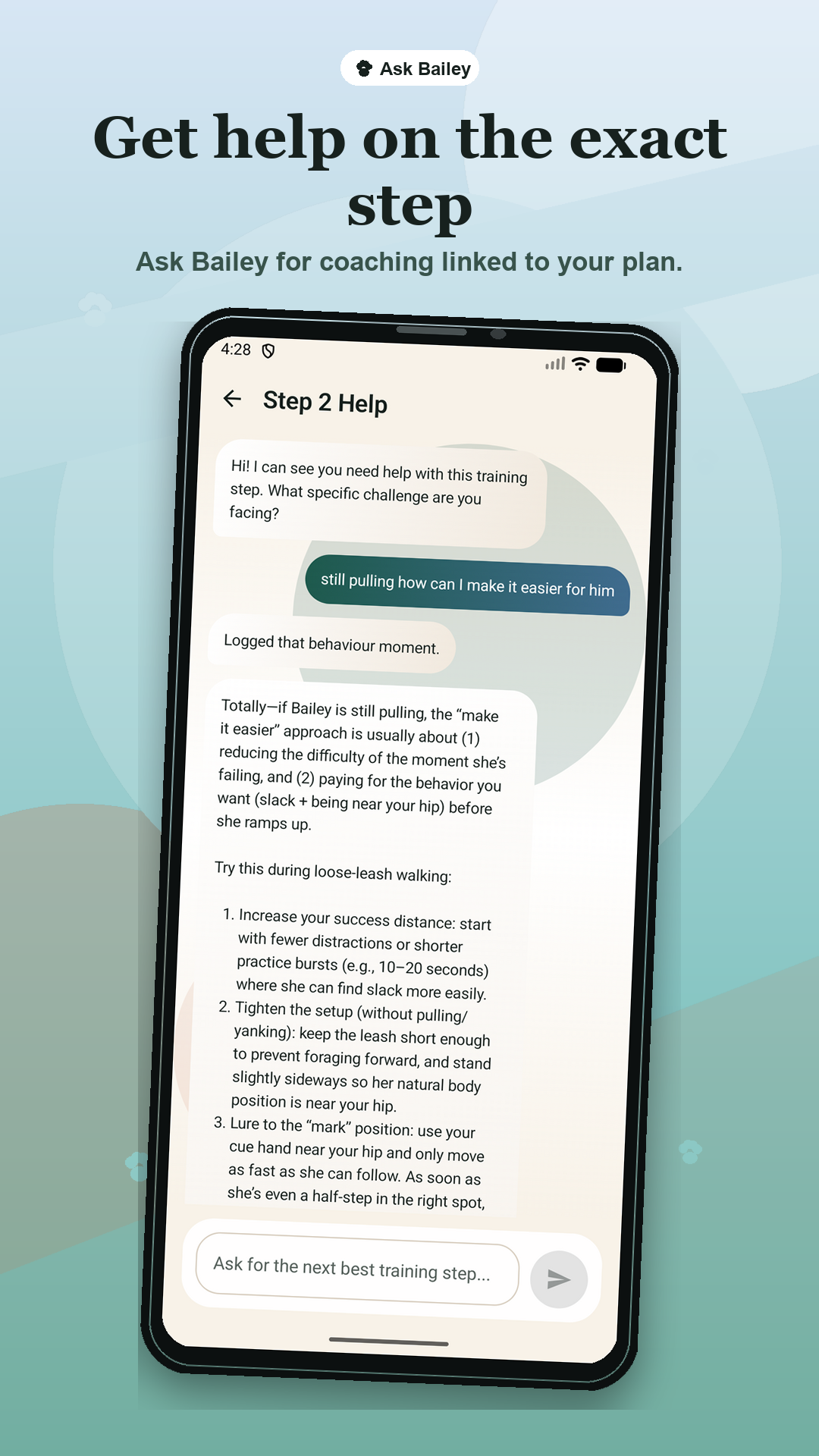
Once your puppy understands that slack leash = treats, take a step forward. If the leash remains slack as you move, mark and reward immediately. If your puppy pulls, stop walking and stand still. Don't jerk the leash or scold—simply become immobile. [4] This teaches your puppy that pulling actually stops progress rather than speeding it up.
Step 3: Build Duration
Gradually increase how long your puppy walks with a slack leash before earning a reward. Start with just one or two steps, then three, then five. Keep sessions short and fun. End while your puppy is still engaged and successful. [5]
Step 4: Add Distractions Gradually
Once your puppy reliably walks with slack leash in a quiet environment, slowly introduce mild distractions—a different room, the driveway, a quieter street. Only move to a more distracting environment once your puppy is consistently successful in the current one. This prevents frustration and keeps training positive.
Using Markers and Rewards Effectively
A marker is a sound or word (like "Yes!" or a clicker) that tells your puppy exactly which action earned the reward. [5] The marker should come at the precise moment your puppy does the right thing, followed immediately by a treat. This clarity helps your puppy learn faster.
Vary your rewards to keep training interesting. Use different treats, enthusiastic praise, play with a toy, or simply the ability to continue walking. [5] This variety keeps your puppy engaged and prevents them from getting bored with training.
Handling Common Pulling Scenarios
Pulling Toward Other Dogs
From your puppy's perspective, pulling gets them closer to something they want—another dog. [1] To change this, increase distance from other dogs during training. Practice loose leash walking at a distance where your puppy notices the other dog but can still focus on you. Reward heavily for looking at you instead of pulling toward the other dog. Gradually decrease distance as your puppy improves.
Pulling Toward Interesting Smells
Puppies have vastly superior senses and experience the world through smell far more intensely than humans do. [4] Rather than preventing sniffing entirely, allow your puppy to stop and sniff when walking with slack leash. This is actually rewarding for them and teaches that loose leash walking leads to exploration time.
Pulling From Excitement
Some puppies pull because they're thrilled about going somewhere—the park, a friend's house, or a favorite walking route. Before heading to exciting places, do a short training session in a calm area. This helps your puppy transition into the right mindset. Also, consider that a very excited puppy might benefit from a few minutes of play or exercise before the walk to take the edge off their energy.
Timeline and Expectations
Loose leash walking is one of the most complex skills puppies learn. [1] It requires patience, planning, and persistence. Don't expect perfection overnight. [1]
Most puppies show initial improvement within days or weeks of consistent training, but reliable loose leash walking typically takes several months to fully develop. [5] Think of the first year as laying a foundation you'll keep reinforcing. [5]
Consistency matters more than intensity. A few minutes of training multiple times daily beats one long session. [5] Weave tiny training moments into everyday life—reward loose leash walking during routine trips outside, not just formal training sessions.
When to Seek Professional Help
If your puppy shows signs of extreme pulling—such as coughing, noisy breathing, or pulling so hard they physically overpower you—consult your veterinarian to rule out any physical issues. [1] They can also refer you to a certified dog trainer or veterinary behaviorist if your puppy needs additional support.
Some puppies benefit from working with a professional trainer who can observe your specific situation and tailor guidance to your puppy's personality and needs.
Key Takeaways
- Puppy pulling is normal behavior driven by your puppy's desire to explore and engage with their environment
- Ensure your puppy's daily exercise and mental stimulation needs are met before expecting calm leash walking
- Invest in appropriate equipment—a good leash, well-fitted collar or harness, and avoid training collars that cause discomfort
- Use the ABC method to understand what's driving your puppy's pulling behavior
- Reward-based training is the most effective and humane approach—reward slack leash and loose leash walking consistently
- Keep training sessions short, positive, and frequent throughout the day
- Expect improvement over weeks and months, not days—consistency matters more than intensity
- Gradually introduce distractions only after your puppy succeeds in calm environments
Final Thoughts
Walking your puppy should be enjoyable for both of you. [4] With consistent training, the right equipment, and realistic expectations, even the most enthusiastic puller can learn to walk calmly on lead. Remember that your puppy isn't being stubborn or difficult—they're simply learning what works. By making loose leash walking the most rewarding choice, you'll create a confident, well-mannered walking companion who's eager to explore the world alongside you.