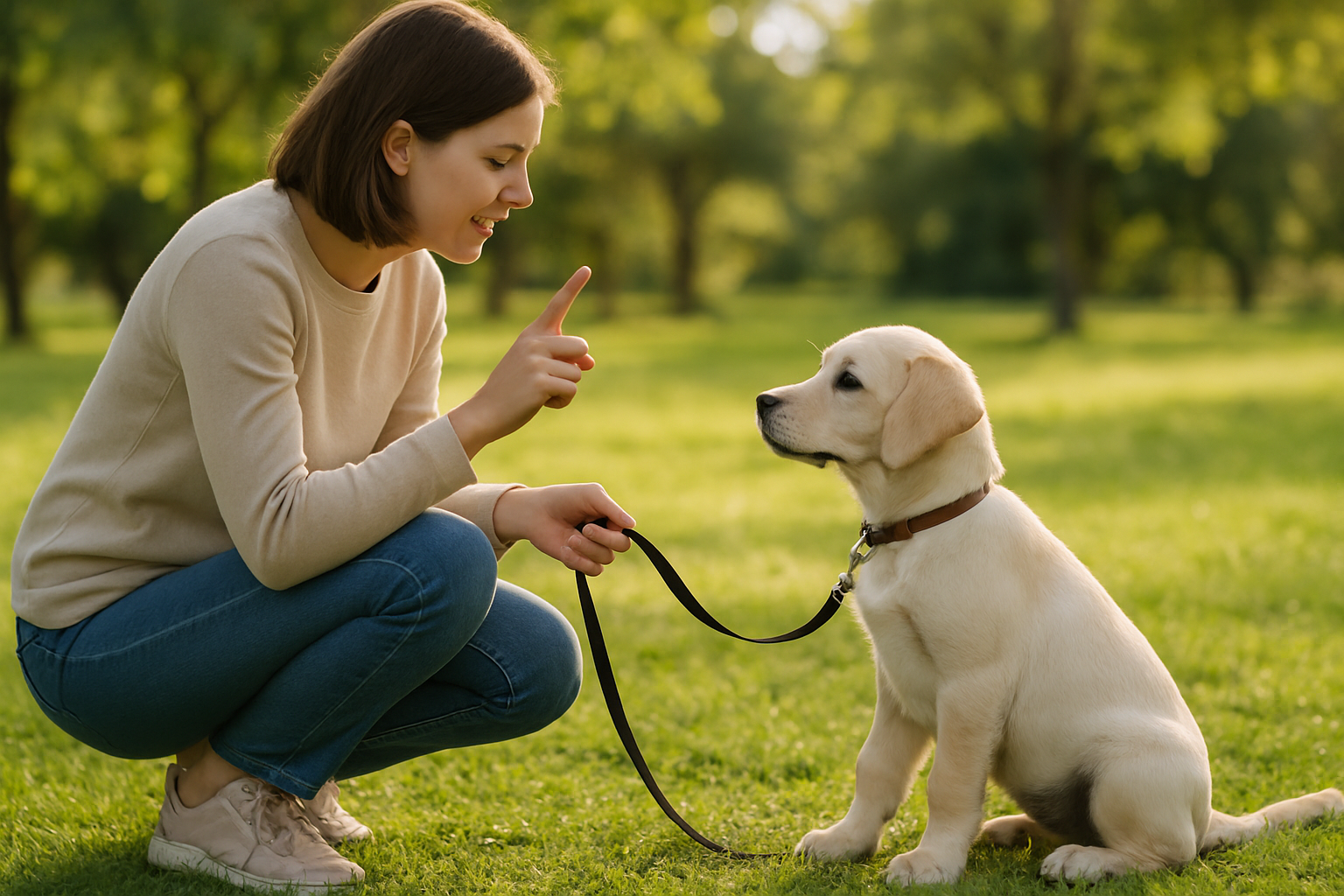
Why Puppies Pull on the Leash (And Why Yanking Doesn't Work)
If you're walking your puppy and constantly feel like you're being dragged down the street, you're not alone. Leash pulling is one of the most common challenges new dog owners face. But before we dive into solutions, it's important to understand why puppies pull in the first place.
Puppies pull because they're naturally curious, energetic, and haven't yet learned that walking calmly beside you is rewarding. They see interesting sights, smell fascinating scents, and want to explore everything at once. The world is genuinely exciting to them! [2] Additionally, when you allow your puppy to move forward while pulling, you're inadvertently rewarding the behavior—even if you don't intend to.
Here's the critical part: yanking, jerking, or using harsh corrections doesn't solve the problem. In fact, these methods can backfire. Punitive leash corrections can make pulling worse, create fear around walks, and even trigger more serious behavioral issues like lunging or aggression toward other dogs. [2] The goal of modern puppy training is to teach your puppy what you *want* them to do, not just punish what you don't want.
The Foundation: Proper Fit and Setup
Before you start training, make sure you have the right equipment properly fitted to your puppy.
Collar Fit
Your puppy's collar should be snug enough that they cannot slip out of it, but loose enough that you can fit one or two fingers between the collar and their neck. [2] A properly fitted collar is your first line of defense in preventing escape and ensuring control during training.
Leash Length
For training purposes, use a leash that's no longer than 6 feet. [1] A longer leash gives your puppy too much room to build momentum, which can result in sudden jerks that harm their neck or shoulders when they hit the end of the line.
Consider Training Tools
While a standard collar and leash work for many puppies, certain tools can make training easier, especially if your puppy is particularly strong or rambunctious:
- Front-attachment harnesses: These attach to the leash at your puppy's chest rather than their back. When your puppy pulls, the harness naturally turns them toward you rather than allowing them to forge ahead. [1] Front-attachment harnesses are safe, easy to use, and work well for puppies of all sizes.
- Head halters: These fit over your puppy's muzzle and neck, giving you control from the head rather than the body. Head halters are excellent for larger or more powerful dogs, but they can feel strange to puppies initially. [2] If you use a head halter, never jerk the leash, as this can cause neck injuries.
Important: If you choose to use a head halter, your puppy will likely try to paw it off at first. Distract them by moving forward, offering treats, and praising them to redirect their attention away from the halter. [2]
The "Stop and Wait" Method: The Foundation of Loose-Leash Walking
This is the most fundamental technique for teaching puppies not to pull, and it's beautifully simple. The principle is straightforward: pulling stops the walk, and walking calmly makes the walk continue. [4]
How to Execute It:
- Begin the walk. Start walking with your puppy on a loose leash.
- Recognize the pull. The moment your puppy pulls forward and creates tension on the leash, stop moving immediately. Plant your feet firmly.
- Wait for the release. Don't move, don't talk, don't yank. Simply wait. Your puppy will eventually realize that pulling isn't working and will either turn to look at you or loosen the tension on the leash. [4] This might take 10 seconds or several minutes at first—patience is essential.
- Mark and reward. The instant the leash goes slack (forming a J-shape), say "Yes!" or use a clicker if you're clicker training, then immediately give your puppy a treat at your side. [4] This teaches them that a loose leash = good things happen.
- Resume walking. Start moving again, and repeat the process.
In the early stages, you might stop and start every few steps. This is completely normal and actually a sign the training is working. Your puppy is learning the cause and effect: pulling = no movement, loose leash = forward progress.
Critical consistency note: If you allow your puppy to pull forward "just this once" because you're in a hurry or tired, you set your training back significantly. [4] Your puppy thinks, "It worked that one time, so it might work again." Consistency is everything.
Advanced Technique: The Direction Change Method
Once your puppy understands the basics, you can speed up training and keep walks more interesting with direction changes. This method is particularly effective for puppies that pull immediately after receiving a treat. [3]
How It Works:
- Notice the pull. When your puppy begins to pull, call their name to get their attention.
- Change direction. Without yanking or jerking, simply turn and walk in the opposite direction. Your puppy will naturally fall behind you as they realize the direction has changed.
- Reward the turnaround. As your puppy catches up and positions themselves at your side, mark the behavior with "Yes!" and immediately reward with a treat or praise. [3]
- Continue in the new direction. Keep walking. If your puppy pulls again, repeat the process.
This method keeps training dynamic and moving, which many puppies find more engaging than stopping completely. Over time, your puppy learns to pay attention to your movements and stay close to you to avoid missing rewards.
A variation of this is "crazy walking," where you make frequent, unpredictable direction changes throughout your walk. [2] While you might not reach your destination in a straight line, your puppy learns to focus on you rather than their surroundings, which dramatically reduces pulling.
The "Treat Toss" Technique for Active Puppies
If your puppy is particularly energetic or seems frustrated by constant stopping, the treat toss method keeps momentum going while still teaching loose-leash walking. [3]
Steps:
- When your puppy pulls, call them back to you.
- Toss a treat on the ground behind you. This causes your puppy to move behind you and catch up to you, rather than forge ahead.
- Start walking again in your original direction as soon as your puppy finishes the treat.
- Reward again when they reach your side and are walking with a loose leash.
This technique is perfect for walks where you actually want to reach a destination, as it keeps you moving forward while still teaching the lesson.
Pre-Walk Energy Management
Here's a game-changing tip that many new puppy owners overlook: a tired puppy is a focused puppy. [2] Before you head out for a formal leash-training walk, spend 10-15 minutes playing with your puppy in your yard or home. A quick game of fetch, tug, or chase burns off excess energy and helps your puppy focus during training. [3]
This doesn't mean exhausting your puppy completely—that's not healthy for growing puppies. Rather, it means taking the edge off their excitement so they're in a learning mindset rather than a "let's go crazy" mindset.
The Power of Positive Reinforcement and Life Rewards
Treats are helpful training tools, but don't underestimate the power of other rewards. [4] Praise, petting, and attention are genuinely rewarding to puppies. Even better are "life rewards"—the things your puppy naturally wants to do.
Examples of Life Rewards:
- Permission to sniff a tree or fire hydrant
- Greeting another friendly dog or person
- Exploring a new area
- Playing with a toy
Use these rewards strategically. If your puppy walks politely for 20 feet without pulling, release them to sniff for 30 seconds as a reward. [4] This teaches them that loose-leash walking unlocks access to the things they actually want to do on a walk.
In the beginning, reward heavily and frequently. As your puppy improves, gradually reduce treat rewards and substitute them with these life rewards instead. [4]
Proactive Training: Preventing Pulls Before They Happen
The best leash training includes preventing pulling rather than just responding to it. [3]
Stay Ahead of Your Puppy's Attention
Watch your puppy's body language. When you notice their attention drifting toward something that might trigger pulling (another dog, a squirrel, an interesting smell), cue them back to you *before* they pull. [3] Call their name, ask for a "watch me" or "look," and reward them for re-orienting to you. This is incompatible behavior training—your puppy can't pull while they're focused on you.
Adjust Your Walking Pace
Most humans walk too slowly for dogs. If your pace feels leisurely to you, your puppy might be fighting the urge to move faster. [4] During training, try walking at a brisker pace that feels more natural for your puppy. Once they've learned not to pull, you can gradually slow down if desired.
What NOT to Do
Understanding what doesn't work is just as important as knowing what does:
- Never yank or jerk the leash. This teaches fear, not manners. [2]
- Avoid pinch collars, prong collars, or choke chains. These devices can physically harm your puppy and often make pulling worse or trigger aggression. [2]
- Don't use leash corrections. Forcefully pulling your puppy in another direction is punitive and ineffective. [2]
- Never walk while your puppy is pulling. You're rewarding the very behavior you're trying to eliminate. [4]
- Don't be inconsistent. If you enforce the "no pulling" rule four out of five times but allow pulling the fifth time, your puppy learns that persistence pays off. [2]
Troubleshooting Common Challenges
"My puppy pulls immediately after getting a treat."
This is extremely common. Try the direction change method or treat toss technique instead of the stop-and-wait method. These keep your puppy engaged and moving with you rather than triggering another pulling cycle. [3]
"It's been weeks and my puppy still pulls."
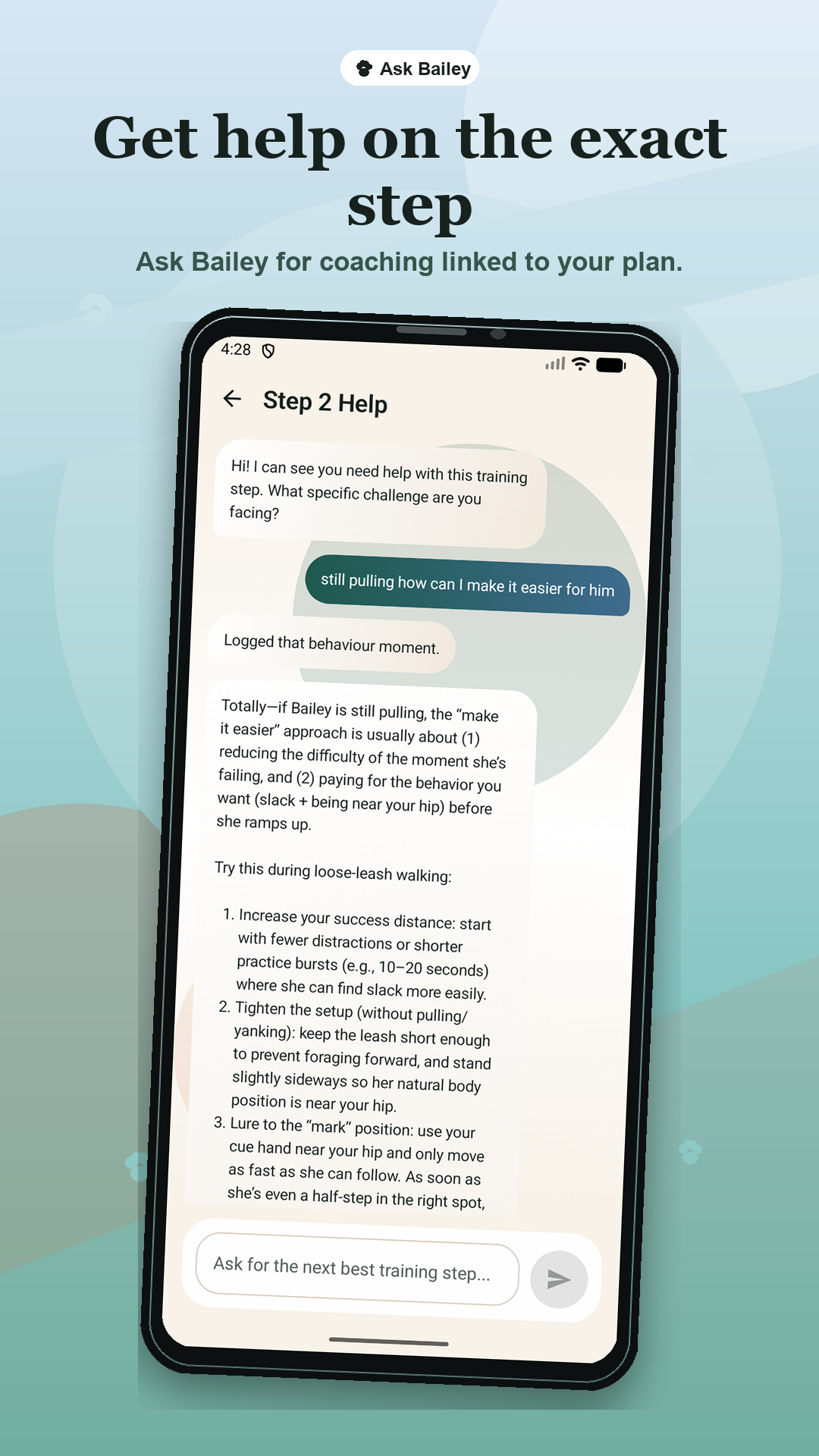
First, ensure you're being truly consistent—no exceptions. Second, make sure you're rewarding heavily in the beginning. Some puppies need more frequent rewards to understand the connection. Finally, consider whether your puppy might benefit from a front-attachment harness or head halter as a management tool while training continues. [1]
"My puppy is too strong for me to control."
A front-attachment harness or head halter designed for larger dogs can provide better control while you build training skills. [1] These tools don't replace training—they support it—but they make the process safer and more manageable for you.
"My puppy lunges or reacts to other dogs."
Pulling combined with reactivity toward other dogs or people suggests your puppy may benefit from professional guidance. Consult a certified dog trainer or veterinary behaviorist who can assess the underlying cause and create a customized training plan. Reactivity requires specialized techniques beyond basic leash training.
Making Walks Enjoyable for Your Puppy
Remember that walks should be enriching experiences, not just bathroom breaks. [4] Your puppy needs physical exercise and mental stimulation. While you're teaching loose-leash walking, try to incorporate sniffing time, exploration, and interaction with the environment (when appropriate). This keeps your puppy engaged and makes walks something they look forward to rather than a frustrating training session.
The goal isn't to have a robot puppy that walks in perfect heel position. The goal is a puppy that can walk calmly beside you, enjoys the experience, and understands that cooperation makes walks better for everyone.
Key Takeaways for Puppy Leash Training Success
- Consistency is non-negotiable. Enforce the no-pulling rule every single time, without exception.
- Never yank or use corrections. These methods don't work and can harm your puppy physically and emotionally.
- Stop walking when your puppy pulls. Make pulling unrewarding and loose-leash walking rewarding.
- Use direction changes to keep training dynamic and engaging for active puppies.
- Reward generously at first, then gradually transition to life rewards as your puppy improves.
- Manage energy before walks by playing with your puppy beforehand.
- Consider training tools like front-attachment harnesses if you need additional support.
- Prevent pulls proactively by redirecting your puppy's attention before they pull.
- Make walks enjoyable by allowing sniffing and exploration time as rewards for good behavior.
- Be patient. Leash training takes time, especially if your puppy has already developed pulling habits.
The Long-Term Payoff
Investing time in proper leash training now sets your puppy up for a lifetime of pleasant walks. A puppy that understands loose-leash walking becomes an adult dog that's safe to walk in any environment, from busy city streets to hiking trails. You'll enjoy your walks more, your puppy will be safer, and you'll have built a foundation of communication and trust that extends far beyond the leash.
Leash training might feel like the most challenging thing you teach your puppy, but it's absolutely worth the effort. [1] Start today with patience, consistency, and kindness—your future walks together will thank you.
Sources & References
- https://petexpertise.com/blogs/dog-leash/dog-training-article-training-your-dog-not-to-pull-on-the-leash
- https://bestfriends.org/pet-care-resources/how-stop-dog-pulling-leash
- https://happyhoundsdogtraining.ca/dog-pulls-on-leash-try-these-5-tips/
- https://www.akc.org/expert-advice/training/expert-tips-dog-leash-issues/