Why Crate Training Matters (And Why It's Not What You Think)
When you first hear the term "crate training," it's natural to feel a twinge of guilt. Aren't you essentially locking your puppy in a cage? The short answer is no—and understanding the difference between punishment and proper crate training is the key to success.
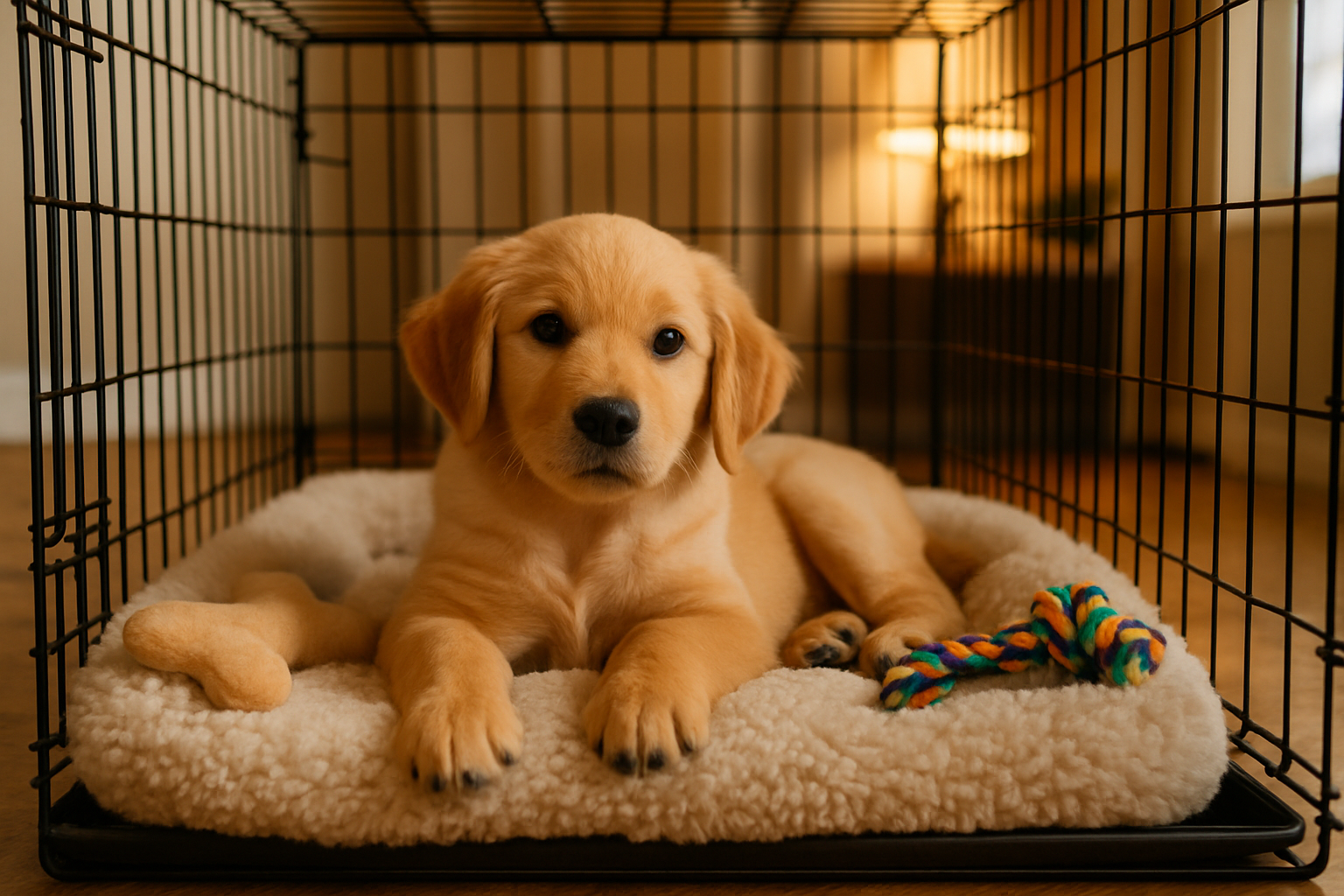
Here's the truth: puppies and dogs are naturally den animals. In the wild, canines seek out enclosed, secure spaces to rest and feel protected. Your puppy's crate, when introduced correctly, becomes their personal sanctuary—not a prison. [1] Dogs actually feel more secure in enclosed, den-like spaces, which can help reduce anxiety during stressful situations like thunderstorms or loud gatherings. [5]
Beyond the psychological comfort, crate training serves several practical purposes that make it invaluable for new puppy parents:
- Accelerates housebreaking: Puppies naturally avoid soiling their sleeping area, making crates powerful tools for potty training [1]
- Prevents destructive behavior: Keeps your puppy safe from household hazards and your belongings safe from curious teeth when you can't supervise [2]
- Provides safe transportation: A properly crate-trained dog travels safely in vehicles [2]
- Establishes routine and security: Gives your puppy a predictable, calm space during hectic household moments [5]
The critical distinction here is this: a crate should never be used as punishment. When used correctly, your puppy will actually choose to spend time in their crate because they associate it with positive experiences. [3]
Choosing the Right Crate for Your Puppy
Before you begin training, you need to set yourself up for success by selecting the appropriate crate. This decision matters more than many new owners realize.
Crate Types
You'll encounter three main types of crates: [5]
- Wire crates: Offer flexibility with door placement and allow you to use dividers to adjust interior space as your puppy grows
- Plastic airline-style crates: Provide a more den-like feel and are excellent for travel
- Heavy-duty fabric crates: Portable and lightweight, though less durable for determined chewers
Sizing: The Make-or-Break Decision
This is where many well-intentioned puppy parents make a critical mistake. Your crate should be large enough for your puppy to stand up, turn around, and lie down comfortably—but not much larger. [1] This isn't about restricting space; it's about leveraging your puppy's natural instinct to keep their sleeping area clean.
If the crate is too large, your clever puppy will simply designate one end as the bathroom and the other as the bedroom, completely defeating the housebreaking advantage. [1]
Pro tip for large and giant breed puppies: Purchase a crate sized for your puppy's adult dimensions and use an adjustable divider to reduce the interior space as they grow. This approach saves money and works beautifully with the training process. [1] Alternatively, some animal shelters rent crates, allowing you to upgrade sizes as your puppy grows without significant expense. [2]
Setting Up Your Puppy's Crate for Success
Location and comfort matter more than you might expect when establishing your puppy's relationship with their crate.
Finding the Perfect Spot
Place the crate in an area where your family spends significant time—your living room, family room, or wherever the action happens. [2] Think of it as a dog bed rather than an isolation chamber. Your puppy should feel included in family life, not separated from it. When puppies feel isolated from their pack, they may interpret crate time as punishment, which creates anxiety and resistance to training. [5]
For very young puppies, consider placing the crate in your bedroom or nearby hallway, especially during nighttime hours. Puppies need frequent bathroom breaks, and you'll want to hear their signals quickly. Once your puppy consistently sleeps through the night without accidents, you can gradually move the crate to your preferred location. [2]
Making the Crate Inviting
Add soft bedding or blankets to create comfort—but observe your puppy's preferences first. Some puppies destroy bedding or prefer hard surfaces, so start conservatively. You can always add more comfort items once you understand your puppy's habits. [5]
Ensure your puppy's collar or tags won't snag on the crate door or walls, which could frighten them or cause injury. [5] These small details prevent negative associations before they start.
The Step-by-Step Crate Training Process
Here's where patience becomes your superpower. The timeline varies—some puppies adapt in days, others take weeks or even months depending on their temperament and past experiences. [2] Resist the urge to rush. The time you invest now prevents months of anxiety and resistance later.
Phase One: Making Friends With the Crate
Step 1: Open Door Exploration
Start with the crate door completely open or propped securely so it can't accidentally close and startle your puppy. Let your puppy explore at their own pace without pressure. [1] Stay upbeat and positive during this phase.
Step 2: Treat Motivation
Toss treats inside the crate and praise enthusiastically when your puppy enters to investigate and eat them. Continue rewarding while they're inside. You might also place a treat-stuffed toy in the crate to make it irresistible. [1] The goal is simple: your puppy should think the crate is the best thing that's happened to them since you brought them home.
Step 3: Meal Association
Begin feeding all meals near or inside the crate. If your puppy shows hesitation, start by placing the food bowl just outside the crate entrance, then gradually move it closer over several feeding sessions until the bowl sits inside. [2] This positive association with feeding is powerful—puppies begin to anticipate good things happening in their crate.
According to professional guide dog trainers, feeding all meals in the crate until your puppy eagerly enters can take several months, but the positive association accelerates the entire training process. [3]
Phase Two: The Crate Game (Building Confidence)
Once your puppy shows comfort around the crate, introduce structured play that builds positive associations. [3]
Step 1: Lure and Reward
Lure your puppy all the way to the back of the crate with a treat, then drop it and let them eat. Repeat this 5-10 times until they understand the pattern. [3]
Step 2: Self-Entry
After several repetitions, stop luring and instead drop a treat only after your puppy walks in independently. This teaches them to make the choice to enter the crate. [3]
Step 3: Adding a Cue Word
Once your puppy consistently enters the crate, introduce a command word like "crate" or "kennel" by saying it just before tossing the reward inside. Over time, this word becomes a powerful tool for directing your puppy into their safe space. [5]
Phase Three: Closing the Door (Gradually)
This is where many trainers rush, creating the very anxiety they're trying to avoid. Take your time.
Step 1: Door Closure During Meals
Once your puppy comfortably eats meals in the crate, gently close the door while they eat. Open it immediately when they finish. Do this for several days. [5]
Step 2: Adding a Delay
After several days of this routine, add a small delay—wait just a few minutes before opening the door after your puppy finishes eating, while you remain in sight. [5]
Step 3: Extending Duration
Gradually increase the time between when your puppy finishes eating and when you open the door. Work toward 10-15 minutes of calm crate time. [5]
Step 4: Leaving the Room
Only after your puppy consistently remains calm for 10-15 minutes should you begin stepping out of sight for brief periods. Start with just a few minutes and gradually extend. [5]
Phase Four: Overnight Crating
Your puppy's bladder capacity determines how long they can hold it. As a general rule, puppies can hold their bladder for approximately one hour per month of age, plus one. [2] A three-month-old puppy might manage four hours; a four-month-old, five hours.
During the night, place the crate near your bed so you can hear when your puppy needs to eliminate. When they whine, take them outside immediately—this isn't playtime, it's a bathroom trip. [2] Once your puppy consistently sleeps through the night without accidents, you can gradually move the crate to your preferred location.
Managing Whining and Crying
Few things test a pet parent's resolve like a whining puppy. Understanding what your puppy is communicating makes all the difference.
Is It a Bathroom Emergency or Testing the Boundary?
If you've followed the gradual training process and haven't rewarded whining in the past by releasing your puppy, try ignoring the whining initially. Many puppies stop after a short period once they realize whining doesn't produce results. [2]
If whining continues after you've waited several minutes, use your "outside" cue (the phrase or gesture your puppy associates with bathroom breaks). If they respond excitedly, take them outside. If not, they're likely testing boundaries rather than signaling a genuine need. Return them to the crate calmly. [2]
Critical Rule: Never Punish Whining
Punishment creates fear and anxiety around the crate—exactly what you're trying to avoid. [2] Yelling, hitting, or scolding teaches your puppy that the crate is a scary place, not a sanctuary.
Prevention Through Proper Progression
The best way to avoid excessive whining is to avoid rushing through the training phases. When puppies progress gradually and develop genuine comfort in their crate, whining becomes minimal. [2]
Time Limits: How Long Can Your Puppy Stay Crated?
Understanding your puppy's limits prevents frustration and behavioral problems.
- Puppies under 4 months: No more than 1-2 hours during the day, plus their nighttime sleep [3]
- Puppies 4-6 months: No more than 3-4 hours during the day [3]
- Adult dogs: No more than 6 hours during waking hours [3]
Exceeding these limits leads to anxiety, depression, and insufficient exercise and socialization. [3] Crates are management tools, not long-term confinement solutions.
What Not to Do: Common Crate Training Mistakes
Don't use the crate as punishment. Sending your puppy to their crate as a timeout for misbehavior teaches them to fear the space. [3]
Don't ignore separation anxiety. If your puppy shows signs of genuine separation anxiety (destructive escape attempts, extreme distress), a crate alone won't solve the problem. Consult a professional animal behavior specialist for counterconditioning techniques. [2]
Don't leave unsafe items in the crate. Cloth bedding, toys with small parts, or anything destructible can become hazards. Stick with hard toys like Kongs or Nylabones. [3]
Don't rush the process. Every puppy is different. Pushing too fast creates anxiety that can take months to overcome. [1]
Crate Training Isn't Forever
Here's something many new owners don't realize: crate training is a temporary tool, not a permanent lifestyle. [3] Once your puppy develops good house manners, can be trusted unsupervised, and demonstrates reliable bladder control, you can gradually phase out crate use.
Some dogs choose to return to their crates throughout life because they've learned to love them. Others leave them behind entirely. Both outcomes represent success.
Your Crate Training Action Plan
Ready to get started? Here's your roadmap:
- Week 1: Set up your crate in a family gathering space. Leave the door open and let your puppy explore naturally. Toss treats inside frequently.
- Week 2: Begin feeding meals near the crate, gradually moving the bowl inside. Play the crate game 3-5 times daily.
- Week 3: Start closing the door during meals. Introduce your cue word. Extend calm crate time gradually.
- Week 4+: Begin leaving the room for short periods. Practice overnight crating near your bed.
Remember: this timeline is flexible. Your puppy's comfort matters more than hitting arbitrary deadlines.
Final Thoughts: Building a Lifetime of Security
Crate training, done right, gives your puppy more than just a safe space—it gives them confidence. A puppy who learns that their crate is a place of comfort and security develops into an adult dog who feels safe and secure in the world.
The tears you're worried about? They'll be minimal if you approach training with patience, consistency, and kindness. Your puppy will tell you when they're ready to move to the next phase. Trust that process, and you'll create a positive relationship with their crate that lasts a lifetime.
Sources & References
- https://www.chewy.com/education/dog/new-dog/how-to-crate-train-a-puppy-a-step-by-step-guide-from-an-expert
- https://www.humaneworld.org/en/resources/crate-training-101
- https://www.guidedog.org/gd/events-and-news/Crate_Training_A_Puppy.aspx
- https://www.thepuppyacademy.com/blog/2023/4/7/the-ultimate-guide-to-puppy-training-tips-tricks-and-techniques
- https://www.wisdompanel.com/en-us/blog/crate-training