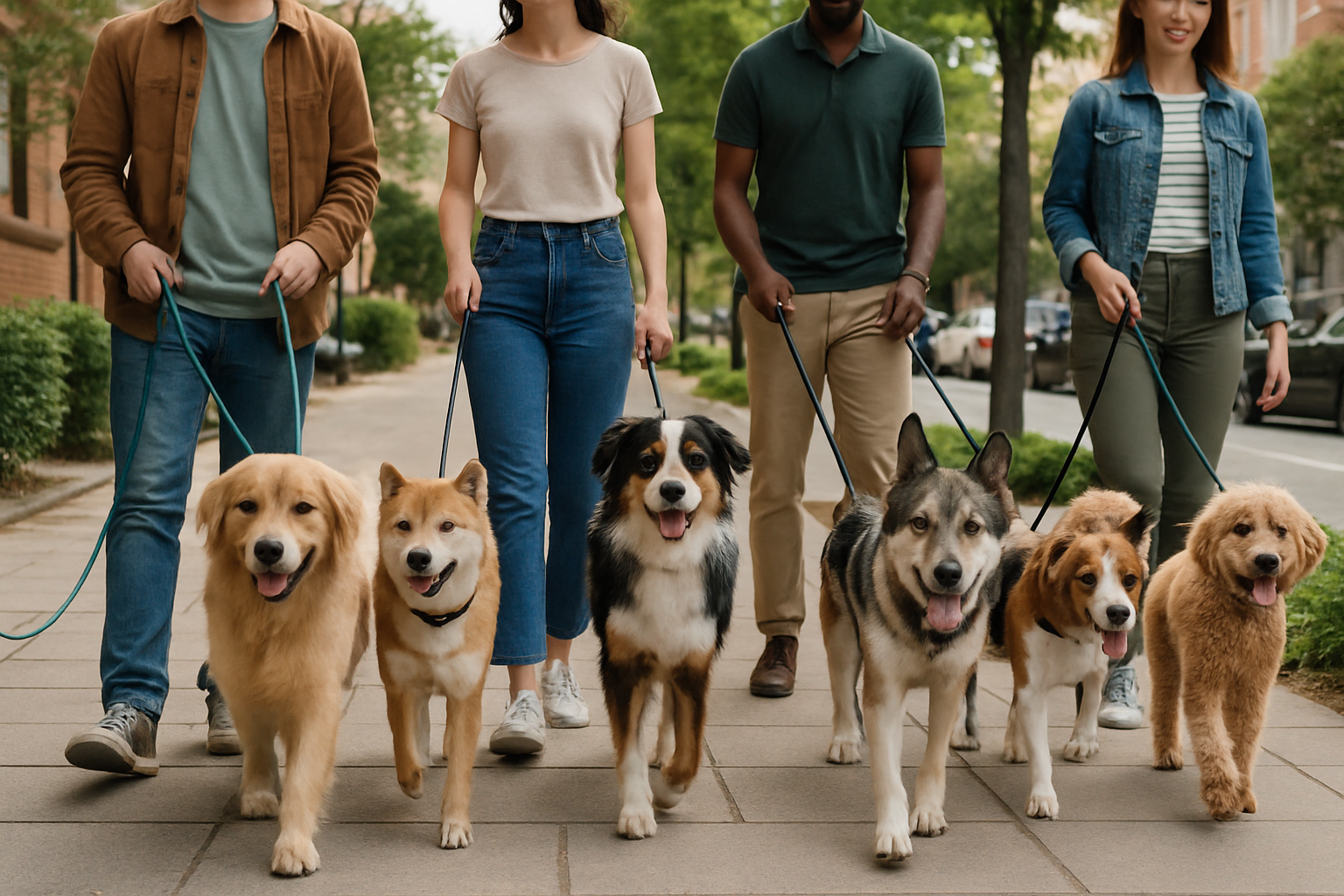
The Leash-Pulling Struggle: Why Your Dog Pulls (And Why You're Not Alone)
If you're reading this, chances are you've experienced that moment: your dog spots something interesting, locks onto it like a missile, and suddenly you're being yanked forward with the force of a small horse. You're not alone. Leash pulling is one of the most common complaints from dog owners, and it transforms what should be an enjoyable walk into an exhausting, frustrating ordeal.
Here's what most dog owners don't realize: the pulling problem often isn't your dog's fault—it's how we've inadvertently set them up to fail. When we attach our dogs to short leashes and keep them 8-10 feet away from everything they find interesting, we're essentially dangling treasure just out of reach. When your dog pulls to get closer and it works (even partially), they learn that pulling is the solution. [1]
The good news? This behavior can be completely transformed with the right understanding and approach.
Understanding the Three Types of Loose Leash Walking
Before diving into training methods, it's important to recognize that loose leash walking isn't a single behavior—it's actually a complex interaction between you, your dog, and your environment. [1] More specifically, there are three distinct types of loose leash walking you'll encounter, and understanding the difference helps you stay consistent and set realistic expectations. [2]
- Walking at your side: Your dog maintains a position aligned with your hip, moving in sync with your pace
- Walking ahead with permission: Your dog moves forward of you on a loose leash, but without pulling—they're exploring within boundaries you've set
- Exploration walks: Your dog has freedom to sniff and investigate while maintaining a slack leash and checking in with you regularly
The critical rule across all three types: no pulling, no matter which format you're practicing. [2] Consistency here is your secret weapon. If your dog can pull sometimes but not others, they'll keep testing the boundaries.
The Equipment Question: Why Your Gear Matters More Than You Think
Before you even step outside, your equipment choices set the stage for success or struggle. This isn't about finding a magical "no-pull" device—it's about choosing tools that work with your dog's natural behavior rather than against it.
Leash Length: The Game-Changing Variable
One of the most overlooked factors in loose leash walking is leash length. If you're currently using a standard 6-foot leash gathered up in your hand, you might be unknowingly creating the pulling problem. [1] Research from French trainers has shown that dogs on longer leashes actually sniff more, and as they sniff, their heart rate slows—indicating a calmer emotional state. [1] Additionally, when dogs have more environmental access, they become less obsessed with pulling toward distant stimuli.
Consider this: if your dog can reach interesting smells and sights without straining, they have less motivation to pull. By using more of your available leash length—or upgrading to a longer line altogether—you're essentially removing the "temptation just out of reach" that teaches pulling in the first place. [1]
Practical recommendations:
- If you have a 6-foot leash, try using the full length rather than gathering it up
- Consider upgrading to an 8-15 foot leash depending on your walking environment [1]
- Use a thin, flat biothane leash for better control and comfort
- Avoid retractable leashes—they're always taut and don't allow for true loose leash walking
Harnesses vs. Collars: The Safety Factor
Where you attach the leash matters significantly, especially on longer lines. Non-restrictive harnesses with back-clip attachment points are preferable to collars or front-clip "no-pull" harnesses. [1] Why? Because when your dog lunges or pulls on a collar, you're applying pressure directly to their neck—potentially causing injury. A properly fitted harness distributes force across the chest and shoulders, making it safer for your dog while still giving you control.
For puppies specifically, a longer leash with a harness is especially beneficial. Their developmental need to explore can quickly turn into pulling behavior when confined to a short line, and the resulting struggle can damage your relationship before it even begins. [1]
The Foundation: Preparation Work Before You Walk
Here's where many dog owners skip ahead and wonder why their training isn't working: you can't successfully teach loose leash walking without proper preparation. [2] Think of this as building a strong foundation before constructing the house.
Step 1: Teach Off-Leash Basics at Home
Before expecting your dog to walk politely on a leash in the real world, they need to understand the basics in a low-distraction environment. [2] Practice basic commands like "sit," "stay," "look," and "come" in your home and yard. These aren't just nice-to-haves—they're essential safety tools that give you reliable communication during walks, especially at critical moments like before crossing streets. [3]
Step 2: Release Energy Appropriately
A dog with pent-up energy is far more likely to pull on walks. Before heading out, engage your dog in active play to burn off excess excitement. [2] This isn't about exhausting them into submission—it's about allowing them to express natural energy in an appropriate outlet so they can focus better during training.
Step 3: Master Transitions
The moments when you're about to start your walk are critical. Expecting calm and quiet at each transition point—from your house to the yard, from the yard to the street—sets the tone for everything that follows. [2] If your dog is bouncing off the walls at the door, that energy will translate directly into pulling once you're outside.
Step 4: Introduce the "Go Sniff" Cue
Teaching your dog a specific cue that grants permission to explore can be transformative. [2] This gives your dog breaks from active training while still maintaining your control. When you say "go sniff," they know they have freedom to investigate. When you say your walking cue (like "with me"), they return to focused walking. This variety keeps walks interesting for your dog and prevents the monotony that can lead to pulling behavior.
Progressive Training Environments: Meeting Your Dog Where They Are
One of the biggest mistakes dog owners make is jumping straight into high-distraction environments and then blaming their dog for struggling. Your dog's current skill level determines where training should happen. [3]
Follow this progression:
- Phase 1 - Home: Start in your house with minimal distractions
- Phase 2 - Yard: Move to your backyard or a quiet area
- Phase 3 - Quiet neighborhood: Practice on low-traffic residential streets
- Phase 4 - Moderate distractions: Progress to busier areas as success increases
- Phase 5 - High-distraction environments: Only attempt parks and exciting locations once your dog is reliably successful in earlier phases [3]
If your dog is struggling during a walk, that's valuable feedback: the environment is too difficult for their current skill level. Rather than pushing through, step back to an easier phase. [3] This isn't failure—it's smart training.
The Four Dog-Friendly Training Methods That Actually Work
Unlike outdated techniques that rely on punishment or discomfort, modern positive reinforcement methods are both more effective and more humane. [2] Here are the most successful approaches:
Method 1: The Check-In Reward System
This method capitalizes on your dog's natural tendency to look back at you. When your dog checks in with you during a walk—making eye contact or turning their head toward you—immediately reward with a high-value treat. This teaches your dog that paying attention to you is more rewarding than pulling toward distractions. Over time, checking in becomes their default behavior rather than pulling.
Method 2: The Direction Change Technique
When your dog begins to pull, simply change direction. Don't jerk the leash or give commands—just turn and walk the opposite way. Most dogs will follow, and when they do, reward them. This method teaches that pulling doesn't get them where they want to go; staying with you does. It's particularly effective because it removes the struggle and puts the decision-making on your dog.
Method 3: The Positional Luring Method
Use high-value treats to lure your dog into the correct position beside you, aligned with your hip. Reward them generously for maintaining this position. [3] The key is consistency—reward every time they're in the right spot, and they'll naturally gravitate there. Gradually increase the duration they stay in position before treating.
Method 4: The Environmental Satiation Approach
By allowing your dog more access to environmental reinforcers (smells, sights, interesting areas) on a longer leash, you reduce their obsession with them. [1] When your dog can sniff and explore without needing to pull, those environmental rewards become slightly less valuable. This opens the door for food and attention rewards to become more motivating, making your training more effective. Additionally, because your dog isn't constantly pulling, you're not reinforcing that behavior—you're reinforcing calm exploration instead. [1]
Practical Implementation: Your Step-by-Step Action Plan
Understanding the theory is one thing; implementing it is another. Here's exactly what to do:
Week 1-2: Foundation Building
- Assess your current equipment and upgrade if necessary
- Practice basic commands in your home with zero distractions
- Establish your transition expectations (calm at doors, etc.)
- Choose your walking cue ("with me" or "let's go" work well) [3]
Week 3-4: Home and Yard Practice
- Practice your chosen training method in your yard
- Reward heavily for correct position and attention
- Introduce your "go sniff" cue for exploration breaks
- Build success before moving to the neighborhood
Week 5+: Gradual Real-World Application
- Start with quiet areas and progressively increase distractions
- Use verbal cues like "easy" or "woah" to remind your dog if they're getting ahead [3]
- Maintain consistency—enforce the no-pulling rule everywhere, every time
- Celebrate small victories and progress
Handling Common Challenges and Setbacks
Even with perfect technique, you'll encounter challenges. Here's how to handle them:
Challenge: Your dog pulls toward other dogs or people
Solution: Redirect their attention using treats or a favorite toy before they reach the end of the leash. Avoid harsh corrections, as these can create anxiety and actually worsen the behavior. [3] If the distraction is too strong, change direction or increase distance until your dog can succeed.
Challenge: Progress plateaus after initial improvement
Solution: You may have progressed to an environment that's too difficult. Step back to an easier phase and rebuild success gradually. [3] Also, ensure you're using truly high-value rewards—if your dog isn't motivated by your treats, they're not high-value enough.
Challenge: Your dog pulls less but still pulls sometimes
Solution: This is actually normal progress! Consistency is key—maintain your rules everywhere. Each time you allow pulling "just this once," you're teaching your dog that pulling sometimes works. [2] Stay patient and persistent; each dog learns at their own pace.
Why This Approach Actually Works (The Science Behind It)
These methods aren't just feel-good techniques—they're grounded in behavioral science. When you use positive reinforcement and remove the "temptation just out of reach" scenario, you eliminate the primary reasons your dog pulls in the first place. [1] Additionally, research shows that dogs on longer leashes who have opportunity to sniff experience lower stress levels, making them more receptive to training. [1]
By avoiding punishment-based corrections, you also prevent the anxiety and reactivity that often develops from harsh handling. Your dog learns that walking with you is rewarding because good things happen—not because they're afraid of consequences.
When to Call a Professional
Loose leash walking is absolutely trainable for most dogs, but sometimes professional guidance accelerates progress and helps you identify subtle mistakes in your technique. Consider reaching out to a certified professional dog trainer if:
- Your dog shows no improvement after 4-6 weeks of consistent training
- Your dog's pulling is accompanied by lunging, jumping, or reactivity
- You're uncertain about which training method would work best for your dog's personality
- Your dog has a history of trauma or fear-based issues
The Bottom Line: Your Dog Can Learn
Loose leash walking isn't a pipe dream reserved for other people's dogs. It's an absolutely achievable goal that transforms your daily walks from stressful battles into enjoyable bonding time. The key is understanding that this isn't a single behavior to train—it's a complex skill built on proper equipment, environmental management, consistency, and positive reinforcement.
Start with your foundation work, choose a training method that matches your dog's personality, progress gradually through environments, and maintain unwavering consistency. Your dog will learn. Patience and persistence are essential, but the payoff—walks you actually enjoy, a dog that walks calmly beside you, and a stronger relationship with your companion—is absolutely worth the effort.
Your loose leash walking journey starts today. Which step will you tackle first?