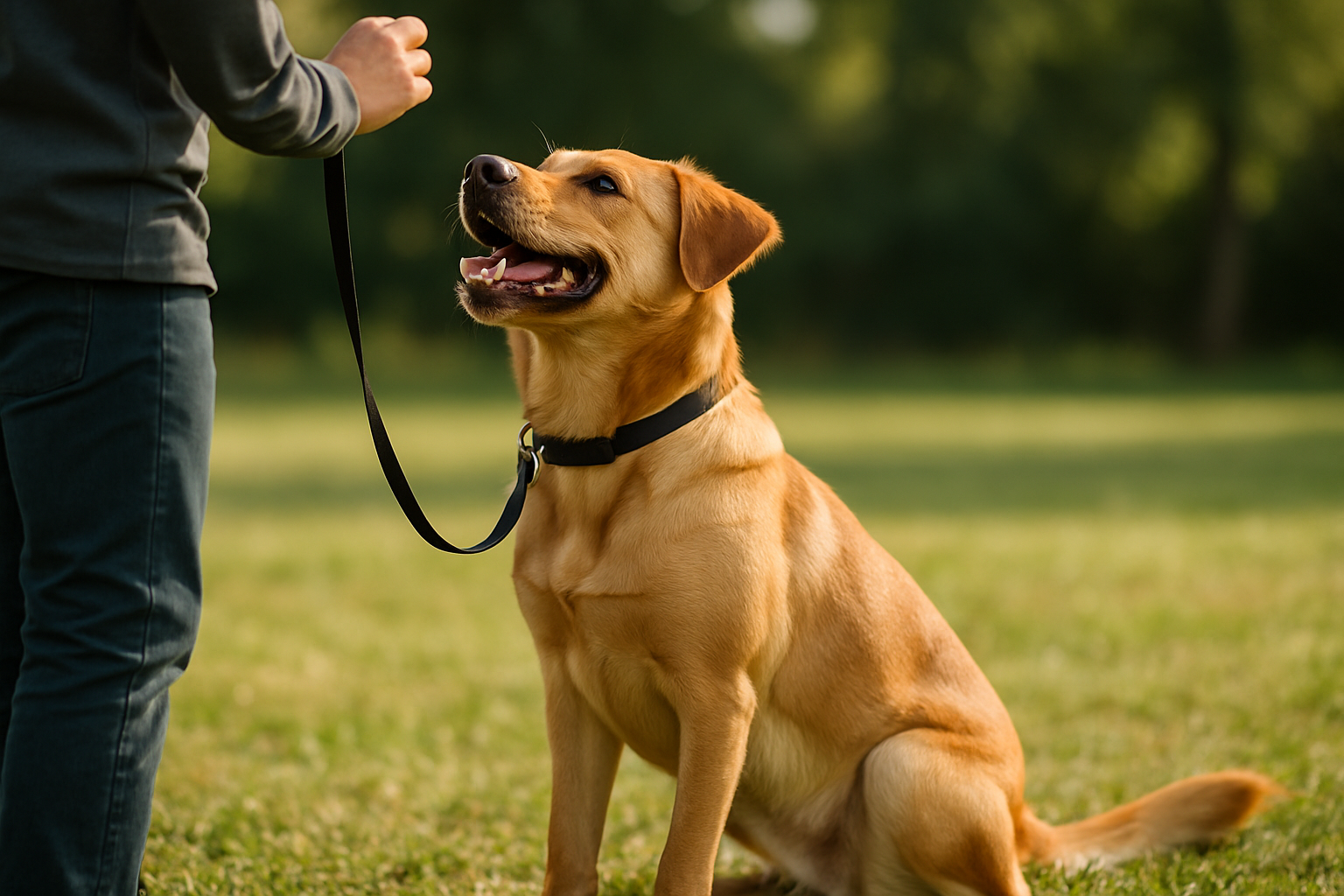
Puppy Training: A Practical Guide to Real Results
Saturday morning arrives, and your puppy bolts through the front door. You chase frantically down the street while neighbors watch. This doesn't have to be your reality.
Most new puppy owners accept that chaos is simply part of the experience. They scroll through conflicting online advice, stuff their pockets with treats, and hope their puppy will listen—at least sometimes. The frustration builds when your dog responds perfectly in your kitchen but completely ignores you the moment a squirrel appears or a guest walks through the door.
The truth is simpler than you think: your puppy doesn't have a listening problem. They have a focus problem. And that focus problem can be solved during a specific, limited window that closes faster than you realize.
The Critical Window: Why Timing Matters
Your puppy's brain undergoes a massive transformation between 8 and 16 weeks of age. This 56-day period is when their worldview is being constructed, and approximately 90% of their permanent temperament is being forged before their first birthday [5]. This isn't just about teaching tricks; it's about establishing the neural pathways that will define how your dog responds to the world for the next 15 years.
Research from the American Veterinary Society of Animal Behavior indicates that the primary socialization period ends by 16 weeks [2]. Miss this window, and you're not just delaying training—you're potentially allowing behavioral patterns to solidify that will require expensive correction later.
Consider this sobering statistic: 70% of dogs surrendered to shelters exhibit behavioral issues that could have been prevented during early development [5]. These aren't dogs with bad genetics or stubborn temperaments. They're dogs whose owners didn't understand the urgency of early intervention.
Beyond Treats: Why Bribery-Based Training Falls Short
You've probably tried the treat approach. Your puppy sits perfectly when you're holding a high-value snack. But the moment you step outside or a distraction appears, your puppy acts like they've never heard the word "sit" before.
This isn't failure on your puppy's part—it's a fundamental limitation of bribery-based training. When your dog learns that obedience depends on visible rewards, they're learning to evaluate whether compliance is worth it. A treat in your hand? Sure, they'll sit. A squirrel in the distance? That's a better deal.
Professional puppy training programs move beyond food motivation to establish what's called "attention-based obedience" [2]. This means teaching your puppy that paying attention to you is the most rewarding choice they can make, regardless of environmental distractions. This shift typically happens around week three of structured training, when 90% of puppies transition from following treats to responding to clear communication [5].
What Real Puppy Training Actually Involves
Quality puppy training isn't about teaching your dog to roll over on command. It's a behavioral conditioning program designed specifically for the developmental stage your puppy is in [2]. The best programs focus on three core pillars:
- Focus: Teaching your puppy to look to you for guidance when they feel unsure or distracted
- Manners: Establishing clear boundaries around jumping, nipping, and other unwanted behaviors
- Obedience: Creating a binding contract where commands mean the same thing every single time, in every environment
The philosophy underlying effective training can be summed up as "freedom through obedience" [5]. When your dog is truly reliable, they don't need to stay home in a crate or remain tethered to a short leash. They can join you at the beach, hiking trails, outdoor cafes, and crowded parks because you've built genuine trust and control.
Socialization: More Than Just Meeting Other Dogs
Many owners confuse unstructured puppy playdates with actual socialization. While social interaction matters, a chaotic room full of barking puppies often teaches bad habits like over-arousal and fear [2]. Worse, random negative encounters at dog parks can create fear-based reactivity that follows your dog into adulthood.
Real socialization is intentional and controlled. It involves exposing your puppy to at least 12 different floor textures (wood, tile, carpet, gravel, etc.) and 15 distinct environmental sounds (traffic, umbrellas opening, suitcases rolling, vacuum cleaners) before they reach 4 months of age [5].
Structured puppy socialization classes create a controlled version of the real world. Your puppy learns to remain calm and focused in the presence of other dogs and people, rather than becoming reactive or fearful. This prevents the expensive behavior modification that often becomes necessary when a puppy develops anxiety or aggression due to poor early experiences.
Building Attention in a World of Distractions
In 2026, the most valuable skill your dog can possess is attention [2]. Our world contains more distractions than ever before—more traffic, more people, more stimuli competing for your puppy's focus. A puppy that can maintain attention on you despite these distractions is a puppy that stays safe.
This isn't about dominance or harsh corrections. It's about teaching your puppy that looking to you for guidance is the smartest choice they can make. When your puppy feels unsure—whether it's because of an unfamiliar sound, another dog approaching, or a sudden movement—they should instinctively check in with you rather than react independently.
Building this attention foundation requires consistency, clear markers (specific words or sounds that communicate "yes, that's right" or "no, try again"), and structured practice in increasingly distracting environments [2].
The Role of Professional Training vs. DIY Methods
Video tutorials and online guides can provide valuable information, but they often result in what trainers call "selective hearing"—where your dog only listens when they feel like it [5]. Without in-person feedback, owners typically make subtle mistakes that undermine their training efforts.
Professional puppy training classes provide several advantages:
- Immediate correction of handler mistakes you might not even realize you're making
- Exposure to distractions in a controlled setting before you attempt training in the real world
- Clear benchmarks for progress so you know when your puppy is truly ready for the next level
- Accountability and structure that prevents the trial-and-error approach that confuses young dogs
- Access to proven methods rather than trendy techniques that may be ineffective or harmful
The key difference: professional trainers teach you how to teach your dog, not just what commands to teach [2].
Key Commands That Transform Daily Life
While every puppy needs to learn basic commands like sit, down, and come, one command deserves special attention: "Place."
The "Place" command teaches your puppy to move to and stay on a designated bed or mat [5]. This single command becomes the secret weapon for a peaceful home. Instead of managing jumping, mouthing, and chaotic energy throughout the day, you redirect your puppy to their place. This gives them structure, teaches impulse control, and gives you breathing room.
When building your training foundation, focus on:
- Sit: The foundation command that teaches the concept of obedience
- Down: A calming command that settles arousal
- Come: The most important safety command for off-leash freedom
- Place: The command that prevents chaos in your home
- Leave it: The command that can save your dog's life
Each command should mean exactly the same thing every single time, regardless of whether a squirrel is running by or a guest is at the door [2].
Understanding Your Puppy's Breed and Temperament
Every puppy is capable of mastery, regardless of breed [2]. Whether you're raising a focused German Shepherd or a stubborn Bulldog, the principles of attention and obedience remain the same. However, different breeds may have different motivations and learning styles.
A high-drive herding dog may need more mental stimulation and physical exercise before training sessions are effective. A toy breed may require different spatial considerations and handling techniques. A naturally fearful breed may need more gradual exposure to novel stimuli.
The best puppy training programs adapt their methods to your specific dog's temperament rather than applying a one-size-fits-all approach [5].
The First 100 Days: Your Action Plan
Your first three months with your puppy are critical. Here's how to make them count:
- Week 1-2: Establish a consistent routine, begin basic potty training, and start building positive associations with handling and grooming
- Week 3-4: Enroll in a professional puppy training program if you haven't already, begin introducing controlled socialization experiences
- Week 5-8: Focus on foundational commands (sit, down, come) with increasing levels of distraction, continue structured socialization
- Week 9-12: Build reliability in real-world environments, introduce "Place" command, practice recall with increasing distractions, begin teaching "Leave it"
Don't wait for a problem to emerge before seeking help. Proactive training is the difference between a dog that stays home and a dog that joins you on every adventure [5].
Resources for Continued Learning
If you're committed to understanding dog behavior and training on a deeper level, certain educational resources stand out for their scientific accuracy and practical application [3]:
- "Don't Shoot the Dog" by Karen Pryor: While not specifically about dogs, this book on animal training has influenced countless professional trainers and changed how people understand learning and behavior
- "Mine!" by Jean Donaldson: Focuses on dog behavior and training with practical guidance for teaching basic commands
- "The Other End of the Leash" by Patricia McConnell: Explores how human and dog communication differ, helping you understand why your dog might not be responding as expected
- Dr. Ian Dunbar's training materials: Comprehensive resources on puppy training, obedience, and behavior modification from a veterinarian and founder of the Association of Professional Dog Trainers
When evaluating training books or online programs, be cautious of outdated advice about dominance theory or punishment-based methods. Research has consistently shown that positive, science-based training methods are more effective and humane [3].
Moving Forward: Building Your Confident Puppy
The transformation from a chaotic ball of energy to a focused, reliable companion isn't magic—it's the result of understanding your puppy's developmental stage, committing to consistent training, and building a relationship based on trust and clear communication.
Your goal isn't just a dog that knows commands. It's a dog that looks to you for guidance, remains calm under pressure, and has the freedom to experience the world safely by your side. That's what "freedom through obedience" really means.
The window for shaping your puppy's permanent temperament is closing faster than you realize. The investment you make in the next 8-16 weeks will pay dividends for the next 15 years. Start today. Your future self—and your future dog—will thank you.