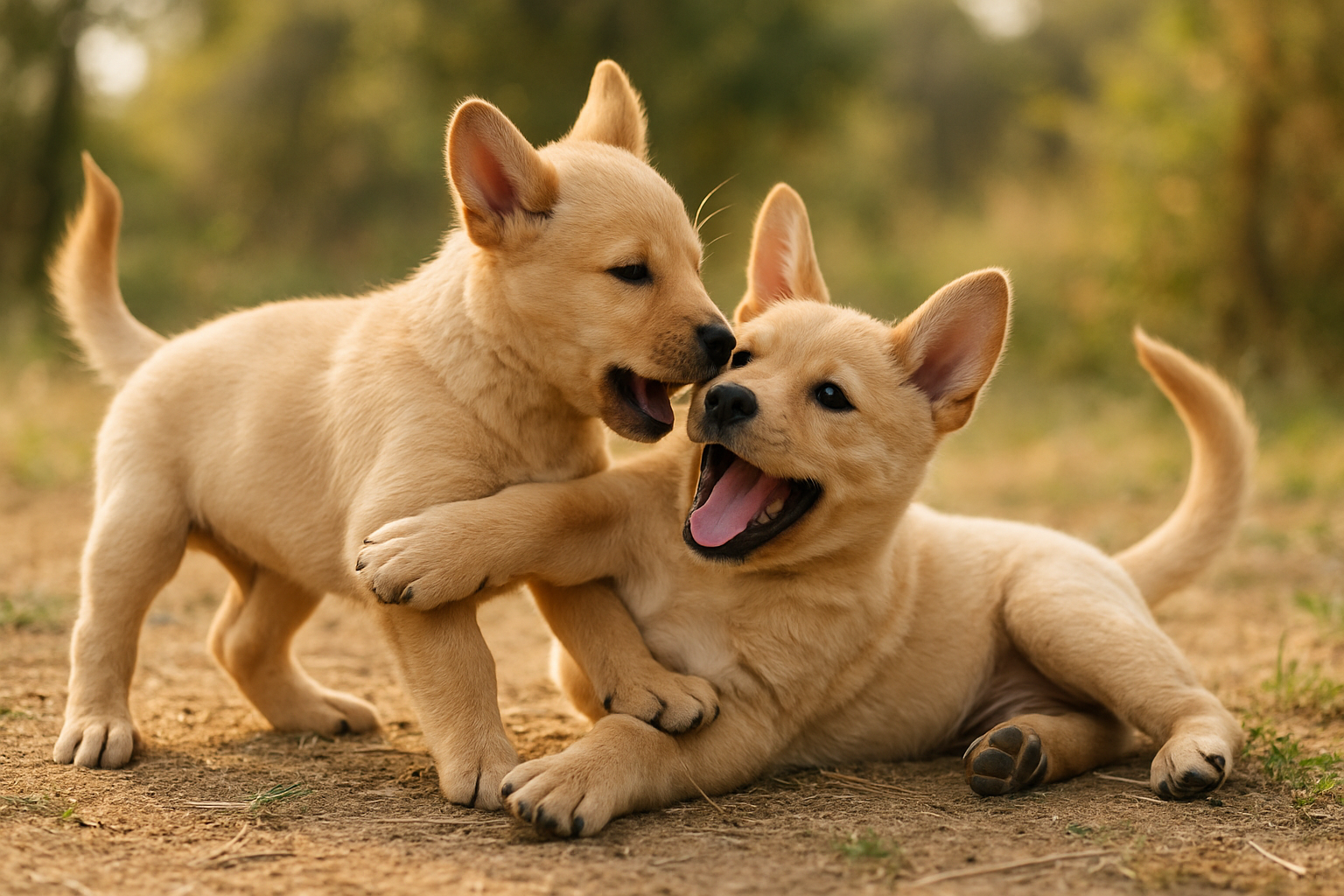
Puppy aggression is one of the most common concerns new owners bring to trainers—but the answer often hinges on understanding the difference between normal play and true aggression.[1] Your puppy might be growling, pouncing, and mouthing with intensity that triggers worry, but these behaviors are frequently part of healthy development. The key is learning to read the subtle signals your puppy communicates through body language, facial expressions, and play patterns. This guide reveals exactly what to watch for so you can distinguish playful exuberance from problematic behavior and support confident socialization.
Understanding the Confusion Between Puppy Play and Aggression
One of the most common concerns new puppy owners bring to trainers is distinguishing between normal, spirited play and genuine aggressive behavior. Your adorable pup might be growling, pouncing, and mouthing with intensity that makes your heart skip a beat. But is this normal puppy exuberance, or should you be worried? [1] The answer lies in learning to read the subtle signals your puppy is communicating through their body language, facial expressions, and behavioral patterns.
The challenge is real: puppies naturally engage in chasing, pouncing, barking, and biting as part of their developmental play repertoire. [2] Many pet owners either dismiss concerning behaviors as "just playing" or misinterpret normal play as aggression, leading to either missed training opportunities or unnecessary anxiety. Getting this distinction right is crucial for your puppy's social development and everyone's safety.
The Hallmarks of Healthy Puppy Play
When puppies are genuinely playing, they display a constellation of body language signals that indicate joy, confidence, and social engagement. Learning to recognize these markers will give you peace of mind during your pup's roughhousing sessions.
Body Language Signals of Playful Puppies
- Play Bows: Your puppy lowers their front legs while keeping their rear end elevated. [1] This classic invitation to play is one of the most reliable indicators that your pup wants to have fun.
- Relaxed Facial Expression: A playful puppy has soft facial muscles with their mouth open and relaxed, not tense or pulled back. [5] You might see their teeth showing, but the overall expression is loose and friendly.
- Wagging Tail: The tail is moving freely, typically in a relaxed, happy manner. [2] This is different from a stiff, upright tail held in a threatening position.
- Upright Ears: During play, ears are generally up and forward-facing, indicating alertness and positive engagement. [2]
- Darting Movements: Your puppy bounces back and forth, changes direction suddenly, and exhibits spontaneous, energetic movements. [2] This erratic energy is characteristic of play rather than calculated aggression.
- High-Pitched Vocalizations: Playful growling and barking are typically high-pitched and used as greetings or play invitations. [1] These sounds are distinctly different from deep, sustained growls.
- Soft Mouthing: When puppies mouth during play, they typically use gentle pressure and may "inhibit their bite," meaning they control the force of their jaws. [5]
The Importance of Play Reciprocity
One of the most telling signs of healthy play is that both participants are engaging voluntarily and taking turns. [5] In genuine play, you'll notice moments where one puppy chases another, then they reverse roles. Both puppies appear to be enjoying themselves, and neither seems trapped or forced into the interaction. If your puppy is playing with another dog, watch to see if both animals are initiating play equally and respecting each other's boundaries.
Red Flags: Recognizing Aggressive Behavior in Puppies
While puppies are naturally playful, some behavioral signs warrant immediate attention. Understanding these warning indicators helps you intervene early and prevent the development of serious aggression problems.
Body Language Signals of Aggression
- Rigid Body Posture: An aggressive puppy stands stiffly, with muscles tense and braced. [2] This is markedly different from the loose, bouncy movements of play.
- Fixed, Intense Staring: Rather than the soft, engaged gaze of a playful pup, an aggressive puppy fixes a hard, unwavering stare on their target. [2]
- Pinned-Back Ears: The ears are flattened against the head, indicating fear, stress, or hostile intent. [2]
- Lip Curling and Snarling: The lips are pulled back tightly, exposing teeth with furrowed brows. [5] This is distinctly different from teeth showing during relaxed play.
- Deep, Sustained Growling: Unlike playful high-pitched growls, aggressive growling is low-pitched, prolonged, and often sounds threatening. [2]
- Lunging or Snapping: The puppy makes sudden, aggressive movements toward a person or another animal with intent to make contact. [1]
- Stiff-Legged Approach: Rather than the playful dance of approach and retreat, an aggressive puppy moves toward their target with rigid, deliberate movements. [5]
Early Warning Signs That Require Attention
Research shows that puppies under 12 weeks of age responding to pain or fear with growling or snapping are exhibiting abnormal behavior. [2] In a natural dog pack, puppies who respond aggressively to correction from adult dogs are typically corrected themselves, so this behavior is not part of normal development. The younger your puppy is when displaying serious aggressive behaviors like growling or snapping when handled, the higher the likelihood of biting and injuring humans in the future. [2]
If your young puppy shows these concerning behaviors, contact your veterinarian immediately to rule out pain-related issues and discuss a training plan with a certified professional.
Understanding Reactivity: A Separate Issue
Before concluding your puppy is aggressive, it's important to understand that reactivity is often confused with aggression but represents a different behavioral issue. [1] A reactive puppy responds to triggers with intensity that exceeds what might be expected, but without the intent to harm. [4]
Common triggers for puppy reactivity include other dogs, strangers, loud noises, or unfamiliar environments. [4] Your reactive puppy might bark, lunge, whine, or pace when exposed to these triggers, but these behaviors stem from heightened emotional arousal—often fear, excitement, or frustration—rather than a desire to injure. [4] Importantly, reactive behavior is typically context-dependent and usually subsides once the trigger is removed, whereas true aggression may continue or escalate.
The Critical Role of Socialization
One of the most powerful tools for preventing aggression and supporting healthy play development is early, positive socialization. [3] Puppies exposed to other dogs and people during their critical developmental window learn appropriate play manners and develop confidence in social situations.
Proper Socialization Practices
- Start Early: Expose your puppy to varied experiences, people, and dogs during the critical socialization window (typically 3-14 weeks of age).
- Control the Environment: Rather than throwing your puppy into the deep end at a dog park, enroll in a structured puppy class where interactions can be monitored and managed. [5]
- Watch for Over-Stimulation: Be cautious about older or larger dogs playing too roughly with your young puppy. [5] Negative experiences during this sensitive period can create fear-based aggression later in life.
- Teach Bite Inhibition: Allow supervised play that helps your puppy learn to control the force of their bite and recognize when playmates want to stop.
- Vary Experiences: Expose your puppy to different environments, sounds, surfaces, and people to build confidence and reduce fear-based reactivity.
Puppies who miss the socialization window or experience traumatic interactions with other dogs may develop fear-based aggression or become uncomfortable around unfamiliar dogs and people. [5] Think of it like a human who never interacted with peers until adulthood—that person would likely feel uncomfortable and anxious in social situations.
The Types of Aggression to Know
Not all aggression looks the same or stems from the same cause. Understanding the different types helps you address the root issue effectively. [1]
- Territorial Aggression: Your puppy displays aggression when someone enters their claimed space, such as their sleeping area or crate. [1]
- Protective Aggression: Your puppy shows aggression because they believe you or another family member is threatened. [1]
- Possessive Aggression (Resource Guarding): Your puppy becomes aggressive when someone approaches their food, toys, or other valued items. [1]
- Fear or Defensive Aggression: If your puppy feels cornered or trapped, they may display aggressive behavior as a defensive response. [1]
- Social Aggression: Your puppy uses aggression to maintain or establish their position in the social hierarchy. [1]
- Frustration-Elicited Aggression: This occurs when your puppy doesn't get what they want, such as being released from their crate. [1]
- Pain-Elicited Aggression: Injured or ill puppies become more irritable and may snap or bite when touched. [1]
Training Approaches That Work (And What to Avoid)
How you train your puppy significantly impacts their behavioral development. Research reveals a striking finding: 80% of dogs presented to behavioral specialists for problem aggression have been trained using punishment-based methods by their owners. [2] Punishment methods have been shown to worsen aggression rather than resolve it.
Reward-Based Training Works Better
The most effective approach is reward-based training that teaches your puppy what you want them to do, rather than simply correcting unwanted behaviors. [2] Most dog owners spend too much time correcting perceived mistakes and far too little time rewarding appropriate behavior. By shifting this focus, you create a well-adjusted, friendly dog rather than one who develops behavioral problems.
Practical Training Tips
- Reward Appropriate Play: When your puppy engages in gentle play or responds to play interruptions, reward with treats and praise.
- Teach Play Interruption: Train your puppy to stop playing on command. This gives you control if play becomes too intense.
- Manage the Environment: If play is escalating, calmly remove your puppy from the situation rather than punishing them. [1]
- Stay Calm: Your puppy looks to you for guidance on how to react to situations. Remaining calm sets a positive example and discourages escalation. [1]
- Provide Appropriate Outlets: Ensure your puppy has toys and activities that allow them to engage in natural behaviors like chewing and chasing.
When to Seek Professional Help
Some situations warrant professional intervention. Contact a certified dog trainer or veterinary behaviorist if your puppy displays:
- Growling or snapping when handled before 12 weeks of age
- Unprovoked biting or lunging at people or other animals
- Intense, escalating aggression that doesn't de-escalate
- Resource guarding that's severe or worsening
- Fear or reactivity to specific triggers that's affecting quality of life
- Any behavior that concerns you or makes you feel unsafe
A qualified professional can conduct an in-home assessment to identify the root causes of concerning behavior and develop a customized training plan. [3]
Key Takeaways for Puppy Parents
- Healthy puppy play includes play bows, relaxed facial expressions, wagging tails, and high-pitched vocalizations.
- Aggressive behavior shows rigid posture, fixed staring, pinned ears, and deep growling.
- Reactivity and aggression are different issues requiring different approaches.
- Early, positive socialization in controlled environments is crucial for preventing aggression.
- Reward-based training is far more effective than punishment-based methods.
- Puppies showing aggression before 12 weeks of age need immediate professional attention.
- Trust your instincts—if something feels wrong, consult a professional.
Understanding the difference between puppy play and aggression empowers you to support your pup's healthy development while addressing genuine concerns early. By learning to read your puppy's body language, providing appropriate socialization, and using positive training methods, you're setting the foundation for a well-adjusted, happy companion.
Sources & References
- https://www.nylabone.com/dog101/dog-aggression-vs-playing
- https://bestfriendsvet.com/library/puppy-play-or-aggression/
- https://www.alphapaws.com/how-to-differentiate-when-dogs-are-playing-or-fighting/
- https://www.noblebeastdogtraining.com/reactivity-vs-aggression-in-dogs-why-understanding-the-difference-matters-and-how-noble-beast-can-help
- https://www.petprofessionalguild.com/barks/barks-magazine-blog/play-vs-aggression/