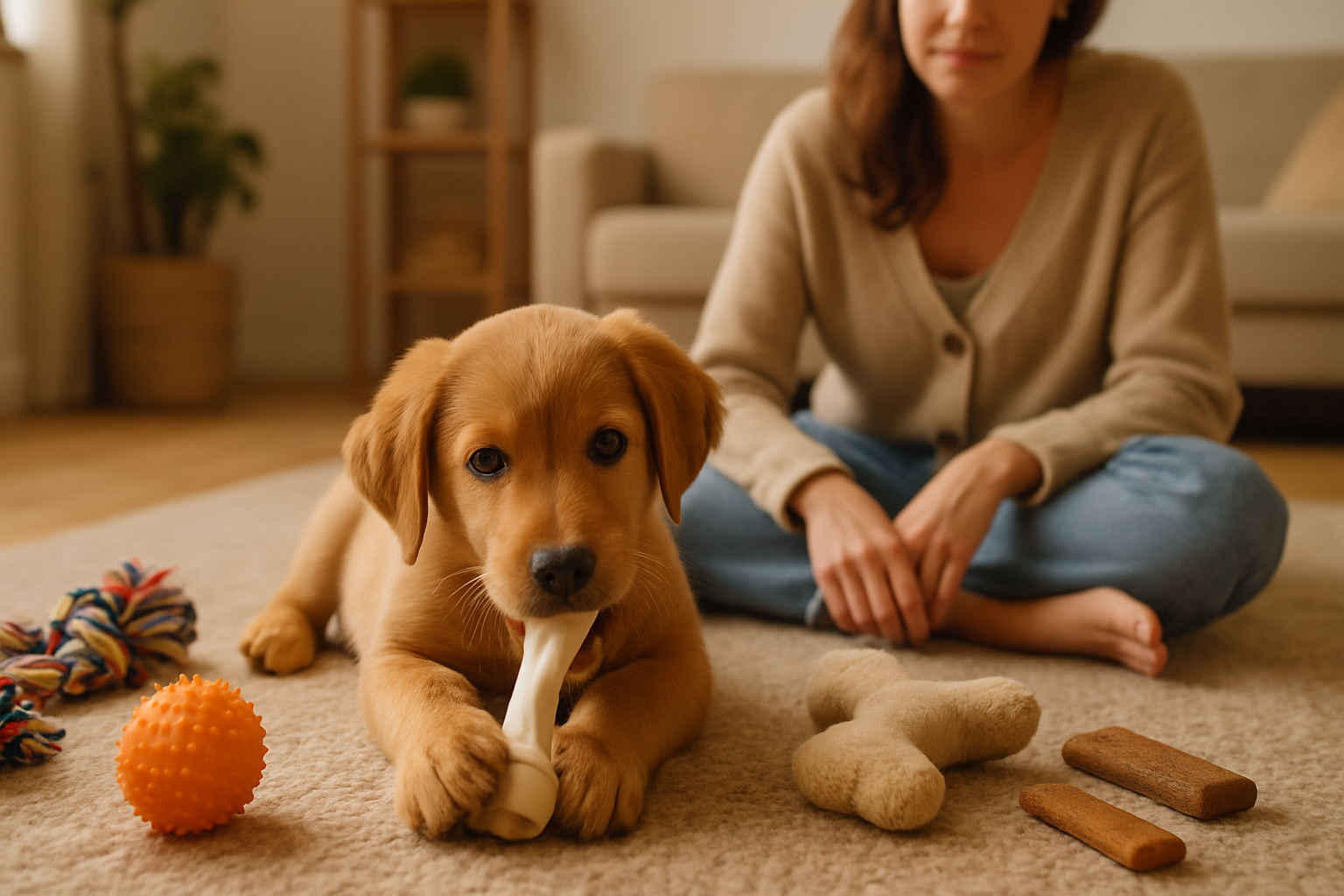
Understanding Resource Guarding: What It Is and Why It Matters
Resource guarding is a natural canine behavior where a dog displays defensive actions—growling, snarling, freezing, or snapping—when someone approaches them while they possess something valuable. In puppies, this behavior often emerges from a misunderstanding about how their humans interact with their possessions. [5] Many new puppy owners inadvertently create or reinforce guarding behaviors through well-intentioned but counterproductive training methods.
The challenge with resource guarding is that it can manifest in multiple forms. Your puppy might guard food bowls, high-value chews like bully sticks, toys, locations (like their favorite sleeping spot), or even seemingly random items like tissues or paper towels. [3] What matters most is recognizing the warning signs early and responding with compassion rather than punishment.
How Resource Guarding Develops in Puppies
Understanding the root causes of resource guarding is essential for prevention. Unlike adult dogs who may guard due to past trauma or learned behavior, puppies typically develop guarding tendencies through their interactions with their caregivers.
The Primary Culprit: Forceful Item Removal
The most common cause of resource guarding in puppies is a history of humans forcefully taking items from their mouths. [1] When you repeatedly extract objects—whether it's a cigarette butt, unsafe food, or a toy—your puppy learns a critical lesson: when humans approach while they have something, that thing is about to disappear. This creates anxiety and teaches them to either run away, consume the item quickly, or bite to maintain possession.
It's important to recognize that puppies explore their environment naturally through their mouths, just like human babies do. [5] This is developmentally normal and expected. The problem arises when we respond to this exploration by creating a pattern of confiscation.
Other Contributing Factors
- Aversive training methods or punishment-based corrections that create fear and anxiety [1]
- Inconsistent boundaries that confuse puppies about what's safe to possess
- Lack of positive associations with human approach during valuable moments
- Breed predispositions (retriever breeds are naturally inclined to carry objects) [5]
Recognizing the Warning Signs Early
Early detection is your greatest advantage in preventing resource guarding from becoming a serious issue. The warning signs exist on a spectrum, from subtle to obvious.
Behavioral Indicators to Watch For:
- Stiffening or freezing when you approach while they have an object
- Picking up items and quietly moving away from you
- Eating faster when you're nearby
- Hard staring or "whale eye" (showing the whites of their eyes)
- Growling, snarling, or raised hackles
- Air snaps or actual bites when you reach for items [3]
It's crucial not to take these behaviors personally. Your puppy isn't being "bad" or "dominant"—they're expressing a legitimate concern based on their learning history. Understanding this distinction helps you respond appropriately rather than reactively.
Prevention: The Best Medicine
The most effective approach to resource guarding is preventing it from developing in the first place. These preventative strategies should begin the moment your puppy arrives home.
1. Never Forcefully Take Items Away
This is the cornerstone of prevention. Instead of reaching for items, redirect your puppy's attention or use positive training methods to encourage them to relinquish objects willingly. [5] When your puppy picks up something inappropriate, resist the urge to chase or grab. Often, puppies will naturally drop items once they realize they're not food and move on to something more interesting.
2. Create Environmental Management Systems
Set your puppy up for success by controlling their environment. Keep prohibited items out of reach, use baby gates to restrict access to certain areas, and maintain a clean living space. [5] This prevents the situation from arising in the first place and eliminates opportunities for you to practice the harmful behavior of taking things away.
3. Teach the "Drop It" Game Proactively
Begin teaching a reliable "drop it" cue before any resource guarding issues emerge. Here's how:
- Gather 8-10 small, low-value treats
- Wait until your puppy's attention is elsewhere
- Say "Drop it!" in an upbeat, happy voice
- Immediately scatter treats on the ground in a small area (about one square yard)
- Push individual treats toward your puppy's mouth to help them gather them
- Repeat this sequence regularly until your puppy excitedly looks for treats when hearing the cue [5]
The key is practicing this game with low-value items first, when your puppy has nothing to guard. This builds a strong foundation before you need it in high-stakes situations.
4. Build Positive Associations with Your Approach
Train your puppy to view your approach as a predictor of good things, not threat. When your puppy has an item, occasionally approach calmly and toss treats near them without reaching for the object. [1] Over time, your puppy learns: "When my human approaches while I have something, treats appear. This is great!" This fundamentally changes their emotional response to your presence.
5. Practice the "Trade" System
Establish a consistent trading protocol where your puppy learns that relinquishing items results in equal or greater rewards. Keep high-value items on hand (like bully bites) specifically for this purpose. [1] When you need to take something from your puppy, offer an immediate trade rather than simply removing the item.
Teaching Your Puppy to Share: Practical Training Methods
Beyond prevention, actively teaching your puppy to share builds confidence and trust in your relationship.
The Fetch-Based Drop It Exercise
Incorporate drop it training into play sessions using fetch:
- Throw a toy and encourage your puppy to retrieve it
- When your puppy returns with the toy, hold out a high-value treat at nose level
- As soon as your puppy drops the toy to take the treat, mark the behavior with a marker word like "Yes!" and reward immediately [1]
- Gradually reduce treat value as the behavior becomes reliable
The Retrieval Training Protocol
For breeds naturally inclined to carry objects, teach formal retrieval training:
- Show your puppy a toy and reward them for looking at it
- Move away from your puppy while holding the toy, rewarding them for approaching
- Reward any attempts to touch or grab the toy with their mouth
- Gradually progress to placing the toy on the ground and rewarding them for picking it up and delivering it to your hand [5]
What NOT to Do: Common Mistakes That Backfire
Understanding what doesn't work is just as important as knowing what does.
- Don't use punishment or force: Punishing growling or guarding doesn't eliminate the underlying anxiety—it suppresses the warning signal and often escalates to biting. [1]
- Don't use aversive tools: Sonic devices, shock collars, or other punishment-based tools may temporarily stop the behavior but create additional anxiety and behavioral problems. [1]
- Don't chase your puppy: Chasing reinforces the behavior and teaches your puppy that running with items is a fun game.
- Don't make it a power struggle: Approaching resource guarding as a dominance issue or power contest misunderstands the behavior's root cause.
- Don't ignore the problem: While prevention is ideal, ignoring emerging guarding behavior won't make it disappear—it typically worsens over time.
Addressing Existing Resource Guarding
If your puppy is already showing signs of resource guarding, don't despair. These behaviors are highly trainable with the right approach.
Step 1: Assess the Severity
Determine whether your puppy is passively guarding (quietly moving away with items) or actively guarding (growling, snapping, or biting). Passive guarding is easier to address independently, while active guarding may warrant professional help. [3]
Step 2: Eliminate Forceful Taking
Immediately stop any pattern of forcefully removing items from your puppy's mouth. This is the behavior that's likely maintaining or worsening the guarding. [1]
Step 3: Restrict Access to High-Value Items
Temporarily remove the items your puppy guards most intensely. Practice drop it and positive associations with lower-value items first. [5]
Step 4: Build Positive Associations Systematically
Use the "treat cache" method: place small boxes with treats nearby, and when your puppy shows guarding behavior, toss treats from a distance without approaching. Gradually decrease distance over multiple sessions as your puppy's anxiety decreases. [1]
Step 5: Know When to Seek Professional Help
If your puppy is showing intense guarding behaviors, has bitten, or if you feel unsafe, consult a certified professional dog trainer or veterinary behaviorist. Resource guarding can escalate, and professional guidance ensures safety for everyone involved.
Understanding Canine Body Language and Consent
Effective prevention and management requires you to read your puppy's body language accurately. Understanding what your puppy is communicating helps you respond appropriately before situations escalate.
Learning to recognize cut-off signals—behaviors your puppy uses to communicate discomfort—is essential. [1] These include looking away, yawning, lip licking, and moving away. When you see these signals, respect your puppy's request for space and don't persist in approaching or handling.
Additionally, understanding the concept of canine consent means recognizing that your puppy has boundaries and preferences. Just because your puppy tolerates something doesn't mean they're comfortable with it. Respecting these boundaries builds trust and prevents anxiety-driven behaviors like resource guarding.
Creating a Household Culture of Sharing
Preventing resource guarding extends beyond individual training exercises. It requires creating a household environment where sharing is the norm.
Reward Appropriate Behavior Consistently
When your puppy brings items to you, responds to recall while carrying something, or drops items on cue, celebrate enthusiastically. [1] These moments are opportunities to reinforce the exact behaviors you want to see.
Use Positive Attention Strategically
If you have multiple dogs, praise and reward the dog who isn't engaging in unwanted behavior. This redirects your puppy's attention and teaches them that good things happen when they make better choices. [5]
Practice "Leave It" Proactively
Teaching your puppy to ignore items they encounter strengthens impulse control and reduces the frequency of situations where guarding might occur.
Key Takeaways for Success
Resource guarding in puppies is highly preventable and treatable when you understand its causes and respond appropriately. Remember these essential principles:
- Never forcefully take items from your puppy's mouth
- Begin training positive behaviors before problems emerge
- Use positive reinforcement exclusively—avoid punishment and aversive tools
- Build your puppy's trust by creating positive associations with your approach
- Teach reliable drop it and trade behaviors through play and games
- Read your puppy's body language and respect their boundaries
- Seek professional help early if problems persist or escalate
By implementing these strategies from puppyhood, you're not just preventing resource guarding—you're building a foundation of trust, communication, and cooperation that will benefit your relationship with your dog for years to come. The effort you invest now in positive prevention pays dividends in a confident, well-adjusted adult dog who genuinely enjoys sharing with their human family.
Sources & References
- https://www.doggoneproblems.com/loumi-stop-resource-guarding/
- https://www.companionanimalpsychology.com/2023/04/understanding-resource-guarding-in-dogs.html
- https://www.madcapradio.com/puppy-culture-potluck-podcast/episode-29-teaching-puppies-to-share-dog-dog-resource-guarding-prevention
- https://olatheksdogtraining.com/resource-guarding-puppies/