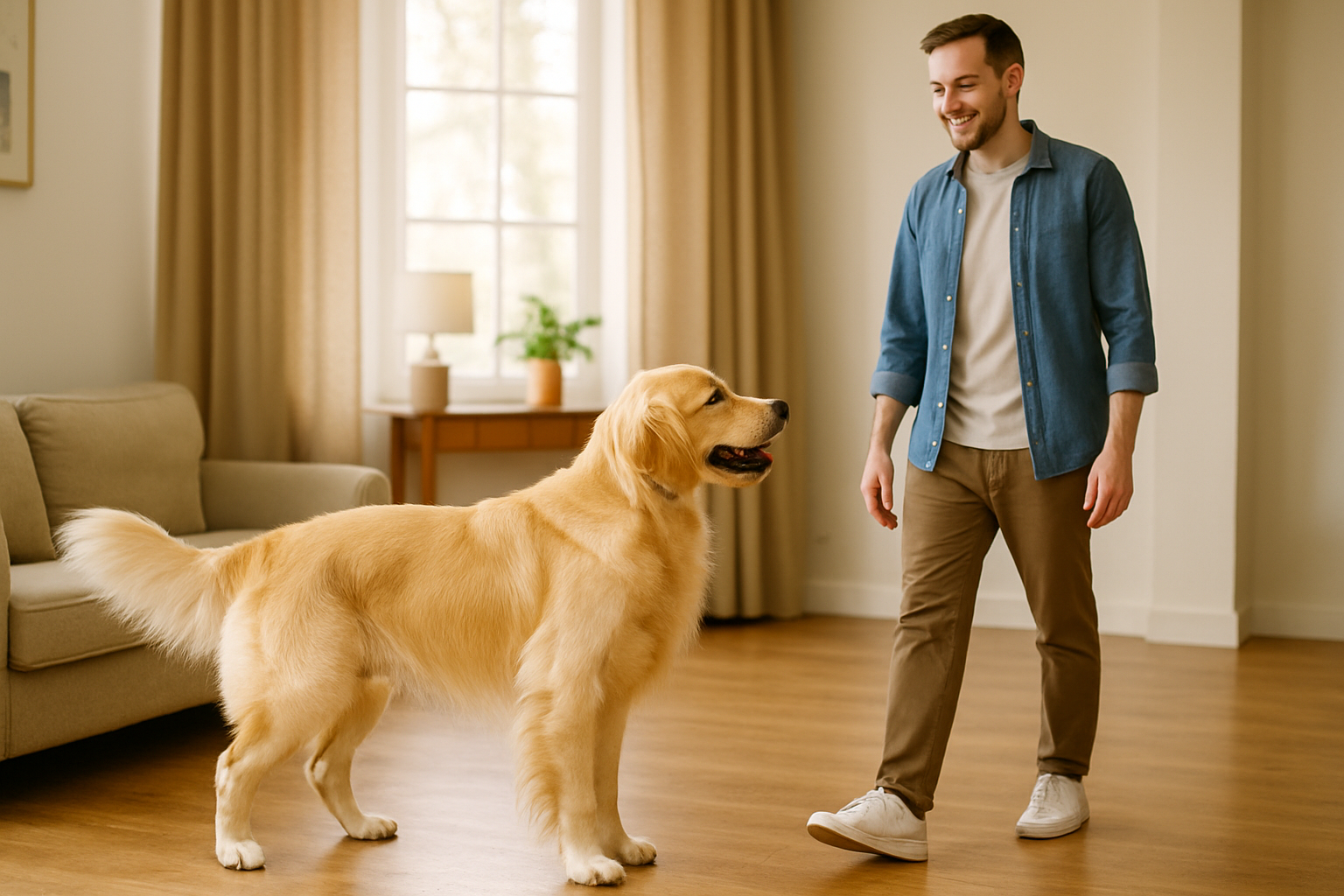
If you're wondering how to stop your dog jumping up at visitors, you're not alone—this is one of the most common behavioral complaints dog owners face. Dogs don't jump to be rude or dominant; jumping is a natural greeting behavior that starts in puppyhood and gets reinforced when people react excitedly to it. From your dog's perspective, jumping gets attention, and attention is a reward. Understanding why your dog jumps is the first step toward breaking the habit and teaching polite greeting manners that work for everyone.
Why Do Dogs Jump on Guests?
Before we tackle solutions, it's important to understand why your dog is jumping in the first place. Dogs don't jump to be rude or dominant—contrary to popular myth. Instead, jumping is a natural greeting behavior that starts when puppies are very young.
When puppies greet their mother, they jump up to lick her face. This behavior gets reinforced throughout their lives, especially when people react excitedly to their jumping. From your dog's perspective, jumping gets attention—and attention is a reward, whether it's positive or negative.
Research in canine behavior shows that dogs repeat behaviors that result in rewards. When guests squeal, pet your dog, or make eye contact during jumping, they're accidentally teaching your dog to jump more frequently. Understanding this cycle is the first step toward breaking the habit.
The Science Behind the Behavior
Jumping up is also a sign of excitement and enthusiasm. Your dog isn't trying to be dominant or aggressive; they're simply expressing joy at seeing someone new. This is why jumping tends to be worse when guests first arrive—your dog's excitement is at its peak.
Dogs also jump to get closer to your face, which is why they'll jump higher as guests move away or turn around. This distance-closing behavior is hardwired into canine communication.
Step 1: Stop Reinforcing the Jumping Behavior
The most important step in stopping jumping is to eliminate rewards for the behavior. This means everyone who interacts with your dog must follow the same rules.
What Counts as a Reward?
- Petting or touching your dog while they're jumping
- Eye contact or talking to your dog (even saying "no") during a jump
- Excited reactions or high-pitched sounds
- Pushing your dog away in a playful manner
- Any attention while all four paws are off the ground
Many people don't realize that even negative attention—like pushing a dog away—can reward jumping. The key is to make jumping completely unrewarding by ignoring it completely.
The Ignore Technique
When your dog jumps, immediately:
- Turn away and face the wall
- Cross your arms
- Stay silent and still
- Avoid all eye contact
- Wait for all four paws to hit the ground
The moment your dog's paws touch the floor, you can turn around, make eye contact, and give praise or treats. This teaches your dog that jumping results in zero attention, while standing with all four paws on the ground gets them what they want.
Step 2: Teach an Alternative Behavior
Simply stopping the reward for jumping isn't enough. You need to teach your dog what you do want them to do when guests arrive.
Train a "Sit" Command
The easiest replacement behavior is a solid sit command. If your dog can sit reliably in everyday situations, you're ready to use it for guest arrivals.
Practice this exercise:
- Have a family member pretend to be a guest approaching the door
- Before your dog can jump, ask for a sit
- Immediately reward with treats and praise
- Repeat this 10-15 times daily for one week
- Gradually increase distractions and excitement
Your dog will begin to associate guest arrivals with sitting and receiving rewards, rather than jumping and being ignored.
Consider Teaching a "Go to Your Place" Command
Some dogs need more distance to avoid the temptation to jump. Teaching your dog to go to a mat, bed, or crate when guests arrive is an excellent management strategy that also rewards calm behavior.
Start by placing your dog on their mat and rewarding them for staying there. Gradually practice this during mock guest arrivals. Once your dog is reliable, you can use this command to manage the jumping behavior completely.
Step 3: Prepare Your Guests
Your training efforts will fail if guests don't cooperate. Before they arrive, explain the new rules clearly and kindly.
What to Tell Your Guests
Say something like: "We're working on training our dog not to jump. To help us, please ignore any jumping completely. Don't pet, talk to, or even look at the dog until they sit or calm down. Once all four paws are on the ground, you can give them attention. Thanks for helping!"
Most guests will appreciate being part of the solution. Provide them with treats they can offer your dog once the jumping stops.
Control the Greeting Environment
- Have your dog on a leash when guests arrive (at least initially)
- Open the door only partially to prevent your dog from rushing out
- Ask guests to enter calmly without excited greetings
- Position yourself between your dog and guests to guide behavior
- Use a baby gate to separate your dog during initial greetings if needed
Step 4: Practice, Practice, Practice
Consistency is essential for changing any dog behavior. The more your dog practices the new behavior, the faster it will become a habit.
Structured Practice Sessions
Don't just hope your dog behaves better with guests. Set up practice sessions where family members or friends role-play as guests.
Run through these scenarios:
- Guest arrives and rings doorbell
- Guest enters and approaches your dog
- Guest offers treats for sitting
- Guest pets and interacts calmly
- Guest leaves and returns
Perform these practice sessions 3-4 times per week for at least 2-3 weeks. Each session teaches your dog what to expect and what behavior produces rewards.
Step 5: Manage Exercise and Excitement Levels
A tired dog is a well-behaved dog. If your dog is overflowing with energy, jumping becomes even more tempting.
Increase Physical Exercise
- Take longer walks or add an extra walk daily
- Play fetch or tug games in the yard
- Use a dog treadmill or flirt pole
- Arrange playdates with other dogs
- Try canine sports like agility or dock diving
Add Mental Stimulation
Mental exercise tires dogs just as much as physical activity. Try puzzle toys, nose work games, training sessions, or scent work games.
Manage Pre-Guest Excitement
About 30 minutes before guests arrive, take your dog for vigorous exercise. A slightly tired dog will be calmer and more focused on training during the greeting.
Common Mistakes to Avoid
Mistake #1: Punishing the Jumping
Yelling, hitting, or knee-bumping your dog doesn't teach them not to jump—it just teaches them not to jump when you're watching. Additionally, punishment can make your dog anxious around guests, potentially causing other behavioral problems.
Mistake #2: Inconsistent Rules
If some family members allow jumping while others don't, your dog will be confused and progress will stall. Everyone must follow the same protocol.
Mistake #3: Expecting Overnight Results
Changing a long-established behavior takes time. Most dogs need 2-4 weeks of consistent training to significantly reduce jumping. Some strong-willed breeds may need longer.
Mistake #4: Forgetting the Leash
During early training, always keep your dog on a leash during guest arrivals. This gives you control and prevents accidental reinforcement of jumping.
Mistake #5: Skipping the Alternative Behavior
You can't just teach your dog what NOT to do. You must teach them what TO do instead.
Troubleshooting: When Training Isn't Working
If you've been consistently training for 4 weeks with no improvement, consider these factors:
Your Dog Might Have Excessive Energy
Increase exercise substantially. Some dogs need 2+ hours of vigorous activity daily to reach a calm state suitable for training.
Your Dog Might Be Anxious
Some jumping stems from anxiety rather than excitement. If your dog seems nervous around guests, consult a veterinary behaviorist. You may need additional desensitization work.
Everyone Might Not Be Following the Plan
Check in with family members and guests. Even one person reinforcing jumping can undo weeks of training.
Your Dog Might Need a Professional Trainer
A certified professional dog trainer or veterinary behaviorist can assess your specific situation and create a customized training plan. They can also rule out underlying medical issues or behavioral problems.
Training Timeline: What to Expect
Week 1-2: Your dog will likely test the boundaries. Jumping might briefly increase as they figure out the new rules.
Week 3-4: Most dogs show noticeable improvement. Jumping occurs less frequently, and sitting on cue becomes more reliable.
Week 5-8: With continued consistency, jumping should be significantly reduced or eliminated.
Ongoing: Continue reinforcing calm greetings. Even after training is successful, occasional reminders help maintain the behavior.
Success Tips from Professional Trainers
- Keep training sessions short: 5-10 minutes, multiple times daily works better than one long session
- Use high-value treats: Use special treats your dog only gets during guest-greeting training
- Stay calm yourself: Dogs pick up on your energy; if you're stressed about jumping, your dog will feel it
- Celebrate small wins: Every successful greeting is progress worth acknowledging
- Document progress: Keep notes on guest interactions to see improvement you might otherwise miss
- Be patient: Some dogs are more excitable than others; adjust your timeline accordingly
Special Considerations for Different Situations
Multi-Dog Households
If you have multiple dogs, manage them separately during guest arrivals initially. Train them individually, then gradually practice with both dogs together.
Puppies vs. Adult Dogs
Puppies learn quickly but forget quickly too. Be especially consistent with puppies. Adult dogs may take longer to change established habits but will be more reliable once trained.
High-Energy Breeds
Terriers, sporting breeds, and herding dogs often jump more enthusiastically. These breeds may benefit from extra exercise and mental stimulation before guest arrivals.
Senior Dogs
Older dogs often jump less due to decreased energy and potential joint issues. Ensure your senior dog isn't jumping due to pain or discomfort by consulting your veterinarian.
Maintaining Long-Term Success
Once your dog has learned proper greeting etiquette, don't abandon the training. Long-term success requires ongoing reinforcement.
Keep Rewarding Good Behavior
Continue giving treats and praise for calm greetings, even after the behavior is established. This keeps your dog motivated to maintain the behavior.
Occasional Practice Sessions
Even after successful training, do monthly practice sessions to refresh your dog's memory.
Watch for Regression
If you notice jumping increasing again, immediately return to your training protocol. Catching regression early prevents the behavior from becoming re-established.
Conclusion
Stopping your dog from jumping on guests is absolutely achievable with consistency, patience, and the right approach. Remember that jumping is a natural behavior that your dog learned because it was rewarded. By removing the reward, teaching an alternative behavior, and maintaining consistency across everyone in your dog's life, you can transform those chaotic greetings into calm, pleasant interactions.
The key is starting today and staying committed to the process. Your guests will appreciate a polite greeting, and your dog will learn exactly what behavior earns them the attention they crave. With 2-4 weeks of dedicated training, most dogs show dramatic improvement, and many guests will never even realize your dog ever had a jumping problem.