Why Puppy-Proofing Matters More Than You Think
The moment your puppy's paws touch your floor, they begin a mission of discovery. Unlike human babies, puppies don't have hands to explore—they have mouths. This means virtually everything in your home becomes a potential chew toy, snack, or hazard. According to insurance data, nearly one in four puppy-related claims stem from preventable home accidents. [2] The good news? Most of these incidents can be avoided with thoughtful preparation.
Puppy-proofing isn't just about protecting your furniture (though that matters too). It's about preventing choking, poisoning, electrocution, suffocation, and broken bones. As a responsible pet owner, conducting a thorough "four-legged inspection" of your home before your puppy arrives is one of the most important things you can do. [1]
Getting Started: The Foundation of Puppy Safety
Before diving into room-specific advice, establish a baseline approach to puppy-proofing:
- Get on your puppy's level: Literally crawl around your home on all fours. This perspective shift reveals hazards you'd otherwise miss—small spaces they could squeeze into, items within reach of their mouths, and entanglement risks. [5]
- Limit initial access: Don't give your new puppy free rein over your entire home immediately. Start by restricting them to 2-3 rooms where they'll eat, sleep, and play. This prevents accidents, makes supervision easier, and supports potty training success. [2]
- Invest in containment tools: Baby gates, playpens, and properly-sized crates are your best friends. They create secure zones where your puppy can relax safely while you handle household tasks.
- Establish boundaries early: Decide now whether furniture will be off-limits or puppy-friendly. Changing these rules later creates confusion and behavioral problems. [5]
The Living Room: Your Puppy's Primary Playground
Since your living room is likely where your puppy will spend the most time, it deserves special attention on your puppy-proofing checklist.
Electrical Hazards
Puppies are drawn to electrical cords like moths to a flame. Chewing on live wires can cause mouth burns, electrical shock, or even fatal electrocution. [1] Here's what to do:
- Wrap exposed cords with protective covers or cord management sleeves
- Use outlet protectors to prevent curious noses and teeth from accessing outlets
- Bundle excess cord length with velcro straps and secure them out of reach
- Consider rearranging furniture to make cords less accessible
- Redirect chewing behavior through positive reinforcement—praise your puppy when they choose their toys over cables [2]
Furniture and Fall Hazards
Puppies lack the judgment to avoid dangerous situations. Coffee tables, lamps, and decorative items can topple onto them. [2] Additionally, young puppies shouldn't navigate stairs independently—falls can result in serious injuries.
- Move breakable items like photo frames, vases, and ornaments to higher shelves or secure them with museum putty [2]
- Install baby gates at both the top and bottom of stairs until your puppy is confident and coordinated enough to climb safely [1]
- Remove or secure tall floor lamps and fans that could be knocked over
- If your puppy uses the couch, ensure they can safely jump down or use a ramp to prevent falls
Plants and Greenery
Many common houseplants are toxic to dogs, including lilies, anthurium, kaffir lily, boxwoods, and hydrangeas. [Sources 1, 5] Rather than simply moving plants higher:
- Replace toxic plants with dog-safe alternatives like spider plants or Boston ferns
- Use hanging planters instead of floor-level pots [2]
- Teach the "leave it" command to discourage plant investigation [2]
- Consult the ASPCA's poisonous plant list before bringing any new greenery into your home [1]
Windows, Doors, and Escape Routes
An open door or window looks like an adventure waiting to happen to your curious puppy. [1]
- Keep all doors and windows closed and locked
- Tuck blind cords out of reach to prevent accidental strangulation [1]
- Use window guards if you have upper-story windows
- Double-check that screens are secure and won't pop out if your puppy leans against them
Fireplace Safety
A cozy fireplace can turn dangerous in seconds. [1]
- Install a secure fireplace screen to prevent burns from flames or sparks
- Store firestarter logs safely out of reach—they can cause poisoning or intestinal blockages if ingested
- Keep the hearth area clear of decorative items your puppy could knock into the fire
Carpets and Small Objects
Puppies will find and attempt to swallow the tiniest objects—lint, hair, crumbs, and forgotten choking hazards. [1]
- Vacuum frequently to eliminate small debris
- Check under furniture and cushions regularly
- Use lint rollers on carpets to catch small items before they become problems
- Keep remote controls, phone chargers, and small electronics in boxes or holders out of reach [2]
The Kitchen: Ground Zero for Hazards
The kitchen presents the most concentrated dangers to puppies. This room combines toxic substances, choking hazards, and enticing smells—a dangerous combination. [1]
Chemicals and Cleaning Supplies
Dogs explore through their mouths, and kitchen chemicals are deadly. [1]
- Store all cleaning supplies, bleach, and chemical products in high cabinets or locked storage
- Install childproof locks on low cabinets within your puppy's reach [1]
- Never leave cleaning supplies out while in use—even for a moment
- Choose pet-safe cleaning products when possible
- Remember that unintentional poisoning is one of the most common pet emergencies [5]
Trash and Food Waste
A knocked-over trash can is an invitation to disaster. Puppies can choke on bones, ingest toxic foods, or swallow sharp objects.
- Use trash cans with locking pedal mechanisms that require deliberate action to open [1]
- Store garbage behind closed cabinet doors or in a closet [5]
- Never leave food unattended on counters or tables
- Dispose of dangerous foods immediately—grapes, chocolate, avocado, onions, and xylitol-containing products are all toxic [Source 1, 5]
Human Food and Pantry Items
Many "harmless" human foods are dangerous for puppies. [1]
- Keep all food in sealed containers on high shelves
- Secure pantry doors with childproof locks
- Never feed table scraps or leave plates within reach
- Store baked goods, dairy products, raw meat, and pretzels safely away [5]
- Keep plastic bags out of reach—they're a suffocation hazard [1]
Medications and Supplements
Just as you'd protect children from prescription medications, your puppy needs the same protection. [5]
- Store all medications in high cabinets or locked drawers
- Keep vitamins and supplements secured away
- Never leave pills on counters or nightstands
Water and Bathroom Access
Yes, even the toilet can be dangerous. [5]
- Keep toilet lids closed at all times
- Ensure everyone in your household understands this rule
- Clean the toilet regularly and avoid chemical bowl cleaners if possible
- Provide fresh, clean water in designated bowls instead
The Bedroom: Creating a Safe Sleep Space
Bedrooms present unique hazards because puppies naturally den—they seek small, enclosed spaces for security. [1]
Preventing Entrapment
Puppies can wedge themselves into dangerous spaces between furniture. [1]
- Eliminate gaps between dressers and desks using flat storage boxes
- Keep closet doors closed to prevent your puppy from becoming trapped
- Secure furniture to walls if there's any risk of tipping
- Check under beds regularly for hazards
Bedding and Comfort Items
Set up a comfortable, safe sleeping area for your puppy:
- Use a washable, chew-resistant dog bed inside a properly-sized crate [2]
- Avoid blankets with fringe or tassels that could be chewed and swallowed [1]
- Don't leave loose blankets in the crate unsupervised if your puppy can't safely remove them
- Choose toys specifically designed for puppies—human baby toys can pose choking hazards [2]
Medications and Personal Items
- Store purses, gym bags, and backpacks in high closets or locked drawers [5]
- Keep medications on high shelves or in locked cabinets
- Secure hair ties, bobby pins, and small accessories that could be swallowed
Other Areas: Don't Forget These Spaces
Bathrooms
- Keep medications and supplements locked away
- Store cleaning supplies securely
- Keep the toilet lid closed
- Remove small items like hair ties, cotton swabs, and dental floss
Laundry Rooms
- Store detergent and fabric softener in locked cabinets
- Keep dryer sheets and lint out of reach
- Use a baby gate to restrict access if possible
Garages and Storage Areas
- Store antifreeze, pesticides, and automotive fluids safely
- Keep tools and sharp objects secured
- Install a gate to prevent unsupervised access
Managing Destructive Chewing Behavior
Even with perfect puppy-proofing, your puppy will want to chew. This is normal developmental behavior, not misbehavior. [2]
Redirecting Chewing Energy
- Provide appropriate chew toys and rotate them to maintain interest
- Use bitter sprays designed to deter chewing on furniture and inappropriate items [Sources 1, 2]
- Ensure your puppy gets adequate physical activity and mental stimulation—insufficient exercise often leads to destructive behavior [2]
- Never leave your puppy unsupervised outside of a crate or designated safe space [5]
- Praise and reward your puppy when they choose appropriate toys over household items
Protecting Your Furniture
If you're concerned about furniture damage:
- Use washable furniture covers that are easy to clean [1]
- Apply pet-safe bitter sprays to wooden furniture legs and fabric areas
- Consider area rugs designed for outdoor use—they're more durable and easier to clean [5]
- If replacing carpet, choose colors and patterns that hide puppy hair and stains [5]
Setting Up Puppy Pads and Potty Training Stations
Puppy pads can be helpful during the early weeks, but placement matters significantly. [2]
- Create one designated "potty station" rather than scattering pads throughout your home
- Multiple pads confuse puppies about where they should eliminate [2]
- Continue using the station until your puppy goes 4-5 weeks without accidents [2]
- Transition to outdoor potty training as soon as your puppy is old enough
Creating a Puppy-Safe Crate and Play Area
A properly set up crate becomes your puppy's sanctuary, not a punishment. [5]
Crate Essentials
- Choose the correct size—large enough for your puppy to stand, turn around, and lie down comfortably, but not so large they can potty in one corner and sleep in another
- Line the crate with a washable, chew-resistant bed [2]
- Add a few safe toys to prevent boredom
- Place the crate in your bedroom initially for comfort and bonding [2]
- Move it to other areas once your puppy is settled
Playpen Alternatives
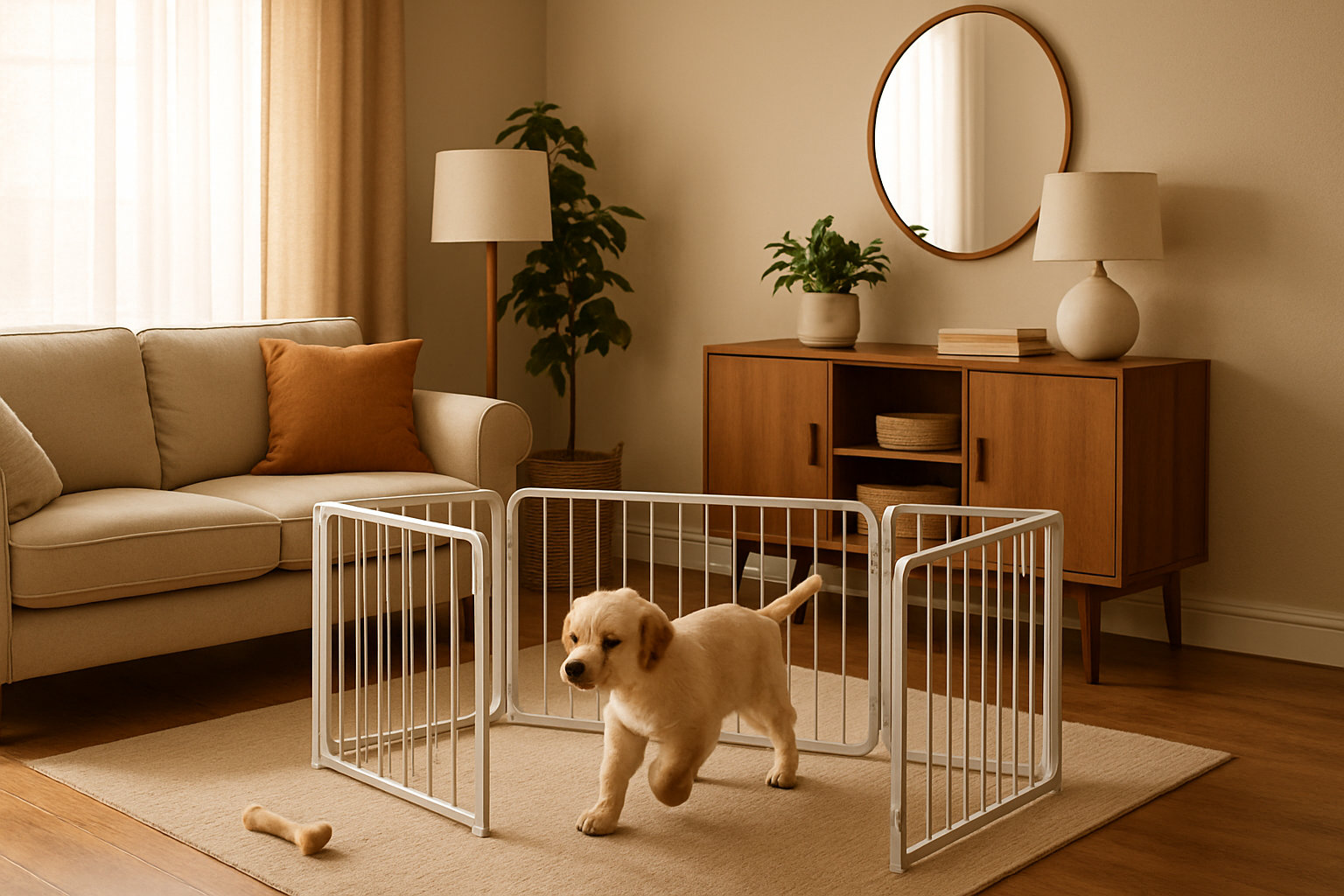
- Extendable child playpens can divide spaces and keep your child's toys separate from your puppy [2]
- Create a designated play area with appropriate toys and puppy pads
- Use baby gates to create boundaries without confining your puppy to a crate
Final Puppy-Proofing Checklist
Before your puppy arrives, work through this comprehensive checklist:
- ☐ Wrap and protect all electrical cords and outlets
- ☐ Install baby gates at stairs and doorways
- ☐ Move or secure toxic plants and decorative items
- ☐ Lock all cabinets containing chemicals, medications, or cleaning supplies
- ☐ Secure trash cans or store garbage behind closed doors
- ☐ Remove small objects that could be choking hazards
- ☐ Check for gaps and spaces where puppies could get trapped
- ☐ Set up a safe crate with bedding and toys
- ☐ Establish one designated potty pad station
- ☐ Decide on furniture boundaries and communicate them to family members
- ☐ Stock bitter spray and furniture protectors
- ☐ Ensure all windows and doors lock securely
- ☐ Review the ASPCA's toxic plant list
- ☐ Keep toilet lids closed
- ☐ Vacuum thoroughly and remove small debris
The Bottom Line: Prevention Is Easier Than Treatment
Puppy-proofing your home requires some upfront effort and a modest investment in safety equipment, but it's infinitely easier than dealing with a poisoning emergency, choking incident, or broken bone. [2] Think of it as puppy insurance—a preventive measure that protects both your new family member and your peace of mind.
Remember, puppies are curious, energetic, and utterly lacking in judgment. They don't understand that electrical cords are dangerous or that certain plants are toxic. As their guardian, it's your responsibility to create an environment where they can safely explore, play, and grow. By systematically puppy-proofing each room in your home, you're setting the foundation for a happy, healthy relationship with your new companion.
Once your puppy-proofing is complete, you can relax and enjoy the wonderful journey of puppyhood. Your thorough preparation means fewer accidents, less stress, and more time to focus on training, bonding, and creating memories with your new best friend.