Puppy Leash Training Essentials: Complete Checklist
If your puppy's walks feel like a tug-of-war match rather than a bonding experience, you're dealing with one of the most widespread training challenges pet owners face. The good news? Leash pulling is highly fixable when you understand what drives the behavior and use the right approach from the start.
This checklist covers everything you need to establish solid leash manners in your puppy—from choosing appropriate equipment to implementing evidence-based training protocols that build lasting, loose-leash walking habits.
Understanding Why Puppies Pull: The Root Cause
Before you can fix leash pulling, you need to understand what's actually happening. Dogs don't pull because they're trying to dominate you or be spiteful. They pull because it works. [3]
Puppies are naturally curious, energetic, and eager to explore their environment. From their perspective, you're the slow one holding them back from interesting sights, smells, and experiences. When a puppy leans forward on the leash and gets closer to something they want—whether that's another dog, a fascinating smell, or an exciting location—the pulling behavior is reinforced. This creates what trainers call a "rehearsal loop," where repeated pulling strengthens the neural pathway for that behavior. [3]
Additionally, puppies have a natural opposition reflex. When pressure is applied to their collar or harness, their instinct is to lean into that pressure rather than back away from it. This is the same reflex that makes sled dogs pull—it's hardwired into their biology. [3] Understanding this helps explain why traditional "just hold your ground" approaches often backfire and make pulling worse.
Loose-leash walking is actually one of the most complex skills you can teach a puppy, requiring patience, planning, and persistence. [1] But with the right foundation, most puppies show measurable improvement within 4-8 weeks of consistent training. [3]
Pre-Training Checklist: Set Your Puppy Up for Success
1. Rule Out Medical Issues
Before starting any behavior modification program, schedule a veterinary wellness exam. Pain, discomfort, or underlying health conditions can significantly alter your puppy's walking behavior and make training ineffective. [3] A standard wellness exam with orthopedic evaluation typically costs $50-$100 and is time well spent. Look for signs like:
- Limping or favoring one side
- Reluctance to walk or exercise
- Yelping when touched in certain areas
- Stiffness after rest
- Changes in gait or posture
2. Meet Your Puppy's Daily Needs
A puppy that's overtired, understimulated, or bursting with pent-up energy will be significantly harder to train. Before teaching loose-leash walking, ensure your puppy is receiving adequate physical exercise, mental stimulation, and social interaction every day. [1]
However, here's an important distinction: regular leash walks alone rarely satisfy a puppy's full exercise needs. Consider adding:
- 10-15 minute play sessions (fetch, tug, chase games) before training walks
- Sniff walks on a long line in safe, enclosed areas (15-20 minutes of sniffing can be equivalent to an hour of regular walking in terms of energy expenditure) [3]
- Interactive puzzle toys and enrichment activities indoors
- Supervised socialization with other puppies and friendly dogs
A well-exercised puppy will be calmer, more focused, and significantly more trainable during structured leash training sessions.
Equipment Checklist: Choosing the Right Gear
The tools you select have a massive impact on training success. Here's what to prioritize:
Leash Selection
- Length: Choose a 6-10 foot leash for training. Avoid retractable leashes—they can cause serious friction burns to both human hands and your puppy's skin, and they don't provide the control needed for effective training. [1]
- Material: Select a leash that feels comfortable in your hands. It should be wide enough to prevent friction burns even if your puppy pulls, but lightweight enough that your puppy won't feel burdened. Nylon or leather options work well.
- Bonus tool: Keep a 15-20 foot long line on hand for unstructured exploration in safe, enclosed areas. This allows your puppy to experience natural roaming behavior while remaining under your control. [1]
Collar vs. Harness: Making the Right Choice
Flat Collar: If your puppy has a gentle, light pulling style, a well-fitted flat collar can work. It should be snug enough that your puppy can't slip out of it, but loose enough that you can fit two to four fingers between the collar and their neck. [1]
Front-Clip Harness (Recommended): A front-clip harness is the gold standard for puppies, especially those who pull moderately to hard. When your puppy pulls, the harness redirects their forward momentum sideways rather than allowing them to drag you forward. Look for H-style or Y-style harnesses with these features: [1]
- Padded straps to prevent chafing
- Adjustable sizing for growing puppies
- A leash attachment point on the front chest (not the back)
- Quality stitching and hardware
Popular options: The 2 Hounds Design Freedom No-Pull Harness (~$34) and Ruffwear Front Range (~$40) are evidence-based choices that many trainers recommend. [3]
What to Avoid: Skip training collars like slip collars, choke chains, prong collars, and electronic collars. These tools rely on pain to discourage pulling—when the leash tightens, the collar causes discomfort; when slack is achieved, the pain stops. [1] Current scientific evidence from the American Veterinary Society of Animal Behavior (AVSAB) explicitly recommends against aversive methods in all contexts, including leash training. These tools carry significant risks to your puppy's welfare and can damage the human-animal bond. [Source 2, Source 5]
Treats and Rewards
Stock high-value, training-specific treats that are:
- Small (pea-sized pieces) so your puppy can eat them quickly and stay engaged
- Highly motivating (real chicken, cheese, hot dogs, or commercial training treats)
- Soft and easy to chew (no crunchy treats that require extended chewing)
- Different from daily kibble so they feel special and rewarding
Keep treats in a small pouch or pocket for easy access during walks.
Training Protocol: Step-by-Step Guide
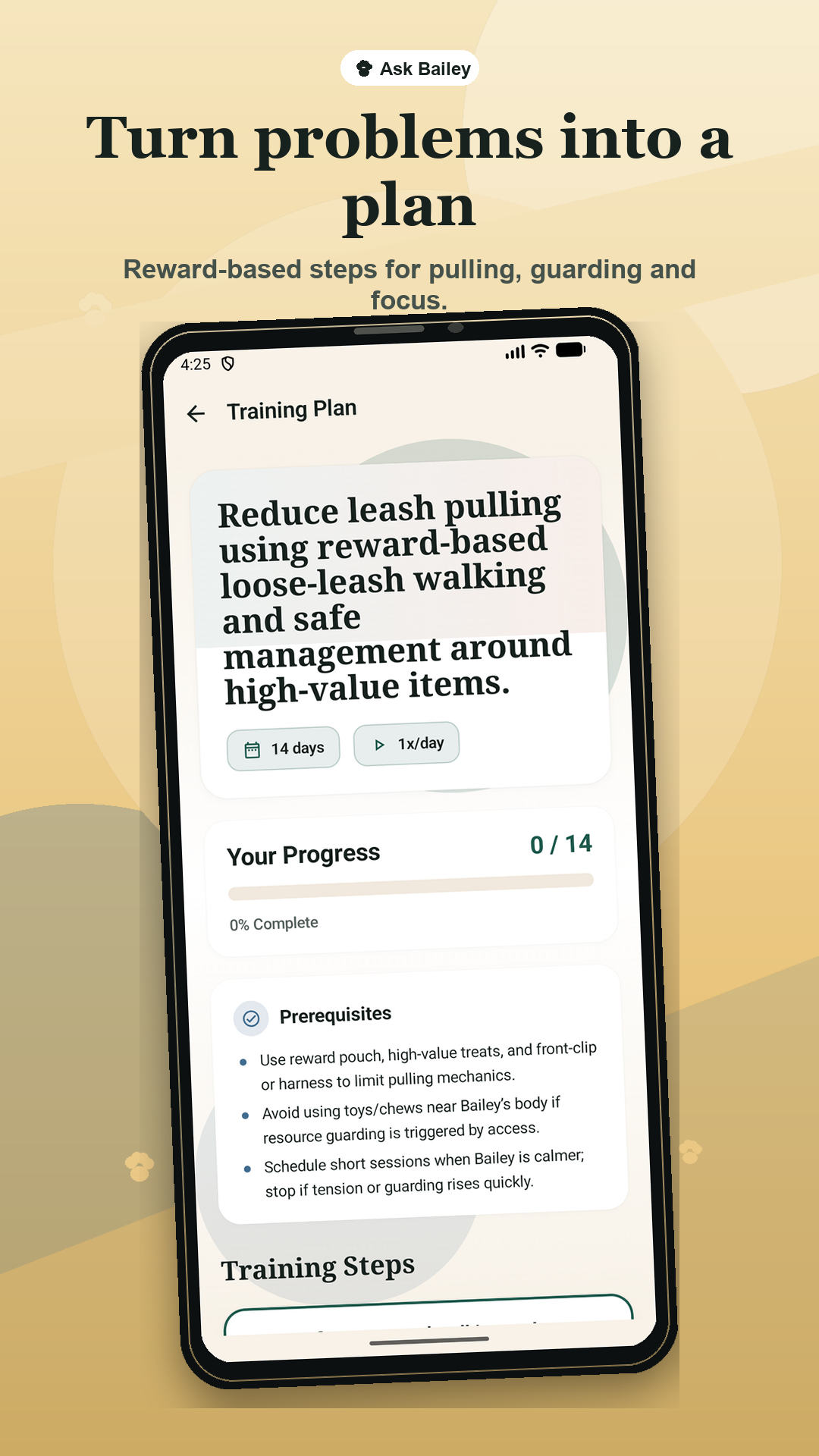
Phase 1: Indoor Foundation (Week 1-2)
Environment: Inside your home or a quiet, fenced yard with zero distractions
Duration: 5-10 minute sessions, 2-3 times daily
Steps:
- Put on your puppy's harness and attach the leash, but don't go anywhere yet
- Stand quietly and wait for your puppy to naturally create slack in the leash (they'll look around, sniff, or move toward you)
- The moment slack appears, mark the behavior with a clear marker word like "Yes!" and immediately deliver a high-value treat [1]
- Repeat this 10-15 times per session
- Gradually extend the duration of slack before rewarding (start at 2 seconds, build to 5-10 seconds)
- Begin taking a single step forward when your puppy has slack, immediately reward
- Progress to 2-3 steps, then longer sequences
Key principle: You're teaching your puppy that a loose leash—not pulling—is what earns rewards. This is the foundation of all future loose-leash walking.
Phase 2: Quiet Environment Training (Week 3-4)
Environment: A quiet residential street, empty parking lot, or low-traffic park with minimal distractions
Duration: 10-15 minute focused training walks
Steps:
- Begin your walk with your puppy on a loose leash
- Reward frequently—every 5-10 steps of loose-leash walking, mark and treat
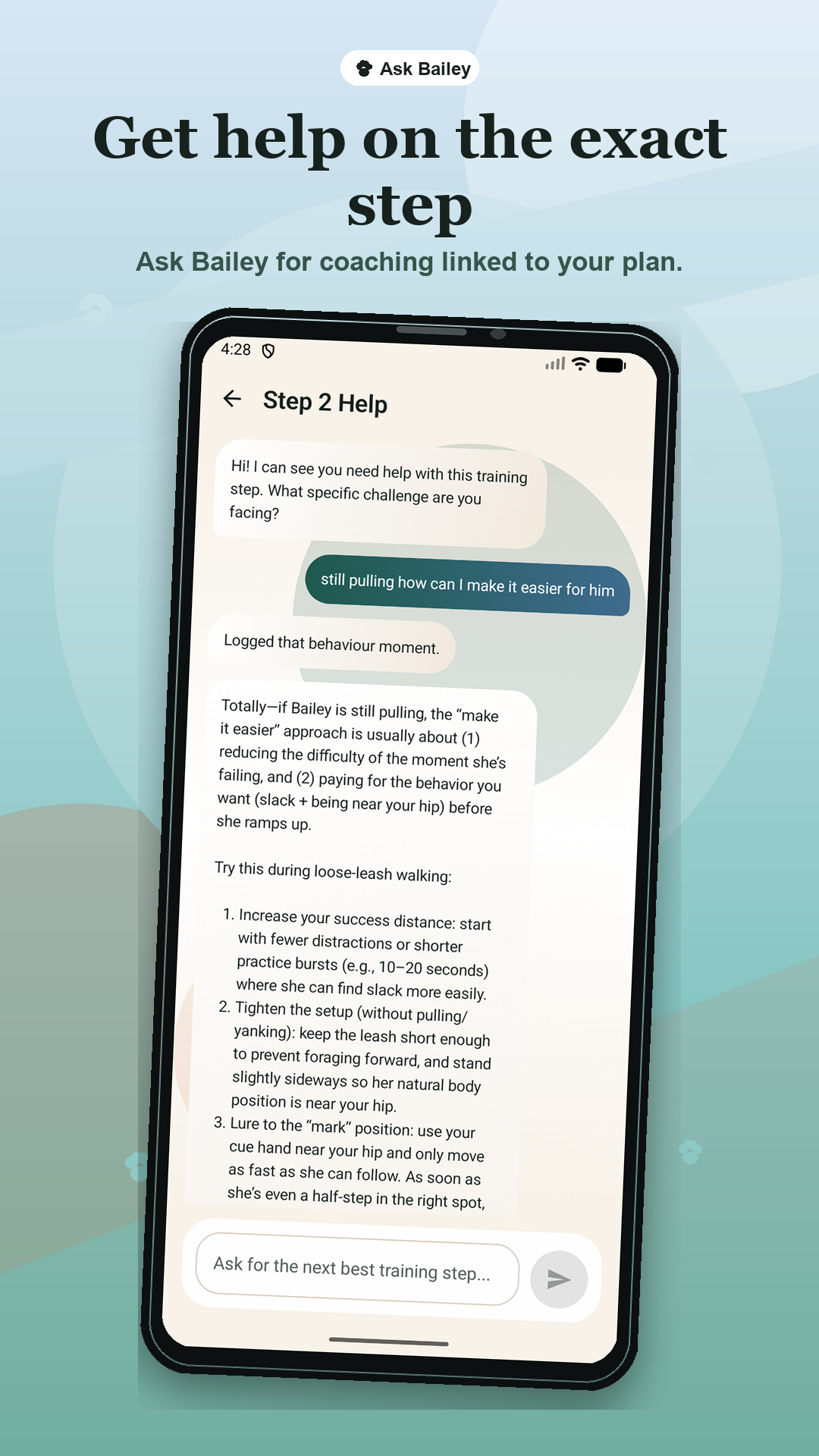
- If your puppy pulls, stop moving immediately and stand still (don't jerk or pull back—this triggers the opposition reflex) [3]
- Wait for slack to reappear, then mark and treat
- Resume walking
- Gradually increase the distance walked between rewards as your puppy improves
Management during this phase: If your puppy pulls for extended periods, shorten walks to 10-15 minutes of deliberate practice rather than 30 minutes of rehearsed pulling. Quality beats quantity. [3]
Phase 3: Progressive Distraction Training (Week 5+)
Environment: Progressively busier locations—sidewalks with foot traffic, parks with distant dogs, pet-friendly store parking lots
Duration: 15-20 minute walks
Steps:
- Continue the same reward protocol from Phase 2
- Increase distractions gradually—don't jump from quiet streets to busy dog parks
- If your puppy pulls toward a distraction, use the "stop and wait" method
- Reward heavily for loose-leash walking near distractions
- If your puppy shows reactivity (barking, lunging, growling toward other dogs or people), this indicates leash reactivity, which requires a modified protocol beyond basic loose-leash training [3]
Management Strategies: Prevent Rehearsal While Training
Every time your puppy pulls and reaches their destination, the pulling behavior gets stronger. While you're building loose-leash skills, use these management strategies to prevent reinforcing pulling:
- Use the front-clip harness consistently: This management tool prevents pulling from being rewarding while you train. [3]
- Shorten training walks: 10-15 minutes of focused training beats 30 minutes of uncontrolled pulling. [3]
- Burn energy first: A 10-15 minute play session before the walk reduces the arousal spike that triggers pulling. This is especially critical for high-energy breeds. [3]
- Schedule sniff walks: On non-training days, let your puppy wear a long line and sniff freely in a safe area. This provides mental stimulation and decompression. [3]
- Avoid high-distraction environments: Don't practice loose-leash walking at the dog park or busy downtown area until Phase 3. Set your puppy up to succeed by training in controlled environments first. [1]
Training Method Checklist: What Works, What Doesn't
Evidence-Based Methods to Use
- Positive Reinforcement: Reward loose-leash walking with treats, praise, and play. This is the most effective and humane approach. [5]
- Desensitization: Gradually expose your puppy to distractions at increasing distances until they remain calm. [3]
- Counter-Conditioning: Change your puppy's emotional response to triggers (like other dogs) by pairing them with good things (treats and praise). [3]
- Marker Training: Use a consistent word like "Yes!" or a clicker to mark the exact moment your puppy does something right, followed immediately by a reward. [1]
Methods to Avoid
The American Veterinary Society of Animal Behavior (AVSAB) explicitly recommends against aversive training methods for all aspects of dog training, with no exceptions. [Source 2, Source 5] These include:
- Prong collars
- Choke chains and slip collars
- Electronic/shock collars
- Leash jerks and corrections
- Shouting or punishment-based methods
Research shows these methods carry significant risks to your puppy's welfare and can damage the human-animal bond, while reward-based methods are both safer and more effective. [5]
Timeline and Expectations
With consistent training and management, most puppies show measurable improvement within 4-8 weeks. [3] However, individual timelines vary based on:
- Your puppy's age and maturity level
- How long pulling has been rehearsed (a 16-week-old puppy with 8 weeks of pulling experience will take longer than a 10-week-old with 1 week)
- Consistency of training and management
- Your puppy's temperament and motivation
- Distraction level of your environment
Expect steady progress rather than perfection overnight. Celebrate small wins—even a few steps of loose-leash walking is progress worth rewarding.
When to Seek Professional Help
Contact a certified, reward-based dog trainer or veterinary behaviorist if:
- Your puppy shows leash reactivity (barking, lunging, growling toward other dogs or people)
- You see no improvement after 8-10 weeks of consistent training
- Your puppy pulls so hard they cough, have noisy breathing, or physically overpower you
- You feel overwhelmed or uncertain about the training process
- Your veterinarian suspects an underlying medical or behavioral issue
When choosing a trainer, look for credentials and experience with reward-based methods. Ask about their training philosophy, ask for references, and observe a class before enrolling. [2]
Final Checklist: Your Puppy Leash Training Setup
Before you begin, ensure you have:
- ☐ Veterinary clearance (wellness exam completed)
- ☐ Appropriate front-clip harness (properly fitted)
- ☐ 6-10 foot standard leash (not retractable)
- ☐ Long line (15-20 feet) for unstructured exploration
- ☐ High-value training treats (pea-sized, soft)
- ☐ Realistic timeline (4-8 weeks for measurable improvement)
- ☐ Commitment to consistent training (2-3 short sessions daily, especially early on)
- ☐ Understanding of why your puppy pulls (opposition reflex, curiosity, rehearsal)
- ☐ Plan to burn energy before walks (play sessions, sniff time)
- ☐ Backup plan for professional help if needed
Key Takeaways
Leash pulling isn't a character flaw—it's a learnable behavior that responds beautifully to the right training approach. By understanding the root causes, selecting appropriate equipment, and implementing evidence-based training methods, you can transform walks from frustrating struggles into enjoyable bonding time with your puppy.
Remember: patience, consistency, and positive reinforcement are your most powerful tools. Your puppy isn't trying to frustrate you—they're simply learning what works. By making loose-leash walking the most rewarding choice, you'll build habits that last a lifetime.