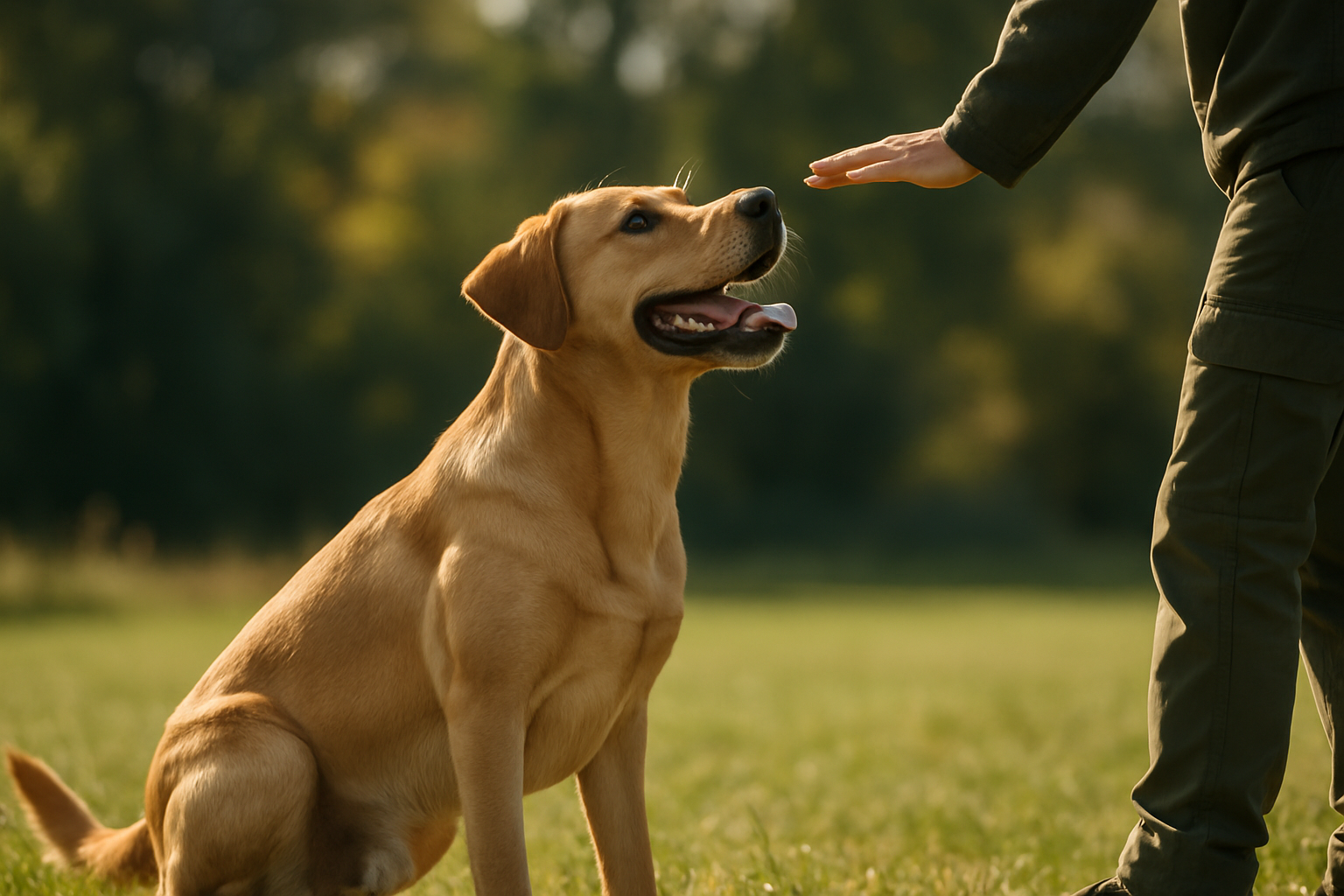
Understanding Leash Reactivity in Puppies
Leash reactivity describes a range of behaviors including lunging, barking, growling, pulling, and snapping that occur when your puppy encounters triggers while on leash. The underlying causes vary significantly—your puppy might be reacting from fear, frustration, excitement, arousal, or a combination of these emotions. [1] Understanding which emotion drives your puppy's behavior is essential because it shapes your training approach.
A fearful puppy displays what trainers call "distance-increasing" body language, essentially saying "stay away from me." A frustrated puppy, by contrast, shows "distance-decreasing" behavior—bounciness, playful barking, and forward lunging—because they desperately want to greet or play with the trigger. [4] The key difference matters because your training strategy will differ based on whether you're addressing fear or frustration.
The leash itself plays a significant role in amplifying reactivity. When a puppy feels restrained, they cannot execute their natural response to a perceived threat or exciting stimulus. A fearful puppy cannot flee, so they resort to fighting behaviors. A frustrated puppy cannot move toward what excites them, which intensifies their frustration. [4] This is why understanding your puppy's emotional state is the crucial first step.
Identifying Your Puppy's Triggers and Threshold
Before you can address reactivity, you need to identify exactly what triggers your puppy's response. Common triggers include other dogs, unfamiliar people, bicycles, cars, and small animals. However, triggers can be surprisingly specific—your puppy might react only to men with beards, large dogs, or cyclists moving quickly. [4]
Start keeping a detailed journal of your puppy's reactive episodes. Record:
- What the trigger was (another dog, person, vehicle, etc.)
- The distance between your puppy and the trigger when reactivity started
- Your puppy's body language and specific behaviors
- Environmental conditions (time of day, noise level, crowding)
- Your puppy's energy level before the walk
Understanding your puppy's threshold—the point at which a trigger produces a reactive response—is equally important. [4] Distance is typically the primary factor. If your puppy reacts to another dog from a block away but remains calm at three blocks away, your working distance is beyond one block.
Be aware of "trigger stacking," where multiple small triggers accumulate and push your puppy over threshold even if each individual trigger wouldn't cause a problem alone. [4] A puppy might handle one distraction fine, but encountering several distractions within a short time period creates a compounding effect that leads to reactivity.
Essential Training Tools and Setup
Successful desensitization requires specific equipment and supplies. Gather these before beginning your training plan: [1]
- Clicker: A marker that precisely identifies the exact moment your puppy earns a reward
- High-value treats: Small, easily consumed pieces of something your puppy loves (cheese, chicken, hot dog, or liver work well)
- Treat bag: For easy access during walks
- 4 to 6-foot leash: Standard length for control and communication
- Well-fitted collar or harness: A buckle collar or properly fitted harness (avoid retractable leashes)
- Sturdy shoes: For your own stability and control
Depending on your puppy's intensity and size, additional safety equipment might include a head collar, double-leash system, or basket muzzle. [1] Consult with a qualified trainer or veterinary behaviorist to determine if these tools are appropriate for your situation.
The A.C.E.S. Training Framework
Professional trainers use the A.C.E.S. framework to structure desensitization work. This acronym breaks the training process into four sequential phases: [1]
- Association: Creating positive connections between triggers and good things happening
- Cues: Teaching specific behaviors your puppy can perform instead of reacting
- Exposure: Gradually increasing proximity to triggers
- Systematic Desensitization: Methodically reducing reactivity through repeated, controlled practice
This guide focuses primarily on the Association and Exposure phases, which form the foundation of effective leash reactivity work.
Step 1: Pre-Training Clicker Conditioning
Before using your clicker around triggers, your puppy must already understand that the clicker predicts treats in neutral, non-stressful contexts. [1] This prevents the clicker from becoming associated with scary situations.
How to condition your puppy to the clicker:
- In a calm, distraction-free environment, click the clicker once
- Immediately give your puppy a treat
- Repeat this 10-15 times per session
- Practice in various locations and situations over several days
- Once your puppy reliably looks to you after hearing the click, you're ready to use it during walks
Your puppy should develop an automatic response: hear click, look to you for the reward. This conditioned response is essential for the desensitization work ahead.
Step 2: Establishing Working Distance
The most critical principle in desensitization is keeping your puppy below their reactivity threshold. [1] This means starting at a distance where your puppy notices the trigger but doesn't react.
Finding your starting distance:
- Take your puppy on a walk in an area where they're likely to encounter their trigger
- Observe how far away the trigger needs to be before your puppy shows any interest or tension
- Your working distance should be slightly farther than this point—where your puppy notices but remains calm
- If your puppy typically reacts when a trigger is a half-block away, start at a full block or more
Remember: the goal is not to get your puppy close to triggers initially. The goal is to build positive associations from a safe distance. [1] This might feel like progress is slow, but it's the foundation for lasting change.
Step 3: Classical Counterconditioning—The Core Desensitization Work
Classical counterconditioning involves pairing the presence of a trigger with something your puppy loves (treats and praise). [2] Over time, your puppy learns that the trigger predicts good things, changing their emotional response from reactive to anticipatory.
The desensitization walk protocol:
- Position yourself at your established working distance from potential triggers
- Watch your puppy carefully for the first sign they notice a trigger (ears perking forward, a glance in the direction of the stimulus, or body stiffening)
- Click the instant you see this awareness before your puppy has a chance to react
- Immediately deliver a high-value treat
- Repeat continuously as you pass the trigger, giving treats every 1-2 seconds or continuously if needed [1]
- Maintain a loose leash and calm demeanor throughout
- If your puppy begins to escalate, increase distance and continue the exercise from farther away
Your puppy will quickly learn that noticing triggers equals treats. Many owners report that within weeks, their puppy begins to anticipate earning rewards when triggers appear—they'll look toward you expectantly before you even see the stimulus. [1]
Important warning signs: If your puppy cannot reorient toward you after hearing the click, they're likely over threshold. [1] Redirect your puppy and move farther away. If your puppy is snatching treats or you feel sharp pressure from their teeth, their arousal level is too high—create more distance. [2]
Step 4: Teaching Replacement Behaviors
While counterconditioning changes your puppy's emotional response, teaching specific cues gives them an alternative behavior to perform. [1] Instead of lunging or barking, your puppy learns to offer specific, incompatible behaviors.
Foundational cues to teach:
- "Watch" or "Look": Your puppy focuses on your face or eyes instead of the trigger
- "Touch": Your puppy touches their nose to your hand on cue
- "Go": Your puppy continues walking calmly past the trigger
Teach these behaviors in low-distraction environments first, then gradually introduce them during desensitization walks. When your puppy sees a trigger, you can ask for a "watch" or "touch," redirecting their focus and rewarding the alternative behavior.
Step 5: Gradually Reducing Distance Over Time
As your puppy becomes comfortable with triggers at your working distance, you can gradually move closer. This process should unfold over weeks or months, not days.
Progression guidelines:
- Only decrease distance when your puppy consistently remains calm at the current distance
- Move closer in small increments (a few feet at a time)
- Maintain the same click-and-treat protocol at each new distance
- If your puppy regresses at any distance, move back to where they were successful
- Expect this process to take several weeks minimum
There's no timeline to rush. Every puppy progresses at their own pace based on their individual temperament, history, and the specific triggers involved.
Managing Your Own Stress and Leash Communication
Your emotional state directly affects your puppy through the leash connection. [4] When you tense up in anticipation of reactivity, your puppy senses that tension and interprets it as confirmation that the trigger is indeed threatening.
Strategies for staying calm:
- Take slow, deep, even breaths during walks
- Keep your leash loose and relaxed rather than taut
- Avoid muttering commands like "be nice" or "don't react"—this communicates anxiety to your puppy
- Maintain a neutral or positive facial expression
- Remind yourself that progress is gradual and that's normal
Your calm, confident presence is one of the most powerful tools in your training toolkit.
Managing Reactivity: Practical Tips for Daily Walks
While you're working on desensitization, managing your puppy's environment prevents repeated practice of reactive behavior, which reinforces the habit. [2]
Management strategies:
- Walk at quieter times: Avoid peak hours when triggers are most common
- Choose lower-traffic routes: Select walking paths with fewer dogs, people, or vehicles
- Vary your routes: Prevents your puppy from anticipating triggers at specific locations
- Use alternative exercise: Practice indoor play, fetch in a secure yard, or training sessions to tire your puppy mentally and physically
- Create distance when needed: Cross the street, step behind a parked car, or change direction to avoid triggers you're not ready to work with
Management isn't failure—it's a crucial part of successful training. Every time your puppy practices reactivity, it becomes more ingrained. Every time you prevent it and practice the new, calm response, you're building new neural pathways. [2]
When to Seek Professional Help
Leash reactivity is highly trainable, but some situations require professional guidance. Consider consulting a qualified trainer or veterinary behaviorist if: [1]
- Your puppy shows signs of actual aggression (snapping, biting, or intense growling)
- You're uncertain whether your puppy's reactivity stems from fear or frustration
- Your puppy's reactivity is intensifying despite your training efforts
- Your puppy has a history of bites or severe fear
- You're not confident you can keep your puppy safely under control during training
- Your puppy's behavior has changed suddenly
A qualified professional can assess your specific situation, rule out underlying medical or behavioral issues, and create a customized plan tailored to your puppy's needs.
Realistic Expectations and Timeline
Desensitization is a gradual process that requires consistency, patience, and time. Most puppies show noticeable improvement within 4-8 weeks of consistent training, but complete resolution often takes 3-6 months or longer, depending on the severity of reactivity and the puppy's individual temperament.
Celebrate small wins: the first time your puppy looks to you instead of lunging, the first calm walk past a trigger, the first instance of your puppy anticipating treats when they spot a stimulus. These milestones represent genuine progress in rewiring your puppy's emotional response.
Key Takeaways for Your Training Plan
- Identify whether your puppy's reactivity stems from fear or frustration—this shapes your approach
- Determine your puppy's specific triggers and the distance at which they react
- Condition your puppy to the clicker in neutral situations before using it during walks
- Start desensitization at a distance where your puppy notices triggers but remains calm
- Use classical counterconditioning by pairing trigger sightings with high-value treats
- Teach alternative behaviors your puppy can perform instead of reacting
- Gradually decrease distance as your puppy shows consistent calm responses
- Manage your own stress and keep your leash loose to communicate calm to your puppy
- Use environmental management to prevent rehearsal of reactive behavior
- Seek professional help if you're uncertain or if reactivity involves aggression
Leash reactivity is frustrating, but it's absolutely changeable. With a structured desensitization plan, consistency, and patience, your puppy can learn to walk calmly past their triggers and develop genuine confidence in the world around them. The walks you're dreading today can become the enjoyable outings you've been hoping for.
Sources & References
- https://www.vin.com/apputil/content/defaultadv1.aspx?pId=20539&catId=113448&id=8506442&ind=17&objTypeID=17
- https://www.aspcapro.org/resource/managing-and-training-leash-reactive-dogs
- https://www.vin.com/Members/CMS/Project/DefaultAdv1.aspx?pId=20539&meta=VIN&id=8506442
- https://bestfriends.org/network/resources-tools/dealing-leash-reactivity