How to Train a Puppy: Complete Practical Guide
You've just brought home your new puppy, and the questions are flooding in. How do you housetrain? When should socialization start? What's the best way to teach commands without causing fear? The good news is that puppies are incredibly capable learners—and with the right approach, you can set your pup up for a lifetime of good behavior and confidence.
The key insight that changes everything: your puppy is learning during every waking moment, whether you're actively training or not. [5] Every interaction shapes behavior. This means you're not just training during formal lessons—you're training all day long. Understanding this empowers you to be intentional about what your puppy learns.
Understanding How Puppies Learn
Before diving into specific training techniques, let's understand the fundamental principle behind effective puppy training. Puppies—like all animals—repeat behaviors that produce results they like. [5] If jumping on you gets attention, your puppy will jump more. If sitting quietly leads to treats and praise, your puppy will sit more often.
This is why modern, science-based dog training focuses on positive reinforcement: rewarding the behaviors you want to see more of. [3] This approach is supported by decades of research and recommended by veterinary and animal behavior organizations worldwide because it's effective, builds trust, makes training enjoyable, and works safely for all dogs.
The opposite approach—punishing unwanted behavior after it happens—often backfires. It can lead to fear, avoidance, and confusion. Your puppy won't understand what you want; they'll only learn that certain situations are scary or unpredictable. [5]
Housetraining: Building the Foundation
Housetraining is often the first formal training challenge new owners face. The good news: puppies have a natural instinct to avoid soiling their sleeping area. [2] You can leverage this denning instinct to make housetraining faster and easier.
The Crate Training Method
- Use a properly-sized crate: It should be large enough for your puppy to stand, turn around, and lie down comfortably—but not so large that they can eliminate in one corner and sleep in another. [2]
- Follow age-appropriate schedules: A rule of thumb is to let your puppy out at least every 3 hours at 2 months of age, every 4 hours at 3 months, and so on. [2]
- Establish a routine: Take your puppy out first thing in the morning, after meals, after naps, during playtime, and before bedtime.
- Choose a designated potty spot: Always take your puppy to the same outdoor area. The familiar scent encourages elimination.
Rewarding Success (Not Punishing Accidents)
This is crucial: reward every successful pee and poo outside with an immediate tiny treat and praise for the first 4-6 weeks. [2] The immediacy matters—your puppy needs to connect the outdoor elimination with the reward within seconds.
If your puppy loves being outside, let them stay out for at least one minute after eliminating so they don't learn that pottying ends the fun. If they're eager to get back inside (especially in cold weather), bring them right back in as the reward. [2]
Never punish accidents. Don't rub your puppy's nose in their mess, yell, or use any form of punishment. This can cause fear and aggression and teaches nothing useful. [2] Instead, supervise closely during the first 4-6 weeks so you can interrupt accidents in progress with a hurried trip outdoors.
Proper Socialization: The Critical Window
Socialization is one of the most important things you'll do as a puppy owner—yet it's often misunderstood. Many owners think socialization means exposing their puppy to as many people, dogs, and situations as possible. In reality, proper socialization involves much more than mere exposure. [1]
The goal of socialization is to teach your developing puppy to be calm, relaxed, and well-behaved in public situations and to reduce the likelihood of fearful or aggressive responses to common stimuli they'll encounter throughout life. [1]
The Critical Socialization Window
Puppies have a critical socialization window between approximately 3 and 14-16 weeks of age. During this period, puppies are most receptive to new experiences and form lasting impressions about the world. [3] While socialization continues throughout the first year and beyond, these early weeks are particularly important.
However, this doesn't mean you should rush into overwhelming situations. Poorly managed socialization that overwhelms your puppy can achieve the opposite effect, making them more fearful in the future. [3]
Know Your Puppy's Personality
The first key strategy is to observe and understand your own puppy. [1] Some puppies are naturally confident and exuberant—they greet everyone with enthusiasm. Others are timid, shy, or cautious. These personality differences require different socialization approaches.
For confident puppies: You can move more quickly through various experiences. Focus on teaching appropriate greetings—like sitting politely instead of jumping—so their natural enthusiasm doesn't become a problem. [1]
For shy or fearful puppies: Move slowly and deliberately. Start at a distance from new people and situations. Work on basic obedience and play in the presence of new stimuli without forcing interaction. [1] Have friends sit down and look away casually, so your shy puppy can approach at their own pace without feeling threatened.
Pairing New Experiences with Positive Outcomes
For shy puppies especially, associate the appearance of things that make them nervous with wonderful stuff. [1] If your puppy loves treats, deliver a treat with a happy call of their name each time you see a person approaching. If they love their tennis ball, bring it on outings so they learn the ball appears when strangers are around. If they prefer belly rubs, sit down beside a walking trail and give a luxurious massage each time a jogger passes.
Your goal is to teach them to be happy and excited about the thing that now makes them nervous because that thing predicts wonderful stuff. [1]
What to Expose Your Puppy To
During the critical socialization window, expose your puppy to a wide variety of experiences in a positive, controlled manner: [3]
- Different types of people (children, elderly people, people wearing hats, uniforms, using mobility aids)
- Various environments (busy streets, quiet parks, different floor surfaces and textures, car rides)
- Different sounds (traffic, household appliances, fireworks recordings played quietly)
- Other vaccinated, friendly dogs and puppies in safe settings
Remember: quality over quantity. [3] Each experience should be positive and not overwhelming. Watch your puppy's body language—if they seem scared or stressed, create more distance or end the session. Never force interactions. Let your puppy approach new things at their own pace, rewarding brave behavior with treats and praise.
Balancing Socialization with Vaccination
While the critical period occurs before vaccinations are complete, you can still socialize safely by carrying your puppy in busy areas, inviting vaccinated dogs to your home, and attending puppy socialization classes run by qualified trainers who maintain hygiene standards. [3] Puppies can start off-leash positive method socialization classes as early as 7-8 weeks of age, provided they've received at least one set of vaccines at least 7 days prior. [4]
Teaching Basic Commands and Good Manners
Your puppy is learning every waking minute, so take the reins on this learning by teaching important commands. [2] The most valuable commands include Sit, Stay, Come, Leave It, and Drop It. Enroll your puppy in a puppy kindergarten class or private obedience training that uses positive reinforcement in the form of praise, petting, and treats. [2]
Luring: The Easiest Starting Point
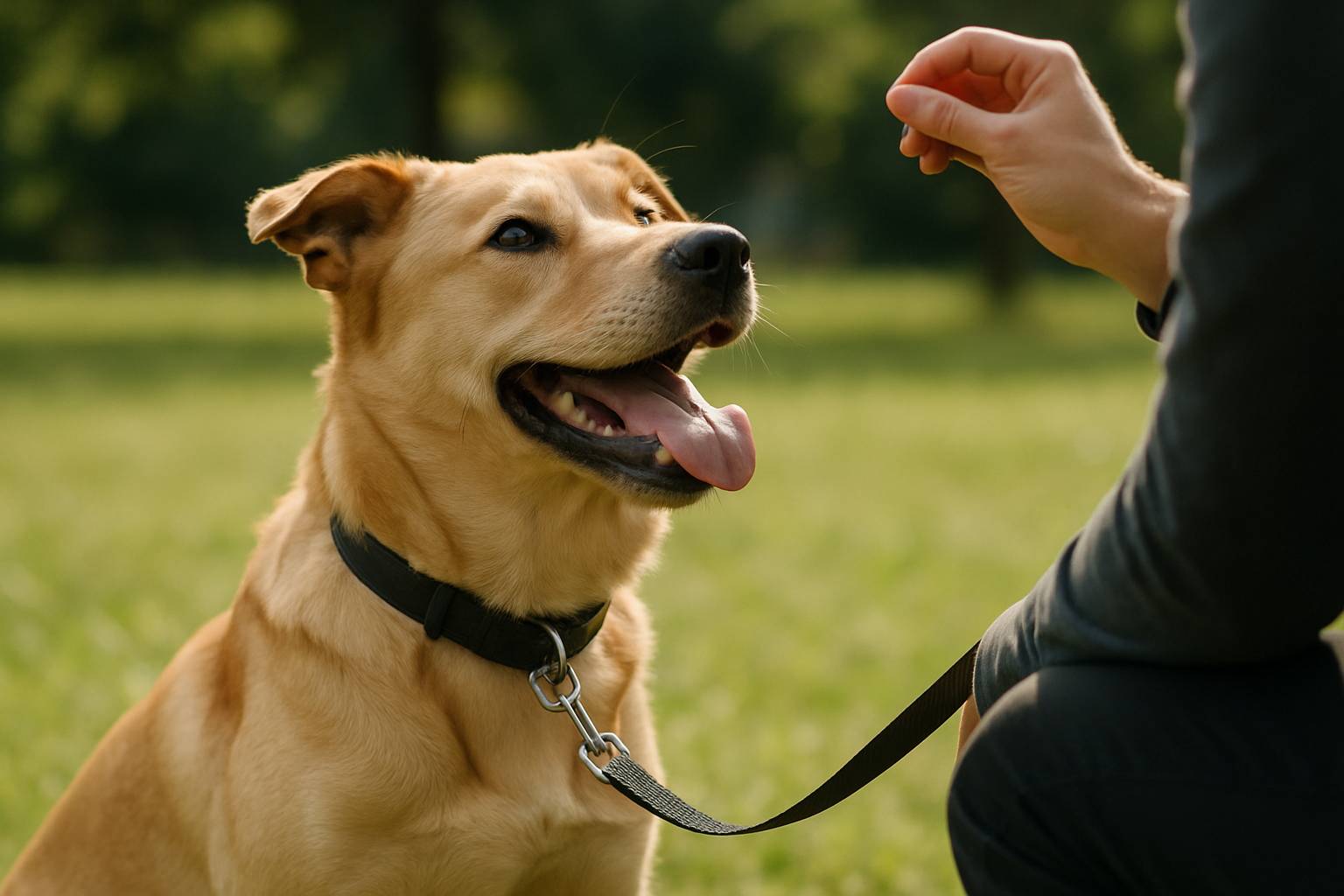
Luring involves using a treat or toy that your puppy will predictably follow to show them what to do. [5] This is especially useful for teaching new behaviors the first few times.
How to lure effectively: [5]
- Use tiny treats the size of a pencil eraser that are high in value to your puppy
- Hold the treat like a magnet—your puppy's nose should be attracted and practically attached to it
- Move the lure slowly at a speed your puppy can easily follow
- Deliver little bits of treats regularly to maintain interest
- Make sure the lure is always within reach without your puppy having to jump, grab, or bite at it
Example: Teaching Sit: Hold the treat in front of and slightly above your puppy's nose. Slowly move the treat up and back. When your puppy's nose goes up and back, their rump will naturally go down into a sit. The moment their bottom touches the ground, mark the behavior (say "Yes!" or click a clicker) and give the treat immediately.
Capturing: Training in Real Life
Capturing involves waiting until your puppy is naturally doing a behavior you want to see more often, then marking and rewarding it. [5] This teaches you to observe your puppy's behavior constantly and look for right choices—which puppies make all day long, even if briefly.
Example: Your puppy naturally looks at you and moves toward you without you calling. When they move toward you, call their name, mark during the movement ("Yes!"), then give a treat when they arrive. You've just "captured" them responding to their name.
Preventing Destructive Behavior
Puppies love to chew—sometimes for hours on end, shredding toys to pieces. Many owners make the mistake of gradually taking toys away because the mess is annoying. Don't do this. [2]
If your puppy is left without toys and bones to destroy, it will be your carpet or couch instead. Unless your puppy is ingesting chewed toy material, provide lots of toys for destroying and consider the cost and cleanup a necessary part of puppy rearing. [2]
Rotate toys to keep them interesting, and provide a variety of textures and destruction levels. Some puppies love rope toys, others prefer rubber toys or stuffed toys. Offering choices prevents boredom and channelizes the natural chewing instinct appropriately.
Setting Up Your Puppy for Long-Term Success
Remember: raising a puppy well requires energy, patience, flexibility, knowledge, and lots of love. [2] Here are the key principles to keep in mind:
- Be consistent: Everyone in the household should follow the same training rules and reward the same behaviors.
- Follow through with homework: If you enroll in a puppy class, practice what you learn at home. Dogs learn obedience commands in a snap—and can learn problem behaviors just as quickly if you stop reinforcing good choices. [2]
- Use positive reinforcement: Rewards (treats, praise, play, attention) are far more effective than punishment. [3]
- Supervise and manage: Don't wait for your puppy to make mistakes and then punish them. Prevent problems by supervising closely and managing their environment.
- Be patient with your puppy's personality: If your puppy is naturally shy or cautious, slow down and adjust expectations. Socialization doesn't mean your dog must interact with every person or dog they meet. It means they can remain calm and confident when encountering new things. [3]
- Seek professional help when needed: If your puppy is displaying fear, aggression, or other concerning behaviors, consult a veterinary behaviorist or certified dog trainer. [3]
When to Seek Professional Help
If your puppy is already exhibiting signs of fear or tension during socialization, continue socialization under the guided supervision of a board certified animal behaviorist or certified dog trainer. [2] Similarly, if your puppy shows signs of fear or aggression, seek veterinary guidance rather than trying to handle it alone. [4]
Final Thoughts
Training a puppy is both a joy and a challenge. The methods you use in these critical early weeks shape not just their behavior, but also your relationship with them. By using science-based, humane methods focused on positive reinforcement, you build a strong relationship with your puppy while keeping them safe and happy. [3]
Your puppy isn't trying to upset you or compete with you. They're simply doing what works from their perspective. By understanding how they learn and being intentional about what you reward, you set them up for a lifetime of good behavior, confidence, and connection with you.
Sources & References
- https://avsab.org/socialization-mere-exposure/
- https://avsab.org/preventive-behavioral-care-setting-your-pup-up-for-success/
- https://avs.nparks.gov.sg/pets/caring-for-a-pet/dog-training/
- http://www.animalbehavior.net/Visitors/AVSAB_PositionPaper_PuppySocialization%20_2.htm
- https://vcahospitals.com/know-your-pet/puppy-behavior-and-training-training-basics