Why Crate Training Matters for Your Puppy
When you bring a new puppy home, the challenges can feel overwhelming. Accidents happen on your carpet, your belongings mysteriously develop teeth marks, and nighttime becomes a symphony of whining and crying. Many new dog owners wonder if there's a better way—and there is. Crate training taps into your puppy's natural instincts to create a personal sanctuary that benefits both of you. [2]
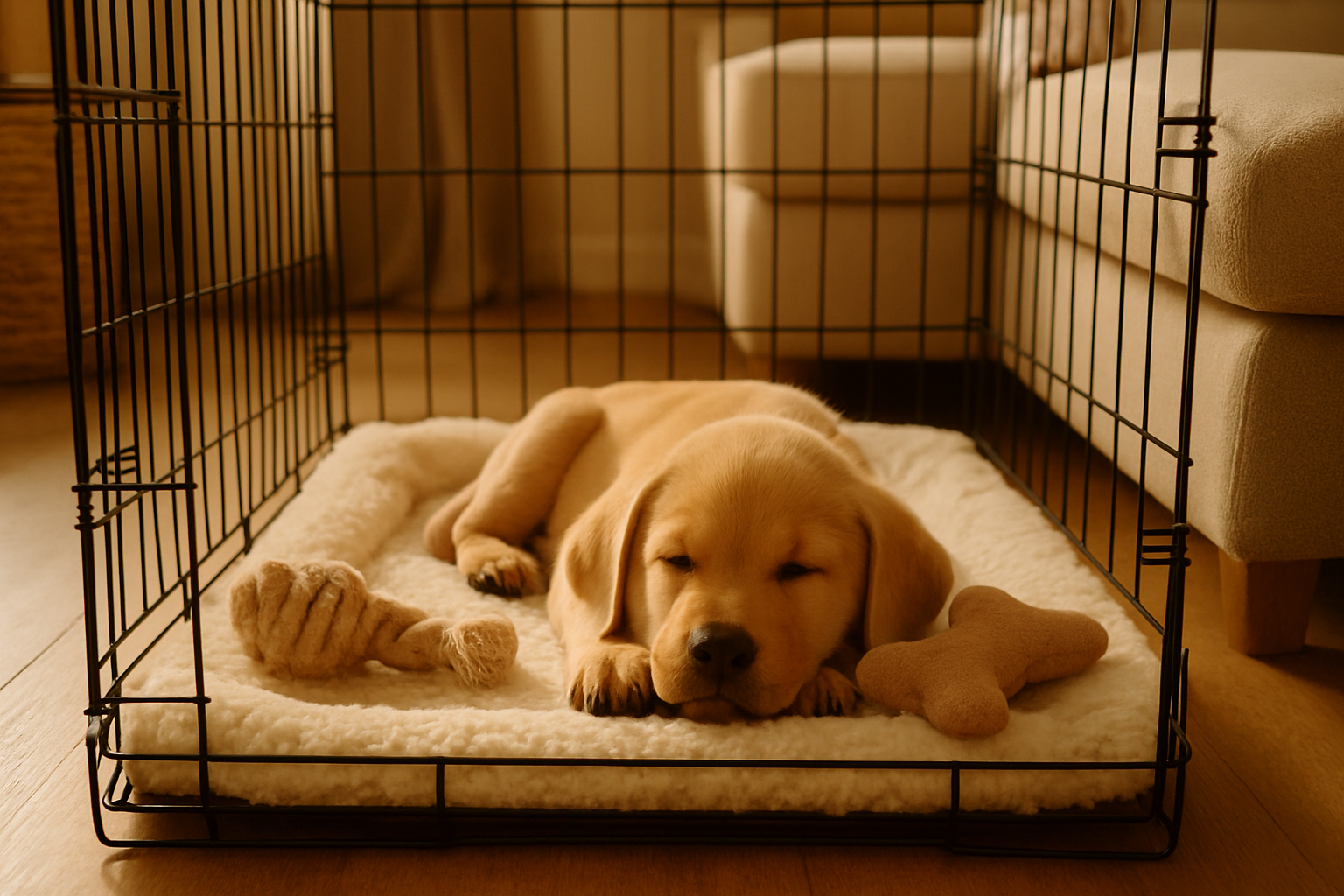
Think of a crate not as a cage, but as a bedroom. Dogs are naturally den animals, meaning they instinctively seek out small, enclosed spaces where they feel safe and secure. When introduced properly, most puppies come to view their crate as their own special retreat rather than a punishment or confinement space. [4]
Beyond the comfort factor, crate training serves several critical functions: it accelerates housebreaking by leveraging your puppy's natural reluctance to soil where they sleep, prevents destructive behavior when you can't supervise, keeps your puppy safe from household hazards, and helps manage anxiety in new or overwhelming situations. [1]
The Benefits You'll Actually Experience
- Faster Housebreaking: Puppies naturally avoid soiling their sleeping area, making crate time an excellent tool for bladder control development. [5]
- Reduced Anxiety: A crate provides a secure retreat where your puppy can decompress from the chaos of a busy household. [4]
- Behavior Management: Keeping your puppy safely contained prevents destructive chewing, jumping, and other unwanted behaviors while you're unable to supervise. [1]
- Travel Safety: A crate-trained puppy travels more safely in vehicles and is better prepared for airline travel or boarding situations. [5]
- Peaceful Nights: With proper training, your puppy learns to settle and sleep through the night, giving you the rest you desperately need.
Choosing the Right Crate for Your Puppy
Not all crates are created equal, and selecting the right one sets the foundation for successful training. Your choice depends on your puppy's size, your home's aesthetics, and your training goals. [4]
Size Matters: This is non-negotiable. Your puppy's crate should be large enough for them to stand, turn around, and lie down comfortably—but not so large that they can use one corner as a bathroom and another as a bedroom. If you're buying for a puppy who will grow significantly, invest in a crate with an adjustable divider panel that you can move as they develop. [5]
Style Options: Wire crates offer visibility and airflow, making them ideal for puppies who enjoy watching household activity. Plastic airline-style crates create a more enclosed, den-like environment that some puppies find more soothing, especially for nighttime sleeping. Soft-sided crates are portable and lightweight but may not withstand a determined teething puppy. [4]
Bedding Considerations: While it's tempting to add plush dog beds and blankets, many puppies will chew these items or use them as bathroom spots. Start with just the crate mat itself—dogs actually prefer hard surfaces for sleeping. You can always add comfort items once your puppy has matured past the destructive chewing phase. [4]
Phase One: Building Positive Associations
The first phase of crate training is all about making your puppy fall in love with the crate before you ever close the door. This is where patience and consistency create lasting results. [3]
Step 1: Introduction Without Pressure
Begin by leaving the crate door open and allowing your puppy to explore at their own pace. Place treats and favorite toys inside to encourage curiosity. Never force your puppy into the crate or use it as punishment. The goal is for your puppy to discover that good things happen around this new object. [2]
Step 2: Feed Meals Inside the Crate
One of the most powerful ways to build positive associations is through food. Start feeding your puppy's regular meals near the crate, then gradually move the food bowl inside the crate itself. This creates a natural, repeated positive experience. Many puppies who eat inside their crate multiple times daily begin seeking it out on their own. [3]
This phase can take several weeks or even months, but the investment pays dividends. A puppy that eagerly enters the crate for meals has already learned that the crate is a source of good things.
Step 3: The Crate Game
Professional trainers use a structured game to accelerate positive associations. Here's how to play it with your puppy: [3]
- Lure your puppy all the way to the back of the crate with a small piece of food
- Drop the food and let them eat it
- As they turn around to exit, meet them with another piece of kibble at the entrance
- Repeat this 5-10 times in a single session
- Gradually transition to letting your puppy walk in on their own before you drop the food reward
Play this game several times daily when your puppy is hungry but not right before regular mealtimes. The repetition builds an automatic positive response to entering the crate.
Step 4: Make the Crate Part of Your Home
Position the crate in a room where your family spends time, not isolated in a basement or back room. Your puppy should see the crate as part of normal family life, not as exile. [2] Include items that smell like home, and if using it at night, place a piece of your worn clothing inside for comfort.
Phase Two: Building Duration and Closing the Door
Once your puppy happily enters the crate for meals and treats, you're ready to gradually build duration and introduce the closed door. This phase requires patience—progress isn't always linear. [4]
Step 5: Short Intervals with the Door Open
Start by having your puppy spend 10-minute intervals in the crate with the door open while you're nearby. Use a cue word like "kennel" or "crate" consistently. Reward calm behavior with treats and praise. If your puppy leaves, simply allow them to do so without making it a big deal. The goal is for them to view the crate as a comfortable resting spot, not a prison. [4]
Step 6: Introducing the Closed Door
Only close the door once your puppy is consistently calm and relaxed inside the open crate. Start by closing the door for just a few seconds while you're right there, then immediately open it. Gradually extend this duration by a few seconds each time. [2]
The key is to open the door before your puppy becomes distressed. If they start whining or pawing, you've closed it too long. Back up a few steps and progress more slowly.
Step 7: Leaving the Room Gradually
Once your puppy is calm with the door closed for several minutes, begin stepping away for short periods. Start by turning your back for 30 seconds, then leaving the room briefly. Return before your puppy gets anxious. Gradually increase these absences. [2]
This is where many owners make mistakes by leaving too quickly or staying away too long. Your puppy's crate experience should always end on a positive note—them being calm, not them panicking.
Phase Three: Nighttime Crate Training for Peaceful Sleep
Nighttime crate training is slightly different from daytime training because your puppy's biological needs are different. A young puppy's bladder control is limited, so your expectations must match their developmental stage. [3]
Understanding Your Puppy's Capacity
Young puppies cannot physically hold their bladder for extended periods. As a general rule, a puppy can hold their bladder for approximately one hour per month of age, plus one hour. So a three-month-old puppy can manage about four hours. [3] This means nighttime crating requires strategic planning and realistic expectations.
Pre-Bedtime Routine
Set your puppy up for nighttime success by establishing a consistent routine: [2]
- Provide adequate exercise and playtime in the evening (a tired puppy is a calm puppy)
- Take a final bathroom break 15-30 minutes before bedtime
- Avoid food and water for 2-3 hours before sleep
- Use calming activities like gentle petting or soft music to signal wind-down time
- Place the crate in your bedroom or nearby so your puppy doesn't feel abandoned
Managing Nighttime Whining
Your puppy will likely whine or cry at night, especially initially. This is one of the most challenging aspects of crate training, but your response is critical. [2]
If your puppy whines, wait for a moment of quiet—even just a few seconds—before opening the crate or offering comfort. This prevents you from accidentally rewarding the whining behavior. However, be realistic: if your puppy is genuinely desperate for a bathroom break, take them out immediately. The distinction is between genuine need and testing boundaries.
Never punish your puppy for nighttime accidents or whining. Instead, calmly take them outside, let them relieve themselves, and return them to the crate without fanfare or extra attention. [2]
Gradual Progression
Your puppy won't sleep through the night immediately. Expect to wake for nighttime bathroom breaks, especially with puppies under four months old. As your puppy matures, their bladder control improves, and nighttime duration naturally extends. By four to six months, many puppies can manage 6-8 hours. [3]
Avoiding Common Mistakes
Even with the best intentions, crate training can go sideways if you make these common errors: [2]
- Using the Crate as Punishment: Never send your puppy to the crate as a timeout or consequence. This creates negative associations and anxiety. The crate should only be associated with positive experiences.
- Crating for Too Long: Puppies under four months shouldn't stay crated for more than 4 hours during the day. Adult dogs shouldn't exceed 6 hours. Extended confinement leads to anxiety, depression, and regression in housebreaking. [3]
- Forcing Entry: If your puppy is reluctant to enter, you've progressed too quickly. Go back several steps and move at a slower pace. Every puppy is different, and there's no prize for speed. [2]
- Ignoring Safety: Remove collars, tags, and anything that could get caught in the crate. Ensure there are no choking hazards inside. [4]
- Skipping Supervision: Begin crate training when you're home so your puppy doesn't associate the crate with being left alone. Only progress to leaving the house once they're comfortable and calm with the door closed. [2]
Making the Crate Irresistible
Beyond the basic training steps, strategic use of high-value rewards makes your puppy genuinely excited about crate time. [4]
Frozen Kong Toys: Fill a Kong with peanut butter, freeze it, and give it to your puppy only in the crate. The frozen treat keeps them occupied and creates a powerful positive association. This is especially helpful for extending crate duration.
Puzzle Toys: Toys that dispense treats slowly keep your puppy mentally engaged and make time pass more enjoyably. Rotate toys regularly to maintain novelty.
Crate Games: Make the crate part of playtime. Toss treats inside during play, hide toys in the crate for them to discover, or throw a ball into the crate during fetch. Your puppy should see the crate as the center of fun activities. [4]
When to Seek Professional Help
Crate training can be challenging, and some puppies (particularly those with trauma histories or certain temperaments) may struggle significantly. If your puppy shows extreme anxiety, refuses to enter the crate despite weeks of positive conditioning, or has a history of confinement trauma, consulting with a certified professional dog trainer or veterinary behaviorist is worthwhile. [2]
There's no shame in getting help. A professional can assess your specific situation and provide customized strategies that work for your puppy's unique personality and needs.
The Timeline: What to Expect
Be prepared for at least six months of consistent training. Dogs aren't linear learners, meaning you'll have good days and setbacks. [4] Progress might feel invisible some weeks, but consistency compounds over time.
By month two, most puppies are comfortable entering the crate and spending short periods inside. By month three to four, many puppies sleep through the night. By six months, a well-trained puppy views their crate as a genuine safe space and retreat.
Beyond Training: The Crate as a Lifelong Tool
Crate training isn't meant to be forever. Many owners eventually phase out crate use once their dog demonstrates reliable behavior and bladder control. However, the crate remains a valuable tool throughout your dog's life for travel, vet visits, and situations where confinement is necessary. [3]
A dog that was properly crate trained as a puppy remains comfortable with crating as an adult, making life transitions smoother and safer.
Your Action Plan for Success
Start implementing crate training immediately after bringing your puppy home. Follow these foundational steps:
- Select an appropriately sized crate with an adjustable divider if needed
- Position it in a family living area, not isolation
- Feed all meals inside the crate for the first several weeks
- Play the crate game daily to build enthusiasm
- Progress through door-closing and duration gradually
- Establish a consistent nighttime routine with realistic expectations
- Use high-value rewards to make the crate irresistible
- Never use the crate as punishment
- Stay patient and consistent, even when progress feels slow
Crate training requires patience and consistency, but the payoff is immense. You'll enjoy peaceful nights, a safer puppy, and a dog that has learned to self-soothe and feel secure. The investment of time now creates a foundation for a well-adjusted, confident adult dog.
Sources & References
- https://www.maddiesfund.org/crate-training-your-dog-or-puppy.htm
- https://www.diggs.pet/blogs/posts/dog-crate-training
- https://www.guidedog.org/gd/events-and-news/Crate_Training_A_Puppy.aspx
- https://www.akc.org/expert-advice/training/how-to-crate-train-your-dog-in-9-easy-steps/
- https://ccspca.com/blog-spca/education/crate-training/