Why Puppy Training Treats Matter More Than You Think
When you bring a new puppy home, you're standing at the threshold of one of the most critical developmental periods in their life. The decisions you make in these early weeks—including what treats you use for training—will influence everything from their nutritional foundation to their learning capacity and long-term behavior patterns.
Puppies are naturally motivated by food, which makes training treats an invaluable tool for positive reinforcement. However, this same food motivation creates a double-edged sword. While treats can accelerate learning and strengthen your bond with your puppy, poorly chosen treats can quickly derail your nutritional goals and contribute to unhealthy weight gain, digestive issues, and behavioral problems down the road. [1]
The challenge many new puppy parents face is navigating the overwhelming marketplace of treat options without accidentally feeding their puppy the canine equivalent of fast food every day.
Understanding High-Value Treats: The Foundation of Effective Training
Before diving into specific products, you need to understand what makes a treat "high-value" in the training context. This concept is frequently misunderstood by new trainers.
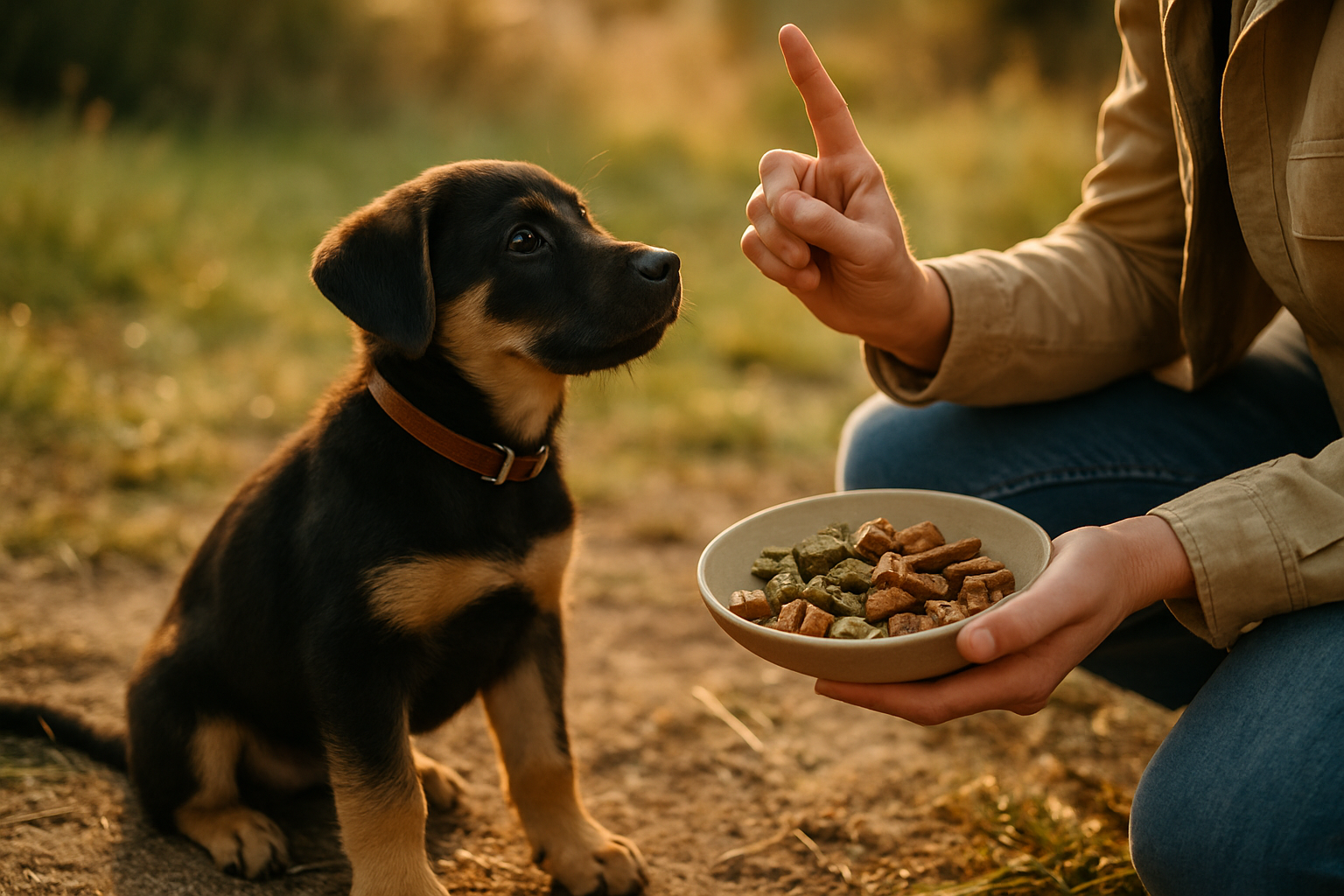
High-value doesn't mean expensive or fancy. Instead, it refers to treats that capture and maintain your puppy's complete attention, even when distractions are present. A high-value treat is one your puppy genuinely desires—something they'll work for enthusiastically and remember as worthwhile. [1]
Think of it this way: if your puppy can take or leave a treat, it won't motivate them to focus on your training cues during challenging moments. But if that treat represents something genuinely delicious and aromatic, your puppy will tune out the squirrel in the yard and lock in on you.
The most effective high-value treats typically share these characteristics:
- Aromatic and pungent: Dogs navigate the world through scent, so smellier treats naturally capture more attention. While these treats might not appeal to your nose, your puppy's enthusiasm will make them worth it.
- Soft and quick to consume: Training requires rapid reward delivery to reinforce the exact behavior you're targeting. Treats that take 30 seconds to chew break the connection between action and reward.
- Small and portion-controlled: Your puppy should finish the treat in 1-2 seconds, allowing you to deliver multiple rewards during a single training session without overfeeding.
- Protein-rich: Puppies thrive on high-protein nutrition, and protein-based treats align with their dietary needs while providing genuine nutritional value. [3]
Reading Labels: How to Identify Quality Training Treats
The dog treat market is saturated with products that prioritize shelf appeal and profit margins over nutritional integrity. When you pick up a treat package, take a moment to examine the ingredient list.
If you struggle to pronounce half the ingredients or see a lengthy list of unrecognizable additives, preservatives, and fillers, that treat likely offers questionable nutritional value. [1] Your puppy's developing digestive system and immune system don't need mystery ingredients.
Instead, look for treats with these qualities:
- Single-ingredient formulas: The simplest treats often provide the greatest benefits. A treat listing only "chicken" or "beef" eliminates guesswork about what your puppy is consuming and makes it easier to identify potential allergies or sensitivities. [3]
- Minimal processing: Dehydrated or air-dried treats maintain nutritional integrity without requiring artificial preservatives or binders.
- No common allergens: Puppies sometimes develop sensitivities, and avoiding known allergens reduces the risk of digestive upset during crucial training phases. [1]
- Transparent sourcing: Reputable brands clearly identify their protein sources and manufacturing practices.
Top Puppy Training Treat Options
Based on expert recommendations and real-world training success, here are the most effective training treat categories:
Premium Soft Bite Treats
Soft, semi-moist treats represent the gold standard for active training sessions. Their texture allows for quick consumption and easy portion control. Treats like Forthglade's Soft Bite range feature convenient sizing options—many include a central groove that allows you to snap them in half for smaller rewards or keep them whole for special achievements. [1]
The advantage of this category is versatility. You can deliver rapid-fire small rewards during skill-building phases, then switch to full-size treats as celebration rewards for mastering new behaviors. These treats also minimize pocket mess, making them practical for on-the-go training sessions.
Single-Ingredient Protein Chips
Dehydrated protein treats from sources like Farm to Pet provide exceptional nutritional density. These treats contain 74-85% crude protein (depending on the protein source) and minimal fat content, making them ideal for puppies needing high-protein nutrition without excess calories. [3]
These chips can be easily broken into smaller pieces, allowing you to stretch your training treat supply and adjust portions based on your puppy's size and age. Each chip contains approximately 6-7 calories, making calorie tracking straightforward during intensive training periods. [3]
Squeeze-Format Treats
Treats like Inaba Churu function as edible rewards that last longer than traditional treats. These work particularly well for situations requiring extended engagement, such as during grooming sessions, airplane travel, or crate training. [5] You can squeeze small portions directly into your puppy's mouth or onto a spoon, giving you precise portion control.
Freeze-Dried Jerky
Jerky-style treats from providers like Just Food For Dogs offer concentrated nutrition and intense flavor in minimal packaging. These single-ingredient jerky pieces can be broken into training-sized portions and work exceptionally well for high-value reward situations. [5] The extended shelf life and portability make them ideal for traveling to new training environments or addressing challenging behavioral moments.
Strategic Treat Usage: Training Techniques That Actually Work
Having excellent treats is only half the equation. How you deploy them determines whether your training efforts accelerate learning or create dependency.
The Rapid-Fire Reward System
During initial skill-building phases, use small, quick treats to deliver immediate feedback. When your puppy sits on command, deliver a treat within one second. This tight timing creates a clear mental connection: sitting = immediate positive consequence. Use your smallest treat portions during this phase, allowing you to deliver 10-15 rewards per training session without overfeeding.
Variable Reward Scheduling
Once your puppy demonstrates consistent understanding of a command, shift to variable reinforcement. Reward the desired behavior sometimes with treats, sometimes with verbal praise, sometimes with play. This unpredictability actually strengthens learning and creates more durable behaviors. Keep high-value treats for moments when your puppy performs the behavior in challenging situations with significant distractions.
Environmental Variety
Introduce new, higher-value treats when training in unfamiliar environments. Your puppy's attention naturally diverts in novel settings, so use your most aromatic, most enticing treats during these sessions. [5] Reserve everyday treats for familiar training spaces where your puppy's focus naturally remains stronger.
Housebreaking Acceleration
Toilet training represents one of the most critical early training goals. Keep treats readily available whenever your puppy eliminates outside. The faster you deliver the reward after the behavior, the more quickly your puppy associates outdoor elimination with positive outcomes. [1] This rapid feedback loop accelerates housebreaking significantly.
Calculating Treat Portions: Preventing Nutritional Imbalance
Training treats should comprise no more than 10% of your puppy's daily caloric intake. The remaining 90% should come from their regular puppy food formula, which is specifically balanced for their developmental stage.
Here's a practical calculation framework:
- Determine your puppy's current weight and target adult weight
- Consult your veterinarian for appropriate daily caloric intake
- Calculate 10% of that total (your treat allowance)
- Divide by the calorie content of your chosen treats
- That number represents your maximum daily treat quantity
For example, a 10-pound puppy requiring 500 daily calories can consume up to 50 calories from treats. If using single-ingredient protein chips at 6-7 calories each, that allows approximately 7-8 chips daily for training purposes.
Addressing Common Treat-Related Challenges
My Puppy Refuses Treats During Training
This typically indicates you haven't identified a truly high-value treat for your puppy. Experiment with different protein sources, textures, and aromas. Some puppies prefer chicken, while others respond more enthusiastically to fish or beef. Try warming treats slightly to increase aroma, or reserve your most aromatic treats exclusively for training to maintain their special status.
My Puppy Gets Digestive Upset from Training Treats
Switch to single-ingredient treats to isolate the problematic ingredient. The simpler the treat formula, the easier it becomes to identify sensitivities. [3] If digestive issues persist, consult your veterinarian before continuing treat-based training.
I'm Concerned About Treat Calories Affecting Weight
Use lower-calorie treat options like Ziwi Peak Air-Dried treats, which function as food rather than pure treats, or freeze-dried options that provide nutrition alongside training reinforcement. [5] Adjust your main meal portions downward on heavy training days to maintain overall caloric balance.
Building Your Ideal Training Treat Arsenal
Rather than committing to a single treat type, develop a varied selection that serves different training purposes:
- Everyday training treats: Soft bites or small protein chips for routine skill-building
- High-value treats: Aromatic jerky or freeze-dried options for challenging situations
- Long-lasting treats: Squeeze formats or larger chews for extended engagement activities
- Novelty treats: New flavors or formats reserved for new environments or particularly challenging training moments
This variety prevents treat boredom, maintains your puppy's motivation across different training contexts, and ensures you always have the right tool for the training situation at hand. [5]
Your Action Plan: Starting Today
Transform your puppy training approach with these immediate steps:
- Audit your current treats: Read the ingredient lists on any treats you currently have. If you can't pronounce ingredients or see long additive lists, plan to replace them.
- Calculate your treat budget: Determine your puppy's daily caloric needs and calculate your 10% treat allowance.
- Select three treat types: Choose one everyday option, one high-value option, and one novelty option to start.
- Test for preference: Introduce each treat type individually to identify your puppy's genuine preferences.
- Implement strategic delivery: Begin using rapid-fire rewards during training sessions this week, tracking which treat types generate the strongest response.
- Monitor and adjust: Watch your puppy's energy, digestion, and weight over the coming weeks, adjusting portions as needed.
The right training treats, deployed strategically, become one of your most powerful tools for accelerating learning, strengthening your relationship with your puppy, and building a foundation for lifelong obedience and good behavior.