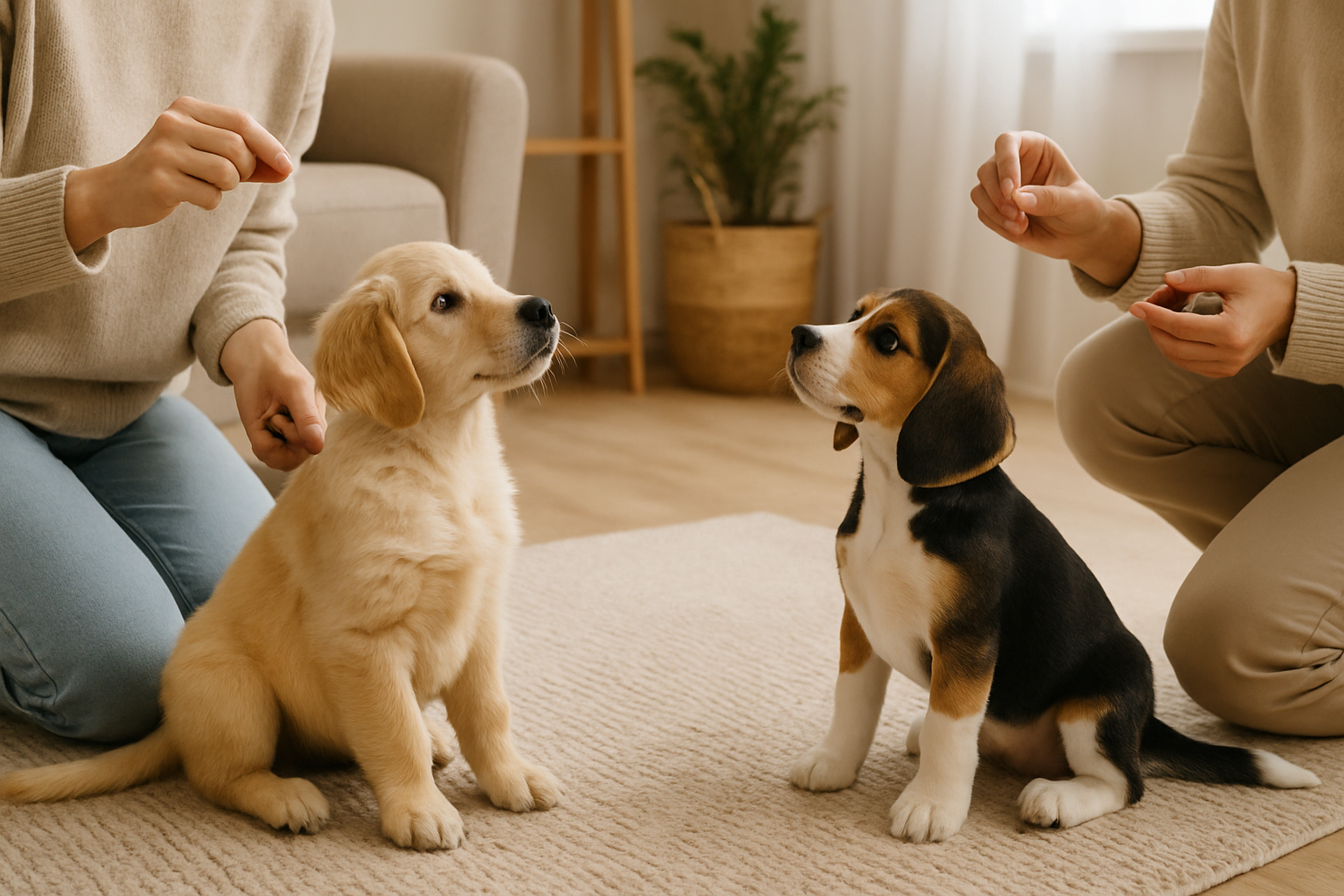
Training multiple dogs demands different strategies than raising a single puppy. Whether you're training two puppies at once or adding a second dog to your home, success requires managing competing attention, preventing behavioral issues from compounding, and ensuring each dog develops a strong individual bond with you. With proper planning, realistic expectations, and proven training strategies, you can raise multiple well-adjusted, well-trained dogs that thrive together.[3] Let's explore how to navigate this rewarding journey.
The Reality of Training Multiple Puppies
If you're considering bringing home two or more puppies at once, you've likely imagined the adorable moments: puppies playing together, keeping each other company, and growing up as best friends. That vision isn't wrong—but it's incomplete. Training multiple puppies simultaneously presents challenges that many first-time multi-puppy parents don't anticipate. The good news? With proper planning, structure, and realistic expectations, you absolutely can raise multiple well-adjusted, well-trained dogs. [3]
The key difference between raising one puppy and multiple puppies isn't just about doing everything twice. It's about managing competing attention, preventing behavioral issues from compounding, and ensuring each puppy develops a strong individual bond with you. Let's explore how to navigate this rewarding but demanding journey.
Understanding Littermate Syndrome and Similar Issues
Before diving into training techniques, it's crucial to understand a phenomenon known as "littermate syndrome." This term describes behavioral challenges that can emerge when two puppies are raised together and become overly bonded to one another. [3] The condition isn't limited to biological littermates—puppies of similar ages from different backgrounds can develop the same issues.
Common problems associated with raising multiple puppies together include:
- Excessive bonding to each other: Puppies become so focused on their sibling that they struggle to bond with their human family members, making training and communication significantly more difficult. [3]
- Behavioral mirroring: When one puppy exhibits fearful, reactive, or problematic behaviors, the other often follows suit, making it harder to correct issues before they become entrenched. [3]
- Separation anxiety: Puppies never separated may develop severe anxiety when apart, complicating vet visits, training classes, and future life events. [3]
- Distraction during training: Puppies constantly distracted by each other struggle to focus, making basic manners, house training, and impulse control exponentially more challenging to teach. [3]
- Difficulty identifying individual needs: It becomes harder to track who's had bathroom breaks, who needs feeding, and who requires individual attention. [3]
The encouraging news: these issues aren't inevitable. They're preventable through intentional training approaches and structural management. [3]
The Foundation: Recognize Each Puppy's Individuality
The first step toward successful multi-puppy training is understanding that each puppy is a unique individual with their own personality, learning style, and pace. [1] Just as humans learn differently, so do puppies.
Some puppies are naturally bold and adventurous, grasping new concepts quickly and eager to explore. Others are more reserved or cautious, requiring additional patience and time to build confidence. A timid puppy might actually benefit from observing a more confident sibling during training—a concept called "observational learning." However, if one puppy is particularly dominant or disruptive, separate training sessions may be necessary to prevent that behavior from overshadowing the other's progress. [1]
Your job as a trainer is to observe these differences and adapt your approach accordingly. This personalized attention doesn't mean treating them identically—it means treating them appropriately for their individual needs. [4]
Individual Training Sessions: The Non-Negotiable Foundation
Here's the most important principle for training multiple puppies successfully: individual training must come before group training. [4]
Dedicate daily one-on-one time with each puppy for focused training sessions. This accomplishes multiple critical goals:
- Builds individual bonds: Your puppies learn to value your attention and develop a strong personal connection with you, not just with each other. [4]
- Prevents distraction: Without a sibling present, each puppy can focus entirely on learning without competing for attention or getting distracted by the other's antics. [4]
- Establishes comfort with separation: Regular solo time helps puppies adjust to being separated, reducing the likelihood of separation anxiety later. [4]
- Allows personalized instruction: You can tailor your training methods to each puppy's learning style and pace without compromise. [4]
- Enables individual attention: Each puppy receives the emotional support and validation they need to develop confidence and security. [1]
During these sessions, mix training with activities your puppy enjoys most. One puppy might love canine massage or gentle stretching, while another lives for water play and running. [4] The goal is bonding, not just drilling commands.
Creating Structure and Consistency
Consistency is the cornerstone of effective training, especially with multiple puppies. [1] Establishing predictable routines helps puppies understand what to expect and when, providing both structure and security.
Your daily schedule should include:
- Regular feeding times: Scheduled meals lead to more predictable potty times, making bathroom training significantly easier to manage. [1]
- Designated potty breaks: Take puppies out at consistent times—first thing in the morning, after meals, after playtime, before bedtime, and periodically throughout the day. [1]
- Individual playtime: Separate play sessions prevent competition and allow each puppy to burn energy appropriately. [1]
- Structured rest periods: Puppies need substantial sleep. Crate time or designated rest areas help them develop good sleep habits and provide you with manageable training windows. [1]
- Training windows: Schedule individual training sessions when puppies are most alert and responsive—typically after rest and before meals. [4]
This consistency reduces anxiety, improves learning outcomes, and helps you manage the household more effectively. [1]
Managing Competition and Individual Spaces
In any multi-puppy household, competition for attention, food, and toys is natural. Managing this competition is essential for harmony and training success. [1]
Implement these structural strategies:
- Separate feeding stations: Each puppy should have their own designated feeding bowl in a separate location. This prevents resource guarding, reduces stress during meals, and helps you monitor individual intake. [1]
- Individual water bowls: Manage water intake by providing separate bowls and controlling access times. This is particularly important for house training, as unrestricted water access leads to unpredictable potty needs. [1]
- Personal spaces: Each puppy needs their own crate, bed, or designated area where they can retreat for security and rest without competition. [1]
- Toy rotation: Avoid having multiple identical toys that create conflict. Instead, rotate toys and provide duplicates only for toys that don't trigger resource guarding. [1]
- Attention management: Give each puppy individual attention daily, ensuring they feel valued and secure. This reduces anxiety and creates a more conducive training environment. [1]
House Training Multiple Puppies
Potty training becomes exponentially more complex with multiple puppies, but the fundamentals remain the same. The challenge lies in tracking who's been out, preventing accidents, and maintaining consistency. [3]
Effective multi-puppy house training strategies:
- Manage food and water carefully: Set specific feeding and water times rather than allowing free access. This makes potty schedules more predictable and manageable. [1]
- Take them out separately when possible: Individual potty breaks help you confirm that each puppy has gone and allow you to praise and reward appropriately. [1]
- Use enzymatic cleaners: When accidents happen—and they will—use enzymatic cleaners that break down urine at a molecular level. Regular cleaners only mask the smell, and puppies will return to the same spot if the scent remains. [1]
- Maintain a potty log: Track each puppy's bathroom schedule to identify patterns and anticipate needs more accurately. [1]
- Watch for signs: Sniffing, circling, whining, and sudden restlessness indicate a puppy needs to go out immediately. [1]
- Be patient and positive: Accidents are part of the process. Respond calmly without punishment, and celebrate successes enthusiastically. [1]
Introducing Group Training Games
Once each puppy has mastered basics individually, you can begin introducing structured group training activities. These sessions should be fun, engaging, and carefully managed to prevent distraction and competition. [5]
Beginner group training games:
- Side-by-side commands: Practice simple behaviors like "sit" or "down" with both puppies present. Use different hand signals or positions so each puppy knows their individual cue. Reward each separately, ensuring both feel acknowledged. [5]
- The "Line Up" game: Have all puppies sit in a line and stay. Reward each in turn by name, so they learn whose turn it is. If any puppy breaks position or tries to grab another's treat, pause the game. Resume when everyone remembers their manners. This teaches impulse control and patience. [5]
- Individual call-outs: While puppies are lined up, call one out for a quick training game or release. This teaches them to pay attention and respond to their individual name even when siblings are present. [5]
- Group recall: When puppies are at a distance, call all of them simultaneously and celebrate whoever arrives first. This is purely for fun and helps build enthusiasm for coming when called. [5]
- Synchronized tricks: Practice paired behaviors like simultaneous spins or "touch" commands. These are entertaining and help puppies understand they can perform individually even in a group setting. [5]
Key principle: Always ensure each dog knows they're not forgotten and gets their turn. Dogs are naturally fair-minded—as long as they receive attention, rewards, and recognition, they'll happily participate in group activities. [5]
Advanced Strategy: Training While Another Dog Waits
As your puppies progress, you can build their ability to remain calm and patient while one sibling receives training attention. This is a valuable skill that prevents behavioral issues and teaches impulse control. [5]
Start by having one puppy engage in active training while the other rests on a nearby mat or cot. Periodically reward the waiting puppy for remaining calm and settled. This teaches them that:
- They don't always need to be the center of attention
- They'll be rewarded for patience and good behavior
- Training time will eventually come for them too
- Staying settled is actually a valuable game with rewards
This technique builds focus, reduces anxiety, and makes multi-puppy training sessions progressively easier to manage. [5]
When to Seek Professional Help
Raising multiple puppies is challenging, and there's no shame in seeking expert guidance. In fact, professional support often prevents minor issues from becoming major behavioral problems. [3]
Consider reaching out to a certified, force-free trainer if you notice:
- Excessive attachment between puppies with little responsiveness to your training efforts
- One or both puppies showing fear, reactivity, or aggression
- Tension or conflict building between the puppies
- Difficulty managing attention or focus during training
- Unexpected separation anxiety or panic when puppies are apart
Early intervention makes correction significantly easier and prevents issues from becoming entrenched behavioral patterns. [3] A professional trainer can help you develop a customized training plan, provide enrichment strategies, and offer ongoing support tailored to your specific puppies' needs. [3]
Practical Tips for Success
Beyond the major strategies, these practical tips will help you manage the daily reality of multi-puppy training:
- Have multiple people help: If possible, involve family members or friends in training sessions. With one person per puppy, training becomes significantly more manageable and effective. [5]
- Use high-value rewards: When training multiple puppies, use rewards they find irresistible—special treats, favorite toys, or enthusiastic praise. This keeps motivation high even with distractions present. [5]
- Keep sessions short: Multiple puppies have shorter attention spans than single puppies. Aim for 5-10 minute training windows, then transition to rest or play. [4]
- Train at different times: Vary which puppy trains first to prevent resentment or anticipatory behavior. [4]
- Celebrate individual progress: Make a big deal when one puppy masters a new behavior, even if the other hasn't yet. This reinforces that individual achievement is valued. [4]
- Accept that it takes longer: Everything—house training, teaching commands, establishing manners—takes longer with multiple puppies. Adjust your timeline expectations accordingly. [3]
- Build in recovery time: Training multiple puppies is exhausting for everyone. Schedule rest days and don't feel guilty about slowing down when needed. [3]
The Bottom Line
Training multiple puppies at once is absolutely possible, but it's twice the effort, not just twice the fun. Success requires commitment to individual training, intentional structure, realistic expectations, and willingness to adapt your approach based on each puppy's unique needs. [3]
The effort you invest now—the individual training sessions, the consistent routines, the careful management of resources and attention—pays dividends for years to come. You'll raise puppies who are confident, well-trained, securely bonded to you individually, and capable of thriving both together and apart.
Remember: every puppy learns at their own pace, and patience is your most valuable tool. With proper planning and support, you can absolutely raise multiple puppies into happy, healthy, well-adjusted dogs. [1]