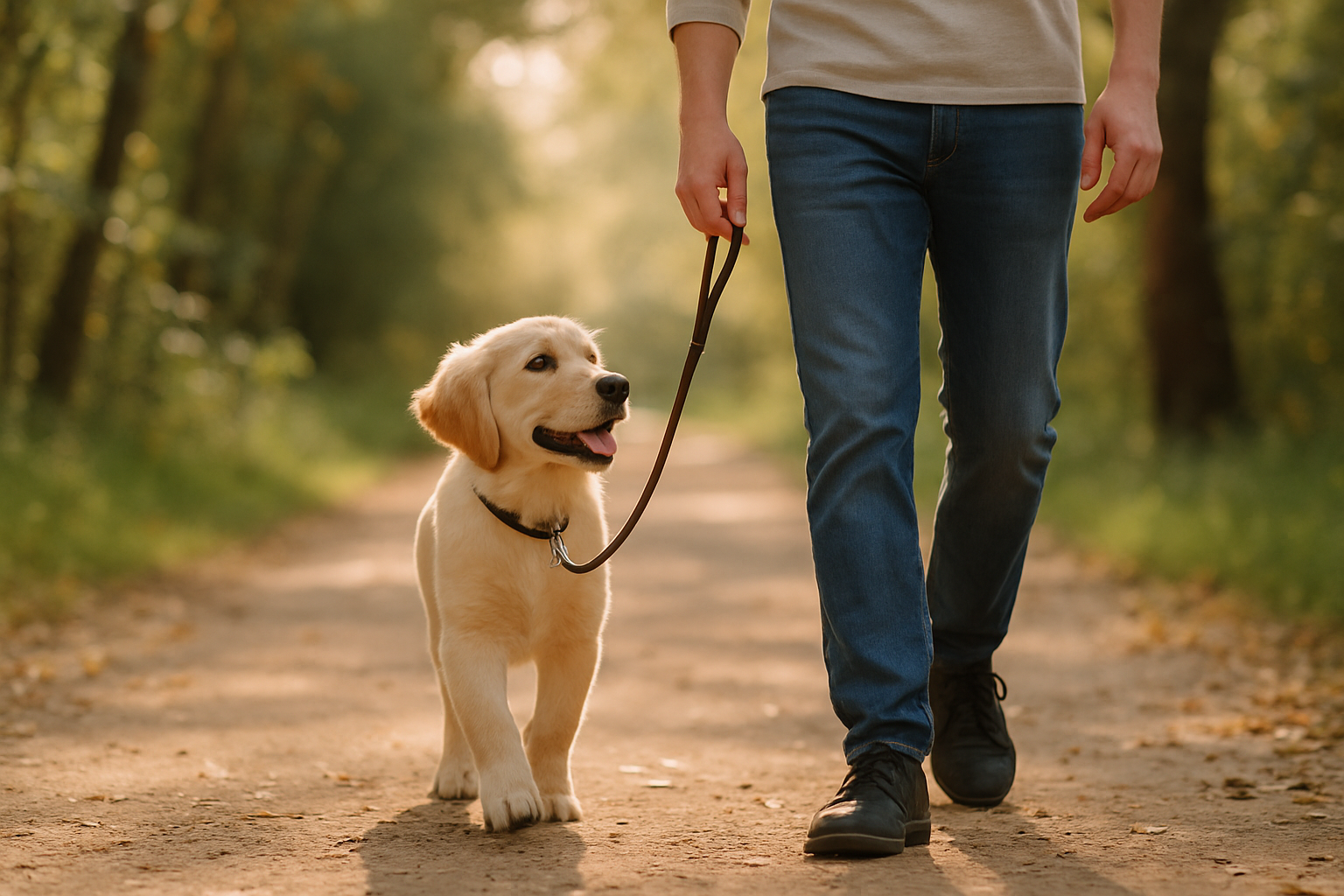
How to Teach Your Puppy to Walk on a Loose Leash: A Complete Training Guide
There's nothing quite like the excitement of bringing home a new puppy. But within days, you're likely to experience one of the most frustrating aspects of early puppy ownership: the constant pulling on the leash. What starts as an adorable little tug quickly becomes exhausting—and if left unchecked, can develop into a serious behavioral problem that makes every walk a battle.
The good news? Loose leash walking is a skill you can teach, and the earlier you start, the easier it becomes. This comprehensive guide walks you through everything you need to know to raise a puppy who actually enjoys walks by your side.
Why Puppies Pull: Understanding the Root Cause
Before jumping into training techniques, it's important to understand why puppies pull in the first place. Pulling isn't a sign of disobedience or a stubborn personality—it's actually a learned behavior that you might be accidentally reinforcing. [2]
Here's what happens: Your puppy charges ahead, the leash tightens, and they continue moving forward. In your puppy's mind, this creates a simple equation: pulling equals progress. Every single time the leash goes tight and they still move forward, they're learning that pulling works. It's a self-rewarding behavior, which means it becomes their default strategy without any intentional training from you.
The challenge is that this doesn't feel like a problem when your puppy weighs 10 pounds. But fast-forward to adulthood, and that same behavior becomes genuinely difficult to manage. A 60-pound dog pulling on the leash isn't just unpleasant—it can also cause physical damage. Constant pressure on collars can strain the trachea, and even harnesses aren't risk-free when a dog is constantly pulling against them. [2]
This is why starting early matters so much. Teaching loose leash walking now prevents years of frustration later.
The Equipment Setup: Choosing the Right Tools
Your equipment choices significantly impact your training success. The right setup makes teaching loose leash walking easier and more effective.
Leash Length Matters More Than You Think
One of the most overlooked factors in loose leash training is leash length. Many owners use standard 6-foot leashes and carry them bunched up or knotted, essentially creating a short leash without realizing it. [1]
Research shows that dogs on longer leashes actually sniff more, and when they do, their heart rate slows—suggesting a calming effect. [1] More importantly, a longer leash prevents you from accidentally teaching your puppy to pull in the first place. When you use a short leash that keeps your puppy 8-10 feet away from interesting smells and sights, you're essentially dangling temptation just out of reach. This setup teaches puppies that pulling harder will get them closer to what they want.
Recommended leash lengths:
- Start with 8-15 feet for puppies in training
- Use at least the full length of a standard 6-foot leash (don't bunch it up)
- Choose a length where you feel safe and comfortable controlling your puppy
- Avoid retractable leashes, which are always taut and don't allow for true slack
Harness vs. Collar
Attach your leash to a back-clip, non-restrictive harness rather than a collar whenever possible. [1] Front-clip "no-pull" harnesses can work, but back-clip harnesses are ideal because they distribute pressure more evenly and allow your puppy greater freedom of movement. Collars, particularly on puppies, can cause unnecessary strain on the neck and trachea.
Step-by-Step Training Protocol
Step 1: Start in a Controlled Environment
Don't expect your puppy to master loose leash walking on a busy street. Begin in an environment with minimal distractions where your puppy can focus on you. [2]
Ideal starting locations:
- Your backyard
- Your driveway
- Inside your house with the leash on
- A quiet park with few other dogs or people
Starting small allows your puppy to build confidence and understand the game before facing real-world distractions. Once they're solid in low-distraction environments, gradually introduce busier settings.
Step 2: Reward the Position, Not the Pulling
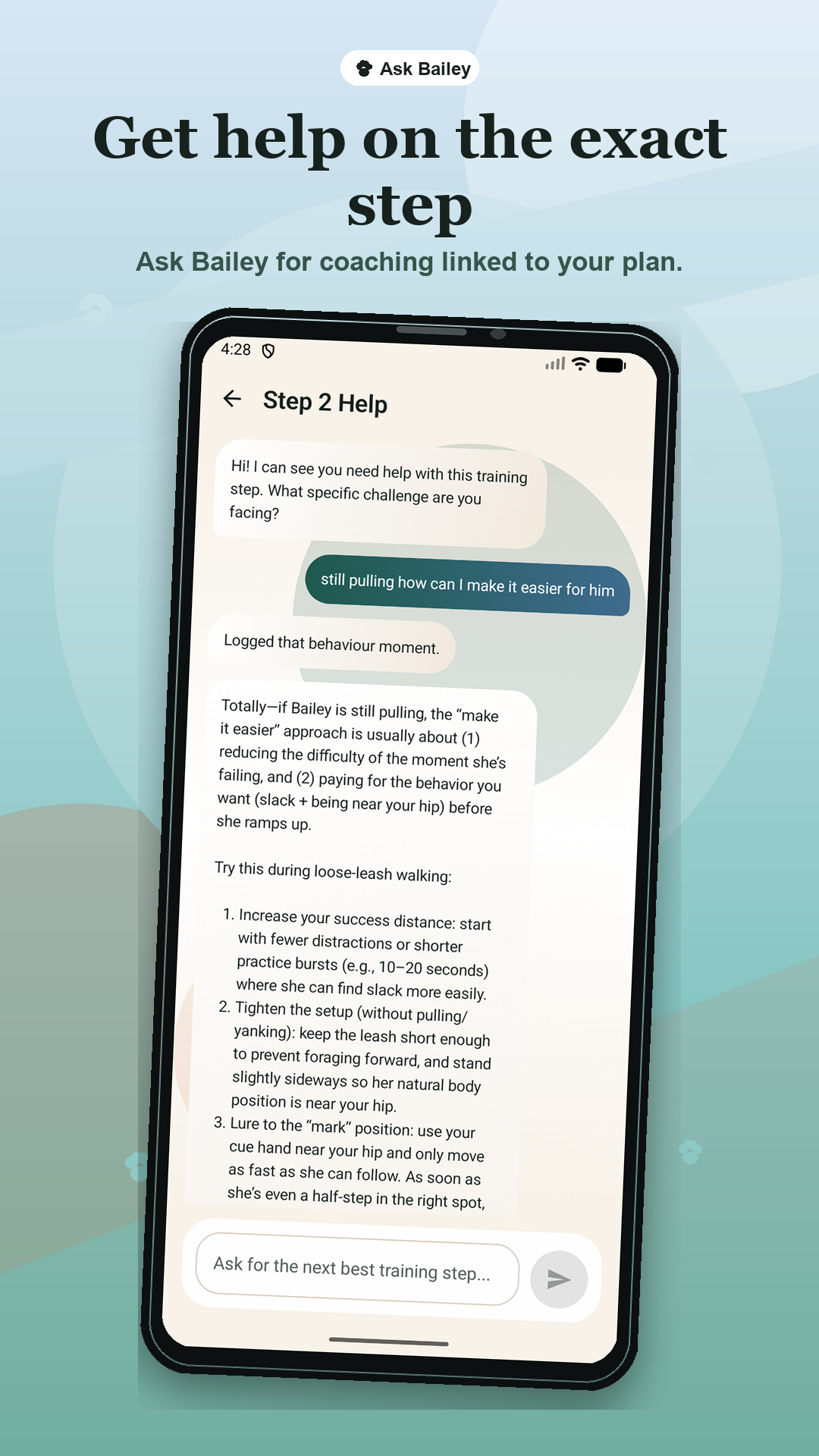
The fundamental principle of loose leash training is this: movement forward only happens when the leash is slack. [2] This teaches your puppy that pulling doesn't work, but staying near you does.
How to implement this:
- As you walk, watch for moments when your puppy naturally walks beside you with slack in the leash
- Immediately mark this moment with a marker word ("yes!") or a clicker
- Deliver a high-value treat right away
- Repeat this dozens of times during each training session
- Vary the timing so your puppy never knows exactly when a reward is coming
The marker (your "yes" or clicker) is crucial because it creates a precise moment of communication. Your puppy learns: "That exact position I was in when I heard 'yes' is what earns rewards."
Step 3: The Stop-and-Wait Technique
When your puppy pulls and the leash tightens, stop walking entirely. Don't move forward, don't scold, don't jerk the leash. Simply become a statue. [2]
Wait for one of three things to happen:
- Your puppy comes back toward you
- Your puppy looks back at you
- The leash goes slack
The moment any of these occur, immediately resume walking. Your puppy learns that pulling stops progress, but slack leash equals movement. This is far more effective than any correction because it's a natural consequence rather than a punishment.
Important note: This technique requires patience. Don't resume walking prematurely. Wait for genuine slack before moving forward again.
Step 4: Build Engagement Through Games
Loose leash walking becomes infinitely easier when your puppy actually wants to pay attention to you. Games are the secret to building this engagement without boring repetition. [3]
Engagement games to try:
- Name Recognition Game: Say your puppy's name and immediately reward when they look at you. Do this randomly throughout walks.
- Check-In Game: Reward your puppy every time they naturally glance in your direction, even if just for a moment.
- Catch Me If You Can: Occasionally change direction or pace unexpectedly. When your puppy catches up to you, celebrate with treats and praise. This keeps them tuned in to your movements. [3]
- Surprise Rewards: Keep your puppy guessing by randomly producing high-value treats or toys during walks. The unpredictability keeps them checking in with you frequently. [3]
These games transform walks from a boring compliance exercise into something your puppy actually wants to participate in. The more fun they have being near you, the less they'll want to pull away.
Step 5: Use Environmental Reinforcement Strategically
Your puppy is naturally interested in sniffing, exploring, and investigating. Rather than fighting this instinct, use it as a training tool. [1]
When your puppy walks with slack leash toward something interesting (like a tree to sniff), allow them to investigate as a reward. When the leash tightens and they're pulling toward something, stop and back up, making the interesting thing move farther away. [3]
This creates a clear lesson: slack leash brings you closer to what you want; tight leash makes it move away. Your puppy learns to maintain slack naturally because it's the only way to access environmental rewards.
Different Types of Walks for Different Situations
Not every walk needs to look the same. Professional trainers often teach multiple walking styles for different contexts. [3]
- "Let's Walk" (Close Walking): Your puppy stays relatively close but has permission to sniff and explore within a small radius. Use this for busy streets or when you need better control.
- "Be a Dog" (Freedom Walk): Your puppy can range to the end of the leash in any direction, but shouldn't drag you. Use this for recreational walks where exploration is the main goal.
- Heel Position (Formal Walk): Your puppy walks right beside you with focus and attention. Reserve this for training sessions or situations requiring precise control.
Teaching multiple cues prevents your puppy from becoming confused about expectations and makes walks more enjoyable for both of you.
Common Mistakes to Avoid
Using punishment or corrections: Yanking the leash, scolding, or using aversive tools teaches your puppy to fear walks, not to enjoy them. Positive reinforcement works faster and builds a better relationship.
Expecting too much too soon: Your puppy's brain is still developing. Expecting perfect loose leash walking on a busy street after one training session sets you both up for failure. Progress gradually.
Inconsistent reinforcement: If you reward loose leash walking sometimes but not others, your puppy won't understand the pattern. Be consistent, especially in early training.
Using low-value treats: Regular kibble might not be exciting enough to compete with environmental distractions. Use high-value treats (small pieces of chicken, cheese, or commercial training treats) during early training.
Forgetting to practice: Loose leash walking improves with repetition. Short, frequent training sessions are more effective than occasional long walks.
Managing Realistic Expectations
Here's an honest truth: puppies are puppies. They're curious, excitable, and the world is endlessly fascinating to them. Even with perfect training, your puppy will sometimes pull, especially when encountering something particularly interesting. [2]
This is normal. Training loose leash walking isn't about achieving perfection; it's about establishing a pattern where loose leash walking is the default behavior most of the time. Celebrate small wins—a few steps of good walking, a moment of checking in with you, a successful stop-and-wait.
Keep training sessions short (10-15 minutes) and end on a positive note before your puppy gets frustrated or overstimulated. [2] A tired, frustrated puppy learns less effectively than an engaged, happy one.
Why This Approach Works
The methods outlined here work because they align with how puppies actually learn. Rather than punishing pulling or forcing compliance, you're creating an environment where loose leash walking becomes the most rewarding choice. [1]
By using longer leashes, you prevent the pulling behavior from developing in the first place. By rewarding the position you want, you teach your puppy exactly what earns reinforcement. By using games and environmental rewards, you keep your puppy engaged and motivated. And by being consistent and patient, you build a strong foundation for a lifetime of enjoyable walks together.
Key Takeaways
- Start training loose leash walking early—it prevents years of pulling problems later
- Use a longer leash (8-15 feet) to prevent accidental reinforcement of pulling
- Reward slack leash consistently; stop moving when the leash tightens
- Use games and environmental rewards to keep your puppy engaged with you
- Practice in low-distraction environments first, then gradually increase difficulty
- Keep training sessions short, positive, and fun
- Be patient—loose leash walking is a skill that improves with consistent practice
With these tools and techniques, you're not just teaching a behavior—you're building a foundation for walks that are genuinely enjoyable for both you and your puppy. That's worth the effort.