Why a Puppy Training Schedule Matters
Your puppy is learning during every waking moment, whether you realize it or not. Every interaction—from the way you greet them to how you respond to jumping—shapes their behavior for life. The difference between a well-mannered adult dog and one with persistent problem behaviors often comes down to what happens in those first weeks and months at home. [1]
The good news? You don't need to wait for formal training classes or special certifications to start. You can begin training the moment your puppy arrives through simple, consistent daily routines and reward-based methods. Think of your first year together as laying a foundation you'll reinforce throughout your dog's life. [3]
The First Week: Setting Expectations
Your puppy's first week home is overwhelming for them, even if it feels exciting for you. Many trainers recommend following the "3-3-3 rule" as a helpful framework: roughly three days to decompress, three weeks to begin learning your routine, and three months to feel fully bonded and settled. This isn't a hard science, but it gives you realistic expectations. [3]
Day One Priorities
- Establish the potty routine: Take your puppy outside immediately upon arrival, through the same door each time, to the same spot. Praise and reward heavily when they eliminate outdoors. [4]
- Show them their crate: Leave the crate door open with treats inside. Let them explore at their own pace—never force them in.
- Introduce their sleeping area: Set up a quiet, safe space with a bed or blanket where they can rest undisturbed.
- Keep it calm: Resist the urge to have everyone meet the puppy immediately. Let them adjust to their new home first.
- Start gentle handling: Touch their paws, ears, and mouth gently to prepare them for grooming and vet visits later.
On that first night, consider using an Adaptil collar or diffuser. This product mimics calming pheromones that mother dogs naturally produce, helping your puppy settle and reducing stress from separation. [2]
Weeks 1-4: Foundation Training Begins
During this critical window, focus on building trust and establishing basic routines rather than complex commands. Your puppy's brain is absorbing everything, but their attention span is measured in seconds. [3]
House Training (Starting Immediately)
House training is one of the most important skills to establish early, and it requires consistency above all else. Here's what works:
- Follow the bladder rule: A puppy can typically hold their bladder for one hour per month of age, up to about 10 hours maximum. A 2-month-old puppy needs a potty break every 2 hours. [2]
- Establish a predictable schedule: Take your puppy out first thing in the morning, after meals, after naps, during playtime, and before bedtime. [4]
- Use the same exit and spot: Consistency creates a mental association. Always use the same door and take them to the same outdoor area.
- Reward immediately: The moment they finish eliminating, celebrate enthusiastically with treats and praise. This is the most powerful teaching moment.
- Supervise constantly: Until your puppy is reliably house-trained (which can take several months), never leave them unsupervised outside their crate. [5]
- Clean accidents thoroughly: Use an enzymatic cleaner to remove all odor. If your puppy can smell previous accidents, they'll return to that spot. [4]
- Never punish: If you catch them mid-accident, calmly interrupt and take them outside. Never rub their nose in it or scold them after the fact—puppies won't understand the connection. [2]
Crate Training
A properly introduced crate becomes your puppy's safe haven and is invaluable for house training, chew management, and teaching independence. [5]
- Choose a crate just large enough for your puppy to stand, turn around, and lie down comfortably. Too much space and they'll use one end as a bathroom.
- Never force your puppy into the crate. Instead, toss treats inside and leave the door open, letting them explore voluntarily.
- Feed meals inside the crate to build positive associations.
- Limit crate time to 3-4 hours during the day (except overnight) until your puppy is older. [4]
- Make crate time calm by avoiding dramatic goodbyes or hellos.
Teaching "Look at Me"
Before teaching sit or come, build focus. This is your foundation for everything else. [3]
- Say your puppy's name once in a happy, upbeat voice.
- The instant they look at you, mark the moment with "Yes!" or a clicker, then immediately give a treat.
- Practice this dozens of times throughout the day in short, 30-second bursts.
- Within days, your puppy will turn toward you eagerly when they hear their name.
Weeks 4-12: The Critical Socialization Window
Between 3 and 12 weeks of age, your puppy's brain is primed to accept new experiences. This is your golden window for socialization, and it closes gradually. Puppies who miss this window are at higher risk for fear-based aggression and anxiety later in life. [2]
Socialization Checklist
Aim for your puppy to meet and have positive interactions with approximately 100 different people before 16 weeks old. This sounds like a lot, but it includes:
- Family members and close friends
- People of different ages (children, teenagers, elderly)
- People in different uniforms (mail carriers, delivery drivers, veterinarians)
- People wearing glasses, hats, or masks
- Other puppies and vaccinated adult dogs in controlled settings
- Cats and other household animals
- Various environments: parks, pet stores, car rides, different flooring types, outdoor sounds
Enroll in a puppy socialization class if possible. Studies show puppies in these classes are more likely to be retained in their homes long-term. [2] These classes provide controlled exposure to other puppies and new people in a safe environment.
Basic Commands: Sit, Down, and Come
Teaching Sit
- Hold a small, high-value treat close to your puppy's nose.
- Slowly move the treat up and back over their head. As their nose follows the treat, their bottom naturally lowers into a sit.
- Mark with "Yes!" the instant their rear touches the ground.
- Deliver the treat immediately.
- After several repetitions, add the word "Sit" just as they begin to fold.
- Practice in short sessions, 5-10 times, several times daily. [3]
Teaching Come (Recall)
A reliable recall can save your puppy's life. Start in a quiet, distraction-free room. [3]
- Say your puppy's name and "Come" in a cheerful, excited voice.
- The instant they reach you, mark with "Yes!" and give an extra-special reward (high-value treat, favorite toy, or enthusiastic praise).
- Make coming to you the best decision they can make.
- Practice dozens of times daily in low-distraction environments before attempting outdoors.
- Always reward generously and never punish them for coming, even if they took a long time.
Teaching Down
- Start with your puppy in a sit.
- Hold a treat to their nose and slowly move it down toward the ground and slightly back toward their body.
- As they follow the treat, they'll naturally lower into a down position.
- Mark and reward the moment their elbows touch the ground.
- Add the word "Down" after they understand the motion.
Bite Inhibition Training
Puppies explore the world with their mouths, and those needle-sharp teeth can hurt during play. Teaching bite inhibition—the ability to control bite force—is essential. [5]
- During play, if your puppy bites too hard, yelp loudly and stop playing immediately.
- Ignore them briefly (10-15 seconds), then resume play gently.
- Repeat this consistently so your puppy learns that hard biting ends the fun.
- Redirect mouthing toward appropriate toys and chew items.
- Praise gently when they mouth toys instead of hands.
Weeks 12-16: Building on Foundations
By four months, your puppy should have a solid grasp of basic commands and house training routines. Now you can expand their skills and increase difficulty.
Stay and Impulse Control
- Start with your puppy in a sit, very close to you.
- Say "Stay" and pause for just one second before marking and rewarding.
- Gradually increase duration and distance over many sessions.
- Practice before meals and at doorways to reinforce impulse control in real-life situations. [5]
Leash Walking Basics
- Introduce the leash indoors first, letting your puppy get used to the feel without pressure.
- Reward calm behavior on the leash with treats and praise.
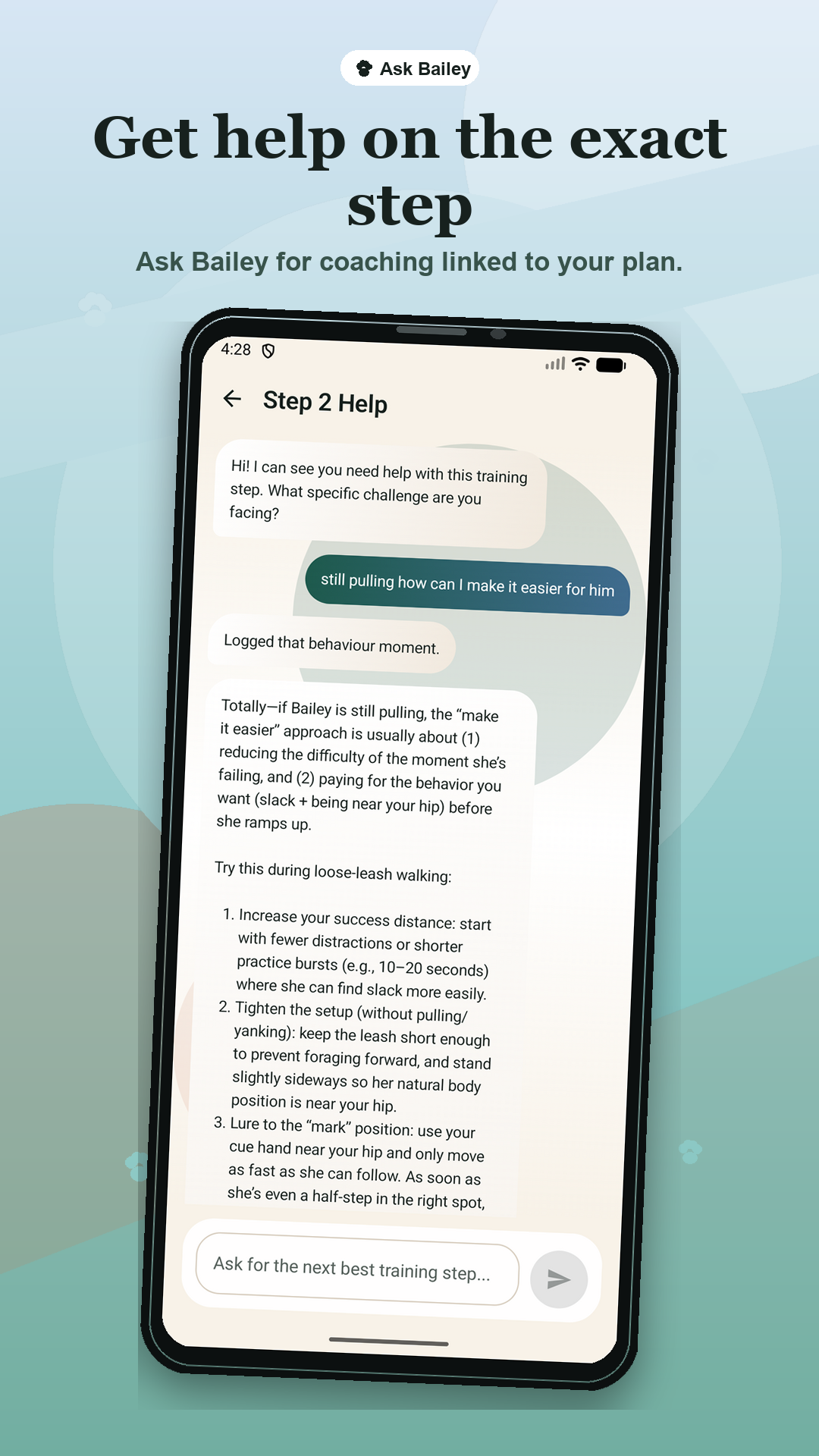
- Practice loose-leash walking by rewarding your puppy for staying near you without pulling.
- If they pull, stop moving. Resume only when the leash is slack.
- Keep early walks short (5-10 minutes) and low-pressure.
Chew Training
Chewing is natural and healthy for puppies, especially during teething. Your job is to direct it appropriately. [5]
- Puppy-proof your home by removing tempting items like shoes, cords, and remote controls.
- Provide appropriate chew toys: bully sticks, marrow bones, and food-puzzle toys filled with frozen treats.
- Supervise actively. When you catch your puppy chewing something inappropriate, calmly interrupt and redirect to an approved toy.
- Praise enthusiastically when they choose the right toy.
- Rotate toys to keep them interesting.
Months 4-6: Expanding Skills and Independence
By six months, many puppies can hold their bladder for longer periods. You can gradually extend the time between potty breaks by adding an hour every week or two. [5] However, expect setbacks—if accidents increase, return to more frequent breaks temporarily.
Teaching "Place" or "Go to Bed"
This command teaches your puppy to settle on a mat or bed, giving you an "off switch" for their energy. [3]
- Place a mat or bed in a designated spot.
- Lure your puppy onto it with treats, then mark and reward heavily.
- Add the word "Place" as they move toward it.
- Reward calm, resting behavior on the mat.
- This becomes invaluable during meals, when guests arrive, or when you need focus time.
Addressing Common Challenges
Jumping on People
Never reward jumping by petting or giving attention. Instead, teach your puppy that sitting gets attention. Ask visitors to ignore jumping and only pet your puppy when all four paws are on the ground. [1]
Nipping and Mouthing
Continue bite inhibition work. Redirect to toys and reward calm behavior. If nipping persists, briefly end the interaction.
Fearfulness or Anxiety
If your puppy shows signs of fear, anxiety, or aggression—especially fear-based behaviors—consult your veterinarian or a certified professional trainer. Early intervention is crucial. [2]
Months 6-12: Refinement and Advanced Skills
By six months, your puppy should be substantially house-trained and comfortable with basic commands. This is when you can introduce more advanced training if desired: distance work with recall, off-leash training (in safe, enclosed areas), tricks, or sport-specific skills.
Continue reinforcing established behaviors. Training is ongoing, not a one-time event. A puppy isn't fully reliable until around six months of age or later, and many behaviors benefit from reinforcement throughout their life. [3]
Training Methods That Work: The Science-Backed Approach
All major veterinary organizations recommend reward-based training methods. Here's why they work:
Positive Reinforcement
When your puppy does something you like, immediately add something they value: a treat, praise, play, or attention. This teaches them the behavior will happen again. [3]
Key Training Techniques
Luring
Use a treat like a magnet to guide your puppy into the desired position. Move the treat at nose level, at a speed your puppy can easily follow. This is especially useful for teaching sit, down, and come. [1]
Capturing
Watch for moments when your puppy naturally does something you like—lying down calmly, looking at you, approaching you—and mark it with "Yes!" followed by a reward. This teaches your puppy that good choices happen on their own. [1]
Marking
Use a clicker or the word "Yes!" to mark the exact instant your puppy does the right thing. This precision helps them understand exactly which behavior earned the reward. [3]
Shaping
Reward small steps toward a bigger goal. You don't need perfection—reward progress and gradually raise your expectations. [3]
Essential Training Supplies
- High-value treats: Small, soft treats the size of a pencil eraser that your puppy loves. Rotate varieties to keep them interesting.
- Treat pouch: Keeps treats accessible during training sessions throughout the day.
- Clicker: A small device that makes a consistent clicking sound, useful for marking desired behavior.
- Appropriate toys: Chew toys, puzzle toys, fetch toys, and interactive toys.
- Long line: A 15-30 foot rope leash for practicing recall in open spaces safely.
- Enzymatic cleaner: For thorough accident cleanup during house training.
- Crate: Properly sized for your puppy's breed and age.
Common Training Mistakes to Avoid
- Waiting too long to start: Begin training the day your puppy arrives. Early habits stick.
- Inconsistency: If one family member allows jumping and another discourages it, your puppy gets confused. Align on rules and enforce them consistently.
- Punishing accidents: Punishment teaches puppies to hide, not to go outside. Focus on prevention and reward instead.
- Long training sessions: A few minutes, several times daily, works far better than one long session. Puppies have short attention spans.
- Ignoring socialization: The window closes gradually. Prioritize varied, positive experiences during the first 16 weeks.
- Using aversive methods: Yelling, hitting, or using shock collars damages trust and carries real risks to your puppy's welfare. [3]
When to Seek Professional Help
Most puppies thrive with consistent, patient, reward-based training from their owners. However, consult your veterinarian or a certified professional trainer if:
- Your puppy shows signs of fear, anxiety, or aggression
- Bite inhibition isn't improving despite consistent practice
- House training isn't progressing after 4-5 months of consistent effort
- Your puppy exhibits extreme shyness or refuses to socialize
- You notice sudden behavioral changes or regression
- You feel overwhelmed or unsure about your approach
Your Training Timeline at a Glance
- Week 1: Potty routine, crate introduction, gentle handling, calm adjustment
- Weeks 1-4: House training, crate training, "look at me," bite inhibition
- Weeks 4-12: Socialization (critical window), sit, down, come, leash introduction
- Weeks 12-16: Stay, impulse control, loose-leash walking, chew training
- Months 4-6: Extended bladder control, "place," address jumping and nipping
- Months 6-12: Refinement, advanced skills, continued reinforcement
Final Thoughts: Patience Pays Off
Training your puppy is one of the most rewarding investments you'll make. Those early weeks and months of consistency, supervision, and positive reinforcement create the foundation for a well-mannered, confident, and happy adult dog. Remember: your puppy isn't trying to misbehave or test you. They're simply doing what works from their point of view. Your job is to show them what behaviors work best in your home, reward those behaviors generously, and give them time to learn. [1]
Stay patient, keep sessions short and fun, celebrate small wins, and enjoy this fleeting puppy phase. The effort you invest now pays dividends for the next 10-15 years of companionship.