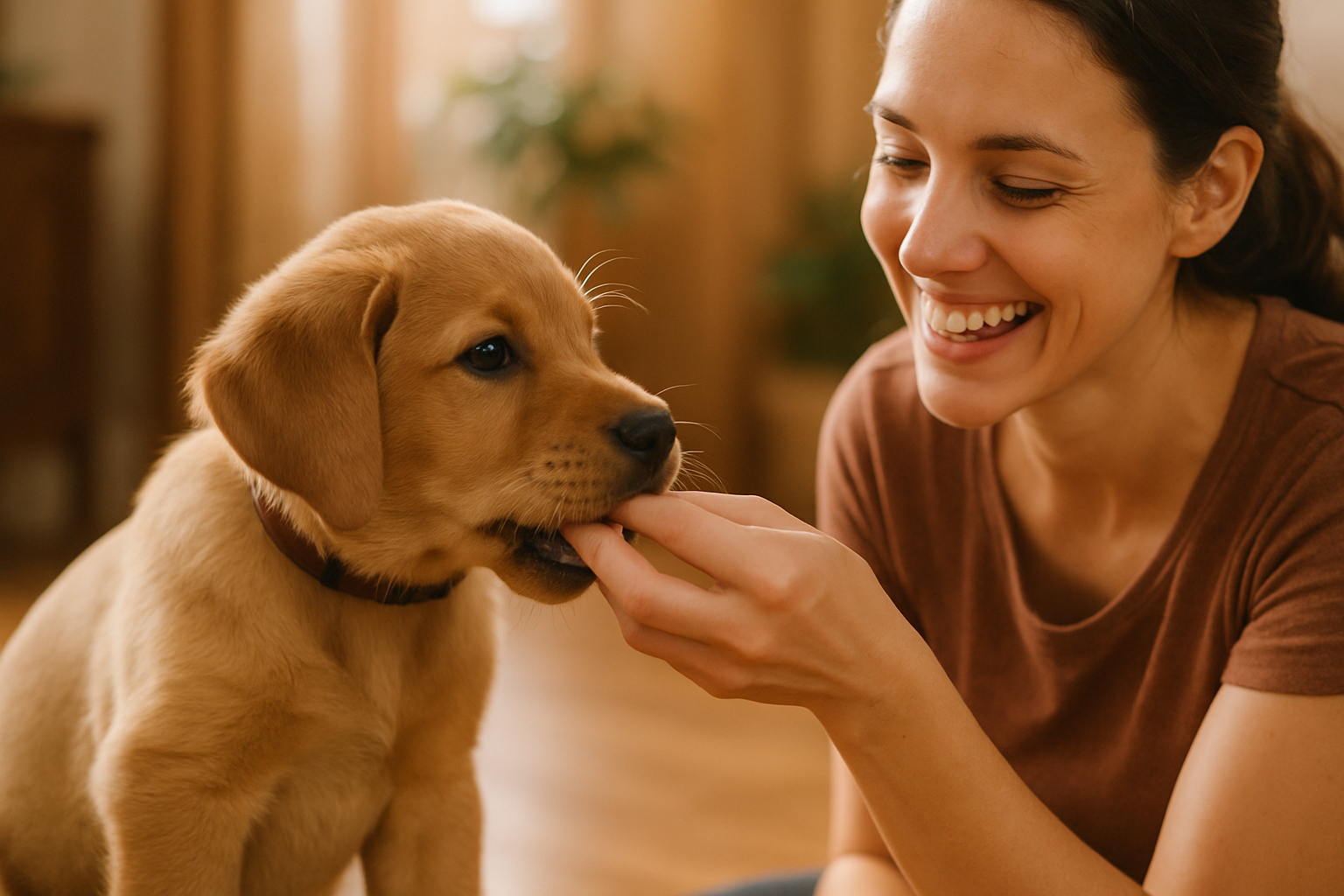
Puppy Bite Inhibition Training: Teach Gentle Mouthing Without Punishment
If you've ever been on the receiving end of a puppy's enthusiastic play bite, you know how painful those tiny razor-sharp teeth can be. But here's what many new puppy owners don't realize: that mouthing behavior isn't a sign of aggression or a personality flaw. It's completely normal development. The key is teaching your puppy to use their mouth gently—a skill called bite inhibition.
Bite inhibition is the ability to control the force of a bite. A puppy with good bite inhibition can grab your wrist during play without leaving a mark, or gently mouth your hand without causing pain. Without it, even accidental contact—like stepping on their tail—could result in a serious puncture wound. [1]
The good news? You don't need punishment or fear-based training to develop this skill. In fact, those methods often backfire. Let's explore how to teach bite inhibition the right way.
Why Puppies Bite: Understanding the Root Cause
Before you can address mouthing behavior, it helps to understand why puppies do it in the first place.
Puppies explore their world primarily through their mouths. They use mouthing to play, test boundaries, soothe teething pain, and communicate with littermates. [3] This isn't a behavior problem—it's normal puppy development. The challenge is channeling this natural instinct into appropriate outlets.
Here's a critical insight: puppies bite because it works. If biting gets a reaction—any reaction—your puppy learns to repeat it. [3] This is why yelling at your puppy or jerking your hand away often makes the problem worse, not better. Your puppy doesn't understand the emotion behind your reaction. They only perceive excitement and engagement, which reinforces the behavior.
Additionally, an overstimulated, tired, or teething puppy is far more likely to bite. Understanding these triggers helps you prevent biting episodes before they happen.
The Critical Window: When Bite Inhibition Develops
Bite inhibition is most effectively learned between 3 and 5 months of age. [5] This is why the early weeks with your puppy are so important.
In a natural pack setting, puppies learn bite inhibition from their mother and littermates. When a puppy bites too hard during play, the other dog yelps loudly and stops playing. The biting puppy quickly learns: "If I bite too hard, the fun stops." [2] This creates a powerful cause-and-effect learning experience.
This is one reason why waiting until your puppy is at least 7-8 weeks old before bringing them home is so valuable. It gives them more time to learn these lessons from their littermates. [1] If you're adopting an older puppy or dog who missed these early lessons, don't worry—bite inhibition can still be taught, but it requires more consistency and patience.
The older your puppy gets without learning bite inhibition, the more challenging it becomes. By 6 months, if mouthing hasn't improved, consulting a certified trainer or behavior specialist is recommended. [4]
Genetics and Bite Inhibition: Does Breeding Matter?
Bite inhibition has both genetic and environmental components. [1] Some puppies are naturally predisposed to mouth softly because their parents did. Others need more environmental guidance.
If you're purchasing from a breeder, ask about the parents' bite inhibition and temperament. Specifically ask: Has either parent ever bitten? If so, how severe was the bite? How would the breeder characterize each dog's natural bite inhibition? [1] A reputable breeder should be able to discuss this openly.
If you're adopting from a shelter or rescue, observe how the puppy interacts with you during the selection process. Some puppies will mouth your hands very gently, while others bite hard enough to cause pain. Those who consistently mouth gently already have healthy innate bite inhibition or learned well from their littermates. Those causing pain will need more direct teaching from you. [1]
Step-by-Step Training: Teaching Bite Inhibition Without Punishment
The most effective approach to teaching bite inhibition avoids punishment entirely. Instead, you're teaching your puppy that gentle behavior earns rewards, while biting ends the fun.
Step 1: The Gentle Hand-Feeding Exercise
Start here. This foundational exercise teaches your puppy to take food delicately from your hand. [5]
- Hold a treat in the base of your open palm rather than between your fingers. This setup makes success easier for your puppy.
- Offer the treat to your puppy. If you feel any teeth contact, immediately close your hand and withdraw it.
- Wait a few seconds, then try again. Only release the treat when your puppy takes it gently.
- Praise and reward the moment they're gentle. "Good gentle!" paired with the treat reinforces the behavior.
- Practice this 5-10 times per day for 1-2 weeks, depending on your puppy's age and progress.
This teaches a fundamental lesson: gentle behavior = good things happen. Teeth contact = nothing happens (the treat disappears). [5]
Step 2: Redirect Biting During Play
When your puppy bites your hands or clothing during play, redirect them immediately to an appropriate toy.
- Keep a chew toy within arm's reach during all play sessions.
- The moment your puppy bites you, stop moving. Don't jerk your hand away or yell. Stillness removes excitement.
- Gently offer the toy instead. "Here's what you can bite."
- Redirect to a sit command if your puppy knows it. This gives them an alternative behavior and a chance to earn a reward.
- Resume play only when they're engaging with the toy, not your skin.
This teaches the critical distinction: hands are not toys. Chew toys are. [3]
Step 3: Make Biting End the Fun
This is the most powerful lesson. When your puppy learns that biting makes playtime disappear, they'll choose gentleness instead.
- If your puppy nips during play, immediately stand up and turn away. No words, no drama. Just remove your attention.
- Keep your hands tucked into your armpits. This is a calming signal that also removes the "toy" (your hands) from the game. [4]
- Wait 3-5 seconds of calm behavior before resuming play. [3]
- If they nip again, repeat the process. Consistency is everything. Every single bite = game over.
Within a few repetitions, your puppy will understand: "If I want to keep playing with my human, I need to use my mouth gently."
Step 4: Teach Impulse Control Commands
Commands like "Sit," "Leave It," "Drop It," and "Place" give your puppy alternative behaviors and help them regulate their own excitement. [3]
- Practice these commands daily in low-distraction settings.
- Use them during play to interrupt escalating behavior. "Sit" can redirect a puppy who's getting too wound up.
- Reward heavily when they comply. These commands become an escape route from overstimulation.
Managing Triggers: Prevention Is Easier Than Correction
Rather than only responding to biting after it happens, proactively manage the situations that trigger it.
Address Overstimulation
An overstimulated puppy is a biting puppy. [3] Signs include rapid escalation during play, inability to focus, and increasingly hard mouthing.
- Keep play sessions short. 5-10 minutes for young puppies, gradually increasing with age.
- Use crate naps strategically. A tired puppy is a chaotic puppy. Enforce nap time if your puppy is getting wild.
- Provide mental enrichment instead of just physical play. Puzzle toys, sniff games, and training sessions tire puppies effectively without overstimulation.
- Watch for the warning signs and end the session before your puppy reaches that frenzied state.
Manage Teething Discomfort
Teething puppies feel physical discomfort that drives mouthing behavior. [3]
- Offer appropriate chew toys. Rubber toys, rope toys, and puzzle toys give them acceptable outlets.
- Freeze wet washcloths or specialized teething toys. The cold numbs sore gums.
- Rotate toys to maintain novelty. Puppies are more interested in toys that feel new.
- Never leave your puppy unsupervised with toys that could be swallowed.
Ensure Basic Needs Are Met
Sometimes a biting puppy is simply a hungry, thirsty, or potty-needy puppy. [4]
- Maintain a consistent feeding schedule.
- Provide fresh water at all times.
- Take frequent potty breaks, especially after meals, play, and naps.
- Ensure your puppy is getting enough sleep. Puppies need 15-20 hours of sleep per day.
What NOT to Do: Avoiding Counterproductive Methods
Several popular approaches to puppy biting actually make the problem worse:
- Don't yell or scold. Yelling is a form of attention and excitement that reinforces biting. Your puppy doesn't understand your emotion—they only perceive engagement. [4]
- Don't use the "ow" sound indiscriminately. For some puppies, a high-pitched "ow!" mimics littermate yelps and teaches them to stop. For others, it escalates their excitement and increases biting. [4] Watch your puppy's response carefully.
- Don't jerk your hand away. This creates a game-like chase response that encourages more biting.
- Don't use physical punishment or dominance-based techniques. These create fear and stress, which actually increase biting behavior. [3]
- Don't assume it's an accident. Dogs have remarkable mouth control. If teeth contacted your skin, your puppy either meant to or hasn't learned not to. [5] Either way, it's a teaching opportunity, not something to excuse.
Special Situations: Pouncing and Clothes Grabbing
Some puppies have specific mouthing patterns worth addressing individually.
Pouncing on Legs and Feet
If your puppy pounces on your legs or feet as you walk, hold a high-value treat next to your leg. This teaches them to walk alongside you calmly rather than attack your feet. [4] Reward heavily when they maintain position.
Grabbing Clothing
When your puppy grabs your sleeves or pants, stop moving immediately and offer a toy instead. If they continue, end the interaction by walking away or entering a different room. Make it clear: grabbing clothes = playtime ends.
Building a Timeline: What to Expect
Your goal should be to work through these steps by the time your puppy is 4.5 months old. [2] Here's a realistic timeline:
- Weeks 1-2: Start hand-feeding exercises. Your puppy may not understand yet, but you're planting the seed.
- Weeks 3-4: Your puppy begins to show understanding. They may take treats more gently. Introduce redirection during play.
- Weeks 5-8: The "game over" response becomes more effective. Your puppy starts choosing gentleness to keep play going.
- Weeks 9-12: Bite inhibition becomes noticeably better. Hard bites are less frequent. Occasional nips still happen, but your puppy responds quickly to redirection.
- 4-6 months: Significant improvement. Mouthing may persist during play, but it's controlled. If no improvement by 6 months, consult a certified trainer. [4]
Keep in mind that consistency matters far more than speed. A puppy who gets the same response to biting from all family members will learn faster than one who experiences different rules from different people.
Socialization and Peer Learning
Enrolling your puppy in a well-run puppy class provides invaluable learning opportunities. [4] Playing with other puppies and dogs teaches them how their bites feel to others in real time. A puppy who bites too hard during class play will immediately get feedback from other dogs, reinforcing the lessons you're teaching at home.
When selecting a class, look for one that emphasizes positive reinforcement and appropriate play management rather than dominance-based techniques.
When to Seek Professional Help
If your puppy shows signs of aggression rather than play biting—such as stiff body posture, intense focus, growling, or bites that break skin—consult a certified professional immediately. [4] A qualified veterinary behaviorist or certified trainer can assess whether this is a behavioral concern requiring intervention.
Additionally, if you haven't seen meaningful improvement by 6 months despite consistent training, professional guidance is worthwhile. Some puppies need more intensive support, and that's okay.
Key Takeaways: Your Bite Inhibition Training Plan
- Understand that puppy mouthing is normal. Your job is to teach control, not eliminate the behavior entirely.
- Start early. The 3-5 month window is critical. Lessons learned now prevent serious problems later.
- Use redirection and positive reinforcement. Reward gentle behavior. Make biting end the fun.
- Stay consistent. Every family member must respond the same way to biting.
- Manage triggers proactively. Address overstimulation, teething discomfort, and unmet basic needs.
- Avoid punishment-based methods. They create fear, stress, and often make biting worse.
- Be patient with progress. Some puppies learn faster than others. Celebrate small improvements.
- Seek help if needed. A certified trainer can provide personalized guidance for your puppy's specific needs.
Teaching bite inhibition is one of the most important gifts you can give your puppy. A dog who understands how to control their mouth is safer, more trustworthy, and more confident in all situations. The effort you invest now pays dividends for the next 10-15 years of your relationship.
Sources & References
- https://www.whole-dog-journal.com/behavior/establishing-a-good-bite-inhibition/
- https://www.seattlehumane.org/resource-library/mouthy-pups-its-normal-lets-teach-them-bite-inhibition/
- https://www.alansk9academy.com/blogs/how-to-stop-puppy-biting-without-punishment
- https://www.akc.org/expert-advice/training/stop-puppy-biting/
- https://www.mccanndogs.com/blogs/articles/creating-good-bite-inhibition