Understanding Arthritis in Dogs and the Role of Movement
Watching your beloved dog struggle with arthritis can be heartbreaking. The stiffness after rest, the reluctance to climb stairs, the visible discomfort when standing up—these are telltale signs that your pup's joints are suffering. Canine arthritis, also known as osteoarthritis or degenerative joint disease, is a progressive condition where the protective cartilage within joints gradually breaks down, leading to inflammation, pain, and reduced mobility [1].
While arthritis cannot be cured, the good news is that you have powerful tools at your disposal to manage it effectively. One of the most valuable interventions is therapeutic exercise, and specifically, passive range of motion (PROM) exercises. These gentle movements can help maintain your dog's joint flexibility, prevent muscle deterioration, and significantly improve their quality of life.
Many dog owners are surprised to learn that movement—the right kind of movement—is actually one of the best treatments for arthritis. This is where passive range of motion exercises come into play.
What Are Passive Range of Motion Exercises?
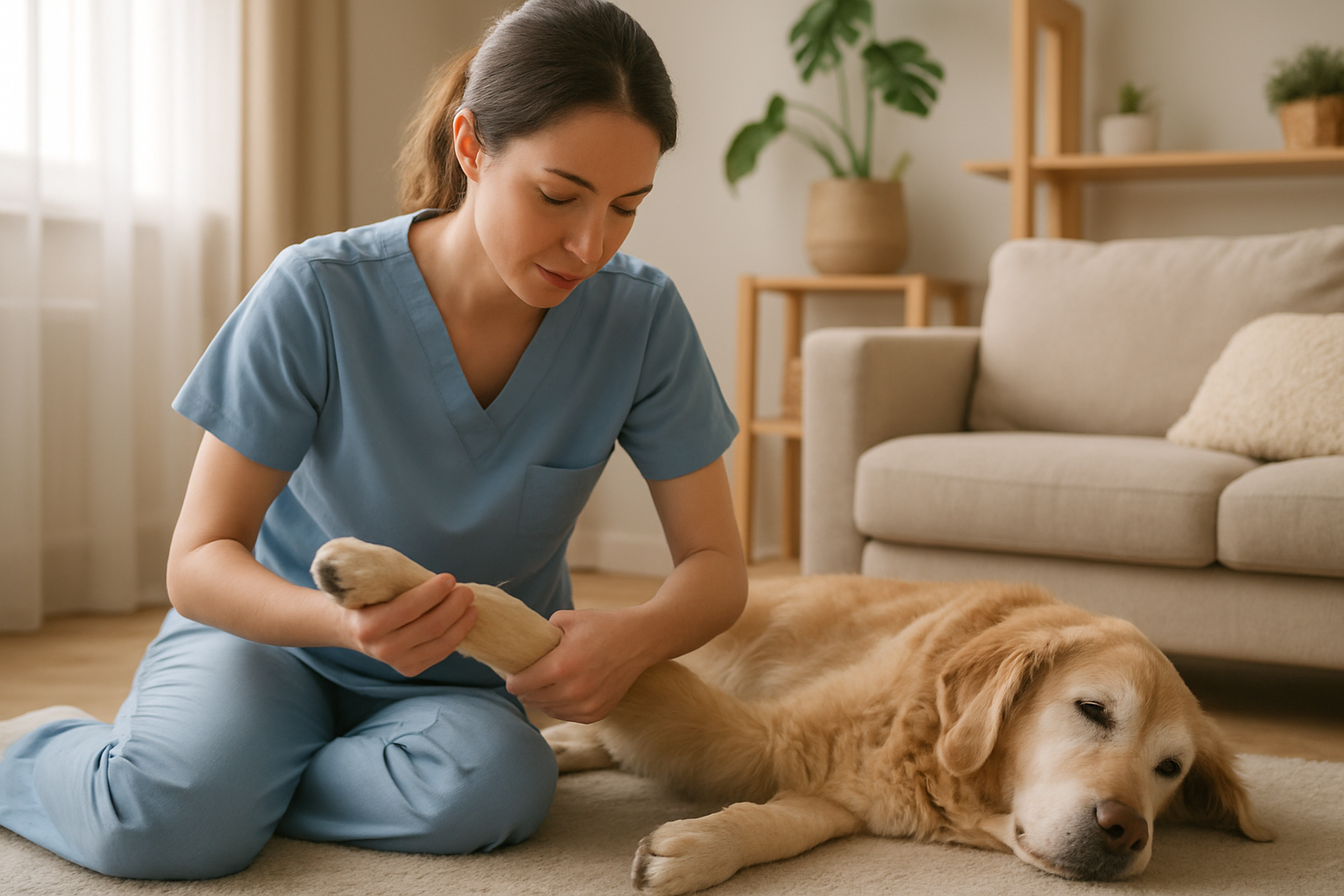
Passive range of motion exercises are therapeutic movements where you, the caregiver, gently move your dog's joints through their full available range without requiring your dog to actively contract their muscles [2]. Unlike active exercises where your dog does the work, PROM exercises are performed entirely by you while your dog remains relaxed.
The beauty of PROM is that it allows your arthritic dog to maintain joint mobility and flexibility without the pain or strain that active movement might cause. These exercises are particularly valuable for dogs who are unable to move their joints independently, experiencing pain during movement, or recovering from injury or surgery [2].
Think of PROM exercises as a gentle massage for your dog's joints—you're maintaining the joint's ability to move through its complete range while your dog simply relaxes and enjoys the therapeutic benefits.
Why PROM Exercises Matter for Arthritic Dogs
The benefits of regular passive range of motion exercises extend far beyond simple comfort. Here's what these exercises accomplish:
- Prevents muscle contracture: When joints aren't moved regularly, surrounding muscles can become permanently shortened and tight, making movement even more painful [3].
- Maintains joint flexibility: Regular movement helps preserve the joint's ability to move through its complete range, slowing the progression of stiffness [3].
- Reduces pain: Gentle movement actually helps manage pain by promoting circulation and preventing the stiffness that develops from immobility.
- Improves overall function: By maintaining ROM, your dog can continue to perform daily activities like walking, standing, and playing more comfortably.
- Supports other treatments: PROM exercises work synergistically with medications, supplements, and other therapies your veterinarian may recommend [1].
Before You Begin: Essential Preparation
Before performing any passive range of motion exercises on your arthritic dog, take these important preparatory steps:
- Get veterinary clearance: Always consult with your veterinarian before starting any new exercise program. They may want to examine your dog and provide specific guidance based on which joints are affected.
- Choose the right environment: Find a quiet, comfortable space where your dog feels safe and relaxed. Many dogs are more comfortable lying down during PROM exercises, though they can also be performed with your dog standing [3].
- Ensure proper positioning: If your dog is standing, make sure all four feet are planted firmly and toes aren't turned inward. If your dog is lying down, have them lie on their side for easier access to the limbs [3].
- Warm up the area: Consider applying a warm compress to the affected joints for 5-10 minutes before exercising. Warmth increases blood flow and makes tissues more pliable.
- Set realistic timing: Plan for 5-10 minutes per session, 3-4 times weekly. You can adjust frequency based on your dog's response.
Step-by-Step Guide to Performing PROM Exercises
Front Leg Extension
This exercise targets the shoulder and elbow joints, two areas commonly affected by arthritis.
- Support your dog's leg by cradling it gently under the upper leg and paw [3].
- Slowly extend the leg forward, moving the elbow and shoulder through their full range of motion.
- Move smoothly and steadily, never jerking or forcing the movement.
- Perform 10-15 gentle repetitions, then repeat on the other front leg.
- If your dog shows resistance, don't force the movement—extend only to where they're comfortable [3].
Hip and Rear Leg Flexion
The hip joints often bear significant weight and stress, making them prime targets for arthritis. This exercise helps maintain hip mobility.
- With your dog lying on their side, gently cradle the rear leg you're working with.
- Slowly bring the knee up toward the chest, bending the hip and knee joints.
- Hold gently at the point of maximum comfortable flexion for 2-3 seconds.
- Slowly return the leg to the extended position.
- Perform 10-15 repetitions on each rear leg.
Hip and Rear Leg Extension
This complements the flexion exercise by moving the hip through its full range in the opposite direction.
- Starting with your dog on their side, support the rear leg with both hands.
- Gently extend the leg backward, straightening the hip and knee.
- Move slowly and smoothly through the full range of motion.
- Return to the starting position and repeat 10-15 times per leg.
Elbow Extension and Flexion
The elbows endure constant stress and are susceptible to arthritis, especially in larger breeds.
- Support your dog's foreleg with one hand under the upper leg and one hand holding the paw.
- Gently bend the elbow, bringing the paw up toward the shoulder.
- Slowly straighten the elbow, extending the leg fully.
- Perform 10-15 smooth, controlled repetitions.
- Repeat on the opposite front leg.
Toe and Paw Flexor Stretches
Don't overlook the smaller joints in the paws—they also benefit from gentle movement.
- Hold your dog's paw gently in your hand.
- Using your other hand, gently extend each toe backward and forward [3].
- Move slowly through the full range of motion for each toe.
- Perform 5-10 gentle repetitions per toe on each paw.
Critical Safety Guidelines and Best Practices
The success of PROM exercises depends heavily on proper technique and prioritizing your dog's comfort and safety.
- Comfort is paramount: Your dog must be relaxed and comfortable throughout the exercise. If your dog shows signs of pain or distress, stop immediately and consult your veterinarian [2].
- Move slowly and steadily: Jerky or rapid movements can cause pain and muscle guarding. Smooth, controlled movements are essential [2].
- Never force movement: PROM should never be painful. If your dog resists, only move the joint to where they're comfortable [3].
- Support the limb properly: Always cradle and hold your dog's limb securely to ensure smooth execution and prevent accidental twisting [2].
- Watch for signs of pain: If your dog yelps, tries to pull away, trembles, or shows other signs of discomfort, you've gone too far. Back off slightly.
- Be consistent: Regular, gentle exercise is more beneficial than occasional intense sessions. Aim for 3-4 sessions per week.
- Monitor overall response: Keep track of your dog's mobility, activity level, and pain indicators. Improvements may take several weeks to become noticeable.
Complementary Strategies for Managing Canine Arthritis
While PROM exercises are valuable, they work best as part of a comprehensive arthritis management plan. Consider these complementary approaches:
- Weight management: Extra pounds put additional stress on arthritic joints. Maintaining a healthy weight is one of the most impactful interventions you can provide [1].
- Medications and supplements: Work with your veterinarian to explore NSAIDs, joint supplements like glucosamine and chondroitin, and omega-3 fatty acids that support joint health [1].
- Environmental modifications: Provide orthopedic beds, use ramps or stairs to reduce jumping, and ensure your dog has easy access to food, water, and bathroom areas [1].
- Low-impact activities: Swimming and underwater treadmill therapy are excellent complements to PROM, providing active movement without joint stress [2].
- Pain management: Work with your vet to keep your dog comfortable, as pain management is crucial for quality of life [1].
When to Seek Professional Help
While you can perform PROM exercises at home, professional guidance is invaluable. Consider working with a certified canine rehabilitation therapist who can:
- Assess your dog's specific condition and identify which joints need the most attention
- Demonstrate proper technique and positioning
- Develop a customized exercise plan tailored to your dog's needs
- Monitor progress and adjust the program as needed
- Teach you how to recognize when your dog is in pain or overexerting
Many veterinary clinics now offer rehabilitation services, and your veterinarian can provide referrals to qualified professionals in your area.
Creating a Sustainable Home Exercise Routine
The key to success with PROM exercises is consistency and making them part of your daily routine. Here's how to establish sustainable habits:
- Schedule specific times: Choose times when your dog is naturally calm, such as after meals or in the evening.
- Keep sessions short: 5-10 minutes is ideal. Short, regular sessions are more beneficial than occasional long ones.
- Make it enjoyable: Some dogs respond well to soft music or a calm environment. Others prefer having a favorite toy nearby.
- Track progress: Keep notes on your dog's mobility, pain levels, and how they respond to exercises. This helps you and your veterinarian assess effectiveness.
- Be patient: Improvements may take 4-6 weeks to become noticeable. Stay committed to the routine.
- Adjust as needed: As your dog's condition improves or changes, modify the exercises accordingly with your vet's guidance.
Key Takeaways for Success
Passive range of motion exercises represent a powerful, non-invasive tool for managing your dog's arthritis and maintaining their quality of life. By performing these gentle movements regularly and correctly, you're actively working to preserve joint flexibility, prevent muscle deterioration, and keep your arthritic companion as comfortable and mobile as possible.
Remember that PROM exercises work best as part of a comprehensive approach that includes veterinary care, appropriate medications or supplements, weight management, and environmental modifications. Start slowly, prioritize your dog's comfort above all else, and don't hesitate to seek professional guidance from a certified canine rehabilitation therapist.
Your dedication to these exercises demonstrates your commitment to your dog's wellbeing. With consistency, patience, and proper technique, you can help your arthritic dog enjoy a more active, comfortable life for years to come.