Dog Training Schedule: A Practical Week-by-Week Guide
It's 11:45 PM on a Tuesday. Your puppy is having a full-speed "zoomie" session across the living room while you're standing in the kitchen with an enzyme cleaner in one hand, wondering if you're doing any of this right. If this sounds familiar, you're not alone — and you're definitely not failing.
The truth is, most puppy training guides fall into two frustrating extremes: they either give you a microscopic breakdown of the first two weeks and then vanish, or they provide a vague list of commands with no timeline attached. Neither helps when your 7-month-old suddenly acts like they've never heard the word "stay" in their life. [3]
What you actually need is a roadmap that matches your puppy's neurological development. Training isn't about dominance or forcing compliance — it's about timing your lessons right, building trust, and setting your puppy up to succeed. [2]
Why Timing Matters: The Biology Behind the Schedule
Here's something most owners don't realize: you can't teach a 10-week-old puppy the same way you'd train a 6-month-old. Their brains are literally different.
Between 3 and 16 weeks of age, your puppy's brain is in a uniquely "plastic" state. During this socialization window, their amygdala (the fear center of the brain) is less reactive, meaning new sounds, surfaces, people, and animals register as normal rather than threatening. This window is so critical that the risk of behavioral problems from missing it far outweighs the risk of infection when you take proper precautions. [3]
Once this window closes around 16 weeks, your dog enters a more "conservative" phase. Novelty shifts from adventure to potential threat. You can still train an older dog, but you're doing reparative work instead of preventative work. [3]
This is why the first 16 weeks aren't just important — they're foundational to your dog's entire life.
The Four Foundations: Build These First
Before you teach a single command, invest time in these four critical foundations. They prevent roughly 90% of the behavioral problems owners report in the first year. [4]
1. House Training
House training isn't complicated, but it requires consistency and vigilance. Here's the system that works:
- Take your puppy outside on leash to the same spot
- Wait quietly for 3-5 minutes
- The moment they eliminate, reward heavily with 3 treats plus enthusiastic praise
- Use a consistent phrase like "go potty" right as they start — they'll eventually associate the phrase with the action, letting you cue elimination on command [2]
The key insight: accidents inside are handler errors, not puppy errors. If your puppy is having frequent accidents, you're either not supervising closely enough or the intervals between potty breaks are too long. [4]
2. Crate Training
The crate isn't a jail — it's your puppy's bedroom and safe den. Done right, they'll actually love it. Here's how to build positive associations:
- Feed every meal in the crate with the door open for the first 3 days
- Then close the door for 30 seconds while they eat
- Gradually extend the duration: 1 minute, 2 minutes, working up to 30 minutes of quiet crate time
- Only leave the house once your puppy can handle 30 minutes calmly [4]
A properly crate-trained puppy typically sleeps through the night by 12 weeks. [4]
3. Socialization
Socialization is not just meeting other dogs. It's positive exposure to the full world your dog will live in for 15 years. Your goal: expose your puppy to 100 different people before 16 weeks. [4]
Variety matters. Aim for diverse ages, appearances, and abilities. Keep all interactions positive by having strangers offer treats and gentle handling — never overwhelming your puppy. [2]
Until your puppy completes their parvo and distemper vaccination series (typically around 16 weeks), avoid high-risk environments like dog parks and pet store floors. Instead, carry them in your arms, use a stroller, invite friends over, and take supervised car rides. [2]
4. Bite Inhibition
Puppies explore the world with their mouths. This is normal, but it needs direction. Between 8 and 18 weeks, puppies learn to control jaw pressure. Here's how to teach it:
- When your puppy's teeth touch skin during play, say "ouch" and stand up
- End play for 10 seconds
- Return calmly and resume play
- This teaches: soft mouth = play continues [4]
Never punish mouthing physically — that teaches your puppy that hands are unsafe. Instead, always have a toy ready to redirect. They can't bite you if they're biting a toy. [2]
Weeks 8-10: The Critical Survival Phase
Your puppy has just experienced the biggest transition of their life. They've lost their mother, littermates, and the only environment they've ever known. They're simultaneously at their most impressionable and most vulnerable. [3]
Your job right now isn't to build a "show dog." It's to be a provider of safety and routine. Every interaction teaches your puppy that the world is safe and you're their advocate. [3]
Focus on these five pillars:
- Establishing a consistent feeding and potty schedule
- Building the crate as a safe space
- Introducing basic socialization in safe environments
- Teaching bite inhibition through play
- Creating predictable routines and clear boundaries
By the end of week 10, your puppy should:
- Look at you when called
- Walk into their crate for a treat
- Show a decreasing number of potty accidents [3]
Weeks 11-16: The Golden Learning Window
If you could only train your dog for one month of their life, this should be it. [3] The initial fear period has subsided, and your puppy's natural curiosity is at peak levels. They're bold, fast, and ready to learn.
This is when you introduce basic commands. But here's the crucial part: teach one command at a time. Each command takes 2-5 short sessions to introduce, then weeks of practice across different environments to generalize. [4]
The Three Variables of Every Command
Every command is built on three variables: Distance, Duration, and Distraction. The Golden Rule is this: never increase more than one variable at a time. [3]
- Distance: How far away your puppy is from you
- Duration: How long they hold the behavior
- Distraction: What's happening in the environment
If you move from the living room to the backyard (increasing Distraction), don't expect them to stay for 30 seconds (Duration). Lower the criteria, get a win, and end the session. Your puppy needs to experience success. [3]
Commands to Teach (In Order)
Master one before moving to the next. [2]
Sit
- Hold a treat to their nose, move your hand up and back
- Their bottom naturally lowers
- Say "sit" the moment it happens, then treat
- Use before meals, before going outside, before greeting people — it teaches impulse control
Come
- Start on leash
- Say "come" in a happy voice and gently reel them in
- Treat and praise enthusiastically
- Never call them to punish — this is the life-saving command
- Practice daily with high-value rewards only
Stay
- Have them sit first
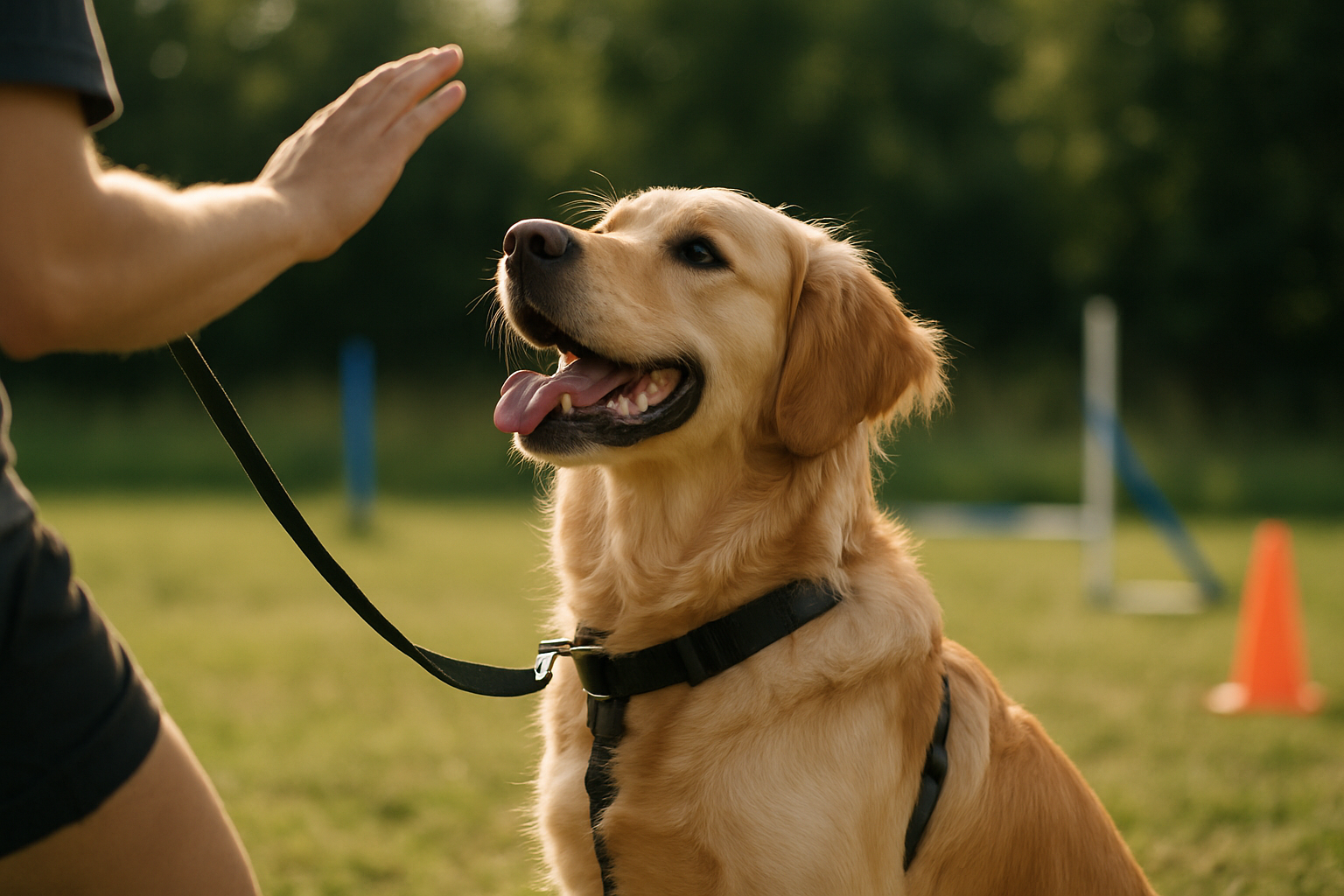
- Say "stay" and hold your hand up like a stop sign
- Take one step back, return, and treat
- Gradually increase distance and duration
- Use for safety at doors and when guests arrive
Down
- From sit, lure a treat down to the floor and forward
- Their body follows into the down position
- Use as a calming position for extended periods
Leave It
- Hold a treat in your closed fist and say "leave it"
- When they stop trying and look at you, treat from your other hand
- This prevents them from eating dangerous things and ignoring distractions
Drop It
- When they have a toy, offer a high-value treat
- Say "drop it" as they release
- Give the treat and return the toy
- Use for retrieving games and preventing resource guarding
Training Sessions: Keep Them Short and Winning
Short, high-energy sessions of 3-5 minutes are vastly superior to hour-long drills. [3] Your goal is to keep the puppy "winning." If they fail three times in a row, the task is too hard. Lower the criteria, get a win, and end the session on a positive note. [3]
Weeks 17+: The Teenage Phase (And Beyond)
You've survived the infant stage. You might even be getting full nights of sleep. But don't get complacent — your puppy is entering adolescence.
Here's what happens: your puppy looks grown but is still mentally a baby. They'll test boundaries, "forget" commands they seemed to know perfectly, and act like they never learned anything. This is completely normal. [2]
Training continues during this phase. Your puppy isn't being defiant — their teenage brain is rewiring itself. Stay consistent, keep reinforcing good behavior, and remember that every puppy is different. Adjust the pace to your dog's personality and needs. [2]
Socialization Beyond 16 Weeks
While the critical socialization window closes around 16 weeks, socialization doesn't stop there. Continue exposing your dog to new experiences, people, and environments throughout their first year. The difference is that novelty is no longer an automatic adventure — it requires more intentional, positive pairing with rewards. [3]
Practical Tips for Success
- Use high-value rewards: Find what motivates your individual puppy — small pieces of chicken, cheese, or special treats work better than kibble for learning new commands
- Train before meals: A hungry puppy is a motivated puppy
- Keep a toy handy: Redirect mouthing and chewing to appropriate toys immediately
- Be consistent with language: Everyone in your household should use the same words for commands
- Supervise constantly: The more you supervise, the fewer accidents happen and the faster house training progresses
- Practice in multiple environments: A command learned in your living room doesn't automatically work in the park — generalization takes time and repetition
- Know when to ask for help: If you're struggling, consult a certified professional dog trainer rather than letting bad habits solidify [2]
The Bottom Line
Training your puppy isn't about forcing compliance or proving dominance. It's about clear communication, consistency, and building trust. Your puppy wants to please you — you just need to teach them how. [2]
The schedule outlined here isn't rigid. Every puppy develops at their own pace. Some will master commands faster, others need more time. The key is understanding why each phase matters and what your puppy's brain is capable of at each stage.
The habits you form now — good and bad — will last a lifetime. Invest in these early weeks, stick to the foundations, and you'll have a reliably trained, confident adult dog who's a joy to live with.