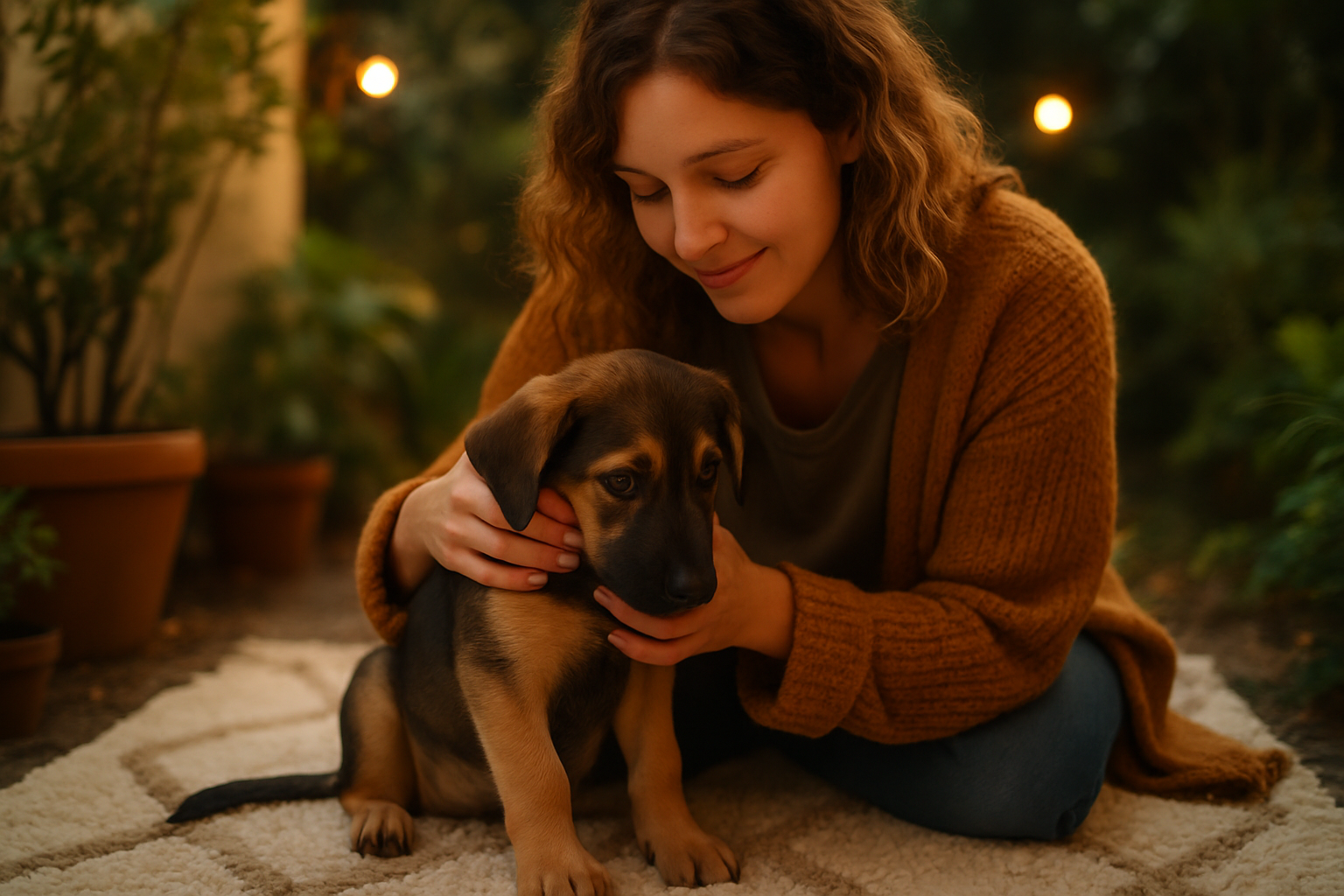
Understanding Your Puppy's Fear and Shyness
If you're the proud owner of a shy or fearful puppy, you've likely experienced that gut-wrenching moment when your little one trembles at the sight of a stranger, freezes during a car ride, or retreats to their safe space when the doorbell rings. You're not alone. Approximately one in five dogs experience some form of anxiety, and puppies are particularly vulnerable during their critical developmental stages [1].
Before we dive into solutions, it's important to recognize that fear and shyness, while often used interchangeably, represent different emotional states in puppies. Understanding this distinction will shape how you approach your training and support.
Shyness vs. Fear: What's the Difference?
A shy puppy tends to be naturally introverted and cautious. These puppies may hesitate to approach new people or environments, preferring to observe from a distance before engaging. Shyness doesn't necessarily indicate panic or distress—it's more about taking time to warm up to unfamiliar situations. Shy puppies often just need patience and gradual exposure to feel comfortable.
Fearful puppies, by contrast, experience genuine anxiety that manifests as panic responses. These puppies might tremble uncontrollably, whine excessively, attempt to escape, or display aggressive behaviors like growling or snapping. Fear-based responses tend to escalate quickly, especially in high-stress situations, and require more intensive intervention [1].
Both personality types need your compassion and support, but the training methods you employ will differ based on your puppy's specific emotional response.
Why Puppies Develop Fear and Shyness
Understanding the root causes of your puppy's anxiety helps you address the problem more effectively. There are typically three main factors at play:
- Inadequate Socialization: Puppies have a critical developmental window—typically between 3 and 14 weeks of age—when exposure to varied people, environments, sounds, and experiences is crucial. Puppies who miss this window often grow up fearful of anything unfamiliar, turning routine situations into sources of anxiety [1].
- Traumatic Experiences: Puppies who've endured abuse, neglect, or frightening incidents carry emotional scars that can manifest as fear for years. These traumatic memories can be triggered by situations that remind your puppy of their past, even if the current situation is perfectly safe.
- Genetics and Temperament: Just like humans, some puppies are born with naturally anxious dispositions. Certain breeds or bloodlines may be more prone to nervousness, and this innate temperament isn't something you can eliminate—but you can absolutely manage and improve it [1].
Recognizing Signs of Anxiety in Your Puppy
The first step in helping your puppy is learning to spot anxiety signals. Some signs are obvious, while others are subtle but equally important:
- Frequent cowering or crouching
- Excessive panting or drooling
- Trembling or shaking
- Hiding or attempting to escape
- Freezing in place or hyper-alertness
- Avoiding eye contact
- Stiff body posture
- Whining or excessive vocalization
- Loss of appetite
The more you understand your puppy's unique anxiety signals, the better equipped you'll be to support them through challenging moments.
Step 1: Respect Your Puppy's Fear
This might be the most critical step, and it's often overlooked by well-meaning owners. When your puppy is scared of something that seems trivial to you—a person wearing a hat, the vacuum cleaner, a rustling plastic bag—resist the urge to dismiss or minimize their fear. Pushing your puppy through these moments, even with gentle encouragement, sends a damaging message: "Your feelings don't matter, and you can't trust me to keep you safe" [3].
When you force your puppy to confront their fears before they're ready, you're actually reinforcing the anxiety rather than resolving it. Your puppy learns that the scary thing happens AND their trusted human puts them through that heart-pounding experience. This erodes trust and deepens fear.
Instead, validate your puppy's emotions. Acknowledge their fear with calm acceptance. You might say, "I see you're worried about that. It's okay, we'll take our time." This approach respects your puppy's emotional experience while positioning you as a safe, reliable guide rather than a force pushing them beyond their comfort zone.
Step 2: Identify and Avoid Specific Triggers
Precision matters when working with anxious puppies. Rather than assuming your puppy is generally fearful, identify the specific situations, objects, or stimuli that trigger anxiety [3].
Ask yourself these questions:
- Is my puppy afraid of specific people (children, men, people in uniforms)?
- Are certain sounds triggering panic (thunderstorms, fireworks, vacuum cleaners)?
- Does my puppy fear other dogs or animals?
- Are there environmental triggers (car rides, vet visits, crowded spaces)?
- Does my puppy react to specific objects (hats, umbrellas, bicycles)?
Once you've identified these triggers, your job is to prevent unnecessary exposure during the initial confidence-building phase. This might mean asking guests to remove hats before entering, avoiding busy parks during peak hours, or temporarily adjusting your routine to protect your puppy from overwhelming situations.
This avoidance phase isn't permanent—it's a foundation-building period that sets your puppy up for success when you gradually reintroduce triggers in a controlled, positive way.
Step 3: Build Predictability and Routine
Many anxious puppies live in a state of perpetual low-level worry, which makes them more reactive when they encounter their specific triggers. You can significantly reduce this chronic anxiety by creating predictability in your puppy's daily life [3].
Implement these strategies:
- Establish consistent schedules: Feed your puppy at the same times each day. Take potty breaks on a predictable schedule. Establish consistent play, training, and rest periods.
- Maintain environmental consistency: Keep your home organized and calm. Avoid sudden changes to furniture arrangement or household routines.
- Use narration: Talk to your puppy about what's happening in a calm, matter-of-fact tone. "Oh yes, I see the mailman. That's just the mailman doing his job. Nothing to worry about." This verbal guidance helps your puppy categorize experiences as non-threatening [3].
- Create safe spaces: Designate a quiet area where your puppy can retreat when overwhelmed. This isn't punishment—it's a sanctuary.
When your puppy knows what to expect, their nervous system stays calmer, making them more receptive to confidence-building activities.
Step 4: Establish Deep Trust With Your Puppy
Your puppy needs to feel utterly secure with you before they can truly overcome their fears. Trust isn't built through commands or obedience—it's built through consistent, respectful interactions [3].
Strengthen your bond by:
- Respecting body language: If your puppy shows signs of discomfort, stop what you're doing. Don't force interactions or cuddles.
- Giving your puppy agency: Allow your puppy to make choices within safe parameters. Let them decide when they're ready to approach something new.
- Following through on promises: If you say something is safe, make sure it actually is. Your credibility depends on it.
- Moving slowly: Rushing creates stress. Take time with transitions and new experiences.
- Avoiding forced interactions: Never hold your puppy still while someone pets them if they're uncomfortable. Never drag them toward something they fear.
When your puppy trusts you completely, they'll look to you for guidance when encountering new situations, rather than defaulting to fear.
Step 5: Use Gentle Training as a Confidence Tool
Short, easy training sessions scattered throughout your day serve multiple purposes: they build your puppy's confidence, strengthen your bond, and give you a way to gauge your puppy's emotional state [3].
Teach simple, low-pressure behaviors like "touch" (nose to your hand), "sit," or "look at me." These aren't about obedience—they're about your puppy learning that their choices lead to positive outcomes. When your puppy realizes they can earn rewards through their own decisions, confidence naturally grows.
Use training sessions as a barometer of your puppy's comfort level. If your puppy is hesitant to engage or performs behaviors halfheartedly, they're likely still anxious about their current environment. This tells you to slow down and provide more support.
Step 6: Implement Desensitization and Counter-Conditioning
Once you've built trust and established routine, you're ready to gradually reintroduce your puppy's triggers in a controlled, positive way. This process is called desensitization and counter-conditioning [1].
Here's how it works:
- Start at a distance: Introduce the trigger at a distance where your puppy can notice it but doesn't show signs of fear. For example, if your puppy fears other dogs, start 50+ feet away from another dog.
- Pair the trigger with positive experiences: Every time your puppy notices the trigger, immediately provide high-value rewards (special treats, praise, play). Your puppy begins to associate the trigger with good things.
- Gradually decrease distance: Over many sessions (this takes weeks or months, not days), slowly move closer to the trigger. Only progress when your puppy remains calm at the current distance.
- Never force engagement: Your puppy chooses when they're ready to interact more closely. Forcing creates setbacks.
This gradual approach rewires your puppy's emotional response to their triggers, transforming fear into neutrality and eventually into positive association.
Setting Realistic Expectations
Building confidence in a fearful puppy is a marathon, not a sprint. Progress can feel slow, and there will be setbacks. This is completely normal and doesn't indicate failure [1].
It's important to manage your expectations realistically. Your goal shouldn't be to eliminate all signs of fear—that's unrealistic for any living being. Instead, aim to help your puppy manage their anxiety and improve their quality of life. Many fearful puppies will always have a cautious nature, and that's okay. With consistent, compassionate support, even significantly anxious puppies can become functional, happy members of your family.
Celebrate small victories. If your puppy takes one step closer to their fear trigger, that's progress. If they eat their meal without trembling, that's success. These incremental improvements compound over time into genuine transformation.
When to Seek Professional Help
If your puppy's anxiety is severe, involves aggression, or doesn't improve with consistent effort over several months, consult a certified professional dog trainer or veterinary behaviorist. Some puppies benefit from short-term medication to reduce anxiety while they're learning new coping strategies. There's no shame in seeking expert support—it often accelerates progress and prevents behavioral patterns from becoming deeply entrenched.
Your Puppy's Transformation Starts Today
Your shy or fearful puppy isn't broken, and they don't need to be "fixed." They need your patience, respect, and consistent support as they learn that the world is safer than their anxiety suggests. By implementing these evidence-based strategies, you're not just addressing behavior—you're fundamentally changing your puppy's relationship with confidence and trust.
Every puppy deserves to experience joy, curiosity, and security. With your guidance, your fearful puppy can absolutely get there. The journey might be longer than you'd hoped, but the destination—a puppy who walks through life with growing confidence—is absolutely worth the effort.