Why Your Puppy Pulls (And It's Not What You Think)
If you've spent the last few weeks feeling like your puppy is training you instead of the other way around, you're not alone. The frustration of being dragged down the street by a 15-pound ball of enthusiasm is real. But here's the thing: your puppy isn't pulling because they're stubborn, trying to establish dominance, or testing your authority. They're pulling because it works. [1]
Every single time your puppy lunges toward that interesting smell, the mailbox, or another dog, and they reach it (even partially), their brain registers success. That behavior—pulling—got them what they wanted. Behavior that produces results gets repeated. It's not personal; it's basic learning science.
Understanding why pulling happens is the first step to stopping it. Three forces are working together to create the pulling behavior you're experiencing:
The Three Forces Behind Puppy Pulling
- Pulling has been reinforced repeatedly. Every successful pull is a training session for the wrong behavior. When you attach your curious puppy to a 6-foot leash and walk them past all the interesting things they want to investigate, you're essentially dangling a treat just out of reach and then rewarding them when they pull harder to reach it. [1]
- The opposition reflex is involuntary. When your puppy feels leash tension, their nervous system triggers an automatic response: they brace and lean into the pressure. This isn't defiance—it's biology. If you pull back, they pull forward harder because their body is wired that way. A constantly tight leash actually creates more pulling, not less. [1]
- Your puppy is faster than you. Even small-breed puppies trot faster than humans walk casually. Adolescent puppies are running on dopamine and pure energy, and their natural pace is quicker than a leisurely stroll. This speed mismatch is one of the most overlooked reasons puppies pull, yet it's one of the easiest to address. [1]
The good news? A well-designed training plan addresses all three of these forces simultaneously.
The Science Behind Loose Leash Training
Modern reward-based training methods aren't just more humane than punishment-based approaches—they're more effective. The American Veterinary Society of Animal Behavior has confirmed that reward-based methods produce results that are at least as good as aversive techniques, without the welfare costs. [1] Your puppy doesn't need to be punished; they need to be taught.
The goal isn't to produce a dog who heels like a competition finalist. The goal is simpler and more practical: teach your puppy that a loose leash equals forward progress. That's the fundamental equation you're flipping. Everything else—perfect positioning, sustained focus, competition-level obedience—is optional polish. [1]
This works because you're not fighting against your puppy's instincts; you're redirecting them. Instead of trying to suppress their desire to explore and move, you're making the decision to stay close to you more rewarding than pulling ahead.
Before You Start: Equipment and Setup
You can't out-train bad equipment. Before beginning your training plan, make sure you have the right setup:
- A properly fitted collar or harness: Your puppy should be wearing something that fits snugly but allows two fingers of space. A harness is often preferable for puppies because it distributes pressure across the chest and back rather than concentrating it on the neck.
- A 6-foot leash: This is long enough to give your puppy some freedom but short enough to manage.
- High-value treats: Use treats your puppy goes crazy for—small pieces of chicken, cheese, or commercial training treats. These should be reserved primarily for training.
- A clicker or marker word: You'll use this to mark the exact moment your puppy makes the right choice. "Yes" works perfectly if you don't have a clicker.
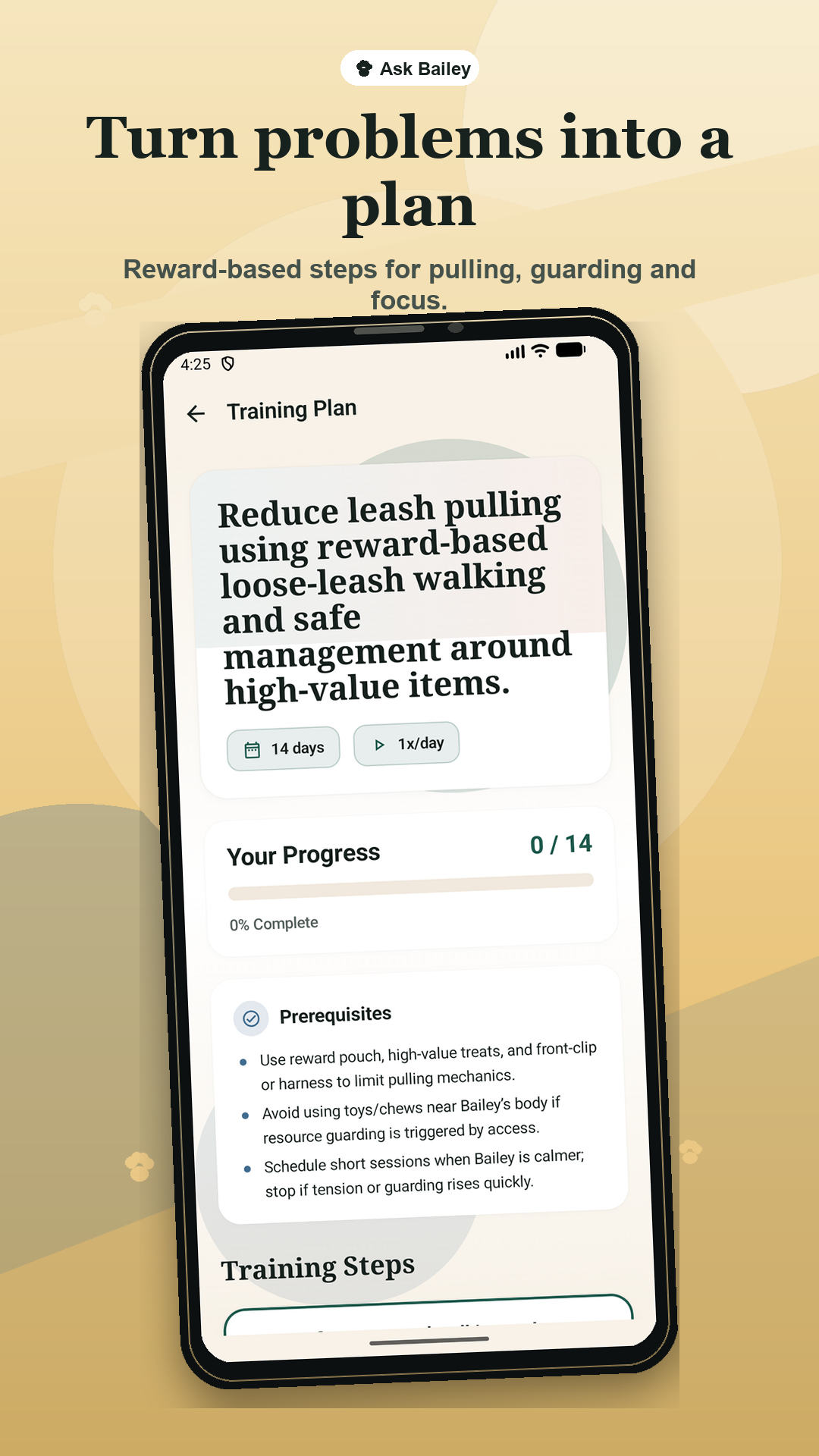
Training happens in short, focused sessions. Plan for two 5-10 minute sessions per day. This is actually more effective than longer sessions because puppies have short attention spans and these frequent, brief interactions build consistency.
The Two-Week Training Plan
Days 1-2: Build Foundation Skills Indoors
Before you ever attach the leash, you're building two critical skills your puppy will need on the street.
Establish your marker word (15 minutes total): Choose a short word—"yes" is ideal—or use a clicker. The rule is absolute: marker word always equals treat, every single time, without exception. Do 15 repetitions in a row, twice per day. Say your marker word, immediately give a treat. Repeat. After about 30 repetitions, your puppy's head will whip toward you the instant they hear it. This marker becomes the bridge that connects the moment your puppy makes a good choice with the reward that follows. On a walk, you can't always deliver a treat fast enough to catch the exact moment of good behavior, so the marker word does that job. [1]
Practice name check-ins (20 repetitions, multiple short sessions): Say your puppy's name. The moment they look at you—even for half a second—mark and treat. Repeat this throughout the day in different rooms. You're not asking for sustained attention; you're just buying yourself a one-second glance, which is all you need to redirect a puppy on a walk. [1]
Days 3-4: Load the Reinforcement Zone
Now you're teaching your puppy that the space beside your leg is the most rewarding location in the universe.
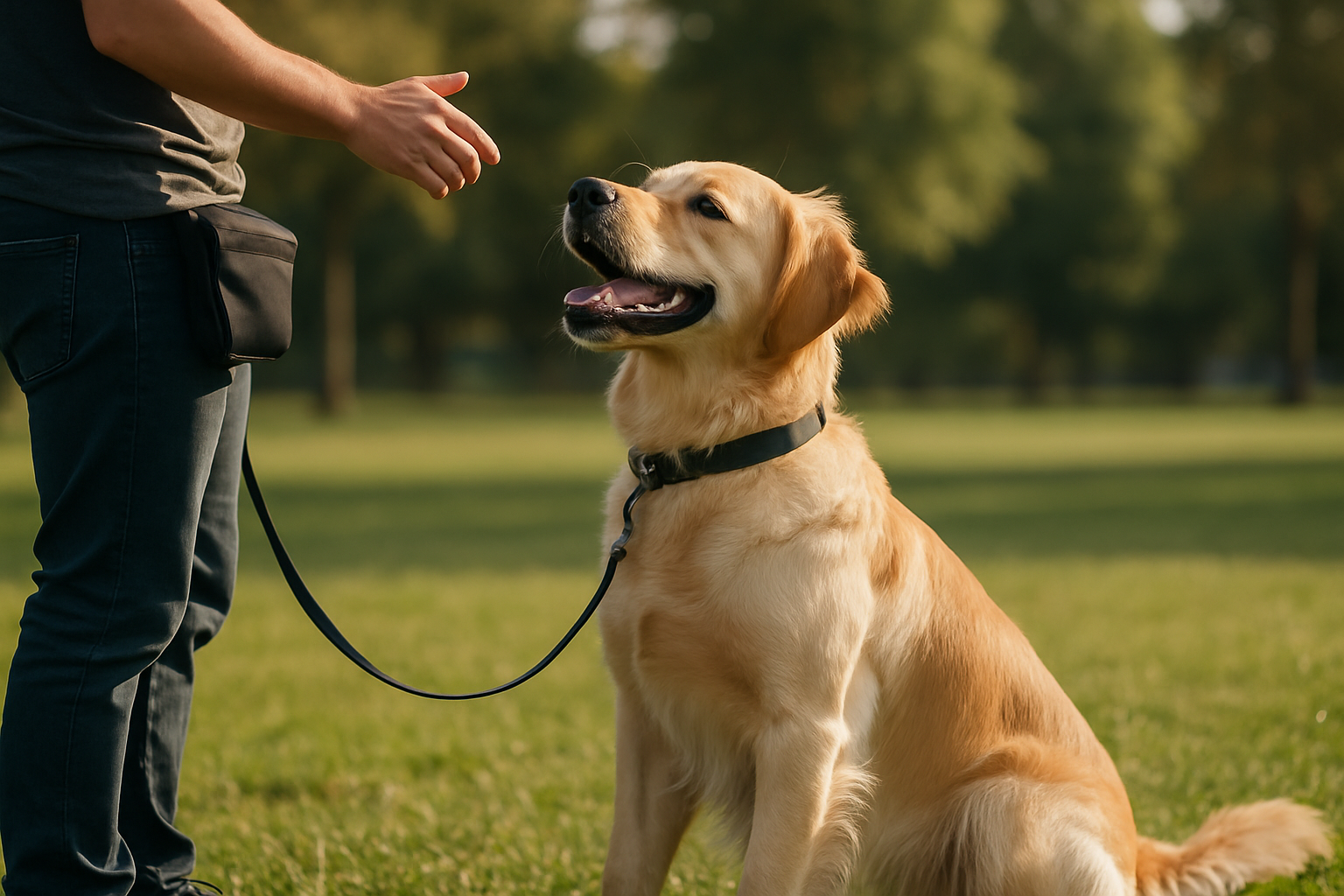
The standing exercise: Stand still indoors. Wait for your puppy to naturally position themselves on the side you want them to walk on (typically your left), within about one leg-length of you. The instant they're in that position, mark and deliver a treat at your knee. Say nothing else. Don't lure them into position. Just wait, mark, and reward when they happen to be there. [1]
Within a few minutes, most puppies start orbiting around you and parking themselves at your knee, looking up expectantly. You're not training them to follow a command; you're making the area beside your leg the most rewarding square meter in their world. Trainers call this "loading the reinforcement zone." [1]
Days 5-7: Add Movement Indoors
One step forward: Once your puppy is reliably positioning themselves at your knee while standing, take one step forward. If they follow into position beside you, mark and treat. If they forge ahead or lag behind, just stop and wait. Don't scold or correct; simply reset and try again. [1]
Gradually increase to two steps, then three, then five. Work at your puppy's pace. If they're consistently staying in position for five steps, you're ready to move to the next phase. The key is that you're teaching them to follow you, not commanding them to heel.
Introduce turns: Walk a few steps, then turn in a different direction. Mark and treat when your puppy adjusts their position to stay beside you. This teaches them to pay attention to your movement, not just follow a straight line.
Days 8-10: Practice in Your Garden or Yard
Now you're taking the same exercises outside, but in a lower-distraction environment than the street. The behavior you're teaching stays the same; only the location changes. [1]
Repeat the standing exercise: Stand still and reward your puppy for positioning themselves at your knee. This might take longer in a more stimulating environment, so be patient. Increase your treat frequency if needed.
Practice walking: Start with just a few steps. Mark and treat frequently—every 2-3 steps initially. As your puppy gets the hang of it, gradually increase the number of steps between treats. The goal is to build duration, not to rush through it.
Use the environment strategically: If your puppy pulls toward something interesting, simply stop and wait. Don't pull back or create tension. When they look back at you or the leash goes slack, mark and treat. This teaches them that pulling doesn't work, but staying close to you does. [3]
Days 11-14: Transition to the Street
Only move to the street once your puppy is reliably maintaining a loose leash in your garden. This progression matters—skipping ahead will undo the previous days' work. [1]
Start on a quiet street: Choose a time and location with minimal distractions. Your puppy already knows what to do; this is just a new location.
Increase treat frequency initially: In this high-distraction environment, go back to rewarding every 2-3 steps. Your puppy needs frequent reminders that staying close to you is the best choice.
Walk at a brisk pace: Remember that your puppy is naturally faster than you. Walk at a pace slightly faster than your normal casual walk. This reduces frustration for your puppy and makes it easier for them to stay beside you without pulling. [1]
Practice the "turn and walk away" technique: If your puppy does pull ahead, simply pivot away and start walking in a different direction. Wait until they catch up and are positioned beside you or slightly behind you, then mark and treat. Never reward them when they're in front of you. This teaches them that pulling doesn't get them where they want to go, but staying close to you does. [3]
Making It Stick: Long-Term Success
By day 14, you've flipped the fundamental equation in your puppy's mind. But maintaining this behavior requires ongoing effort.
Gradual Reinforcement Reduction
Once your puppy is walking reliably with a loose leash, you can begin spacing out your treats. Instead of rewarding every few steps, try rewarding every 5 steps, then 10 steps, then randomly. This intermittent reinforcement actually makes the behavior stronger and more durable. [4]
The key is that your puppy must believe there's a better chance of good things happening near you than in the wider world. Occasional high-value rewards maintain this belief.
Vary Your Rewards
Treats aren't the only reward. Mix in praise, toys, access to interesting smells, and directional changes. If your puppy loves to sniff, let them sniff when they're walking nicely beside you. If they love to play, occasionally pull out a toy. Unpredictability keeps the game interesting and maintains engagement. [4]
Different Walks, Different Rules
Consider teaching your puppy different cues for different types of walks. "Let's walk" might mean "stay close but you can sniff and explore." "Be a dog" might mean "you can range to the end of the leash, just don't drag me." "Heel" means "stay in perfect position by my side." This gives your puppy clarity about what's expected in each situation and prevents confusion. [4]
Use Environmental Consequences
As your puppy progresses, you can use the environment itself as feedback. If your puppy pulls toward a tree, the leash gets tight and the tree moves farther away. If they back up and create slack, suddenly the tree gets closer. This teaches them that a loose leash is the path to getting what they want. [4]
Common Mistakes to Avoid
- Skipping the foundation work: The indoor practice isn't optional. It's where your puppy learns what you want before distractions are added. Rushing through it makes everything else take longer.
- Progressing too quickly: Moving from indoors to the street before your puppy is ready undoes all your previous work. Stick to the progression: indoors, garden, quiet street, busier street.
- Allowing leash tension: Every time you let the leash get tight, you're teaching your puppy that pulling works. If you can't maintain a loose leash, you're not ready for that environment yet.
- Inconsistent rewards: If you reward loose leash walking sometimes but not always, your puppy gets confused about what earns rewards. Consistency in the early stages is essential.
- Walking too slowly: Remember that your puppy is naturally faster than you. A brisk pace reduces frustration and makes it easier for them to stay beside you.
- Using punishment or aversive methods: Prong collars, leash pops, and other aversive techniques don't teach your puppy what to do; they only suppress behavior temporarily. Plus, they're unnecessary when reward-based methods are equally or more effective.
Troubleshooting: When Progress Stalls
If your puppy isn't making progress, consider these factors:
- Are your treats valuable enough? If your puppy isn't motivated by the treats you're using, try higher-value options. Chicken, cheese, or freeze-dried meat often work better than standard kibble.
- Are you marking at the right moment? The marker word needs to happen the instant your puppy makes the right choice. If there's a delay, the connection gets muddied.
- Is your puppy getting enough exercise? A tired puppy is often an easier puppy to train. Make sure your puppy is getting appropriate physical activity for their age.
- Have you progressed too quickly? If things aren't working on the street, go back to the garden. Rebuild the foundation before trying again.
- Is there an underlying issue? If your puppy shows signs of fear, aggression, or extreme anxiety during walks, consult with a certified professional trainer or veterinary behaviorist. These issues require specialized guidance beyond basic loose leash training.
The Bottom Line
Loose leash walking isn't a genetic trait your puppy either has or doesn't have. It's a learned behavior that you teach through consistent, reward-based training. The two-week plan works because it addresses the root causes of pulling, builds the behavior systematically in low-distraction environments before adding complexity, and maintains consistency in what you're asking for.
Your puppy isn't being stubborn or dominant. They're just being a puppy in a world full of fascinating things to investigate. By teaching them that staying close to you is more rewarding than pulling ahead, you're not suppressing their nature—you're redirecting it. The result is walks that are enjoyable for both of you, where your puppy gets to be a dog while you maintain a safe, comfortable connection.
Start today with the foundation work indoors. In two weeks, you'll be amazed at the difference.