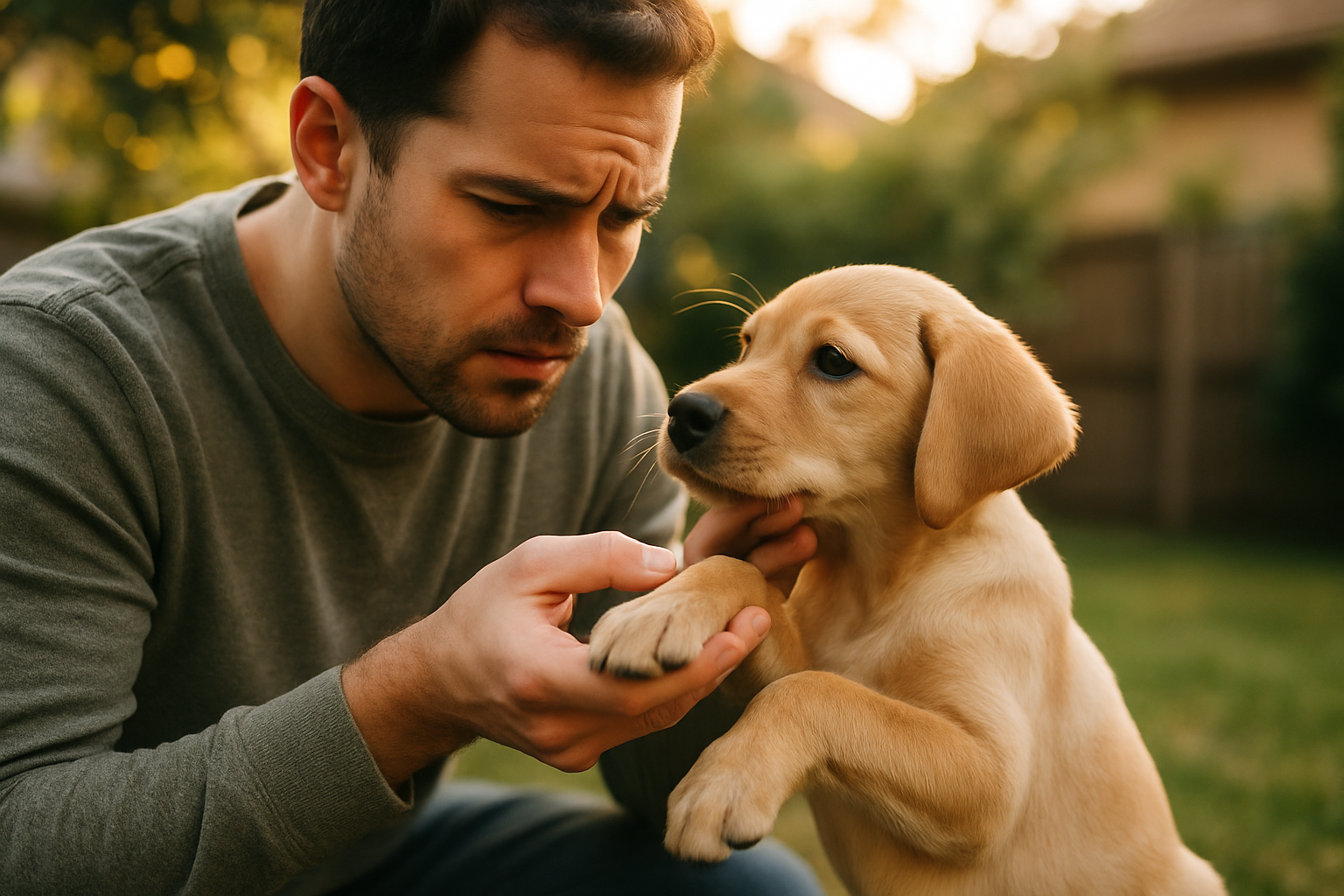
Puppy aggression is often mistaken for normal play, but research shows aggressive behaviors observable as early as 8-10 weeks can predict adult dog aggression with remarkable accuracy.[1] Most pet owners miss these early warning signs, unaware that unaddressed puppy aggression typically escalates rather than disappears with age. When you understand what to watch for and intervene early, you can prevent serious problems and raise a confident, well-adjusted adult dog.
Why Early Detection Matters: The Science Behind Puppy Aggression
Here's something that might surprise you: researchers can predict adult dog aggression with remarkable accuracy by observing puppies as young as 8-10 weeks old. This isn't guesswork—it's peer-reviewed science that's been tracking dogs from puppyhood through adulthood for decades. [1] The concerning part? Most pet owners completely miss the warning signs, mistaking early red flags for normal puppy behavior.
The stakes are real. Unaddressed puppy aggression doesn't just disappear with age. Instead, it typically escalates, putting your family at risk, creating legal liability, and potentially leading to heartbreaking outcomes like surrendering or euthanizing a dog that could have been helped with early intervention. [1]
The good news? When you understand what to look for and respond appropriately, you can transform a potentially problematic puppy into a confident, well-adjusted adult dog. The window for intervention is narrow but powerful—and you're about to learn exactly what to watch for.
Seven Critical Warning Signs of Puppy Aggression
1. Resource Guarding Over Food, Toys, and Possessions
Resource guarding is one of the strongest predictors of future aggression in adult dogs. [1] This behavior shows up when your puppy becomes tense or defensive around valued items. You might notice:
- Growling when you approach their food bowl
- Gulping food quickly when people are nearby
- Stiffening their body when you reach for a toy
- Snapping when you try to take something away
- Blocking access to sleeping spots or favorite areas
The critical distinction: normal puppies may eat quickly out of enthusiasm, but puppies showing resource guarding display clear tension and defensive body language. [1] This isn't about being "food motivated"—it's about anxiety and possessiveness that requires immediate attention.
2. Sensitivity to Handling and Restraint
Can you gently handle your puppy's paws, ears, mouth, and tail without them becoming upset? If not, this is a significant warning sign. Puppies who react strongly to basic handling often grow into dogs who bite during veterinary exams, grooming sessions, or when children pet them. [1]
Research on guide dog development found something particularly telling: puppies who couldn't tolerate gentle restraint at 8 weeks were significantly more likely to develop behavioral problems as adults. [1] This isn't about rough handling—we're talking about calm, gentle touches that are necessary for normal pet ownership.
3. Excessive Growling and Snarling
While growling is a normal part of puppy play, there's a critical difference between play growling and aggressive growling. Play growling is typically high-pitched, occurs during active play, and stops when play stops. Aggressive growling is deeper, more prolonged, and often accompanied by other warning signs. [2]
Snarling—where your puppy curls their lip to show teeth—is never normal puppy behavior. It's a serious warning sign that shouldn't be ignored. [2] If your puppy displays this behavior even occasionally, it indicates they're feeling threatened or defensive and may resort to biting if the situation escalates.
4. Stiff Body Posture and Rigid Stance
Puppies displaying aggressive tendencies often adopt a rigid, tense body posture that's distinctly different from normal play positions. In genuine play, puppies use play bows (lowering their head while raising their hind end), present their sides, and move fluidly. [3]
Aggressive puppies stand rigidly, with muscles visibly tense and body weight forward. This stiff posture indicates the puppy is preparing to defend or attack. [3] The key is observing the overall pattern—occasional stiffness during play is normal, but consistent rigidity when approached or around valued items is concerning.
5. Raised Hackles (Hair Standing on End)
When the hair along your puppy's back and neck stands on end, it's a major warning sign of aggressive arousal. [2] While some puppies may raise their hackles when playing intensely, distinguish between this and the raised hackles that accompany stiff posture, direct staring, and tension. The combination matters more than any single sign.
6. Intense Staring and "Whale Eye"
Prolonged, fixed eye contact—especially when combined with other warning signs—is a territorial aggression indicator. [2] "Whale eye" (where you see the whites of your puppy's eyes) combined with a hard stare is particularly concerning and shouldn't be dismissed as normal puppy behavior.
In contrast, normal play involves soft eyes, relaxed facial expressions, and frequent breaking of eye contact. Intense, unblinking stares are communication of dominance or threat.
7. Dominance Displays and Mounting Behavior
Puppies displaying early dominance aggression often stand tall over other dogs, push their way through situations, or mount other animals aggressively. [2] These behaviors indicate the puppy is trying to establish hierarchy through intimidation rather than play.
While some mounting during play is normal, aggressive mounting—accompanied by stiffness, growling, or intensity—suggests dominance aggression that needs addressing. [5]
Understanding the Critical Socialization Window
Here's where timing becomes everything. Research has identified a critical socialization period between 3-14 weeks of age. [1] During this window, your puppy's brain is essentially programming how they'll respond to the world for the rest of their lives. Miss this window, and you'll be working significantly harder to prevent aggression later.
Your puppy needs approximately 100 positive interactions with different people before 12 weeks of age. [1] We're talking genuinely different: various ages, ethnicities, clothing styles, people using mobility aids, different body sizes, and varying energy levels. Each positive interaction is like a deposit in your puppy's confidence bank.
Additionally, different breeds experience fear periods at different developmental stages. German Shepherds typically hit their first fear period around 39 days, while Yorkshire Terriers don't until around 44 days, and Cavalier King Charles Spaniels not until 55 days. [1] During these windows, even a single scary experience can create lasting behavioral problems.
Distinguishing Play Aggression From True Aggression
One of the most common mistakes pet owners make is confusing normal puppy play with genuine aggression. Understanding the difference is crucial for responding appropriately.
Normal Puppy Play Behavior Includes:
- Play bows and lowered head positions
- Loose, relaxed body movements
- Wagging tail
- High-pitched barks and growls
- Darting back and forth
- Ears up and forward
- Open, relaxed mouth
- Spontaneous attacks followed by breaking away
- Self-regulation—stopping when the other dog signals discomfort
Warning Signs of True Aggression Include:
- Prolonged, deep-toned growling
- Fixed, unblinking stare
- Stiff, rigid posture
- Lip curling and snarling
- Ears pinned back
- Lack of play bows or body relaxation
- Inability to self-regulate—continuing even when other dog signals discomfort
- Growling or snapping in response to pain or fear (in puppies under 12 weeks) [3]
Critical insight: puppies less than 12 weeks old who respond to pain or fear by growling or snapping are responding abnormally. In natural dog pack development, puppies who respond aggressively to correction by adult dogs would be attacked. It's not normal brain development for puppies to do this to people or other dogs, and the younger a dog is when showing serious aggressive behaviors, the more likely they will bite and injure humans in the future. [3]
The Overtired Puppy Factor: When Exhaustion Triggers Aggression
Here's something many new puppy owners don't realize: a tired puppy often behaves aggressively. Around 7 PM, many puppies transform from snuggle bugs into ankle-attacking missiles. This isn't true aggression—it's a lack of self-regulation. [4]
This phenomenon, often called the "puppy witching hour," happens when your puppy becomes overstimulated, overtired, and still fights sleep. Their developing brain short-circuits, leading to biting, barking, and reactive behavior. [4] Unlike genuine aggression, this behavior typically appears during specific times (usually evenings) and disappears with proper rest and routine.
Signs Your Puppy Is Overtired and Spiraling:
- Excessive nipping and biting at clothing or furniture
- Hyperactivity or "zoomies"
- Difficulty focusing on commands
- Persistent barking or whining
- Shadow boxing or attacking invisible objects
- Yawning and glazed eyes combined with hyper behavior
The solution? Structured rest and prevention. [4] Puppies need consistent nap schedules, appropriate daytime exercise, and mental stimulation. When you prevent overtiredness in the first place, you're not just avoiding nips and chaos—you're actively shaping a calmer, more regulated pup.
Root Causes: Why Puppies Display Aggression
Understanding the "why" behind aggressive behavior is essential for addressing it effectively. [5]
Physical Issues
Pain or illness can result in aggressive behavior. Before assuming behavioral problems, have your veterinarian rule out medical issues like ear infections, dental problems, or neurological conditions. [5]
Insufficient Socialization
Puppies who haven't been properly exposed to different people, environments, and experiences often develop anxiety when presented with unfamiliar situations. This anxiety frequently manifests as defensive aggression. [5]
Fear-Based Aggression
Puppies who've had negative experiences or lack confidence often display aggression as self-defense. This type of aggression typically appears when the puppy feels threatened or cornered. [5]
Teething Discomfort
Puppies experiencing teething pain often nip to explore their surroundings and relieve discomfort. Providing appropriate chew toys helps redirect this behavior. [5]
Lack of Impulse Control
Young puppies are still learning how to regulate their impulses. Their brains are constantly processing new information, and by evening, their mental tank is empty. [4]
Proven Prevention and Management Strategies
1. Use Positive Reinforcement, Never Punishment
This is crucial: punishment methods of training have been shown to worsen aggression. In fact, 80% of dogs presented to behavioral specialists for problem aggression have been trained using punishment methods. [3] The more skilled and reward-based your training, the more well-adjusted and friendly your dog will be. [3]
Instead of correcting unwanted behavior, focus on rewarding the behaviors you want to see. When your puppy shows calm behavior around their food bowl, reward it. When they allow handling without tension, praise and treat. This builds positive associations rather than fear.
2. Implement Structured Socialization
Go beyond casual park visits. Create intentional, controlled socialization experiences where your puppy encounters different people, environments, and situations in a safe, positive context. [1]
Pair potentially scary experiences with high-value treats while maintaining safe distance. If your puppy shows fear of something, resist the urge to push them through it. Instead, create positive associations gradually. [1]
3. Establish Clear Boundaries and Consistency
Puppies thrive with structure. Consistent rules about when they can access resources, appropriate play behavior, and boundaries help them understand their place in the family without needing to establish it through aggression. [5]
4. Create Safe Spaces for Rest
Safe spaces aren't punishment—they're essential for helping puppies learn to wind down. Use tools like frozen Kongs, slow-feed bowls, and chew toys to create positive experiences around rest. [4]
5. Manage Resource Guarding Proactively
Rather than punishing resource guarding, prevent it by:
- Hand-feeding meals occasionally to build positive associations with your presence during eating
- Tossing high-value treats near (not reaching for) their food bowl
- Never punishing them for showing warning signs—instead, create distance and work with a trainer
- Teaching "trade" commands where they learn that giving up items results in something better
6. Provide Appropriate Outlets for Energy
Puppies need physical exercise and mental stimulation. Appropriate playtime, training sessions, and puzzle toys help channel energy constructively rather than into aggressive outlets. [5]
When to Seek Professional Help
If your puppy displays any of the following, consult a certified professional dog trainer or veterinary behaviorist:
- Growling or snapping in response to handling before 12 weeks of age
- Biting that causes injury or doesn't decrease with redirection
- Snarling or lip curling
- Aggressive behavior even when well-rested and exercised
- Fear-based aggression that's worsening
- Aggression toward family members or visitors
- Dominance displays that are escalating
Professional intervention early can prevent these behaviors from becoming ingrained patterns in adulthood.
Key Takeaways: Your Action Plan
Puppy aggression isn't something to ignore or hope disappears with age. The behaviors you see now are strong predictors of adult behavior. Here's what you need to do:
- Learn the warning signs. Know the difference between normal play and genuine aggression.
- Act early. The critical socialization window closes at 14 weeks. Use this time wisely.
- Use positive reinforcement. Reward the behaviors you want; never use punishment.
- Prevent overtiredness. Structured rest and routine prevent many behavioral issues.
- Socialize intentionally. Aim for 100 positive interactions with different people before 12 weeks.
- Seek professional help when needed. Early intervention with a trainer or behaviorist can prevent serious problems.
- Manage resources proactively. Don't punish resource guarding—prevent and redirect it.
Your puppy's future behavior is being shaped right now, during these early weeks. The investment you make in understanding and addressing warning signs today will pay dividends for the next 10-15 years. That adorable ball of fluff has incredible potential—and with the right approach, you'll help them become the confident, well-adjusted companion you imagined.
Sources & References
- https://4knines.com/blogs/4knines-blog-home-page/puppy-red-flags-early-warning-signs-your-dog-might-develop-aggression-and-how-to-stop-it
- https://suburban-k9.com/how-to-stop-puppy-aggression/
- https://bestfriendsvet.com/library/puppy-play-or-aggression/
- https://chicagourbanpets.com/puppy-aggression-when-tiredness-gets-rough-fast/
- https://unityk9.com/tackling-puppy-aggression-warning-signs-solutions-and-prevention-strategies-for-2023/