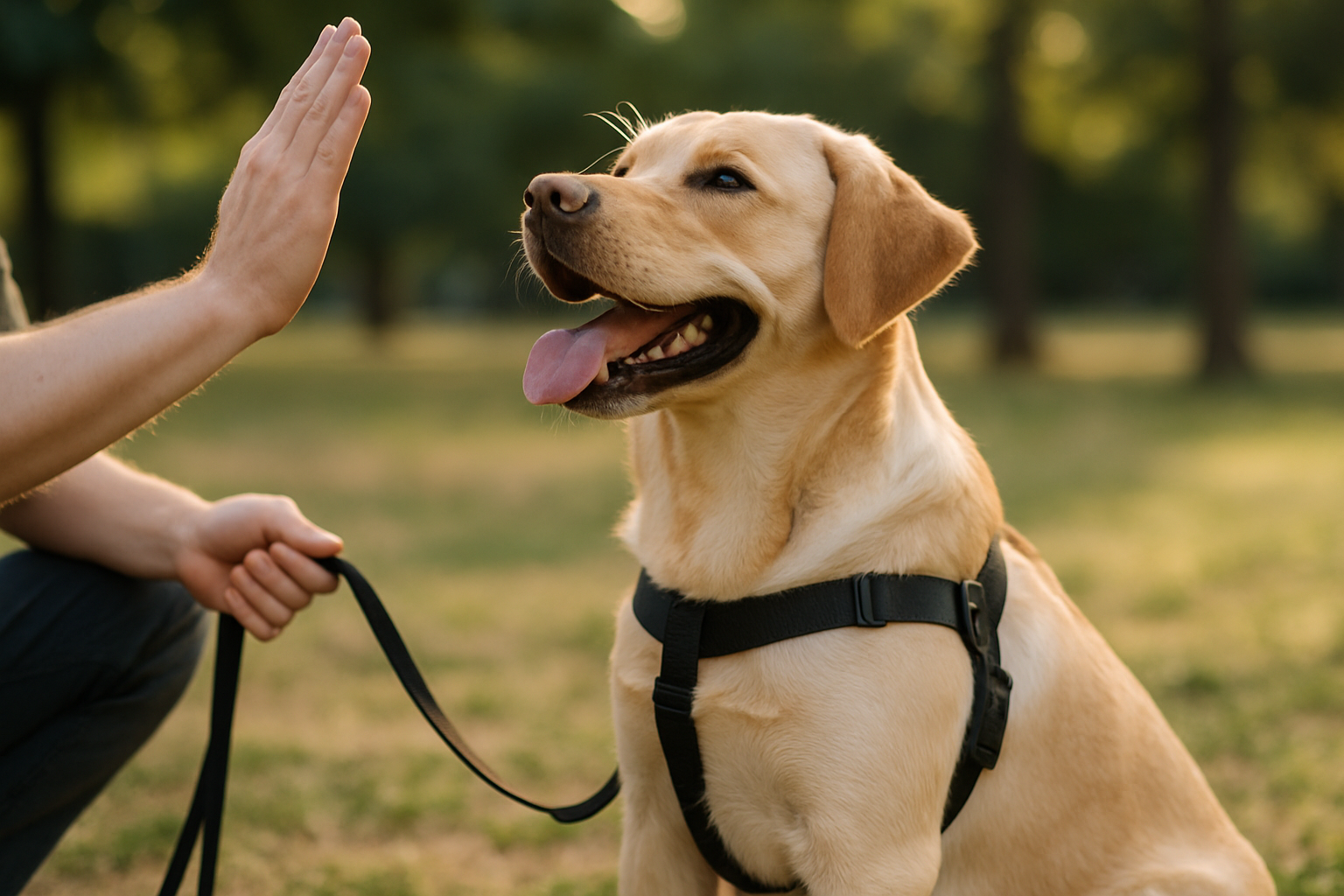
Why Do Puppies Jump Up? Understanding the Behaviour
Before you can fix jumping, it helps to understand why your puppy does it in the first place. Jumping is a completely natural canine behaviour. When puppies greet each other in their pack, they often jump to make face-to-face contact. Your puppy is simply trying to do the same thing with you—except your face is much higher up than another dog's would be, so jumping closes that gap. [1]
The real problem isn't the jumping itself; it's that this natural behaviour gets accidentally rewarded—often hundreds of times over. When your puppy jumps and you coo at them, smile, make eye contact, reach down to pet them, or even say "no" in an engaged tone, you've just taught them a powerful lesson: jumping makes good things happen. [2] This is especially true during puppyhood, when every interaction feels exciting and new.
Here's what makes jumping so tricky: it's one of the easiest problem behaviours to teach without meaning to, but it's also one of the most satisfying to fix once you understand the mechanism. [1] The key is recognising that your puppy isn't being naughty or stubborn—they're simply repeating a behaviour that has been rewarded.
Why Punishment and Physical Corrections Don't Work
If you've been tempted to knee your puppy's chest, step on their back paws, grab their paws, or push them away, you're not alone. These methods have been recommended for decades. Unfortunately, they don't work—and they can actually make the problem worse. [3]
Here's why: to a highly social, attention-motivated puppy, even negative physical contact is still attention. When you grab your puppy's paws or push them away, they may interpret this as a wrestling game or continued engagement rather than a correction. This means you've inadvertently rewarded the jumping anyway. [1] Worse, physical corrections can damage your puppy's trust in you and erode your relationship over time. They may also cause injury.
The ASPCA, RSPCA, and CCPDT (Certification Council for Professional Dog Trainers) all recommend the non-contact, positive-reinforcement approach instead, which is both more humane and more effective. [1]
The Core Principle: Remove Rewards, Teach Alternatives
The solution to jumping is elegantly simple, but it requires consistency. It has two parts that must work together: [4]
- Stop rewarding jumping: Eliminate all forms of attention when your puppy jumps—no eye contact, no talking, no touching, no laughing. Your puppy must learn that jumping produces nothing.
- Reward an incompatible behaviour: Teach your puppy that calm, polite greetings earn all the rewards. A puppy physically cannot jump and keep all four paws on the floor at the same time, and cannot leap while sitting.
This is the foundation of every method that works. Without both parts working together, progress stalls. [3]
The "Four Paws on the Floor" Training Method
This is the most straightforward approach for most puppies. The goal is to teach your puppy that having all four paws on the ground earns rewards, while jumping earns nothing.
Step-by-Step Training Process
Step 1: Start in a calm environment
Before you try this at the front door with guests arriving, practice in a quiet room where your puppy isn't overly excited. Have a pocket full of small, soft treats ready. Soft treats work better than hard ones because you can deliver them quickly, and your puppy can swallow them fast and refocus on you.
Step 2: Reward calm behaviour before jumping happens
The trick is timing. You need to reward your puppy for calm behaviour before they even think about jumping. Approach your puppy, and the moment their four paws are on the floor, immediately deliver a treat and praise. Repeat this 10-15 times in a training session. [2]
Step 3: Turn away when jumping occurs
If your puppy does jump, become completely uninteresting. Turn your body away, fold your arms, look up and away, and stay silent. Don't speak, don't make eye contact, don't touch. You're not angry—you're simply unavailable. [4] Within one or two seconds of all four paws landing back on the floor, immediately turn back around, deliver a treat, and offer warm praise.
This creates a clear cause-and-effect lesson: jumping makes you disappear, and calm behaviour makes you reappear with rewards.
Step 4: Increase difficulty gradually
Once your puppy reliably keeps four paws on the floor in calm situations, practice with slightly more exciting scenarios. Have a family member approach and reward calm greetings. Gradually build up to the chaos of a real visitor arrival.
Timeline for Success
With complete consistency across all household members and visitors, most puppies show significant reduction in jumping within two to three weeks. Reliable four-paws-on-floor greetings typically develop within four to six weeks. [1] The speed of progress depends almost entirely on how consistently everyone responds to jumping.
The "Sit for Greetings" Method
If your puppy already has a solid "sit" command, this method can work even faster because sitting is an incompatible behaviour that's easier to cue and reward. [3]
How it works:
- Ask your puppy to sit the moment a greeting begins—before any social contact starts
- The instant their bottom touches the floor, deliver praise, petting, and attention
- If they jump up, the attention stops immediately
- The moment they sit again, attention returns
With practice, the doorbell or a knock becomes the automatic cue to sit rather than rush and jump. This works particularly well for puppies who find the greeting context too exciting for calm four-paws-on-floor to happen naturally. [1]
Managing the Front Door: Your Biggest Challenge
The front door is where jumping is most rehearsed and hardest to control. Your puppy is at peak excitement, and you're juggling a visitor. This is where management becomes your best friend. [4]
Management Strategies
Use a leash during training
Keep a leash clipped near your front door. When a visitor arrives, pick it up and stand on it or hold it short enough that your puppy has room to sit or stand calmly, but not enough to reach a person's chest. This prevents jumping while you deliver treats for calm behaviour. [1] Your puppy learns the greeting rule while you have physical control over the situation.
Create a "place" or mat station
Teach your puppy to go to a specific mat or bed a few feet from the door. When the doorbell rings, send your puppy to their mat to settle. Reward them generously for staying grounded. Only release them to greet once they're calm. This removes the temptation to jump altogether during the critical greeting moment.
Use a baby gate or dog gate
Position a gate at your entranceway so your puppy can't physically reach visitors. This gives you time to set up the training scenario properly before allowing a greeting.
Scatter treats on the floor
Before your visitor enters, scatter treats on the floor. Most puppies will immediately lower their heads to sniff and search. Since puppies can't jump and search the floor at the same time, this prevents jumping while you reward calm behaviour. [2]
Brief Your Visitors
This step is non-negotiable. Before guests arrive, give them clear instructions: "Please ignore any jumping and wait for four paws on the floor before you greet or pet my puppy." The hardest moment to manage is when a new visitor arrives—it's a time of high excitement for your puppy, and visitors are often inclined to be indulgent. [1]
If your visitor doesn't follow the rules and rewards jumping with attention, you're essentially back to square one. A puppy who is ignored 95% of the time but rewarded 5% of the time is on a highly effective variable reinforcement schedule—the most resistant to extinction of all reinforcement patterns. [1] Consistency across all people is the mechanism that makes this work.
Training Puppies on the Street and With Strangers
Preventing jumping when you're out walking is trickier because you can't expect strangers to know or follow your training rules. Until your puppy has a solid understanding of appropriate greetings with friends and family, try to avoid having them greet strangers on the street. [2]
Instead, redirect your puppy's attention with a "watch me" cue or by squeaking a toy, allowing the stranger to walk past without interaction. Once your puppy has mastered calm greetings at home, you can gradually introduce street greetings—but always ask the stranger first and explain what your puppy needs to do to earn their attention.
Special Situations: When Jumping Means Something Else
Most jumping is attention-seeking excitement, but not all. If your puppy's jumping is paired with mouthing that breaks skin, stiff body language, growling, or any behaviour that worries you, stop the training and consult a certified, force-free trainer or qualified behaviourist. [1]
Jumping can also be driven by anxiety, frustration, or fear rather than excitement. A stressed or anxious puppy may jump to release tension or seek reassurance. [5] Frustrated puppies may jump when they can't reach something they want. In these cases, the underlying emotional state needs to be addressed alongside the behaviour. A professional can help you identify the root cause and create an appropriate plan.
Similarly, sudden changes in greeting behaviour warrant a professional assessment. First, rule out pain or illness with your vet. [1]
Common Mistakes That Slow Progress
- Inconsistency: Allowing jumping sometimes but not others teaches your puppy that jumping might work—they just have to keep trying. Everyone in your household and all regular visitors must follow the same rules.
- Delayed rewards: If you wait to reward calm behaviour, your puppy won't connect the reward to the behaviour. Timing is everything. Treats and praise must arrive within a second or two of calm behaviour.
- Using negative attention: Yelling "no," grabbing paws, or pushing away are all forms of attention. To your puppy, any engagement is a reward. Stay silent and turn away instead.
- Not teaching an alternative: Simply ignoring jumping isn't enough. Your puppy needs to learn what to do instead. Teach "sit" or "four paws on the floor" explicitly.
- Giving up too soon: Change takes time. If you've been rewarding jumping for months, it will take weeks of consistent non-reward to extinguish it. Stick with the plan.
Actionable Steps to Start Today
You don't need to wait for the perfect moment to begin. Here's what you can do right now:
- Gather supplies: Get a pocket-sized container and fill it with small, soft treats. Keep it near your front door.
- Choose your greeting rule: Decide whether you want "four paws on the floor" or "sit for greetings." Pick one and stick with it.
- Brief your household: Sit down with everyone who lives with you and explain the training plan. Make sure everyone understands that they must ignore jumping completely and reward calm greetings.
- Practice in a calm setting: Spend 10-15 minutes today rewarding your puppy for calm behaviour before you try it during real greetings.
- Contact your regular visitors: Call or text friends and family who visit regularly. Give them the same briefing you gave your household.
- Set up management: Get a leash ready for the front door, or set up a mat station if you prefer that approach.
- Track progress: Keep notes on how often jumping happens and how your puppy responds to the training. This helps you spot patterns and stay motivated.
Why Consistency Is Everything
The most common reason training stalls isn't that the method doesn't work—it's that consistency breaks down. A single person who rewards jumping, even occasionally, can undo weeks of progress. [1] This isn't a flaw in your puppy; it's how animal learning works. Intermittent rewards are incredibly powerful and durable.
Think of it this way: if you occasionally won a small prize every time you played a slot machine, you'd keep playing forever, even if you lost most of the time. Your puppy feels the same way about jumping. If there's even a 5% chance that jumping will earn attention, they'll keep trying.
The good news is that once everyone is on board and consistency is maintained, jumping fades quickly because it simply stops working. [4]
Final Thoughts
Jumping is one of the easiest problem behaviours to teach accidentally and one of the most satisfying to fix deliberately. It doesn't require punishment, physical corrections, or confrontation. It requires clarity, consistency, and patience. Your puppy isn't being naughty—they're just following the rules you've accidentally taught them. By removing the reward for jumping and rewarding an incompatible behaviour instead, you're simply changing the rules. Within weeks, you'll have a puppy who greets people politely, and everyone—including your puppy—will be happier for it.
Sources & References
- https://ourpetcircle.com/my/johor-bahru/train/stop-jumping-up-teaching-calm-greetings
- https://www.akc.org/expert-advice/training/how-to-stop-your-dog-from-jumping-up-on-people/
- https://www.akc.org/expert-advice/training/stop-dog-jumping/
- https://dog.it.com/how-to-stop-a-dog-from-jumping
- https://www.dogstrust.org.uk/dog-advice/training/unwanted-behaviours/jumping-up-training