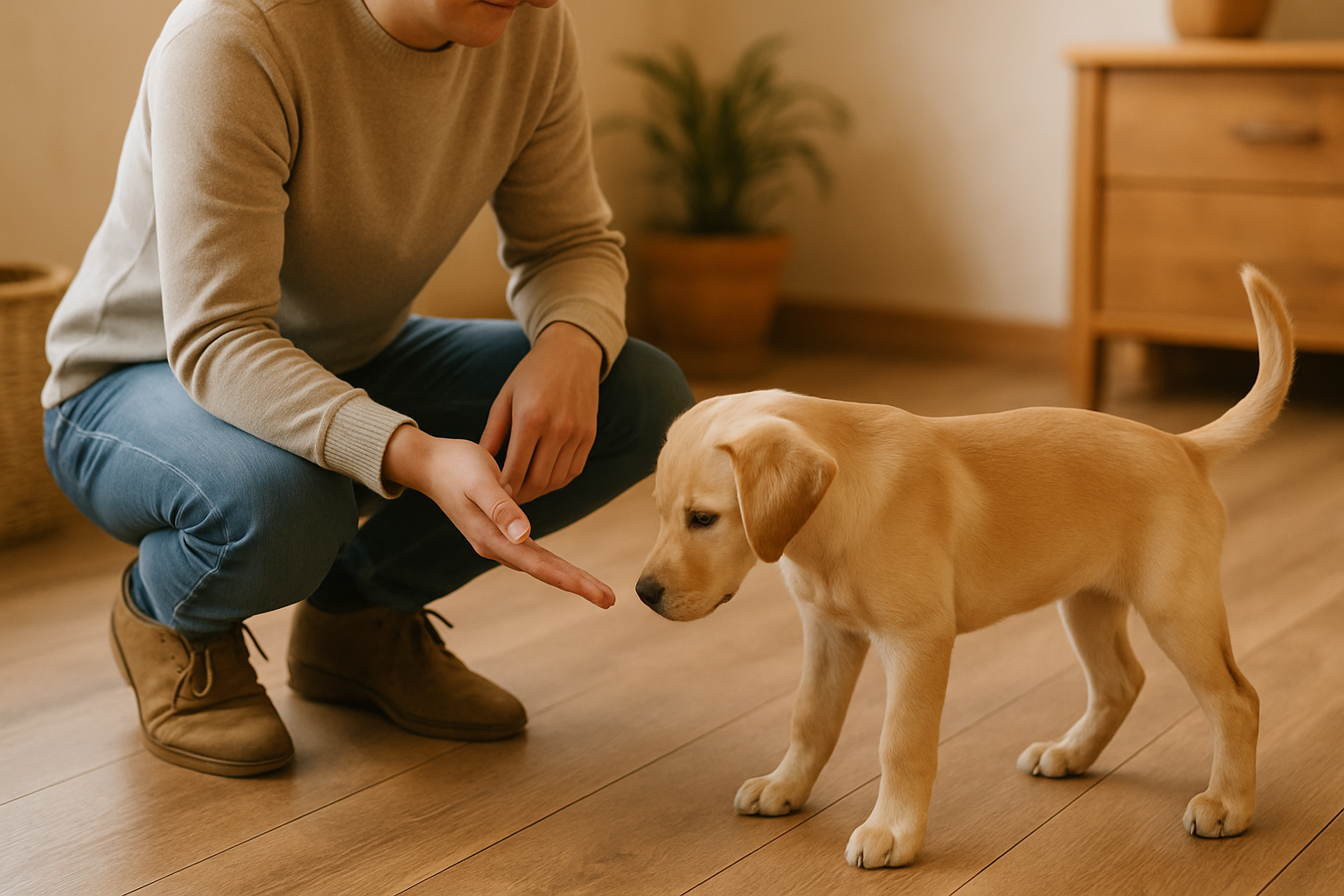
Puppy Body Language: Your Complete Communication Guide
Have you ever watched your puppy and wondered what they're really trying to tell you? That tail wag, those perked ears, that play bow—they're all part of a sophisticated communication system your puppy uses every single day. The challenge isn't that puppies can't communicate; it's that we haven't learned their language yet.
Understanding puppy body language is one of the most valuable skills you can develop as a dog owner. It allows you to recognize when your puppy is happy, anxious, playful, or scared before any behavioral problems develop. It helps you prevent conflicts, build trust, and create a stronger bond with your furry companion. More importantly, it's the foundation of effective training and bite prevention. [3]
In this comprehensive guide, we'll teach you how to read your puppy like a book, breaking down the key signals that matter most.
Why Puppy Body Language Matters
Puppies are born communicators. From the moment they enter the world, they use their bodies to express themselves. However, most new puppy owners focus solely on what their puppy does—jumping, biting, barking—without understanding why they're doing it.
Body language is the window into your puppy's emotional state. When you can accurately interpret these signals, you gain several critical advantages:
- Early intervention: You can identify stress or fear before it escalates into aggressive behavior
- Better training: You'll know when your puppy is ready to learn versus when they're overwhelmed
- Injury prevention: You can remove your puppy from situations where they might get hurt or hurt someone else
- Stronger bond: Your puppy will trust you more when you respond appropriately to their needs
- Behavioral insight: You'll understand the root cause of unwanted behaviors rather than just treating symptoms
Think of body language as your puppy's native language. Learning to speak it fluently transforms how you interact with your pup. [3]
The Holistic Approach to Reading Body Language
Before we dive into specific signals, there's an important principle to understand: you must always evaluate your puppy's body language as a complete picture, not isolated signals. [3]
A wagging tail doesn't automatically mean a happy puppy. Perked ears don't always indicate friendliness. Soft eyes don't guarantee contentment. Instead, think of body language like a puzzle—you need to examine multiple pieces simultaneously to understand the full message your puppy is sending.
For example, a puppy might have their tail wagging while their body is tense, their ears are pinned back, and they're showing the whites of their eyes. This combination tells a very different story than a puppy with a loose, relaxed body and a full-bodied wag.
As you learn to read these signals, always ask yourself: What does the entire picture tell me about how my puppy is feeling right now?
The Five Key Areas to Observe
1. Ear Position and Movement
Your puppy's ears are incredibly expressive. They move independently and frequently change position based on your puppy's emotional state. Here's what different ear positions typically indicate: [3]
- Ears pinned back: Your puppy is likely frightened, anxious, or showing submission. This often accompanies a lowered body posture as if your puppy is trying to make themselves smaller.
- Ears pricked forward: Your puppy is alert and focused. Their attention is directed toward something interesting, and their body often assumes an "offensive" forward position.
- Ears relaxed and natural: Your puppy is calm and comfortable in their environment.
- Ears rapidly moving: Your puppy is processing information or experiencing uncertainty about a situation.
Keep in mind that some dog breeds have naturally floppy ears or cropped ears, which can make ear signals slightly harder to read. However, even with these variations, you'll notice subtle movements and position changes that communicate your puppy's state of mind. [3]
2. Eye Contact and Expression
Your puppy's eyes reveal their emotional state with remarkable clarity. Learning to interpret eye signals is crucial for understanding your puppy's comfort level and preventing conflicts. [3]
- Soft eyes with gentle squinting: Your puppy is relaxed and content. This is often seen when you're petting your puppy or during calm moments.
- "Whale eye" (showing whites of eyes): Your puppy is experiencing fear or anxiety and is trying to avoid conflict. This is a stress signal that shouldn't be ignored.
- Hard stare with furrowed brow: Your puppy is becoming aroused or potentially aggressive. This intense gaze, often accompanied by a lip curl or growl, signals that your puppy views something as a challenge or threat.
- Averted gaze: Your puppy is showing deference or trying to diffuse a tense situation.
- Dilated pupils: Your puppy is experiencing heightened arousal—this could be excitement or fear depending on context.
A hard stare is particularly important to recognize, as it often precedes aggressive behavior. If you notice your puppy staring intensely at another dog, person, or object while their body is tense and their brow is furrowed, it's time to create distance and redirect their attention. [3]
3. Tail Position and Movement
The tail is one of the most obvious communication tools your puppy possesses, and understanding tail language is essential. However, tail signals are more nuanced than many people realize. [3]
- Full-body wag: Your puppy is happy and confident. In short-tailed breeds like Frenchies or Boston Terriers, you'll see their entire rear end wiggle. This is accompanied by a loose, relaxed body.
- Tail wagging to the right: Studies show that right-side tail wagging indicates happiness and confidence. This occurs because the left side of the brain controls movement on the right side of the body. [3]
- Tail wagging to the left: Left-side tail wagging suggests your puppy is experiencing negative emotions like fear or anxiety, even though they're wagging. [3]
- Tucked tail: Your puppy is feeling unsure, worried, or frightened. A tucked tail often indicates your puppy is trying to hide by covering their scent glands.
- High, stiff tail: Your puppy is confident, alert, or potentially aroused. If accompanied by a tense body and hard stare, this can indicate aggression.
- Low tail with minimal movement: Your puppy is uncertain or submissive.
Here's the key insight many owners miss: tail wagging alone doesn't mean your puppy is happy. You must evaluate the tail movement in context with the rest of your puppy's body language. A wagging tail combined with a tense body, pinned ears, and whale eye tells a very different story than a wagging tail with a loose, relaxed body. [3]
4. Body Posture and Tension
Your puppy's overall body posture communicates volumes about their confidence level and emotional state. [3]
- Play bow: Your puppy's front legs are stretched forward while their rear end is raised. This is an invitation to play and indicates excitement and confidence.
- Lowered body: Your puppy is "slinky," with their body close to the ground. This indicates fear, submission, or an attempt to appear non-threatening.
- Stiff, tense body: Your puppy is aroused, whether from excitement, fear, or aggression. Combined with other signals, this helps clarify which emotion is driving the behavior.
- Relaxed, loose body: Your puppy is comfortable and confident in their environment.
- Leaning forward: Your puppy is interested, confident, or potentially challenging something.
- Leaning backward: Your puppy is uncertain or trying to create distance.
5. Coat and Hackles
Your puppy's fur can reveal emotional states that might not be immediately obvious in other body signals. [3]
- Raised hackles: The hair along your puppy's spine and shoulders stands on end. This indicates your puppy is aroused or reacting to something in their environment. Importantly, raised hackles don't always mean aggression—they can also indicate fear or excitement.
- Smooth coat: Your puppy is calm and relaxed.
- Piloerection: The technical term for raised hackles, this is an involuntary response that often accompanies heightened emotional arousal.
Common Puppy Communication Scenarios
The Happy, Confident Puppy
When your puppy is genuinely happy and confident, you'll see:
- Relaxed, loose body
- Soft eyes, possibly squinting
- Tail wagging with full-body involvement, typically to the right
- Ears in a natural, relaxed position
- Mouth slightly open in a "smile"
- Play bows and bouncy movements
The Anxious or Fearful Puppy
When your puppy is scared or anxious, look for:
- Ears pinned back
- Body lowered and "slinky"
- Tail tucked or wagging to the left
- Whale eye or averted gaze
- Yawning or lip licking (stress signals)
- Possibly trembling
The Aroused or Potentially Aggressive Puppy
When your puppy is becoming overstimulated or showing signs of aggression, you'll notice:
- Stiff, tense body
- Hard stare with furrowed brow
- Ears forward or to the side
- Raised hackles
- Lip curl and possibly growling
- High, stiff tail
- Leaning forward
Practical Tips for Reading Your Puppy's Body Language
Tip 1: Observe in Multiple Contexts
Your puppy's body language will vary depending on their environment, the people or animals present, and their energy level. Spend time observing your puppy in different situations—at home, at the park, during training, and during play. This helps you develop a baseline understanding of your individual puppy's communication style.
Tip 2: Watch for Stress Signals
Beyond the obvious signals, puppies display subtle stress indicators that owners often miss:
- Yawning when not tired
- Lip licking or nose licking
- Turning their head away
- Panting when not overheated
- Scratching or shaking off when not wet
- Freezing or becoming very still
These calming signals indicate your puppy is uncomfortable and may escalate if the situation continues.
Tip 3: Consider Individual Breed Traits
While body language signals are generally consistent across dog breeds, some breeds have exaggerated features that make certain signals easier or harder to read. Breeds with naturally floppy ears may have less obvious ear signals. Breeds with docked tails won't have traditional tail wagging. Adjust your interpretation based on your puppy's breed characteristics. [3]
Tip 4: Video Record and Review
Sometimes the best way to improve your body language reading skills is to record your puppy's interactions and review them later. You can pause, rewind, and observe signals you might have missed in real-time. This is particularly helpful for understanding your puppy's play style and recognizing subtle stress signals.
Tip 5: Trust Your Gut
If something about your puppy's body language feels off or concerning, trust that instinct. You don't need to fully understand every signal to recognize when your puppy is uncomfortable. When in doubt, create distance and remove your puppy from the situation.
How to Respond to Different Body Language Signals
When Your Puppy Shows Stress Signals
- Remove your puppy from the triggering situation immediately
- Don't force interaction or socialization
- Create distance between your puppy and the source of stress
- Allow your puppy time to decompress
- Work with a professional trainer if stress signals persist
When Your Puppy Shows Play Signals
- Engage in appropriate play
- Monitor intensity and stop if play becomes too rough
- Use play as a reward during training
- Ensure play doesn't escalate into overstimulation
When Your Puppy Shows Aggressive Signals
- Create immediate distance
- Don't punish—this often escalates aggression
- Consult a certified professional dog trainer or veterinary behaviorist
- Avoid situations that trigger these signals until you have professional guidance
- Never force your puppy into interactions when showing these signals
Common Mistakes in Reading Puppy Body Language
Mistake 1: Assuming all tail wagging means happiness. As discussed, tail wagging to the left or a wagging tail combined with a tense body indicates negative emotions. [3]
Mistake 2: Ignoring subtle stress signals. Many owners focus on obvious signals like growling while missing calming signals like lip licking or yawning. These subtle signals are your puppy's first attempt to communicate discomfort.
Mistake 3: Anthropomorphizing your puppy's expressions. A "guilty" look isn't actually guilt—it's your puppy responding to your angry tone or body language. Similarly, a "smile" is just your puppy's relaxed mouth, not an emotional expression.
Mistake 4: Punishing body language signals. If your puppy growls, that's communication. Punishing the growl doesn't eliminate the underlying discomfort—it just teaches your puppy to skip the warning and bite without signaling first.
Mistake 5: Isolating single signals. The most common mistake is focusing on one body part without considering the entire picture. Always evaluate multiple signals simultaneously. [3]
Key Takeaways: Becoming Fluent in Puppy Language
Understanding puppy body language is an ongoing journey. The more time you spend observing your puppy, the more fluent you'll become in their communication style. Here's what to remember:
- Your puppy is always communicating—you just need to learn their language
- Evaluate body language holistically, considering multiple signals simultaneously [3]
- Focus on the five key areas: ears, eyes, tail, body posture, and coat [3]
- Pay attention to subtle stress signals before they escalate [3]
- Respond appropriately based on what your puppy is communicating
- When in doubt, create distance and consult a professional
- Use this knowledge to build a stronger, more trusting relationship with your puppy
Your puppy is constantly trying to tell you something. By learning to read their body language, you're not just becoming a better dog owner—you're showing your puppy that you understand and respect their feelings. That's the foundation of a truly special bond.