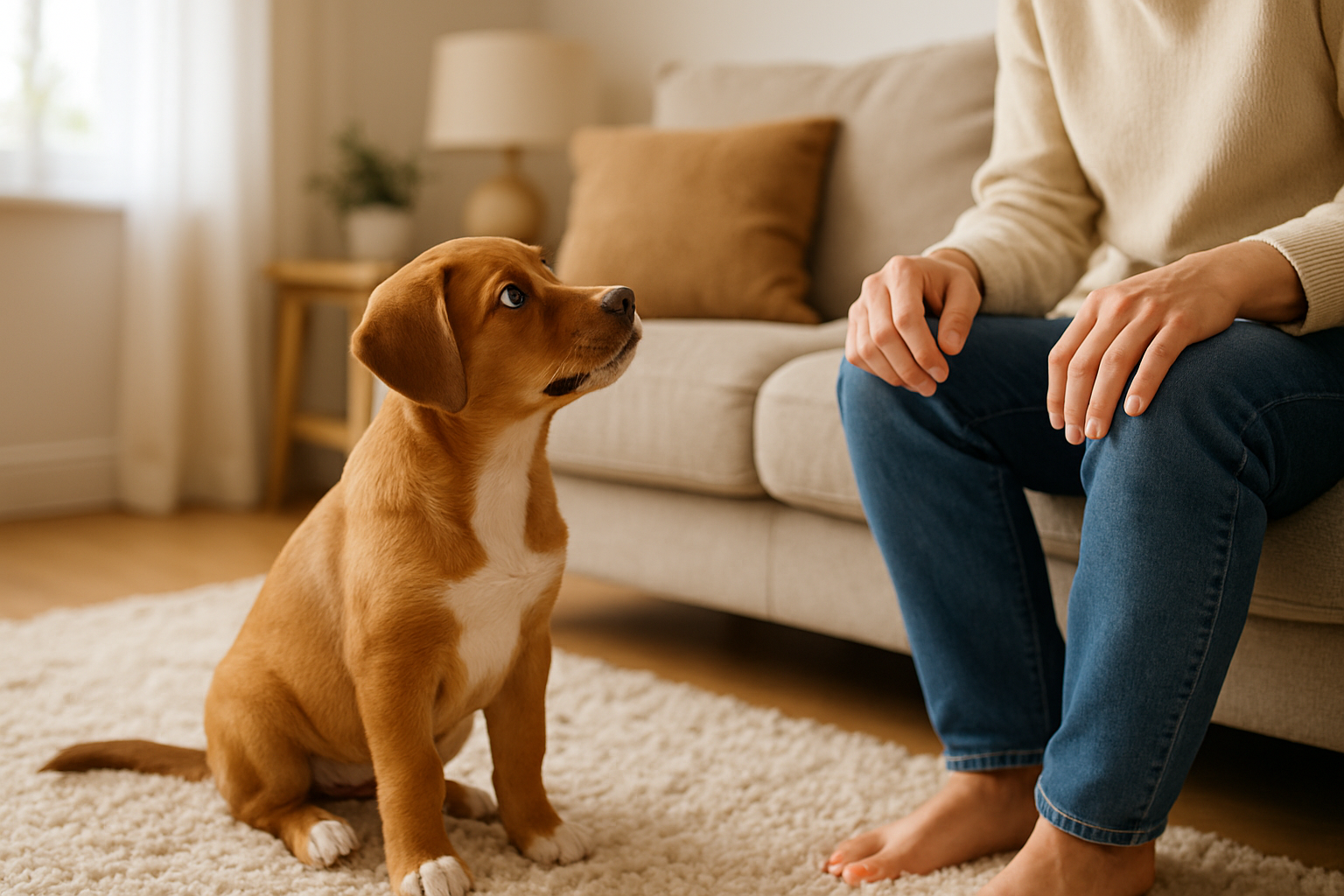
Why Puppy Potty Training Matters More Than You Think
Every new puppy owner faces the same inevitable challenge: accidents on the floor. While it's frustrating, understanding that potty training is a developmental process—not a behavior problem—changes everything. Your puppy isn't being defiant; they're literally learning to control biological functions they don't yet fully understand. [2] This perspective shift is the first step toward patience and success.
Successful potty training creates a foundation for your entire relationship with your dog. It prevents destructive behaviors born from anxiety, eliminates health risks from unsanitary conditions, and gives your puppy confidence in their living space. Most importantly, it allows your puppy to become a true family member who can safely spend time throughout your home.
When to Start: The Ideal Age for Potty Training
Timing matters significantly in potty training success. Starting too early sets both you and your puppy up for frustration. [4] Most veterinarians and trainers recommend beginning formal potty training between 12-16 weeks of age, when puppies develop enough bladder control to make the training meaningful.
Before 12 weeks, your puppy's body simply isn't physically capable of holding urine and feces for extended periods. Their nervous system is still developing the connections necessary for voluntary control. If you've adopted a puppy younger than this age, focus on establishing routines and positive associations with outdoor spaces rather than expecting reliability.
Don't panic if you've missed this window. Older puppies and adult dogs can be housetrained successfully—it may just require additional patience and consistency. [4] The fundamental principles remain the same regardless of age.
Understanding Your Puppy's Biological Schedule
Before you can train your puppy, you must understand their natural rhythms. Puppies need bathroom breaks far more frequently than adult dogs because their bladders are smaller and their digestive systems process food quickly.
Here's a realistic bathroom schedule for puppies at different ages: [2]
- 8-12 weeks old: Every 1-2 hours during the day, plus immediately after meals, naps, and playtime
- 3-4 months old: Every 2-3 hours during the day
- 4-6 months old: Every 3-4 hours during the day
- 6+ months old: Every 4-6 hours during the day
Additionally, all puppies need bathroom breaks first thing in the morning, before bedtime, and immediately after eating. [4] These non-negotiable times form the backbone of your training schedule.
Reading Your Puppy's Signals: The Body Language That Matters
Your puppy will communicate their needs if you learn to listen. Recognizing these signals before accidents happen is crucial to successful training. [2] Watch for:
- Circling or sniffing the ground intensely
- Whining, barking, or other vocalizations
- Pawing at you or jumping on your legs
- Licking your hands or face repeatedly
- Scratching at the door or gate
- Sudden restlessness or inability to settle
- Moving away from their play area toward a corner
Every puppy has unique signals, and learning your individual dog's communication style is one of the most valuable skills you'll develop. Keep a mental note of what your puppy does 5-10 minutes before they typically need to go. Within a week or two, you'll recognize the pattern.
The Foundation: Creating a Consistent Routine
Consistency is the secret ingredient that transforms potty training from a months-long ordeal into a manageable process. [5] Dogs are creatures of habit, and puppies thrive when they can predict what comes next in their day.
Build Your Schedule Around These Anchors:
- Feeding times (feed at the same times daily)
- Wake times (establish a regular sleep schedule)
- Exercise periods (playtime and walks)
- Your own schedule (morning departure, evening return)
Once you establish these anchors, bathroom breaks flow naturally. Feed your puppy at 7 AM, 12 PM, and 5 PM? Plan outdoor breaks 15-30 minutes after each meal. Puppy naps at 2 PM? Take them out when they wake up. [4] This predictability helps your puppy's body develop a reliable schedule.
Proven Training Methods That Actually Work
Method 1: Crate Training (The Den Approach)
Crate training often gets a bad reputation, but when implemented correctly, it's one of the most effective potty training tools available. Dogs are naturally den animals and instinctively avoid soiling their sleeping space. [4]
The key is selecting the right crate size. It should be large enough for your puppy to stand, turn around, and lie down comfortably—but not so large that they can create a bathroom area in one corner and sleep in another. [4] A crate that's too big defeats the purpose entirely.
Use the crate as a safe space, never as punishment. When you cannot actively supervise your puppy, the crate keeps them safe and reinforces bladder control. Use the "month plus one" rule: a 4-month-old puppy can typically hold it for approximately 5 hours. [4] Never force your puppy to stay in the crate longer than they can physically hold their bladder, as this creates anxiety and undermines training.
Method 2: Designated Potty Spot Training
Taking your puppy to the same outdoor location every time creates powerful associations. [4] When your puppy sniffs the same spot repeatedly, their body begins to recognize it as "the bathroom," making elimination easier and more predictable.
Always use the same door to exit, the same path to the potty area, and the same spot if possible. This consistency signals to your puppy's brain: "This is where we do this." Within a few weeks, your puppy will actively head toward that spot, making your job easier.
Method 3: Potty Pads for Indoor Training
If outdoor access is limited due to living situation, health, or weather, potty pads provide an alternative. [4] However, understand that pads teach your puppy it's acceptable to eliminate indoors—just in a specific location. This method requires more management and typically extends the timeline to full outdoor reliability.
If using pads, treat them like you would an outdoor spot: take your puppy to the pad at scheduled times, stay with them, and reward success heavily. Never leave pads down as an excuse for unsupervised time. [4]
The Training Process: Step-by-Step Implementation
Step 1: Take Your Puppy Out Frequently
During the first weeks, err on the side of too many bathroom breaks rather than too few. Take your puppy outside at least every 2-3 hours, plus all the times mentioned in the schedule section. [2] Yes, this is exhausting. Yes, it's necessary.
Step 2: Stay With Your Puppy
Don't simply let your puppy out and expect results. Stay outside with them, staying calm and quiet. [4] Your presence prevents them from getting distracted by interesting smells, bugs, or play opportunities. Once they eliminate, you'll be there to reward immediately.
Step 3: Reward Success Enthusiastically
The moment your puppy finishes eliminating outside, celebrate like they've won an Olympic medal. Use excited verbal praise, high-value treats (small pieces of chicken or special training treats), and physical affection. [2] This positive reinforcement creates the association: "Outside elimination = amazing things happen."
Step 4: Track Accidents to Identify Patterns
For the first 2-3 weeks, keep a simple log noting when you took your puppy out and when accidents occurred. [2] This data reveals patterns about your puppy's individual schedule and capacity. You'll notice your puppy consistently has accidents at certain times, revealing when you need more frequent breaks.
Step 5: Manage the Environment
When you cannot actively supervise your puppy, confine them to a small space using a crate or baby gate. [2] This prevents them from wandering off to have an accident in your bedroom or behind the couch. Unsupervised accidents are the biggest setback in potty training because they happen out of your sight, making correction impossible.
Handling Accidents: What to Do and What Never to Do
Accidents are guaranteed. How you respond determines whether your puppy learns or becomes confused and anxious.
If You Catch Your Puppy in the Act:
Make a gentle noise to get their attention (not a scary sound), then immediately take them outside or to their designated potty area. [4] If they finish eliminating outside, reward them. This teaches them that finishing the job in the right place is what earns praise, not that elimination itself is wrong.
If You Discover an Accident After the Fact:
Do nothing to your puppy. No scolding, no nose-rubbing, no angry tones. [2] Your puppy cannot connect a punishment that happens 10 minutes after an accident to the accident itself. They'll only learn that you're unpredictable and scary, leading them to hide when they need to eliminate—making training exponentially harder.
Always Clean Thoroughly:
This is non-negotiable. Use an enzymatic cleaner designed for pet accidents, not regular household cleaners. [2] Enzymatic cleaners break down the urine and feces at a molecular level, completely eliminating the scent. Regular cleaners only mask the smell to human noses; your puppy's sensitive nose still detects it, drawing them back to that spot repeatedly.
Soak the area thoroughly with enzymatic cleaner and let it sit for 5-10 minutes before wiping up. [2] For stubborn spots, repeat the process twice to ensure complete elimination of odor.
Teaching Your Puppy to Communicate Their Needs
Once your puppy understands the basic concept of outdoor elimination, teach them to actively communicate when they need to go. This transition from you controlling the schedule to your puppy requesting breaks is game-changing.
Popular Communication Methods:
- Door bells: Hang a strand of bells from the door handle. Gently tap your puppy's paw against them before going outside. Within weeks, they'll ring the bells themselves when they need out.
- Training buttons: Recordable buttons designed for dogs allow you to record "outside" and place them by the door. Some advanced puppies learn to press them to request outdoor time.
- Consistent barking at the door: Some puppies naturally develop a specific bark that means "I need out." Reward this specific bark heavily to encourage it.
Whichever method you choose, consistency is essential. Use the same signal every time before going outside, and reward your puppy when they use it. [2]
Timeline Expectations: How Long Will This Actually Take?
Puppy potty training typically takes 4-6 months for consistent reliability, though some puppies take up to a year. [4] Several factors influence this timeline:
- Age at start: Starting at 12-16 weeks typically yields faster results than starting with older puppies
- Consistency: Families maintaining strict schedules see results 2-3 times faster than those with irregular routines
- Breed and size: Smaller breeds sometimes take longer to housetrain; larger breeds often progress faster
- Your puppy's individual temperament: Some puppies are naturally eager to please; others are more independent
- Health factors: Puppies with urinary tract infections, parasites, or digestive issues may struggle regardless of training quality
If your puppy isn't showing progress after 8-10 weeks of consistent training, consult your veterinarian to rule out underlying health issues. [4]
Common Challenges and Solutions
Challenge: Your Puppy Has Frequent Accidents Despite Your Efforts
Solution: Increase outdoor break frequency. You're likely waiting too long between opportunities. Also, verify you're using an enzymatic cleaner on all accident spots—residual scent draws puppies back.
Challenge: Your Puppy Eliminates Immediately After Coming Inside
Solution: Your puppy likely needs more time outside. Don't bring them in immediately after elimination; wait 5-10 minutes to ensure they're completely finished. Also, reduce the time between outdoor breaks.
Challenge: Nighttime Accidents Continue Past 4-5 Months
Solution: Nighttime training develops later than daytime training. Keep your crate in your bedroom so you hear your puppy's signals and can take them out if needed. [4] Use waterproof bedding and don't be alarmed if nighttime accidents persist until 6+ months of age.
Challenge: Your Puppy Won't Eliminate Outside, Then Has an Accident Inside
Solution: Your puppy may be too distracted or anxious outside. Stay longer, minimize distractions, and try a different outdoor location. Some puppies need a quieter, less stimulating environment to relax enough to eliminate.
The Three Keys to Success: Consistency, Patience, and Celebration
Behind every successfully housetrained puppy are three consistent elements. [5] First, consistency means treating every day the same way—same schedule, same location, same response to accidents. Your puppy's brain learns through repetition and predictability.
Second, patience acknowledges that your puppy is learning one of their first major life lessons. Frustration and anger only create anxiety, which actually makes potty training harder. Take a breath, clean up the accident, and move forward.
Third, celebrate every success, no matter how small. Your puppy figured out where to eliminate? Throw a mini party. They communicated they needed to go out? You've just witnessed a major breakthrough. These celebrations build your puppy's confidence and motivation to continue doing the right thing.
Final Thoughts: You've Got This
Puppy potty training is one of the most challenging aspects of early puppy ownership, but it's also one of the most achievable. With a solid plan, realistic expectations, and genuine patience, your puppy will be reliably housetrained within a few months. The accidents that seem endless now will become distant memories, and you'll marvel at how quickly your puppy learned.
Remember: every accident is just data telling you to adjust your schedule. Every success is your puppy proving they're capable of learning. Stay the course, trust the process, and celebrate the journey.