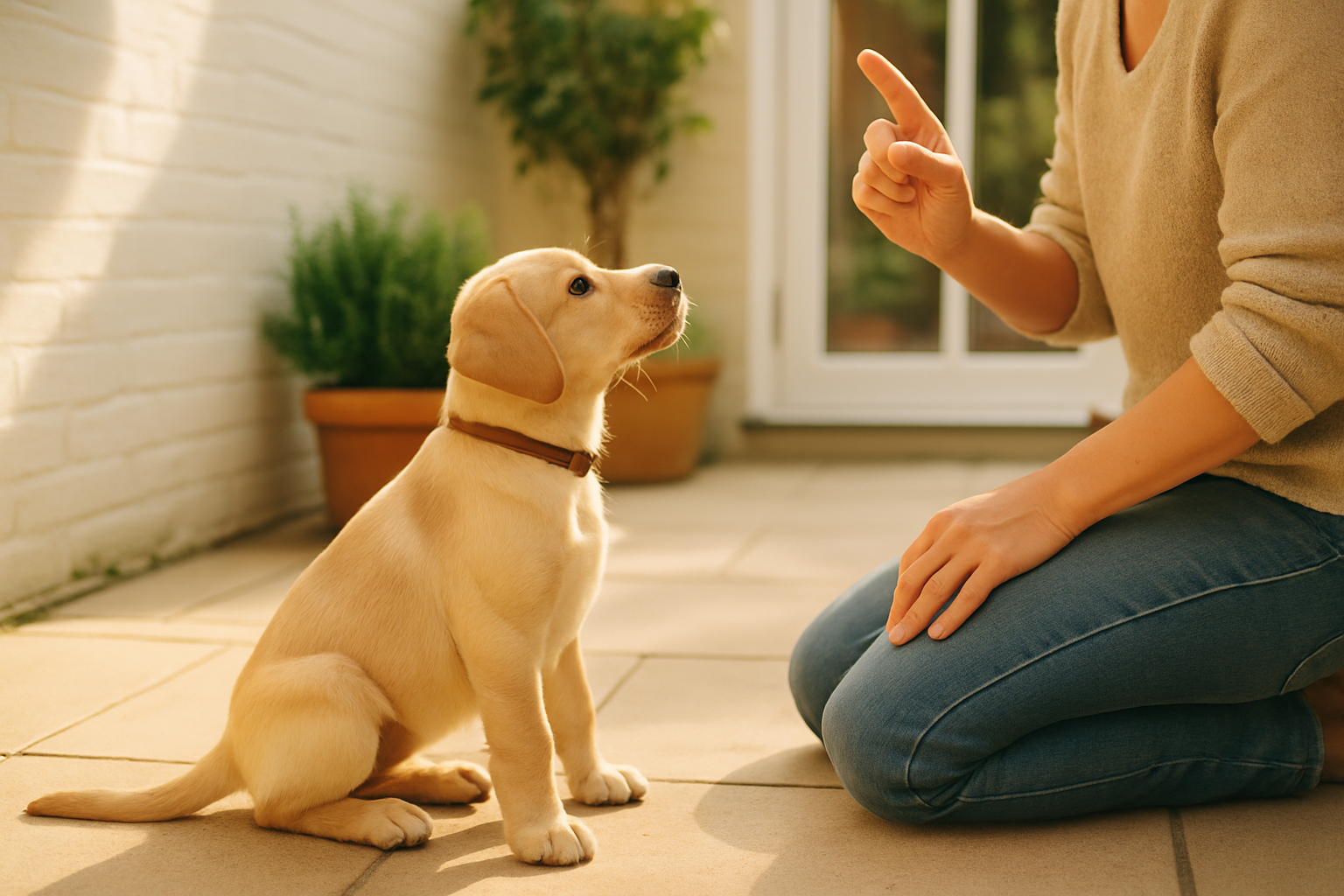
Complete Puppy Potty Training Guide: Master Housebreaking in 6 Months or Less
The moment you bring your new puppy home, you're faced with an unavoidable reality: accidents will happen. Puddles on the carpet, surprises on your hardwood floors, and the unmistakable smell that signals your pup couldn't hold it any longer. While this is frustrating, it's also completely normal and, more importantly, entirely preventable with the right approach.
Potty training is more than just about keeping your home clean—it's about establishing trust, building healthy habits, and setting your puppy up for a lifetime of good behavior. The good news? With consistency, patience, and a solid plan, most puppies can be reliably housetrained within 4-6 months, though some may take up to a year depending on individual factors. [3]
Understanding Your Puppy's Biological Reality
Before you can train your puppy, you need to understand what's actually happening inside their body. Young puppies don't have full control over their bladders and bowels—it's not stubbornness or defiance; it's biology.
The general rule of thumb many trainers recommend is the "month plus one" concept: a puppy's age in months plus one hour represents roughly how long they can hold their bladder. So a three-month-old puppy can typically hold it for about four hours. [2] However, this is a guideline, not a guarantee, and individual puppies vary significantly.
Most importantly, understand that puppies have predictable bathroom needs. They typically require potty breaks:
- Immediately after waking up from sleep or naps
- Within 15-30 minutes after eating
- After play sessions or exercise
- Before bedtime
- Every 30-45 minutes during the initial training phase [1]
The critical mistake most new puppy parents make is waiting for their puppy to "tell them" they need to go. Young puppies rarely give obvious signals. Instead of waiting for signs like whining or circling, you need to be proactive and take your puppy out on a predetermined schedule. [1]
The Ideal Age to Start Potty Training
Timing matters. Most experts recommend beginning formal potty training when your puppy is between 12-16 weeks old. [3] At this age, puppies have developed enough bladder control to actually benefit from training efforts. Starting too early (before 8-12 weeks) often yields disappointing results because your puppy simply cannot physically control their elimination yet.
That said, if you've adopted an older puppy or adult dog, don't panic. While it may take longer and require more patience, it's absolutely possible to housetrain an older dog. The fundamental principles remain the same.
Creating Your Puppy's Potty Schedule: The Foundation of Success
A consistent schedule is the single most important tool in your potty training toolkit. Think of it as the backbone of your entire training program. [2]
Here's how to build an effective schedule:
Step 1: Map Out Your Puppy's Daily Rhythm
Write down when your household typically wakes up, eats meals, works, and sleeps. Your puppy's schedule must align with your family's routine to be sustainable.
Step 2: Build in Strategic Potty Breaks
Structure your day around these key potty break times:
- First thing in the morning (immediately after waking)
- After breakfast (15-30 minutes post-meal)
- Mid-morning break
- After lunch
- Afternoon break
- Before dinner
- After dinner
- Before bedtime
Young puppies may need 8-10 potty breaks daily. As they mature, this number decreases. [1]
Step 3: Document and Share
Print your schedule and post it visibly in your home—on the refrigerator, by the back door, or in a shared family space. Everyone who interacts with your puppy needs to follow the same schedule. Inconsistency from different family members is one of the primary reasons potty training fails. [2]
Crate Training: Your Secret Weapon
Many new puppy parents cringe at the idea of crate training, imagining it as cruel confinement. In reality, when done correctly, crate training is one of the most humane and effective potty training tools available. [3]
Here's why it works: Dogs are naturally den animals and instinctively avoid soiling the space where they sleep and spend significant time. A properly sized crate leverages this natural instinct to help your puppy develop bladder control. [2]
Choosing the Right Crate Size
This is crucial. Your crate should be large enough for your puppy to:
- Stand up comfortably
- Turn around in a circle
- Lie down and stretch out
However, it should NOT be so large that your puppy can potty in one corner and sleep comfortably in another. If your puppy is having accidents in their crate, the crate is too big. [1]
Using the Crate Strategically
During designated rest periods and nap times, place your puppy in their crate. This prevents them from wandering around and accidentally eliminating in forbidden areas. When you take them out, immediately take them to their designated potty spot on a leash.
At night, keep the crate in your bedroom so you can hear if your puppy whines or signals that they need to go. This allows you to respond quickly and prevent nighttime accidents. [3]
Important: Never use the crate as punishment. It should be a safe, comfortable space your puppy actually enjoys.
Designating Your Potty Spot: Location Matters
Consistency in location is absolutely essential. Your puppy needs to learn that there's one specific place—and only one place—where elimination is acceptable.
Outdoor Training
Choose a designated spot in your yard or a nearby area. Take your puppy to this exact spot every single time during their scheduled potty breaks. Use a short 4-6 foot leash to guide them directly there, avoiding distractions. [1]
Over time, your puppy will develop a strong association between that location and the act of eliminating. The scent markers they leave will also serve as a reminder of their purpose when you arrive at the spot.
Indoor Pee Pad Training
If outdoor training isn't immediately feasible due to your living situation, pee pads can serve as a temporary solution. However, most experts advise against relying on them long-term, as they reinforce the idea that eliminating indoors is acceptable. [2]
If you do use pee pads, place them in a designated area away from your puppy's sleeping and eating zones. Gradually transition your puppy from pads to outdoor elimination as they mature and gain better bladder control.
The Power of the Command Word
Adopting a consistent verbal cue creates powerful training recall. Choose a simple phrase like "Go potty," "Do your business," or "Go pee." Every time you take your puppy to their designated spot, use this command consistently. [2]
Over time, your puppy will learn to associate the command with the action. Eventually, you'll be able to say the command and your puppy will understand exactly what you're asking them to do.
The Critical Role of Positive Reinforcement
The moment your puppy finishes eliminating in the correct spot, celebration time begins. Praise enthusiastically, offer treats, play with a favorite toy—make it clear that this is the best thing they could possibly do.
Timing is everything: wait until your puppy is completely finished before praising. If you celebrate too early, they might stop mid-stream, which defeats the purpose. [1]
Positive reinforcement works because it creates a positive association with the desired behavior. Your puppy learns that going potty in the right place results in wonderful things happening, so they'll want to repeat it.
Handling Accidents: What NOT to Do
Accidents will happen. This is not a reflection of your puppy's intelligence or your training ability—it's simply part of the process. How you respond to accidents matters enormously.
Never Punish Your Puppy
The old method of rubbing a puppy's nose in their mess is not only ineffective but actively harmful. Your puppy doesn't understand the connection between past behavior and punishment. Instead, punishment teaches them to hide when they need to eliminate, making future training exponentially harder. [2]
The Right Way to Handle Accidents
When you discover an accident:
- Stay calm and don't express anger or frustration
- If you catch them in the act, make a noise to get their attention and immediately take them outside or to their potty pad
- Once they finish in the correct location, provide praise and rewards
- Return to the accident site and clean thoroughly with an enzymatic cleaner
- Avoid ammonia-based cleaners, which can intensify the smell of urine and attract your puppy back to the spot [1]
Use Accidents as Diagnostic Information
Every accident is valuable feedback. Ask yourself:
- Did the accident occur just before a scheduled potty break?
- Was my puppy given too much unsupervised freedom?
- Did someone forget to follow the schedule?
- Is my puppy drinking too much water?
- Could there be a health issue?
Use this information to adjust your approach. If accidents consistently occur at the same time, adjust your schedule. If they happen when your puppy has unsupervised access, increase supervision or crate time. [1]
Recognizing Your Puppy's Body Language
As your puppy matures, they'll begin showing signs that they need to go. Learning these signals helps you stay ahead of accidents:
- Sniffing or circling
- Whining or pawing at the door
- Pacing or restlessness
- Scratching at the ground
- Going to the door or their designated potty area
However, remember that young puppies rarely show these signs. Don't rely on them during early training—stick to your schedule instead. [1]
Dealing with Challenging Weather
Rain, snow, and cold temperatures can derail potty training if you're not prepared. Many dogs develop an aversion to going outside in bad weather, making consistency difficult.
To overcome this:
- Make the experience as comfortable as possible (use an umbrella, shovel a path, provide a covered area)
- Offer extra praise and treats for successful bathroom breaks in inclement weather [2]
- Stay outside with your puppy until they've finished, rather than sending them out alone
- Keep outdoor potty sessions brief but consistent
The Transition to Independence
As your puppy demonstrates consistent success with potty training, you can gradually increase their freedom. This isn't an all-or-nothing switch—it's a gradual process.
Start by allowing supervised time outside the crate in small increments. If your puppy maintains success, slowly extend these periods. Only when your puppy has demonstrated several weeks of accident-free behavior should you consider full house access. [1]
Remember: the more structure you provide during puppyhood, the more freedom you can safely grant as your dog matures.
When to Seek Professional Help
Most puppies respond well to consistent training, but some don't. If your puppy shows no progress after 2-3 months of consistent effort, or if they suddenly regress after being reliably trained, consult your veterinarian. [3]
Health issues like urinary tract infections, digestive problems, or other medical conditions can interfere with potty training. Your vet can rule out these possibilities and recommend next steps.
Key Takeaways for Potty Training Success
- Start at the right age: Begin between 12-16 weeks when puppies have adequate bladder control
- Create and follow a consistent schedule: This is your most powerful tool
- Use crate training strategically: Leverage your puppy's natural den instinct
- Designate one potty spot: Consistency in location creates powerful associations
- Implement positive reinforcement: Celebrate success immediately and enthusiastically
- Never punish accidents: They're learning opportunities, not behavioral failures
- Stay proactive: Don't wait for signals—follow your schedule
- Involve your entire household: Everyone must follow the same plan
- Be patient: Most puppies take 4-6 months; some take longer
- Consult professionals when needed: Vets and trainers can help troubleshoot problems
The Long View: Building Lifelong Habits
Potty training isn't just about preventing accidents in your home—it's about establishing the foundation for a trustworthy, well-behaved companion. The habits and routines you build now will influence your dog's behavior for years to come.
The effort you invest during these early months pays dividends throughout your dog's life. A puppy that learns to respect your home and follow a consistent routine grows into an adult dog that can be trusted with freedom, can travel with you, and can be welcomed in more environments.
Yes, potty training requires patience, consistency, and sometimes frustration. But the reward—a clean home and a confident, well-adjusted dog—is absolutely worth the effort.
Sources & References
- https://www.thepuppyacademy.com/blog/2023/6/18/how-can-i-potty-train-my-new-puppy
- https://yourpetandyou.elanco.com/us/new-pets/how-to-potty-train-a-dog
- https://www.pethonesty.com/blogs/blog/puppy-potty-training-101
- https://petwastegenie.com/blogs/tips-tricks/the-ultimate-guide-to-puppy-potty-training-from-pee-pee-pads-to-backyard-bliss