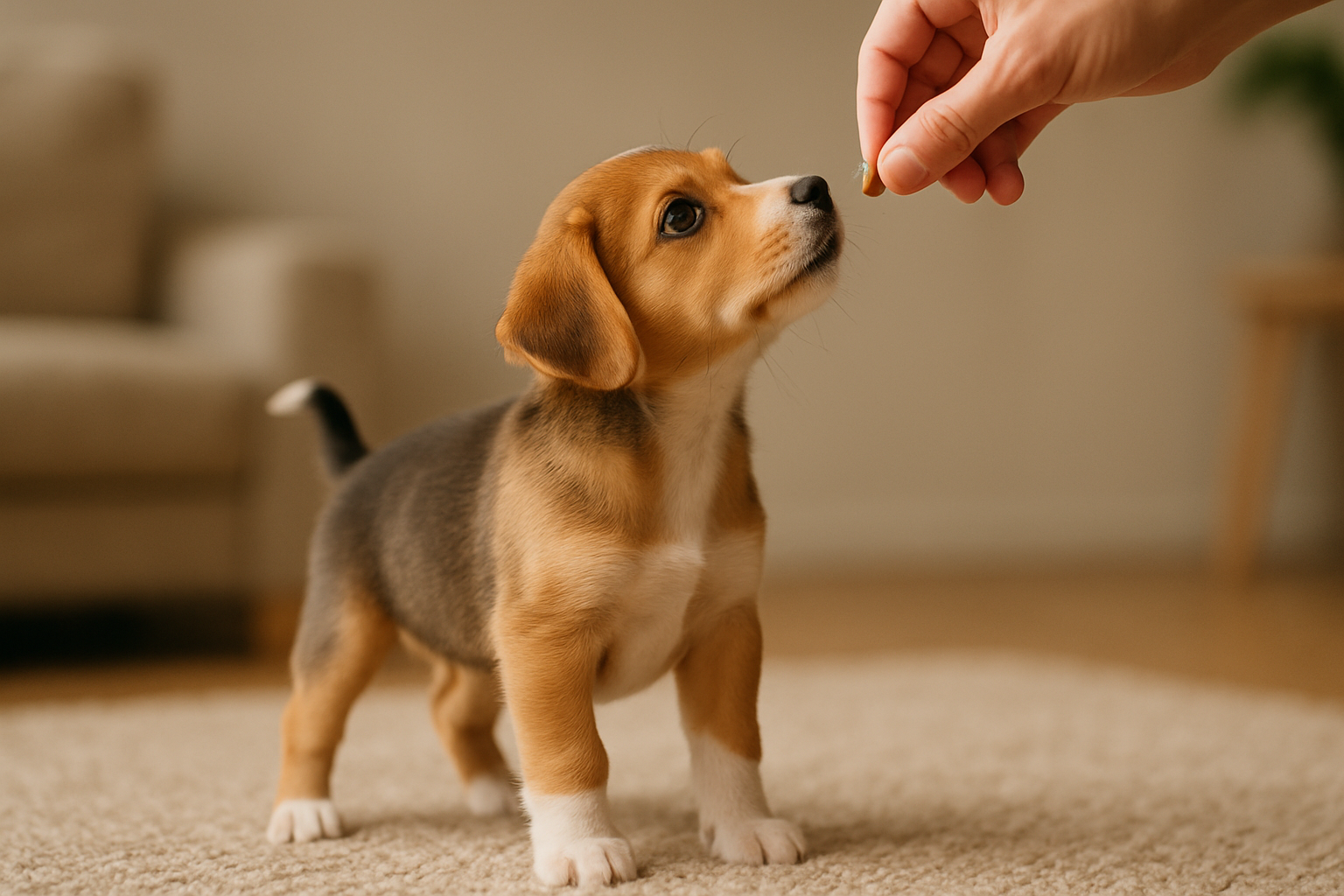
Why Potty Training Should Be Your Top Priority
Bringing a new puppy home is exciting, but let's be honest—discovering accidents throughout your house isn't part of the dream. Potty training isn't just about keeping your carpets clean; it's about establishing a foundation for good behavior, building trust between you and your puppy, and creating the structure that will shape your dog's entire life. [2] When done right, housetraining transforms the chaos of those early weeks into a predictable, manageable routine that benefits both you and your pup.
Understanding Your Puppy's Physical Development
Before you can successfully train your puppy, you need to understand what's physically possible for them. Young puppies simply cannot control their bladders the way adult dogs can—it's not a matter of willingness or intelligence; their bodies just aren't ready yet.
The Bladder Control Timeline: Most puppies can't reliably control their bladder and bowels until around 16 weeks of age. [3] Even then, their capacity is limited. A helpful rule of thumb is the "month plus one" formula: a puppy's age in months, plus one additional hour, represents approximately how long they can hold their bladder. [5] So a three-month-old puppy can typically hold it for about four hours, while a six-month-old can manage roughly seven hours.
This means starting potty training before 12-16 weeks may feel frustrating because your puppy physically cannot perform as expected. Waiting until your puppy is at least 12 weeks old gives you the best chance of success. [3]
Size Matters Too: Smaller breed puppies face an additional challenge—they have proportionally smaller bladders and faster metabolisms, meaning they'll need even more frequent potty breaks than their larger littermates. [5]
Creating Your Potty Training Schedule
Consistency is the secret weapon in potty training. Your puppy thrives on routine, and a well-structured schedule removes the guesswork from both your puppy's day and your training efforts. [1]
When to Take Your Puppy Out: Rather than waiting for your puppy to signal that they need to go, be proactive. [1] Your puppy should have scheduled potty breaks at these key times:
- Immediately after waking up (including from naps)
- Within 15-30 minutes after eating
- After playtime or exercise sessions
- Before bedtime
- Throughout the day at regular intervals (every 2-3 hours for young puppies)
- Anytime you notice signs they need to go
Building Your Custom Schedule: [1] suggests creating a personalized schedule that incorporates your puppy's feeding times, nap windows, and your own daily routine. Write it down and stick to it religiously. If you work outside the home, consider hiring a dog walker or asking a trusted friend to maintain midday potty breaks. This consistency is what transforms random accidents into predictable success.
Pro Tip: Feed your puppy at the same times each day. This creates predictable digestion patterns, making it easier to anticipate when they'll need to eliminate. [5]
Choosing Your Training Method: Outdoor vs. Potty Pads
There's no one-size-fits-all approach to potty training. Your living situation, work schedule, and personal circumstances will influence which method works best for your family.
Outdoor Training (Preferred Method): Most trainers recommend teaching puppies to eliminate outdoors exclusively. [2] This method avoids confusion about where it's acceptable to go potty inside your home. Each time you take your puppy out, use the same door and visit the same designated spot. This consistency helps your puppy understand exactly where they should go. [5] Use a specific command or phrase like "Go potty" every single time, and your puppy will eventually associate those words with the action. [1]
Potty Pad Training: For apartment dwellers, owners with mobility challenges, or those with tiny breeds facing harsh winters, puppy pads offer a legitimate alternative. [2] However, understand that using pads teaches your puppy they can eliminate indoors, which may complicate later outdoor-only training. [2] If you choose this route, designate a specific area for the pads and follow the same consistency principles as outdoor training.
The Hybrid Approach: Some owners successfully use pads during the day while working toward outdoor-only elimination during evenings and weekends. This requires patience and clear communication, but it can work when circumstances demand flexibility.
Crate Training: Your Secret Weapon
Crate training often gets a bad reputation, but when used correctly, it's one of the most effective potty training tools available. The principle is simple and elegant: dogs are naturally clean animals and instinctively avoid soiling their sleeping area. [Source 1, Source 2]
Choosing the Right Crate: Size matters enormously. Your crate should be large enough for your puppy to stand up, turn around, and lie down comfortably—but not so large that they can eliminate in one corner and sleep comfortably in another. [Source 1, Source 2] Many quality crates come with adjustable partitions that grow with your puppy, making them a worthwhile investment.
Using the Crate Strategically: During nap times and rest periods, place your puppy in their crate. This prevents them from wandering around and having accidents while you're not actively supervising. [1] When your puppy wakes up or signals they need to go (whining or scratching), immediately take them to their designated potty spot. [2]
Important Note: Never use the crate as punishment. Your puppy should view their crate as a safe, comfortable den—a place they want to be. [3]
The Art of Supervision and Prevention
Successful potty training relies more on prevention than correction. You're not waiting for accidents to happen and then teaching your puppy they're wrong; you're actively preventing accidents and teaching them they're right. [5]
Active Supervision Techniques: Keep your puppy in sight at all times when they're not in their crate or sleeping. [5] Use baby gates to confine them to specific areas, keep them on a short leash indoors, or use a long line so you can monitor their behavior constantly. Watch for telltale signs that elimination is imminent:
- Circling or sniffing the ground
- Whining or scratching at the door
- Sudden restlessness or leaving their play area
- Squatting or assuming the elimination position
The moment you notice these signs, calmly take your puppy to their designated potty spot. [5]
Managing Water Intake: While your puppy needs constant access to fresh water, you can strategically manage intake to reduce accidents. Remove water bowls a couple of hours before bedtime to help your puppy sleep through the night. [2] During training, monitor how much water your puppy drinks and adjust potty break timing accordingly.
Positive Reinforcement: The Most Powerful Tool
How you respond when your puppy eliminates in the correct location matters far more than how you respond to accidents. Positive reinforcement creates eager learners; punishment creates anxious, confused puppies.
The Timing is Critical: Wait until your puppy has completely finished before offering praise and rewards. [1] If you celebrate too early, your puppy might stop mid-elimination and rush to you, never fully emptying themselves. This creates problems later.
Reward Options: Different puppies respond to different motivators. Experiment with:
- High-value treats (small, quickly consumed pieces)
- Enthusiastic verbal praise in a happy, excited tone
- Favorite toys or a quick play session
- Physical affection and petting
Find what makes your individual puppy's tail wag and use it consistently. [1]
Handling Accidents: What to Do (and What Not to Do)
Despite your best efforts, accidents will happen. How you respond determines whether your puppy learns from the experience or becomes confused and anxious.
What NOT to Do: Never punish your puppy for accidents by yelling, rubbing their nose in the mess, or any form of physical correction. [Source 3, Source 5] This teaches your puppy to fear you and hide when they need to eliminate, rather than communicate their needs. Punishment creates anxiety-driven behavior problems that are far harder to fix than simple housetraining issues.
If You Catch Them in the Act: Calmly interrupt with a gentle noise or "uh-oh," then immediately take them outside or to their designated spot. [5] If they finish eliminating in the correct location, offer praise and a reward. This teaches them where the right place is.
After an Accident: Clean the area thoroughly with an enzymatic cleaner specifically designed to neutralize pet odors. [Source 1, Source 3] Regular cleaners don't eliminate the scent markers that tell your puppy "this is a bathroom." Avoid ammonia-based cleaners, which can actually intensify the smell of urine. [1] Once an area smells like a bathroom to your puppy, they'll return to it repeatedly.
Investigating the Root Cause: Ask yourself why the accident happened. Was your puppy given too much unsupervised freedom? Did they have access to more water than usual? Are you following the schedule consistently? [1] Most accidents result from human error, not puppy error. Use accidents as feedback to adjust your approach.
Timeline Expectations: Patience Pays Off
How long does potty training actually take? The honest answer: it varies. Most puppies need between 4-6 months to master housetraining reliably. [Source 3, Source 5] Some may take up to a year, depending on their age, breed, size, health, and your consistency level. [3]
Remember that "fully housetrained" means your puppy can reliably hold it for extended periods and communicate their needs. Even then, occasional accidents can happen due to excitement, illness, or changes in routine.
Factors That Affect Timeline:
- Age at which you start (12-16 weeks is ideal)
- Breed and size (smaller breeds may take longer)
- Your consistency with the schedule
- How frequently you supervise and prevent accidents
- Your puppy's individual learning pace
- Any underlying health issues
Troubleshooting Common Challenges
Regression After Progress: Your previously housetrained puppy suddenly has accidents again. This often happens due to changes in routine, moving to a new home, or stress. [5] Simply return to basics: stricter schedule adherence, more frequent potty breaks, and closer supervision. It's not a failure—it's a normal part of the learning process.
Persistent Accidents in One Location: If your puppy keeps returning to the same spot indoors, you haven't fully eliminated the odor. Use an enzymatic cleaner multiple times if necessary, and consider temporarily blocking access to that area.
Medical Concerns: If your puppy seems to be making no progress despite consistent training, or if accidents are accompanied by other symptoms like excessive drinking, lethargy, or straining, consult your veterinarian. [5] Urinary tract infections, parasites, or other health issues can sabotage even the best training efforts.
Your Potty Training Action Plan
Ready to get started? Here's your step-by-step roadmap:
- Assess your puppy's age (ideally 12+ weeks) and physical readiness
- Choose your method (outdoor, pads, or hybrid approach)
- Select and properly size a crate
- Create a detailed daily schedule based on your puppy's age and your routine
- Establish a consistent designated potty spot with a command word
- Begin actively supervising using gates, leashes, or confinement
- Take your puppy out on schedule and watch for signals
- Reward successful eliminations enthusiastically
- Clean accidents thoroughly with enzymatic cleaner
- Adjust your schedule based on your puppy's progress
- Stay patient and consistent—your effort now pays dividends for years
Final Thoughts: The Foundation for Everything
Potty training isn't just about preventing accidents; it's about building a relationship based on clear communication, trust, and positive reinforcement. The consistency you demonstrate during these early weeks teaches your puppy that you're reliable, that good things happen when they follow your guidance, and that your home is a safe, structured place.
Every puppy learns at their own pace. Some will be reliably housetrained in four months; others may need eight or more. Neither timeline indicates failure. What matters is that you show up consistently, maintain your schedule, supervise actively, and respond with patience and positivity.
The effort you invest now in establishing solid potty training habits creates the foundation for every other aspect of obedience and behavior training that follows. Your future self—and your carpets—will thank you.